Fat is one of the most useful tools in lightweight hiking food. It contains more than twice the energy per gram of carbohydrate or protein, which allows a substantial amount of energy to be carried in a relatively small package. Oils, nuts, seeds, nut butters, cheese and chocolate can lift the energy content of a meal without adding the same weight as an equivalent amount of carbohydrate.
That does not mean fat should replace carbohydrates or dominate every meal. The body uses a mixture of fuels while hiking, and that mixture changes with pace, gradient, fitness, food intake and the length of the day. Fat is valuable because it helps build an energy-efficient food plan, not because it makes carbohydrates unnecessary.
Why fat matters in a hiking food plan
Food weight becomes increasingly significant as trip length grows. An overnight hiker may be able to carry generous portions without much concern, while someone carrying food for a week must think carefully about the energy returned by every gram. Fat provides approximately 37 kilojoules per gram, compared with about 17 kilojoules per gram from carbohydrate or protein. This makes high-fat foods particularly useful when reducing food weight and volume.
Fat also improves flavour, texture and satisfaction. A dehydrated meal made entirely from lean ingredients can taste thin and leave a hiker searching through the food bag an hour later. Adding olive oil, cheese, nuts, seeds, coconut milk powder or nut butter can transform the same meal into something richer and more substantial.
Dietary fat also supplies essential fatty acids and helps the body absorb fat-soluble vitamins. Sports nutrition guidance generally places fat within a broad range of about 20 to 35 per cent of total energy for many athletes, while warning that very low-fat diets may make it harder to meet energy, health and performance needs. Hikers do not need to calculate an exact percentage for every trip, but the principle is useful: fat should be present in meaningful amounts without pushing out the carbohydrate needed for harder efforts.
The body already carries a large fat reserve
Even a lean person carries far more stored energy as body fat than as glycogen. This can lead to the conclusion that eating fat during a hike is unnecessary because the body already has a large reserve. The issue is not simply how much energy is stored. It is how quickly that energy can be released and used at the intensity required.
At an easy, steady pace, a larger proportion of energy can come from fat oxidation. As the pace rises, the gradient steepens or the hiker needs to make a powerful effort, carbohydrate becomes increasingly important. Carbohydrate can support a higher rate of energy production and is also vital for the brain and nervous system. A hiker climbing hard with a heavy pack cannot assume that abundant body-fat stores will prevent a decline in performance when carbohydrate availability falls.
Fat is not fast fuel
Fat is energy dense, but it is digested and absorbed more slowly than readily available carbohydrate. A handful of nuts or a spoonful of nut butter may provide substantial energy, yet it will not correct an immediate energy slump as quickly as a carbohydrate-rich snack. This is why fat works well in meals and in snacks eaten before they are urgently needed, rather than as the only response to sudden weakness or loss of concentration.
During a steep or sustained climb, foods high in fat may feel heavy and can be difficult to tolerate. Blood flow is being directed toward working muscles and temperature regulation, while digestion competes for resources. Some people can happily eat nuts, cheese or chocolate throughout the day. Others develop nausea or reflux when they eat a fatty snack immediately before hard exertion.
Personal tolerance matters. Test foods on ordinary hikes before using them as the backbone of a remote food plan. A theoretically efficient food is not efficient if it remains uneaten because the texture, richness or sweetness becomes unpleasant.
The relationship between fat and carbohydrate
Fat and carbohydrate should not be framed as rival fuels. Hiking usually includes long periods of moderate effort, brief harder climbs, uneven footing, pack carries and changing weather. The body shifts continuously between fuel sources rather than selecting only one.
Fat helps raise the energy density of the food bag, while carbohydrate supports pace, concentration and more demanding work. A practical meal might use pasta, rice, couscous or potato as its carbohydrate base, then add oil, cheese, nuts or coconut powder for energy density. Snacks might pair dried fruit or crackers with nuts, nut butter or cheese rather than relying entirely on one macronutrient.
Low-carbohydrate, high-fat approaches can increase the body’s capacity to oxidise fat, but research has not established a consistent performance advantage for endurance athletes. Greater reliance on fat may also reduce the efficiency of carbohydrate use during higher-intensity work, which matters when the terrain demands a faster energy supply.
Useful high-fat foods for hiking
Olive oil provides one of the simplest ways to increase the energy content of a dinner. It can be added after a dehydrated meal has rehydrated, avoiding the storage problems created by drying oily food. A small, reliable bottle is essential. Thin disposable containers, poorly fitting lids and ordinary zip-lock bags are not worth trusting beside clothing and sleeping equipment.
Nuts and seeds are durable, compact and easy to divide between meals and snacks. Almonds, cashews, peanuts, walnuts, macadamias, sunflower seeds, pumpkin seeds and mixed trail blends all work, although their energy content and storage life vary. Nuts with a higher proportion of polyunsaturated fat may become rancid sooner, particularly in heat. Buying fresh food, storing it cool before departure and packing only what is needed reduces waste and disappointment.
Nut butters are useful in wraps, porridge, sauces and snacks. Individual sachets are convenient but create packaging waste, while a small screw-top container can be refilled. Peanut, almond and mixed nut butters can also be blended into noodles or couscous with soy sauce, chilli and milk or coconut powder to create a quick savoury sauce.
Hard cheese adds fat, protein, salt and flavour. Parmesan is particularly useful because a small amount changes an otherwise plain pasta, risotto or mashed potato meal. Other firm cheeses may be suitable for shorter trips in cool conditions, but storage depends on the product and temperature. Sweating, oil separation, mould or extended time in a hot pack should not be dismissed simply because cheese is commonly carried by hikers.
Chocolate is energy dense and valuable for morale, but it melts readily and can become difficult to manage in warm weather. Chocolate-coated bars may fare worse than plain chocolate sealed inside a secondary bag. In cold conditions, very hard chocolate can be difficult to bite, so smaller pieces are more practical.
Coconut milk powder adds richness to curries, dhal, rice and desserts. It is convenient, but its fat content limits storage compared with lean powders. It should be kept dry, protected from heat and used within a sensible period rather than prepared years in advance. Some coconut powders also contain dairy ingredients, which matters for people avoiding milk.
Adding fat to dehydrated meals
Home dehydration works best with lean foods. Fat does not dry in the same way as water-containing ingredients and can become rancid during storage. Meat should be trimmed, oily sauces used cautiously and high-fat finished meals assessed realistically rather than assumed to be shelf stable because they feel dry.
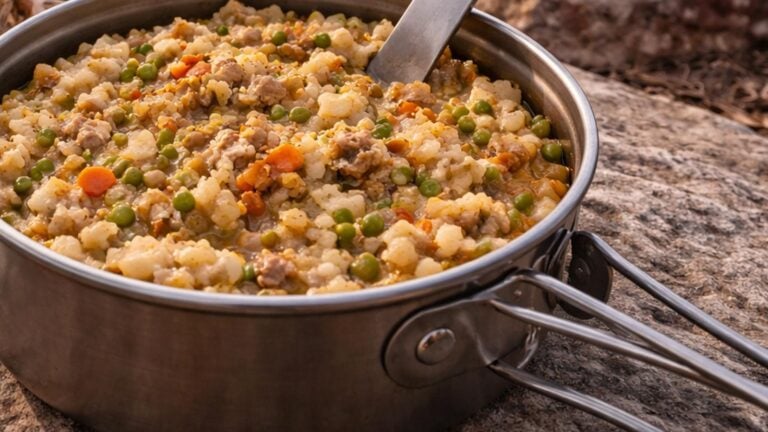
A safer and more flexible strategy is to dehydrate a relatively lean meal, then carry the fat separately. Olive oil can be stirred into pasta, couscous, chilli or soup after rehydration. Parmesan, nuts, seeds, nut butter or coconut milk powder can be packed with the meal and added at camp. This preserves the weight and energy benefits of fat while reducing the time it spends mixed through the stored food.
Separate fat also allows portions to be adjusted. A hiker with a strong appetite can add more oil or cheese, while someone feeling nauseated can eat the meal without making it excessively rich. This can be helpful at altitude, in heat or after an unusually hard day when appetite becomes unpredictable.
Fat during cold-weather hiking
Cold conditions increase the practical value of energy-dense food. The body must support both movement and heat production, while heavy clothing and difficult terrain may increase effort. Appetite can still fall in cold weather, which creates a problem: energy demand rises while the desire to eat may weaken.
Small, rich additions can increase energy without requiring a much larger meal. Oil in dinner, milk powder in porridge, nut butter in a wrap and chocolate after the evening meal can all help. Fat-rich food should still be balanced with carbohydrate, particularly when the next day includes sustained climbing or travel through snow.
Some fatty foods become very hard when cold. Nut butter may stiffen, cheese can become difficult to slice and bars may feel like bricks. Pack them where body heat or the warmer centre of the pack can keep them usable, and divide food into pieces before departure rather than expecting to cut it in freezing conditions.
Fat and digestive comfort
Large amounts of fat can slow stomach emptying and contribute to bloating, reflux or nausea, particularly when eaten immediately before hard walking. A rich evening meal may also disturb sleep in people who are sensitive to heavy food. More is not always better, even when the calculation looks efficient on paper.
Distribute fat across the day rather than concentrating nearly all of it in one enormous dinner. Nuts in trail mix, cheese or nut butter at lunch and oil in the evening meal create a steadier pattern. During demanding sections, choose snacks that contain accessible carbohydrate as well as fat. Dried fruit with nuts is often easier to use than nuts alone because the carbohydrate responds more quickly while the fat contributes longer-lasting energy.
Digestive tolerance is highly individual. Some hikers thrive on rich foods, while others need relatively plain meals. The only reliable way to know is to test the planned menu under realistic conditions, including a long walking day rather than a quiet evening at home.
Storage, heat and rancidity
Fat deteriorates through oxidation, producing stale, bitter or paint-like flavours. Heat, light, air and time accelerate the process. The food may not immediately become dangerous, but it can become unpleasant and lose nutritional quality. Nuts, seeds, oils, powdered dairy, coconut products and fatty dehydrated meals all deserve realistic storage limits.
Buy ingredients fresh, keep them sealed and cool before the trip, and avoid preparing high-fat food months earlier without a good reason. Vacuum sealing can reduce air exposure but does not stop oxidation indefinitely. Freezing suitable ingredients or prepared meal components before departure can extend storage at home, although condensation must be avoided when they are removed and packed.
Any oil carried separately should be protected by a secure primary bottle and a secondary sealed bag. Check the lid before every trip. A few grams saved by using a fragile container are irrelevant if the contents leak through the food bag and into the rest of the pack.
Planning fat across a hiking day
A balanced day might begin with porridge containing milk powder, nuts or seeds. Morning snacks could combine dried fruit with nuts, while lunch might use cheese, fish, hummus or nut butter with wraps or crackers. Dinner could pair a carbohydrate-rich dehydrated meal with oil, parmesan, nuts or coconut powder. The pattern supplies fat throughout the day without requiring every food to be oily or rich.
Hikers with high energy requirements may find it easier to increase fat than to keep enlarging meal volume. Adding a measured amount of oil to dinner can be more manageable than eating another bowl of pasta. The amount should still be tested. Too much oil can overwhelm the flavour, cause digestive discomfort and leave a greasy pot that requires more effort and water to clean.
A useful tool rather than a complete strategy
Fat earns its place in a hiking food plan because it provides compact energy, improves meals and helps reduce carried food weight. It is especially valuable on longer trips, in cold conditions and for hikers who struggle to consume enough energy from bulky carbohydrate foods alone.
Its value depends on how it is used. Fat cannot fully support harder efforts, repair tissue by itself or correct a food plan that lacks variety. Combine it with carbohydrate, protein and foods you genuinely enjoy eating. The best result is not the highest possible percentage of fat. It is a food bag light enough to carry, substantial enough to sustain the trip and appealing enough that its contents are actually eaten.




I do love cheese. Buying it always makes me feel like I’m getting ready for a multi-day hike.