Interactive hiking safety scenarios
Most hiking incidents don’t begin with a single mistake. They develop through a sequence of small decisions made under pressure. These scenarios put you in those moments.
Each one presents a realistic situation in Australian conditions. Work through it, make your decisions, and see how pressure builds and margin changes. There are no trick questions. The goal is not to catch you out, but to show what is worth noticing before things become critical.
Want to see how these pressures connect across all eight systems? Try the HSSF Cascade Failure Simulator →
Heat and Hydration
Small changes in pace, timing and temperature can quickly reduce your margin on exposed tracks.
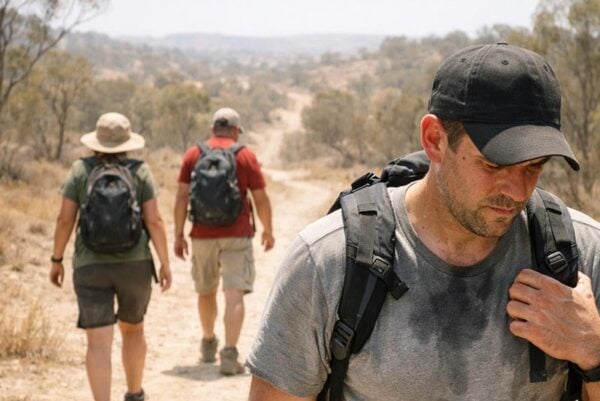
Late start, heat building
Late start, rising heat and an exposed track. Decide how to manage pace, hydration and timing as conditions shift from the original plan.
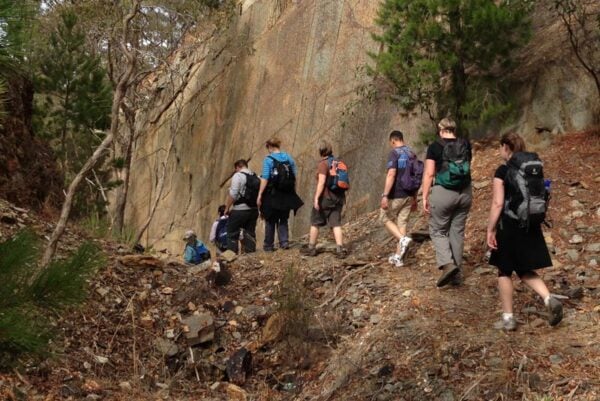
Water running low at midday
Water use is ahead of plan on a hot, exposed track. Decide whether to continue toward an uncertain source or turn back under known conditions.
Planning Failures
Decisions made before you leave the trailhead shape how much margin you have when conditions change.
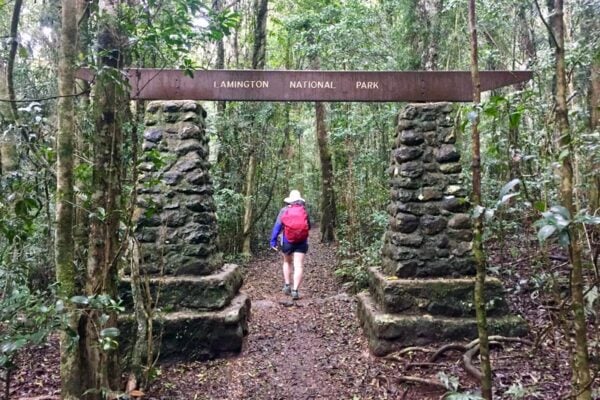
Conflicting information, late start
Trail time estimates don’t match and it’s already late. Decide how to interpret conflicting information before a simple walk becomes a time problem.
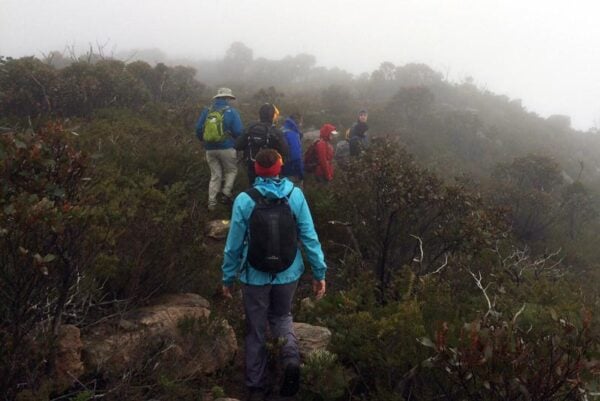
The commitment trap
You’ve passed your turnaround time but the objective is close. Decide whether to continue or turn back as time, light and margin tighten.
Weather and Exposure
Conditions rarely stay as planned, and early decisions determine how much exposure you carry as they shift.
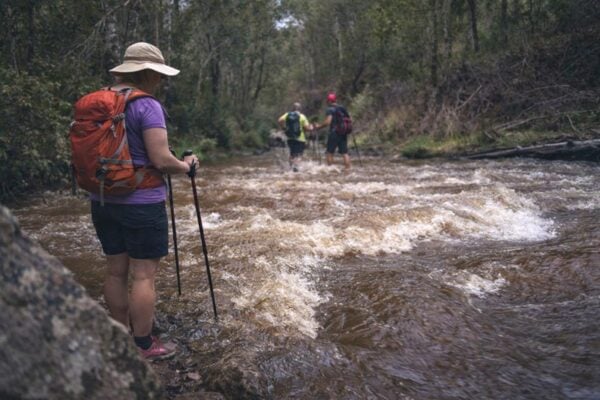
River crossing after rain
Overnight rain has changed a routine river crossing. Assess flow, depth and group capability before committing to a decision that can’t be reversed.
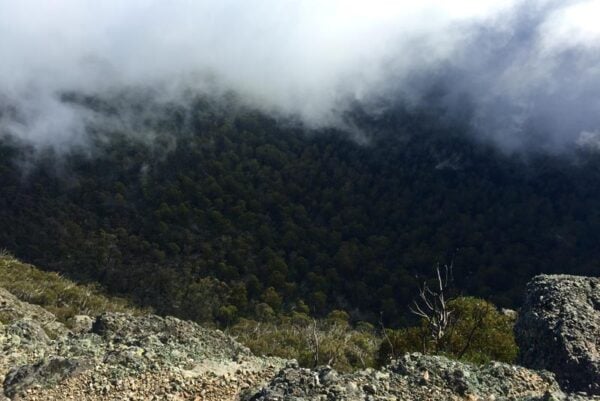
Weather closing in earlier than expected
Weather builds earlier than forecast on an exposed ridge. Decide when to turn back as visibility drops and conditions shift from the original plan.
Group Dynamics
Differences in pace, ability and judgement can quietly change risk across the entire group.
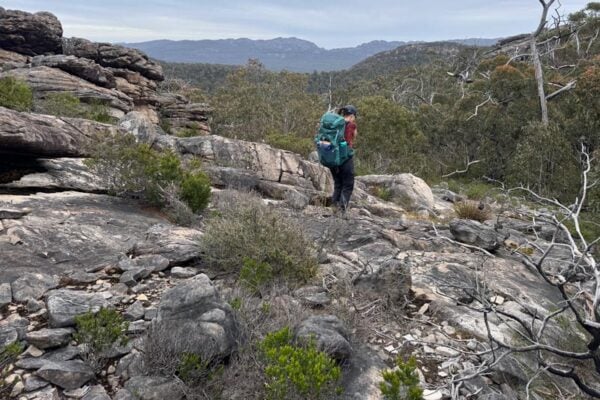
Minor injury, deteriorating mobility
A minor ankle roll changes pace and timing. Decide how to manage movement, group progress and risk as mobility quietly deteriorates.
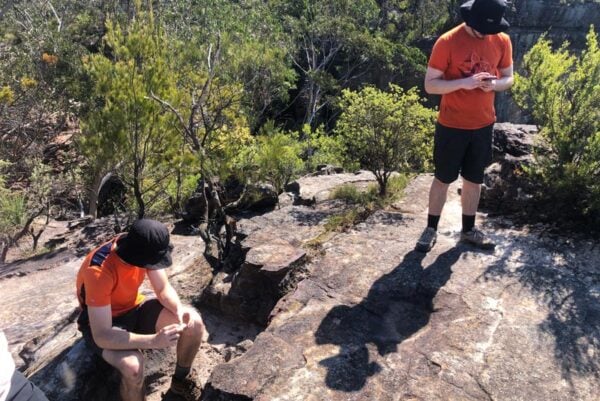
Do you split the group?
One hiker is slowing while others want to continue. Decide whether to split the group or stay together as pace, timing and risk diverge.
Hiking Safety Scenarios — What Each Scenario Covers
These scenarios are built around real hiking environments and the kinds of decisions that lead to search and rescue callouts across Australia. Each one isolates a specific failure pattern, not a dramatic mistake, but the kind of small, reasonable decision that quietly removes margin before anyone realises it is gone. Working through these scenarios develops the habit of noticing early signals, acting on them before options narrow, and understanding how systems interact under pressure.
Scenario Immersion
Scenario Immersion scenarios show how a hike unfolds across all four decision points, regardless of the choices made. Each step reveals how outcomes shift depending on when, and whether, the right call is made.
Late start and heat is building quickly follows a summer day hike in central Victoria where a delayed start and rising temperatures compress the available margin. The scenario explores how heat, hydration, and pace interact when the original plan is already behind before the first step is taken. It is one of the most common patterns in Victorian day hike incidents.
Disoriented off track and losing light fast is set in the Blue Mountains, NSW, where a brief step off a marked trail becomes full disorientation as afternoon light fades. The scenario examines how quickly a familiar environment becomes unfamiliar, and why the first decision after losing reference, stop or move, determines almost everything that follows.
River crossing flowing fast after rain takes place on a multi-day route in the Snowy Mountains, NSW, where overnight rain has transformed a routine crossing into a genuine decision point. The scenario tests the ability to assess conditions against commitment bias, and to hold a sound decision under social pressure from within the group.
Conflicting trail information, late start is set in Lamington National Park, Queensland, where a 1:00pm trailhead arrival meets a conflict between app-based timing and the park information sign. The scenario is built around planning failure, specifically the cost of dismissing authoritative local information in favour of a more convenient estimate.
Minor injury leads to deteriorating mobility follows a steep loose-rock descent in the Grampians, Victoria, where a rolled ankle changes the group’s movement system before anyone has formally acknowledged it. The scenario demonstrates how compensation, altered gait, and continued loading produce a cascade that a brief early assessment would have interrupted.
Weather closing in earlier than expected is set on an exposed alpine ridge in the Victorian High Country where forecast cloud arrives hours ahead of schedule. The scenario tests the rate-of-change signal, not whether conditions are currently dangerous, but whether they are moving in a direction that changes the cost of every subsequent decision.
Water lower than planned at midday follows two hikers on a dry exposed walk in central Victoria where a seasonal water source marked on the map is dry on arrival. The scenario examines how a plan built around an unconfirmed assumption fails quietly, and when the window to call for assistance is still open versus when it has already closed.
Navigation battery dropping fast is set on a remote day walk in Tasmania where the phone has become the primary navigation tool and the battery is declining faster than the distance remaining. The scenario focuses on the single-point-of-failure risk of using one device for both navigation and emergency communication, and the decision timing around when to call.
Gap in pace forces a split decision follows a mixed-experience group in the Blue Mountains, NSW, where a widening pace gap creates pressure to split the party. The scenario examines the coordination risks that an unmanaged group split introduces, and how each subsequent decision either contains or compounds those risks.
The summit commitment trap is set in the Grampians, Victoria, where a self-imposed turnaround time has passed and the summit feels close enough to justify continuing. The scenario is built around the psychology of commitment bias, specifically why the person who set the turnaround rule before departure was better positioned to make that decision than the person standing below the summit.
Decision Pathways
Decision Pathways are branching scenarios where every choice determines what happens next. A correct decision at Step 1 ends the scenario immediately. A poor one opens a chain of consequences that narrows with each step. The debrief shows every possible outcome and where the scenario could have ended earlier.
Solo hiker with no safety net is set in Lerderderg State Park, Victoria, on a 6-hour loop where no trip plan has been left with anyone. The scenario is built around the absence of a recovery system rather than a navigation or physical failure. It demonstrates how a search begins not when someone goes missing, but when someone eventually notices they have not returned.
Social pressure, the cost of staying silent follows a group of four on the Mount Feathertop ridge walk in the Victorian High Country, where the most experienced hiker notices early weather signals but hesitates to challenge the group’s direction. The scenario tests whether experience translates into action or stays quiet under social friction.
Over-reliance on a navigation app is set on the Grand Canyon Cliff Top and Pope’s Glen Track in the Blue Mountains, NSW, where GPS drift inside a sandstone canyon creates a growing mismatch between the screen and the ground. The failure begins at the car park when offline maps are not downloaded, and compounds each time the terrain is trusted less than the app.
Missing the early weather signals takes place on Mount Amos in Freycinet National Park, Tasmania, where a granite slab scramble meets conditions that arrive earlier than forecast. The scenario is built around surface condition change rather than visibility, damp granite on a steep descent is the signal, and the decision to check before committing is the only exit that costs nothing.
Minor injury leads to mobility cascade follows three hikers on Mount Abrupt in the Grampians, Victoria, where an ankle roll on loose rock quietly changes how one person moves before anyone formally acknowledges the injury. The scenario teaches that pace change is the signal, not pain, and that what is not assessed at Step 1 is loaded onto every step that follows.
A small navigation error, a big problem is set on the Ted Errey Nature Circuit in Brisbane Ranges National Park, Victoria, where a side track to a lookout is not properly rejoined and the drift from the main circuit compounds with each decision to keep moving rather than return to the last confirmed marker. The failure is a delay problem, not a navigation problem.
Caught out at night with no margin left follows two hikers on the Tarn Shelf Circuit in Mount Field National Park, Tasmania, on a 14-kilometre, 6-to-7-hour route that begins at 10:30am with no headtorches, light layers, and a plan built around average pace rather than variable terrain. The scenario demonstrates how a daylight margin disappears not through a single mistake but through a series of reasonable continuations, each of which feels manageable until the light does not.
Resupply doesn’t align with the plan is set across four days on the Fainter and Spion Kopje Firetrail Circuit in the Alpine National Park, Victoria, a 65-kilometre route starting from Bogong Village. The scenario follows a water resupply plan that was slightly wrong from the night before departure and shows how a small arithmetic error in daily consumption and source spacing compounds across three days until the afternoon of Day 3 leaves two hikers with 400ml between them and 5 kilometres of exposed alpine plains ahead.
Navigation Breakdowns
Small navigation errors can compound quickly when position, time and certainty begin to degrade.
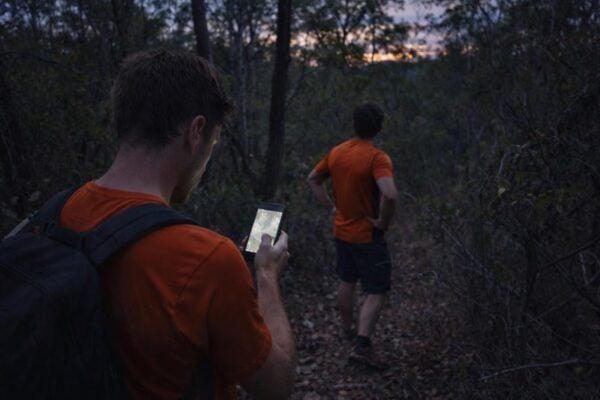
Off track, losing light
Step off the track and lose your reference point. With fading light and patchy GPS, decide how to relocate the trail before margin disappears.

Navigation battery dropping fast
Your phone is the only navigation tool and the battery is dropping fast. Decide how to manage route finding and communication before it fails.
Explore the Hiking Safety Systems
These scenarios are built around the Hiking Safety Systems Framework, a systems-based approach to understanding how incidents develop on the trail. If you’re new to the framework, that’s the right place to start.
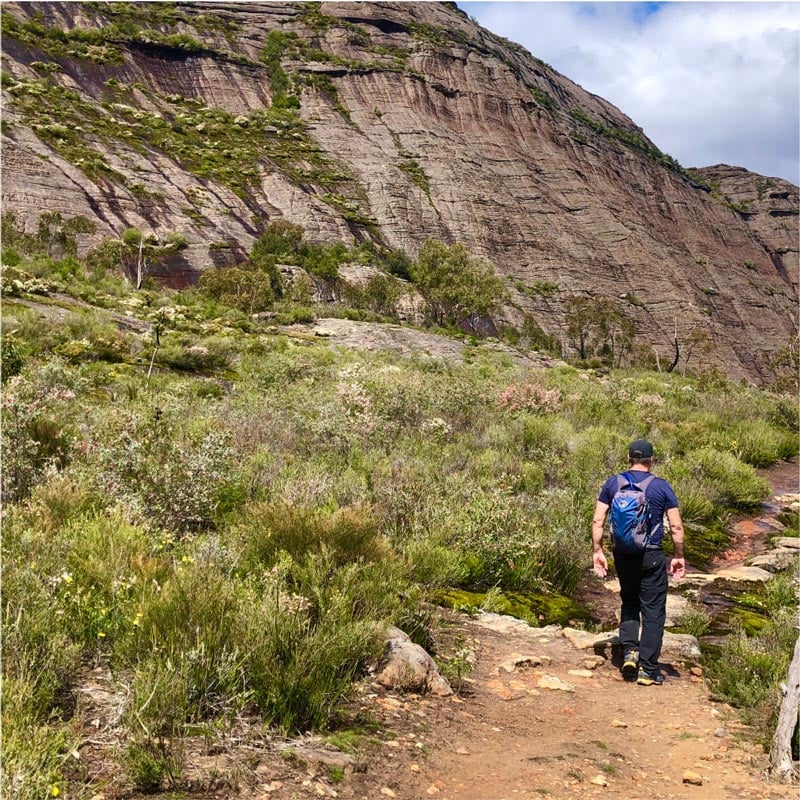
Learn the framework from the ground up
The scenarios show the framework under pressure. Foundations training explains how it works.
HSSF Foundations is a free, structured introduction to how incidents develop and how to recognise system strain before it becomes critical.
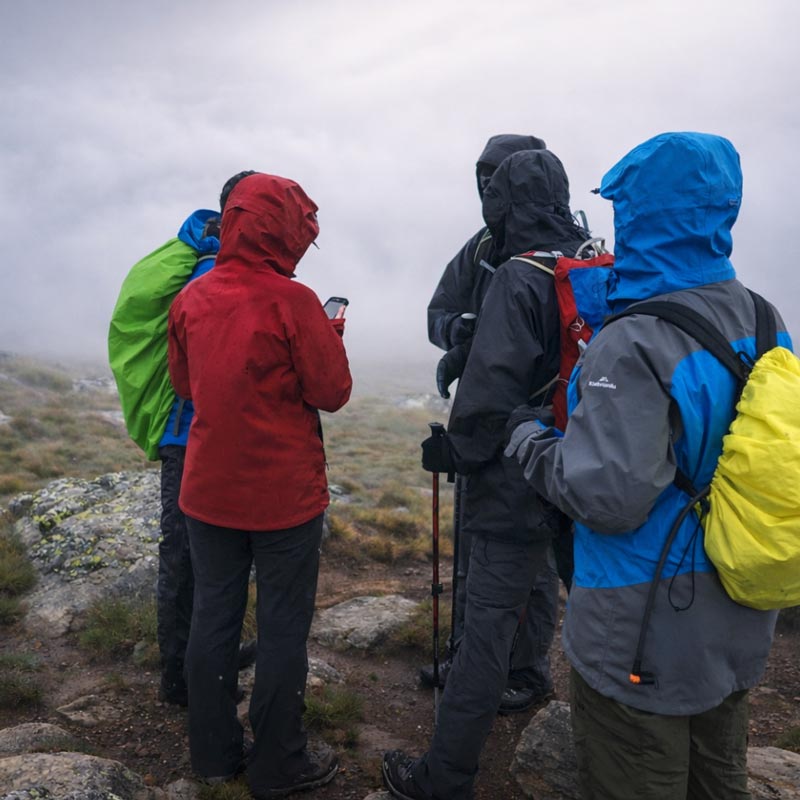
Apply the framework under pressure
Understanding the framework is the foundation. Applying it in real conditions is the next step.
The HSSF Readiness Assessment assesses how you manage interacting systems, recognise developing pressure, and make decisions before situations escalate.
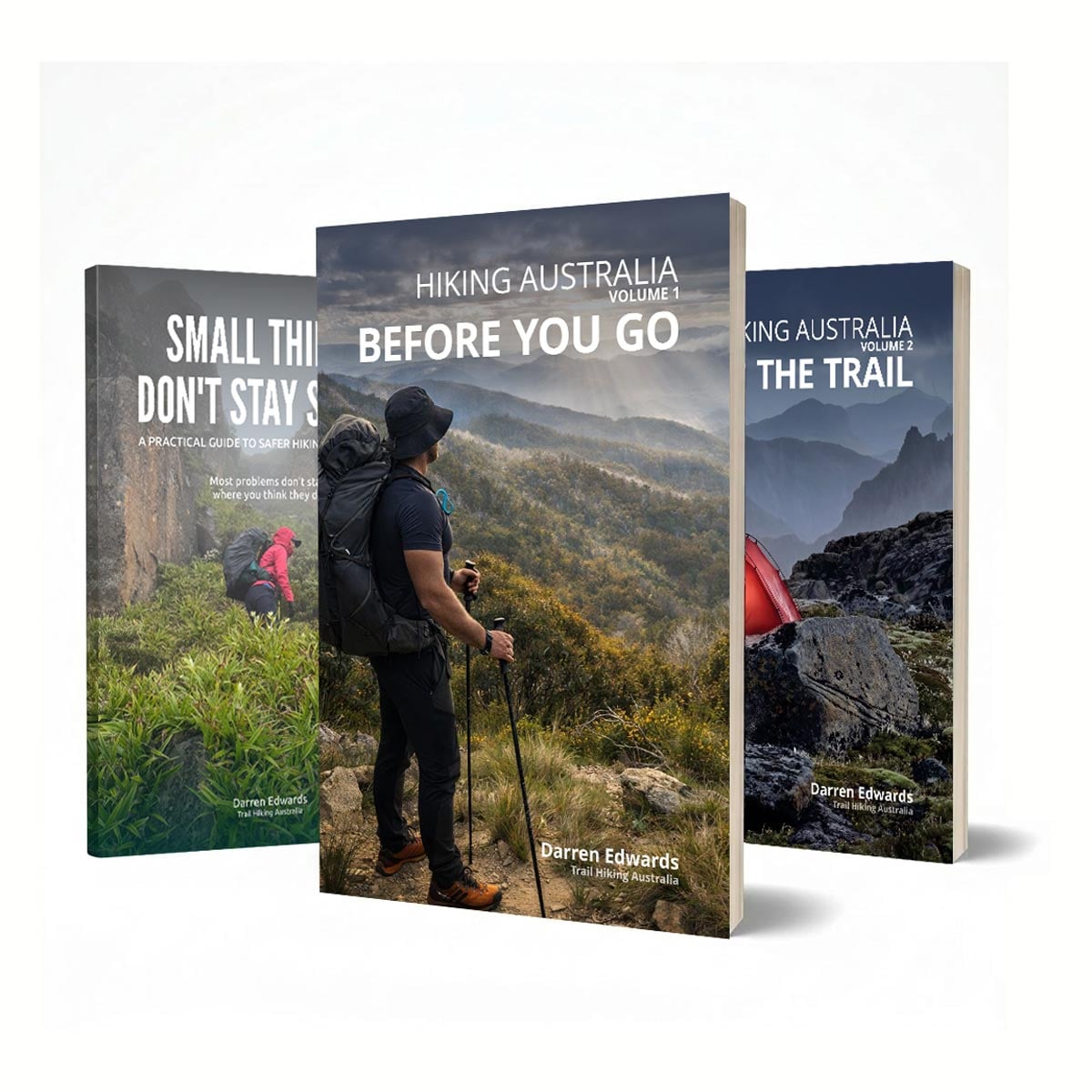
The Small Things Are Where Incidents Begin
Most problems don’t start where you think they do.
They begin with small changes that are easy to ignore. These guides shows you what to look for early, before those small things compound. Explore the field guide and two-volume series.
Explore the field guide →
Explore the Hiking Australia volumes →


