The HSSF Readiness Assessment is a structured assessment of your ability to apply the Hiking Safety Systems Framework in realistic conditions.
Understanding the framework is the foundation.
Applying it under pressure is what readiness looks like.
It evaluates how you interpret developing situations, recognise system strain, and make decisions before small issues become difficult to recover from. It is designed for recreational hikers who want to apply the framework in real conditions, not just understand it.
This is not a completion certificate. It is an assessment of applied capability in the field.
HSSF Readiness Assessment
Start the assessment →Why this assessment exists
Most hiking safety advice focuses on knowledge. What to carry. What to do. What to avoid. But incidents rarely happen because someone lacked information. They happen because pressure builds, systems interact, and decisions are made too late.
The HSSF Readiness Assessment evaluates something different:
- how you recognise developing pressure
- how you interpret interactions between systems
- how you respond before conditions escalate
It focuses on applied judgement, not just knowledge.
What is being assessed
The assessment evaluates your ability to:
- recognise developing system strain
- identify early warning signs
- manage interacting pressures across terrain, environment, load, and physiology
- make decisions before conditions become difficult to recover from
Progression is based on demonstrated capability, not completion.
How the assessment works
The assessment is structured across four phases, each building on the last.
Phase 1 — System Foundations
Work through eight system-based modules. Each module covers one of the eight hiking safety systems and concludes with a checkpoint to confirm understanding before progressing.
Phase 2 — System Stress Scenarios
Apply the framework across eight scenarios where conditions evolve over time and multiple systems come under pressure simultaneously.
Phase 3 — Integrated Assessment
Complete a structured scenario requiring prioritisation, trade-offs, and decision-making under realistic pressure. This phase tests whether you can apply the full framework — not just individual systems — in a connected way.
Phase 4 — Readiness Outcome
Completion of the HSSF Readiness Assessment is based on demonstrated capability across all phases. Progression depends on applied judgement, system awareness, and decision-making under pressure.
What makes this different
This is not a course you complete. It is a readiness assessment built around realistic hiking scenarios and interacting system pressures. It does not test recall. It does not reward passive completion. It does not isolate variables.
Instead, it evaluates how you respond when:
- conditions change
- systems interact
- pressure builds
- decisions matter
The focus is on applied judgement, not memorised knowledge.
What you receive
On successful completion, you will receive:
- a digital HSSF Readiness Certificate
- a unique certificate number
- a public verification record valid for five years
Certificates can be independently verified by trip leaders, organisations, and others.
Who this assessment is for
The HSSF Readiness Assessment is designed for hikers who want to move beyond theory and evaluate applied capability.
It is suited to:
- hikers wanting to apply the framework in real conditions
- experienced hikers seeking structured self-assessment
- trip leaders and group organisers
- outdoor educators and professionals
Before you begin
This assessment builds on a foundational understanding of the Hiking Safety Systems Framework.
If you are new to the model, start with the free HSSF Foundations training.
Start the assessment
The HSSF Readiness Assessment is delivered through the Trail Hiking Australia Learning platform.
The Small Things Are Where Incidents Begin
Most problems don’t start where you think they do.
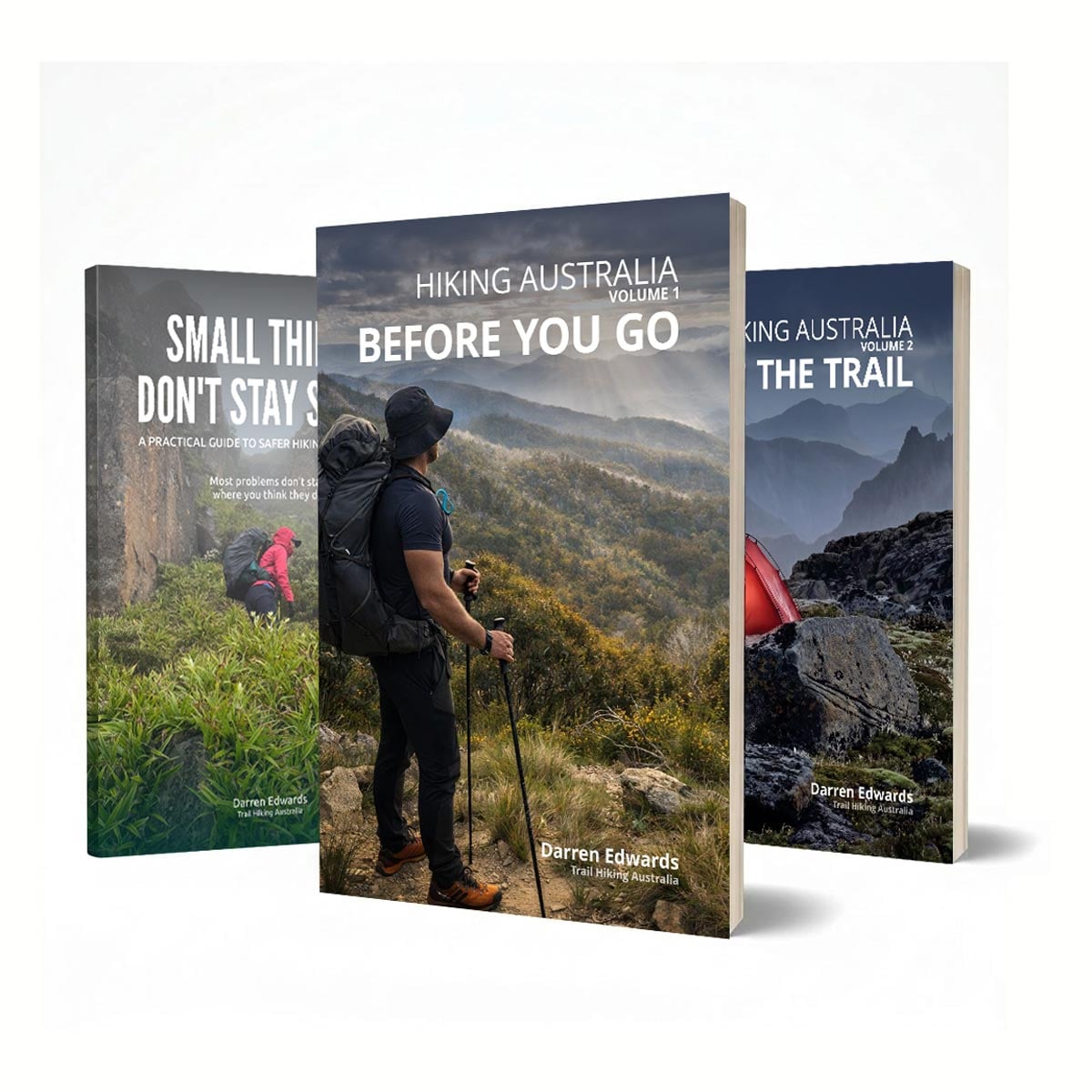
They begin with small changes that are easy to ignore. These books shows you what to look for early, before those small things compound. Explore these practical hiking books for Australian conditions.
The Capable Hiker →
The Hiking Australia series →
Small Things Don’t Stay Small →


