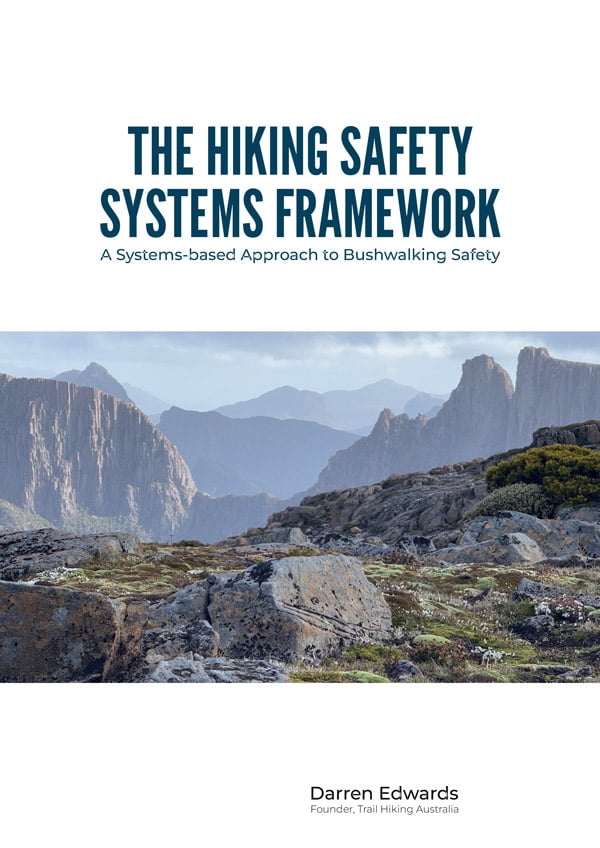
A Systems-Based Approach to Bushwalking Safety in Australian Conditions
The Hiking Safety Systems Framework is a structured model for understanding how hiking safety functions in real Australian conditions. Rather than focusing on isolated skills, individual gear items, or standalone hazards, it explains safety as the interaction of eight interdependent systems, with decision-making integrating how they perform under pressure.
The Framework moves beyond “single mistake” thinking. It recognises that most incidents develop when one system weakens and pressure transfers to others. By identifying stress points early and understanding how systems influence one another, leaders and hikers can manage risk more deliberately.
Developed through field observation, search and rescue experience, incident pattern analysis, and practical application across varied Australian environments, The Hiking Safety Systems Framework provides a structured foundation for planning, supervision and reflective practice.
While organisational risk management frameworks address governance and duty of care, The Hiking Safety Systems Framework focuses on individual hiker readiness: the personal capability layer that shapes how effectively a hiker performs within any group, plan, or changing field situation.
Download The Hiking Safety Systems Framework
Download The Hiking Safety Systems Framework (Version 1.0) → (login required) Download HSSF Executive Overview → (login required)Who it is for
The Hiking Safety Systems Framework is designed for:
- Outdoor educators
- Group leaders and trip coordinators
- Scout and Duke of Edinburgh leaders
- Bushwalking and hiking clubs
- Outdoor programs operating within formal risk management frameworks
- Experienced hikers seeking a structured safety model
It is particularly suited to those responsible for supervising others, planning group activities, or reviewing incidents in educational or club contexts.
What it provides
The Hiking Safety Systems Framework includes:
- A structured model of eight interdependent safety systems
- A clear explanation of cascading system failure in hiking incidents
- Practical planning and supervision prompts
- Scenario-based thinking to strengthen field judgement
- Real-world Australian case analysis
- A systems-based complement to traditional hazard-focused risk management approaches
- Tools to help identify early system degradation before incidents escalate
The Framework is intended to support more deliberate preparation, clearer supervision and stronger judgement in the field.
The Eight Interdependent Systems
- Navigation and Positioning
- Environmental Protection
- Hydration and Fuel
- Injury and Medical Response
- Communication and Rescue
- Load Carrying and Mobility
- Equipment Reliability
- Decision-Making and Judgement
Each system contributes to overall safety. When one system degrades, pressure transfers to others. When multiple systems weaken simultaneously, minor issues can escalate rapidly into serious incidents. The Framework provides a structured way to identify and stabilise system strain before incidents develop.
Publication Details
Version 1.0
First published 2026
Author: Darren Edwards
Published by Trail Hiking Australia
Melbourne, Australia
Suggested Citation
Edwards, D. (2026). The Hiking Safety Systems Framework (Version 1.0). Trail Hiking Australia.

All material on this website and in associated downloadable publications is protected by copyright and may not be reproduced, republished, or redistributed without prior written permission from Darren Edwards. For full details, please refer to the Terms of Use, Copyright and Title of Ownership information.


