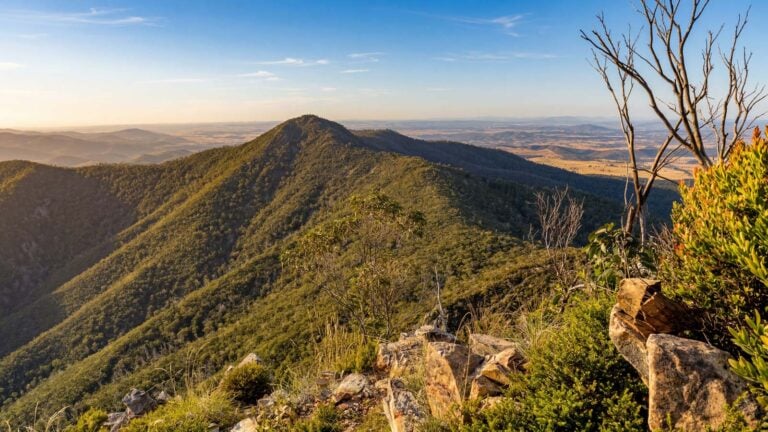
Warrumbungle National Park, near Coonabarabran in north-western New South Wales, is one of Australia’s most distinctive hiking destinations. Defined by dramatic volcanic spires, domes, and ridgelines, the park offers some of the state’s most memorable day walks, ranging from gentle creekside strolls to demanding full-day hikes with expansive views.
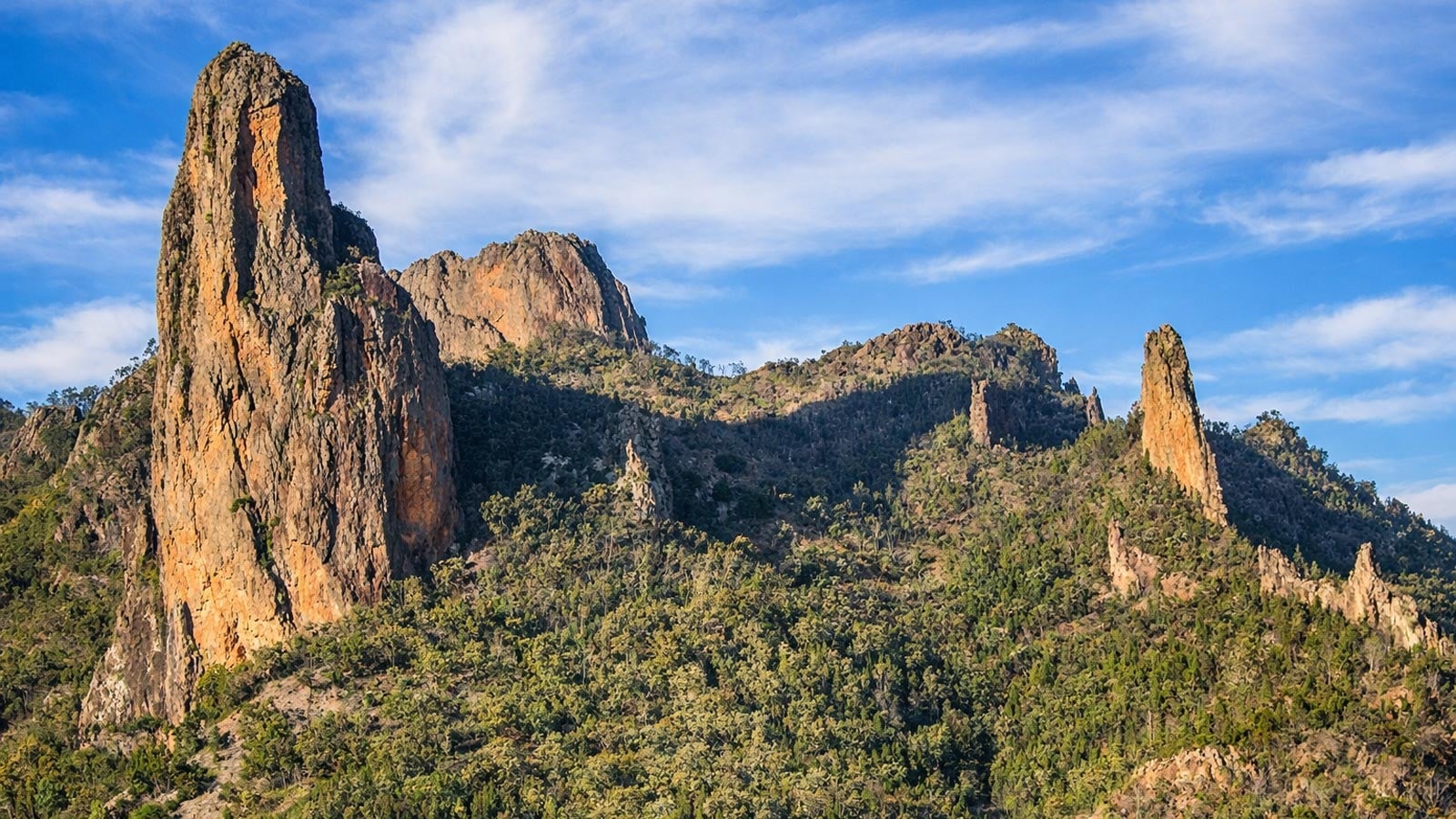
Formed by an extinct shield volcano millions of years ago, the jagged landscape of the Warrumbungles feels both ancient and alive, and once you know that origin story it changes how you read the whole park. Well-established walking tracks provide close-up encounters with features like The Breadknife and Belougery Spire, while higher routes reward effort with sweeping panoramas across forested valleys and open plains. It’s a park where walking is the primary experience, because the geology and the exposure are really the point, not a backdrop to something else.
A landscape shaped by fire and volcanoes
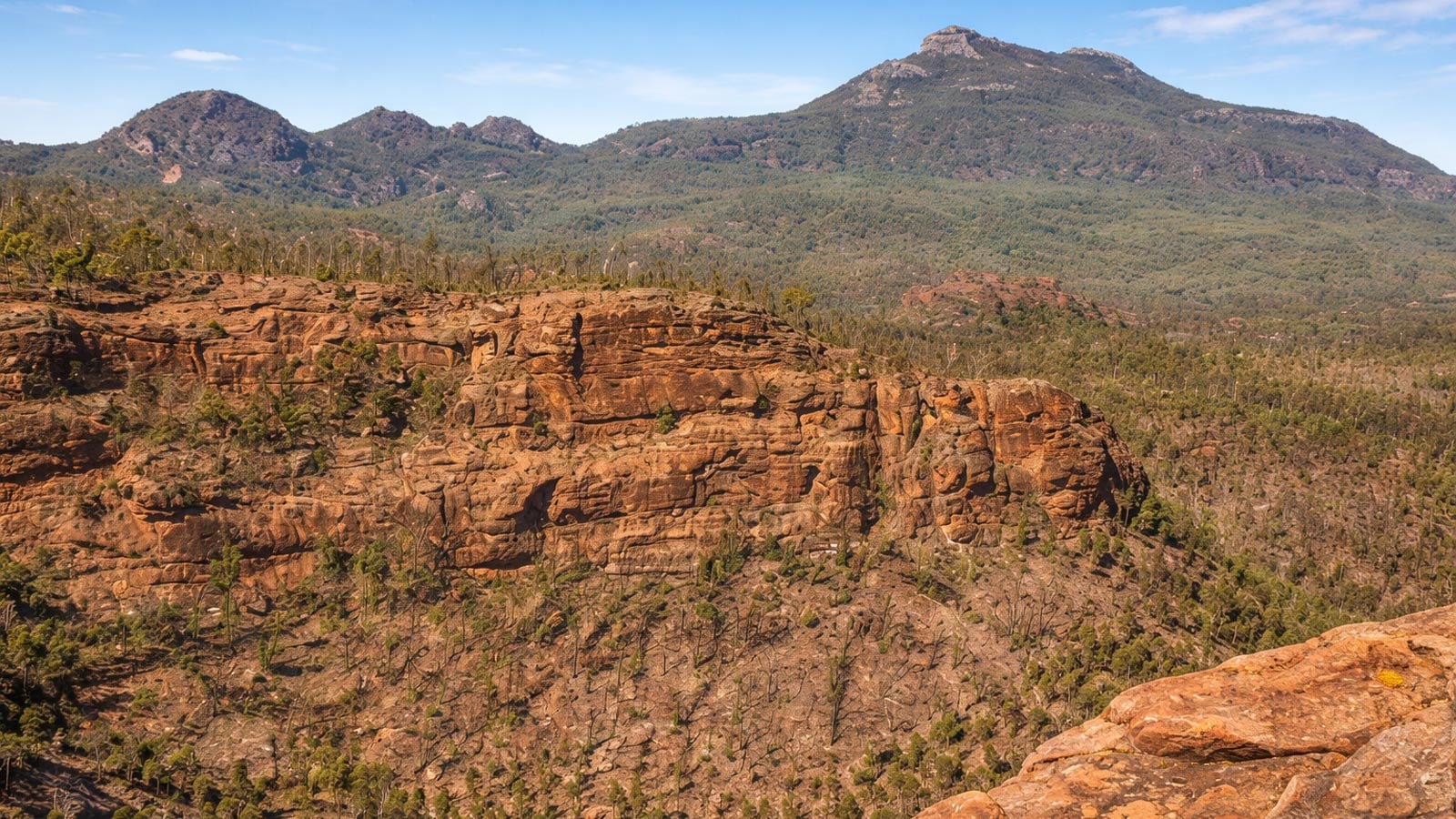
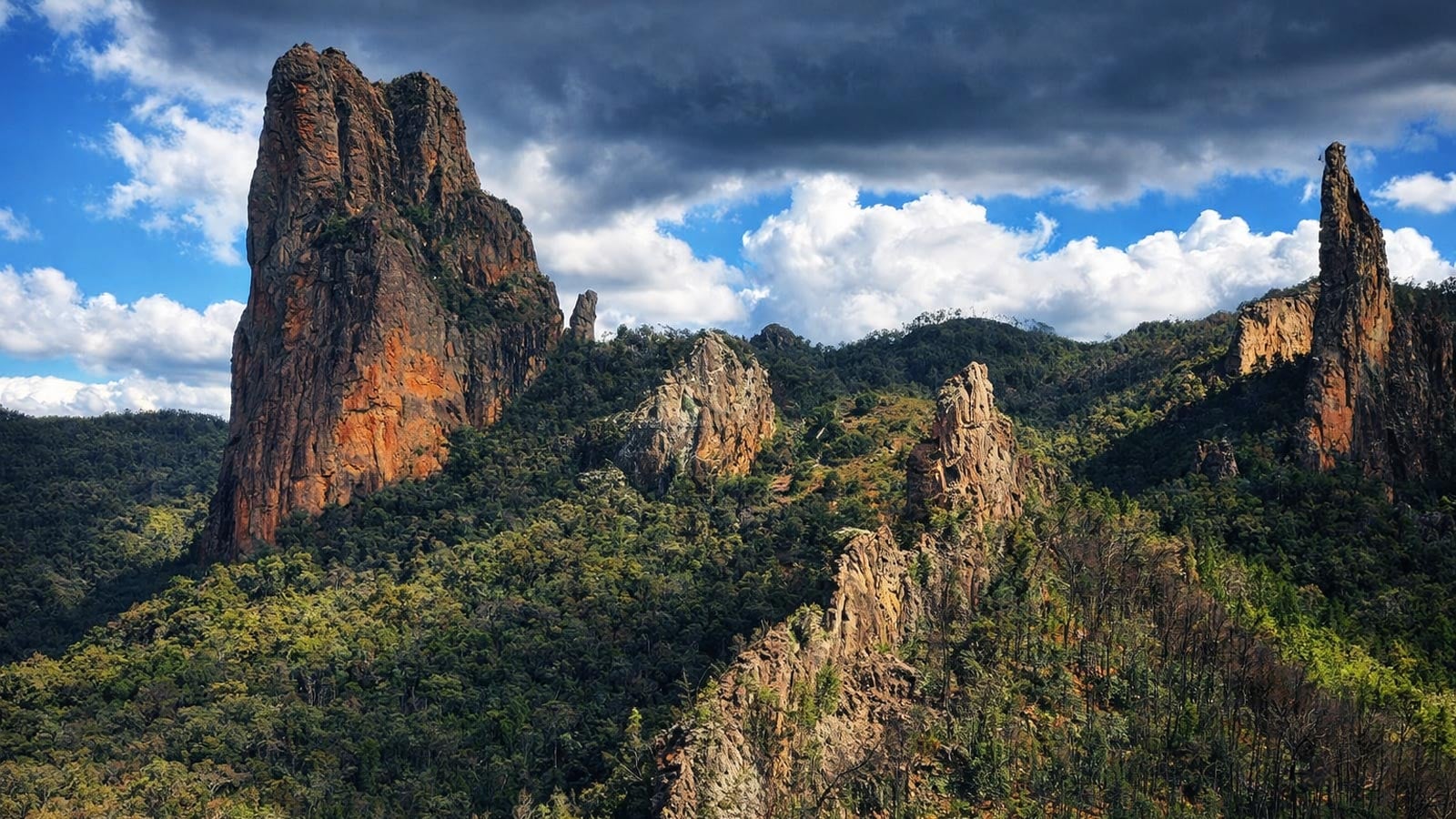
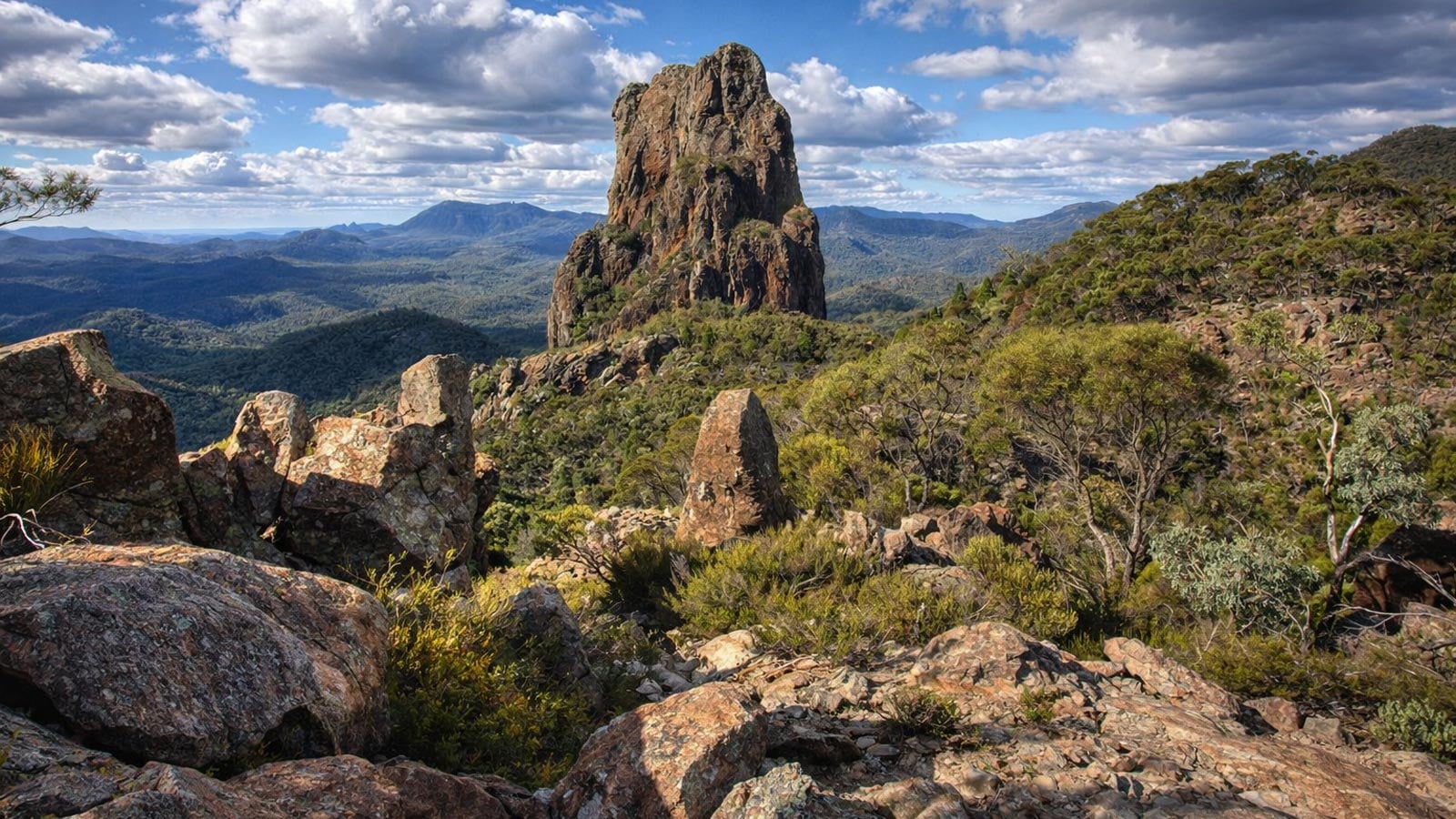
The Warrumbungles are the eroded remnants of a massive volcanic system that once dominated the region. Over time, magma vents, lava domes, and volcanic dykes cooled and hardened, then were slowly carved away by erosion to form the striking skyline seen today. Features such as Crater Bluff, Bluff Mountain, Mount Exmouth, and the iconic Breadknife offer a rare opportunity to walk through a landscape that clearly reveals its volcanic origins, which is part of what makes this park worth the drive out from the coast.
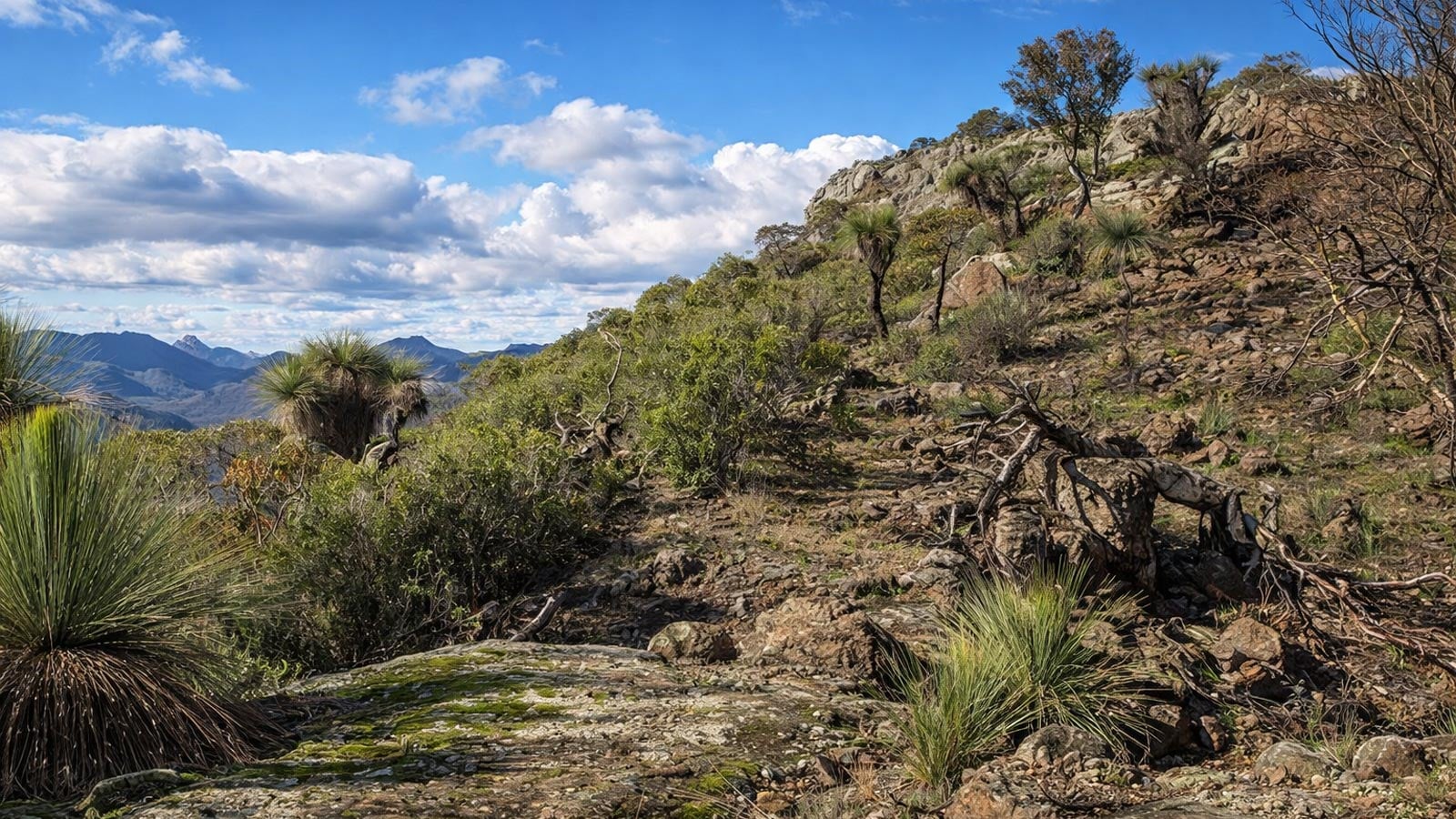
Fire has also played a defining role in the park’s history, and it’s worth understanding this before you go because it explains a lot of what you’ll see on the ground. Severe bushfires in 2013 reshaped large areas of Warrumbungle National Park, affecting vegetation, wildlife, and infrastructure. In the years since, walking tracks, campgrounds, and visitor facilities have been carefully rebuilt, with recovery visible across much of the landscape. Regenerating forests, open views, and modern trail design now sit alongside older volcanic features, adding another layer to the park’s evolving story. So if a section of track looks newer or more open than you’d expect for a place this ancient, that’s usually the fire’s legacy rather than anything wrong with the park.
Walking in Warrumbungle National Park
Walking is at the heart of the Warrumbungle experience. The park offers a well-developed network of tracks that cater to a wide range of abilities, making it possible to enjoy the landscape whether you have an hour or a full day available.
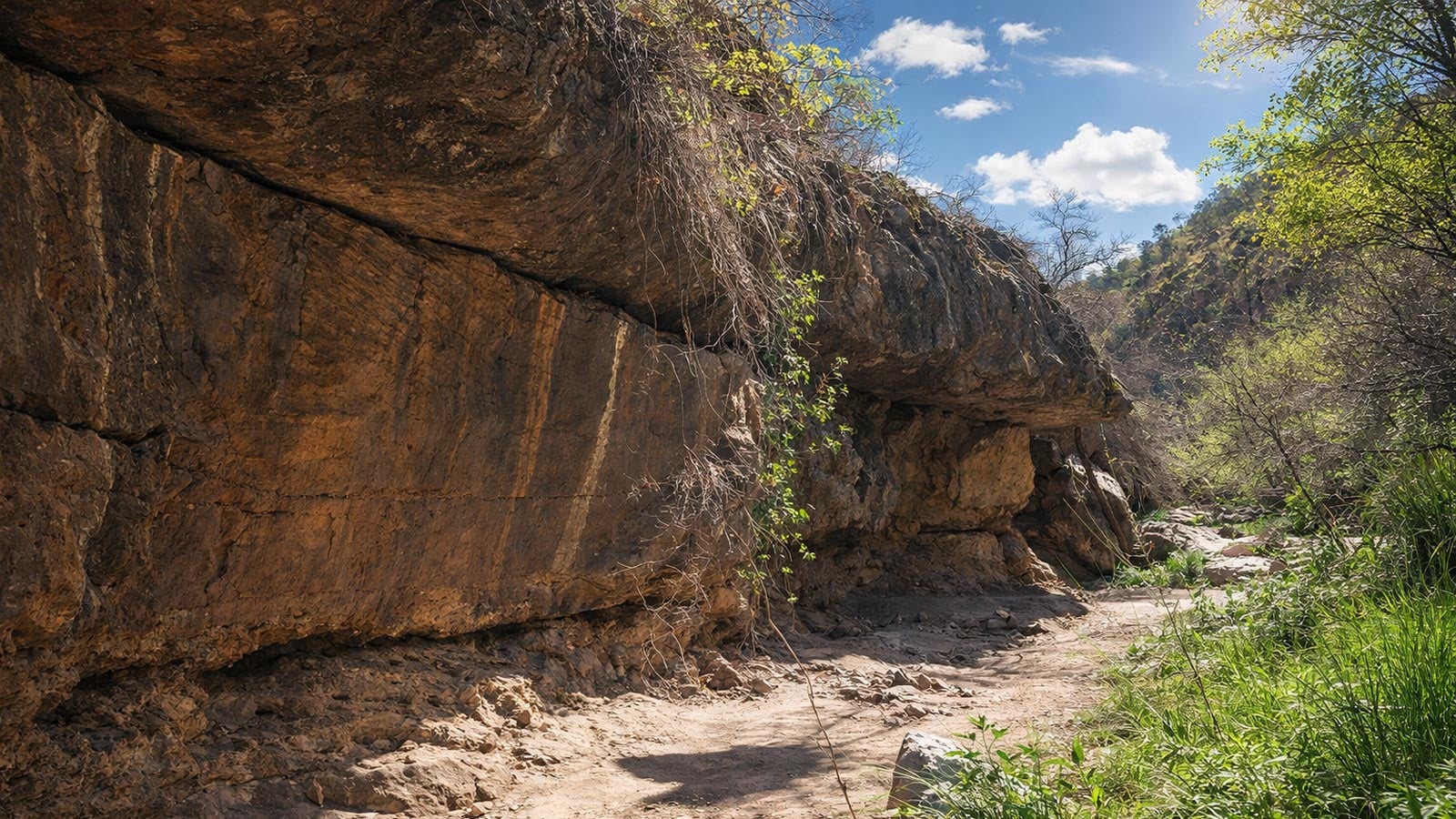
Shorter walks provide an accessible introduction to the park. Tracks such as Tara Cave, Burbie Canyon, and Wambelong follow creeks and sheltered gullies, offering opportunities to learn about Aboriginal heritage, spot birdlife, and enjoy the quieter side of the Warrumbungles. These walks are well suited to families and visitors looking for a relaxed pace without sacrificing scenery.
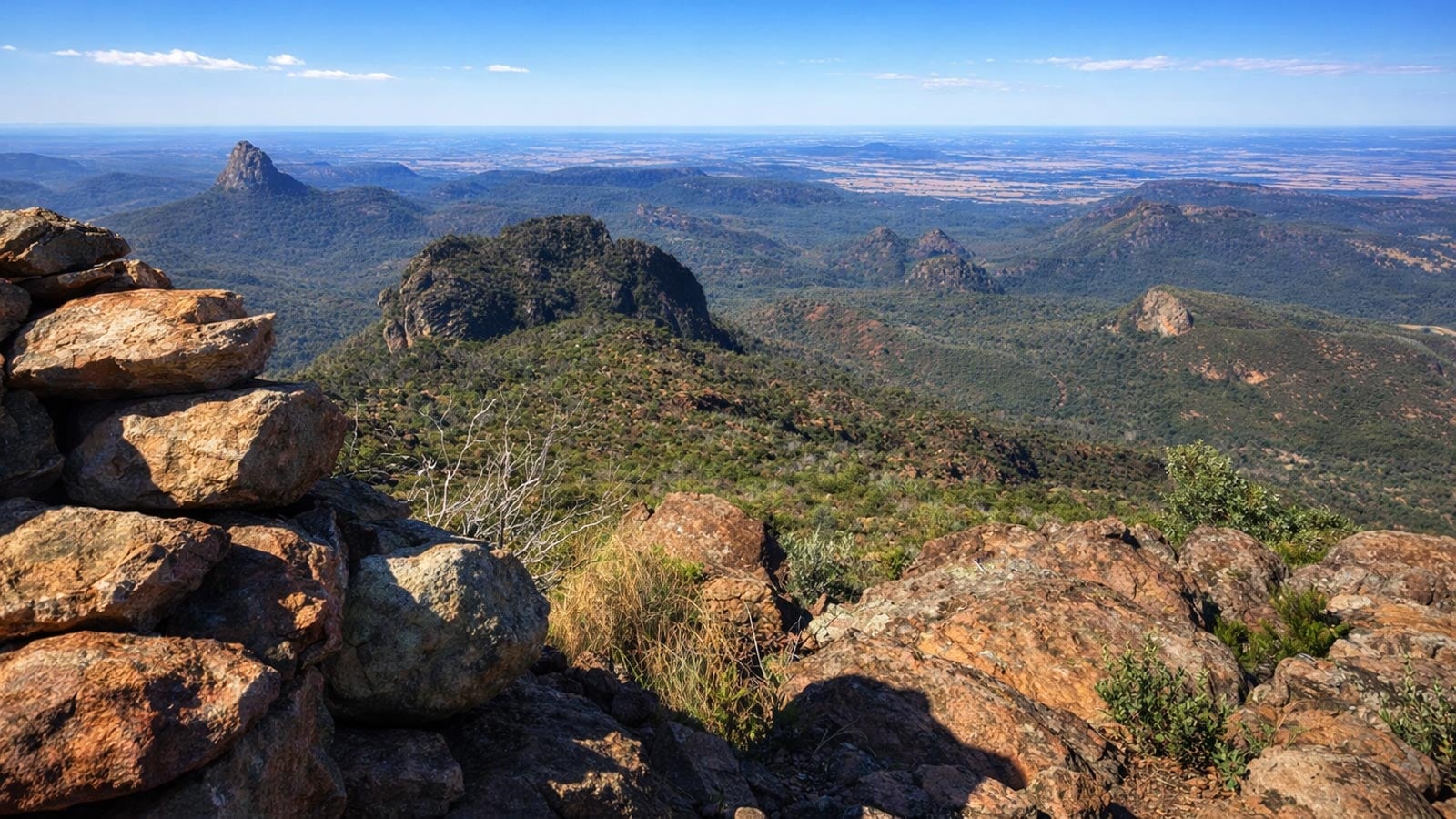
For those wanting a little more elevation and reward, routes like Goulds Circuit and Fans Horizon climb to rocky lookouts with clear views of the park’s volcanic spires. These walks strike a balance between effort and accessibility, revealing the scale and complexity of the landscape without committing to a long day on the track.
The park’s flagship hike is the Breadknife and Grand High Tops walk, and I’d say it earns its reputation as one of the best day walks in New South Wales. This challenging circuit brings walkers close to the Breadknife’s towering volcanic dyke and delivers expansive views across the heart of the park. For experienced and well-prepared walkers, longer routes to Mount Exmouth, Bluff Mountain, and Belougery Split Rock offer more demanding hikes with steeper climbs and exposure.
While many tracks are well formed, some routes are steep, rough, and physically demanding, and the exposure on the higher routes is real rather than decorative. Walkers should be comfortable with sustained climbs, variable weather, and long distances, and should choose walks that match their experience and fitness.
Wildlife, plants, and conservation
Warrumbungle National Park supports a rich diversity of plants and animals, influenced by its varied terrain and microclimates. Open forests, rocky slopes, sheltered gullies, and higher ridgelines each support different species, which is why the park is particularly appealing to birdwatchers rather than a coincidence.
More than 190 bird species have been recorded here, including wedge-tailed eagles, peregrine falcons, turquoise parrots, and emus. Mammals such as koalas, wallabies, wallaroos, and squirrel gliders are also present, although often seen at quieter times of day.
The park is home to several unique plant species, including the Warrumbungle star flower, along with seasonal displays of wildflowers in spring. Conservation efforts are ongoing, including the protection of endangered species such as the brush-tailed rock-wallaby, which has been relocated to predator-free areas within the park to support population recovery.
Aboriginal culture and heritage
The name Warrumbungle comes from the Gamilaraay language and means “crooked mountains,” a fitting description of the park’s jagged terrain. For many thousands of years, this landscape has held deep spiritual and cultural significance for the Gamilaraay, Wiradjuri, and Weilwan peoples.
Aboriginal connections to the land are reflected in sites, stories, and the continued cultural importance of the park today. Walking through the Warrumbungles is also a journey through a living cultural landscape, where plants, animals, and landforms remain closely linked to Aboriginal knowledge and tradition.
Camping and dark skies
Warrumbungle National Park is Australia’s first officially recognised Dark Sky Park, a reflection of its exceptionally clear night skies and minimal light pollution. While walking remains the main draw, the park’s campgrounds offer a rare opportunity to experience the landscape both day and night, and I think that’s worth building into your plans rather than treating as an afterthought.
Several campgrounds are spread throughout the park, ranging from basic sites to those with amenities such as toilets, showers, barbecues, and picnic tables. Camping here allows walkers to start early, avoid day-trip crowds, and enjoy the quiet transition from sunset to starlight. Nearby Coonabarabran, known as the Astronomy Capital of Australia, provides additional accommodation and services.
Practical information
Warrumbungle National Park has a visitor centre and environmental education centre near the main access area, providing maps, information, and current conditions. A valid NSW parks pass is required for entry.
Road access to the park is generally straightforward, though some approach roads are unsealed. Multiple entry points serve different areas of the park, so it pays to plan ahead based on the walks you intend to do.
Weather conditions can vary significantly throughout the year. Summers are often hot, with thunderstorms possible, while winters can be cold, particularly at night. Spring and autumn generally offer more moderate conditions and are popular times for walking, which is worth keeping in mind if you have flexibility on when you go.
A place built for walking
What I like about Warrumbungle National Park is how directly the geology, the history, and the walking connect. The tracks lead straight into the heart of an ancient volcanic landscape, past features that were shaped by processes you can still read in the rock, through country that’s still recovering from the 2013 fires, and across land that carries deep cultural meaning for the Gamilaraay, Wiradjuri and Weilwan peoples. For walkers seeking variety and some of the best day hikes in New South Wales, it’s hard to think of another park that packs as much into a single visit. Find the best walks in Warrumbungle National Park here at Trail Hiking Australia.