A World Heritage Rainforest Less Than 100km From Brisbane
Springbrook National Park, located less than 100km from Brisbane, is part of the Gondwana Rainforests of Australia, a UNESCO World Heritage area that spans Queensland and New South Wales. Some of the trees here have stood since Australia was still connected to Antarctica, and the park shifts between misty rainforest and dramatic cliffs within a short drive. It’s one of the oldest ecosystems on the planet, and it looks and feels like it.
Waterfalls and Cascades
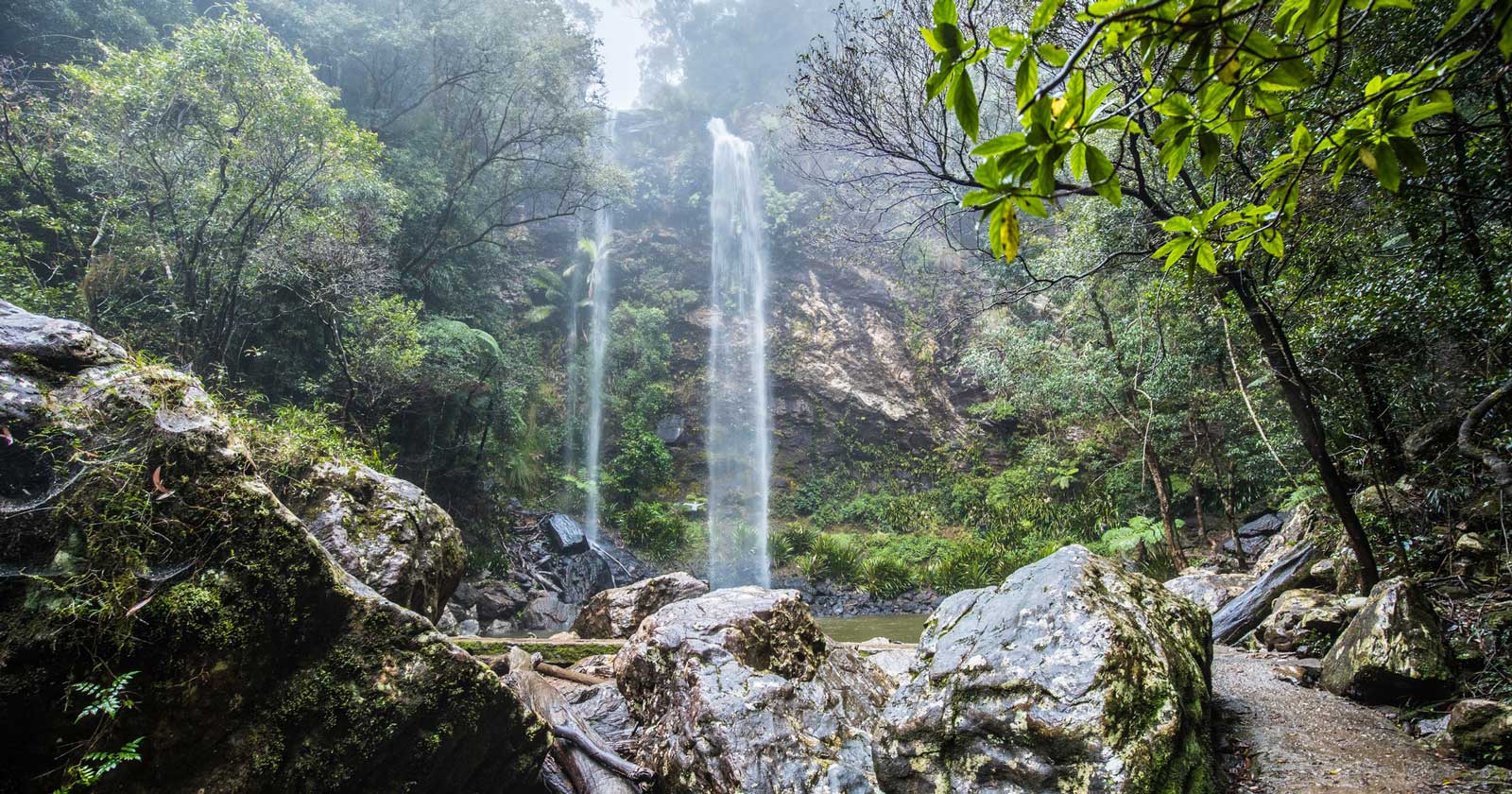
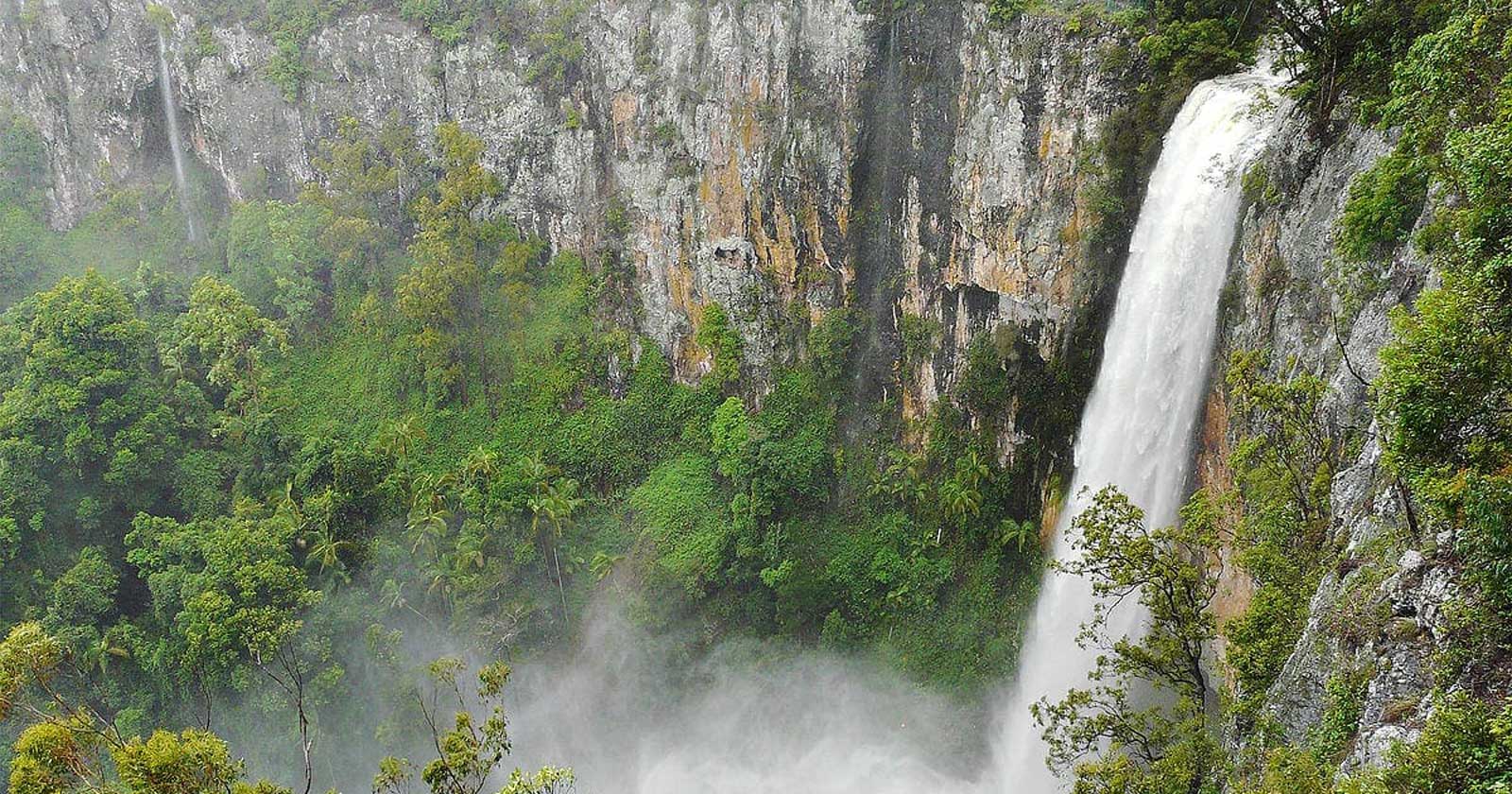
At the heart of Springbrook are its waterfalls and cascading streams, each with its own character. The nearby Twin Falls Circuit is a 4km return journey through lush rainforest to a rock pool beneath a waterfall, worth timing for a swim.
For something more rugged, the Purling Brook Falls Walk takes you through towering trees and across a suspension bridge, with sweeping views of the waterfall plunging into the gorge below. The Warrie Circuit is the bigger undertaking of the three, a 14km loop that takes about five to six hours, passing several waterfalls, meandering creeks and rock pools, descending into a dramatic canyon before climbing back out.
Diverse Flora and Fauna
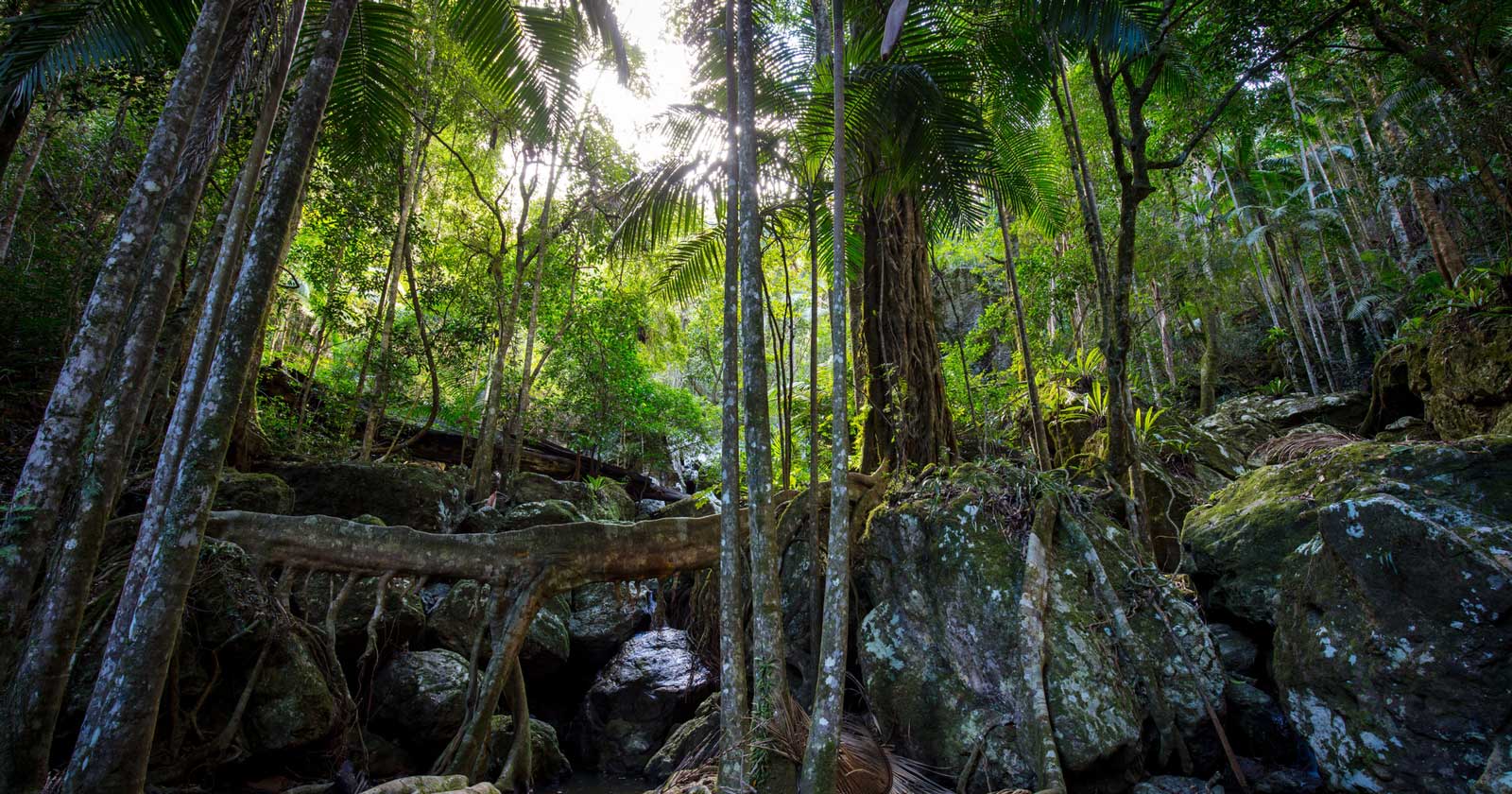
Springbrook is worth visiting for the wildlife alone. Watch for the Albert’s Lyrebird, a rare bird with an estimated 3500 individuals remaining, a figure that comes from a 2000 assessment rather than a current count, so treat it as a historical baseline. You might also spot the land mullet, the world’s largest skink, and pademelons, small marsupials that bounce through the undergrowth. The park also holds a large number of frogs, snakes and birds, making it one of the richer wildlife areas in Australia.
Botanists will find plenty here too. Springbrook itself is home to 1,306 recorded plant species, including 1,152 native species, and many of those lineages trace back to the Cretaceous period, when flowering plants first evolved. The hoop pine and Antarctic beech are living relics from a time long past. Hoop pines can live for up to 450 years, while some Antarctic beech specimens are estimated at close to 3000 years old. A visit to the Best of All Lookout gives you a good look at the ancient trees that dominate this corner of the park, their gnarled trunks and towering branches showing their age.
Hiking Trails
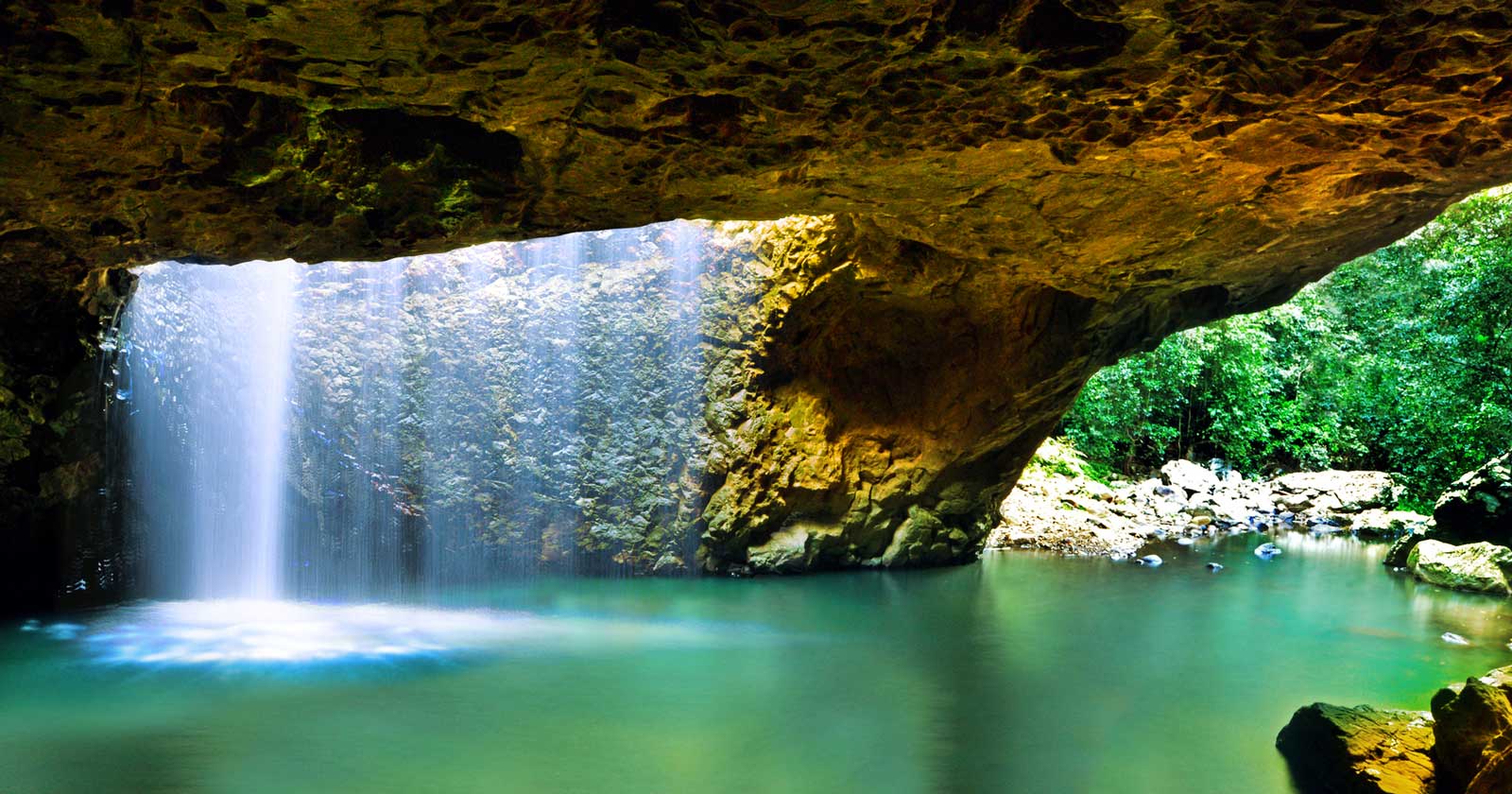
The Natural Bridge Walk is one of the park’s most accessible hikes, and probably its best-known feature: a paved path leads to a waterfall that flows through a natural rock arch and basalt cave. By day it’s a straightforward, pretty walk. After dark, the area’s resident glow-worms come out, which changes the place completely and is worth timing a visit around if you can.
If you’re after a longer trek, the Gold Coast Hinterland Great Walk is a three-day experience through Springbrook’s volcanic geology, ancient flora and diverse wildlife, connecting the World Heritage-listed Lamington and Springbrook plateaus via the scenic Numinbah Valley. This stretch takes in some of the world’s most extensive subtropical rainforest, alongside warm temperate rainforest and pockets of the rarer Antarctic beech cool temperate rainforest.
Weather and Practicalities
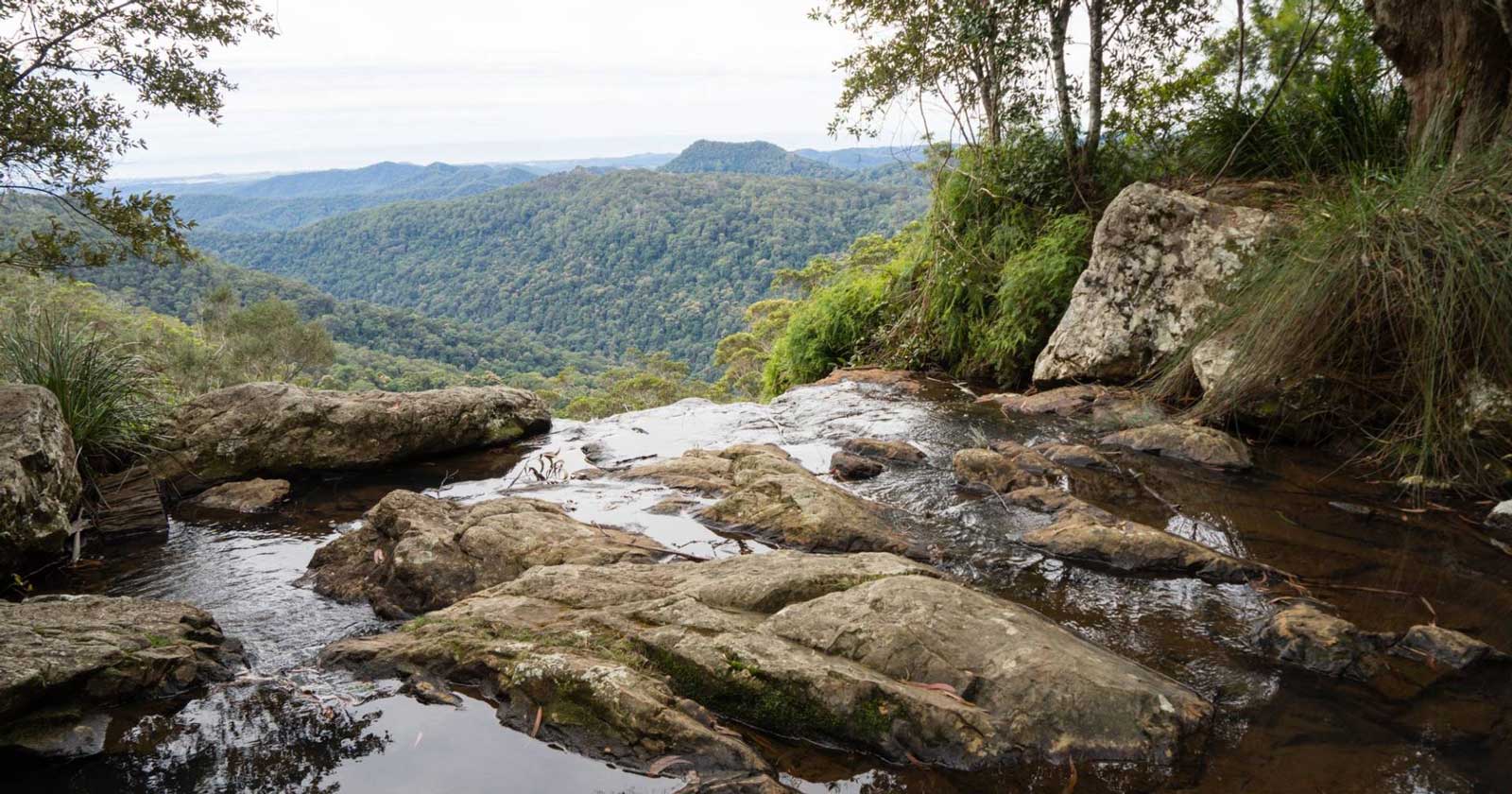
Springbrook is a year-round destination, but it earns its keep in summer. The altitude and dense canopy keep it noticeably cooler than the lowlands, whether you’re walking under the trees or cooling off in one of the park’s rock pools.
Springbrook is accessible by several routes, most commonly through the Springbrook Plateau and Natural Bridge sections. The roads in are steep, winding and narrow, so drive with that in mind. If you’d rather take the scenic route than the shortest one, the road through Numinbah Valley gives you views of the cliffs lining the valley, themselves remnants of an ancient volcanic landscape.
For wheelchair-friendly tracks, the Cascades walking track at the Mount Cougal section runs for 800 metres, and the Buliya-buliya Jagun: Land of Many Little Birds boardwalk is also accessible with assistance.
Springbrook is shaped by millions of years of geological and ecological change, and it still wears that history plainly, in the waterfalls, the ancient trees, and wildlife found nowhere else. Whether you’ve got an afternoon for the Natural Bridge or a few days for the Great Walk, this Queensland park is one of the oldest rainforests left on Earth, and one of the more significant natural places in the country for it. If a short scenic walk is more your pace than an epic multi-day hike, Springbrook has both on offer.




Susi Aso nice.