A hiking tent is more than just shelter. It is where I recover, manage weather, protect gear, and wait out bad conditions if plans change. I treat choosing the right tent as a safety decision, not just a comfort one. The right choice depends on where you hike, when you hike, how many people it must shelter, and how much weather you realistically need to handle.
Australian conditions range from calm, dry bush camps to exposed alpine plateaus, coastal headlands, and remote desert country. A tent that works well in one environment can be a poor or unsafe choice in another. This guide explains the key tent types, designs, and trade-offs so you can choose a tent that matches real hiking use, not marketing claims.
What a hiking tent needs to do
At its most basic level, a hiking tent must provide protection from wind, rain, insects, and overnight temperature changes. In practice, it also needs to manage condensation, withstand uneven ground, cope with variable weather, and be practical to pitch when you are tired or conditions are deteriorating.
A tent that is too light for the conditions can fail when you need it most. A tent that is too heavy or complex can discourage use, slow travel, or increase fatigue. I am not looking for the strongest or lightest tent available, but one that gives me an appropriate safety margin for the trips I actually do.
Season ratings and what they really mean
Tents are commonly described as one-season, three-season, or four-season. These labels are useful, but they are not regulated standards and I treat them as general guidance rather than guarantees.
Three-season tents are the most common choice for Australian hikers. They are designed for spring, summer, and autumn conditions and are suitable for rain, moderate winds, and cool nights. They prioritise lighter weight and ventilation, which makes them comfortable in warmer conditions and practical for longer walks. They are not designed for sustained snow loading or severe alpine storms, but they handle the majority of hiking conditions encountered across Australia.
Four-season tents are built for cold, exposed, and high-wind environments. They use stronger poles, heavier fabrics, and more robust structures to resist wind and snow loading. Ventilation is usually reduced to retain warmth and improve weather resistance. The trade-off is increased weight and reduced airflow, which can make them uncomfortable or impractical outside of true alpine or winter conditions.
A common mistake is assuming a four-season tent is “better” in all situations. In most Australian environments, especially below the alpine zone, a four-season tent is unnecessary and can increase condensation, heat buildup, and pack weight without improving safety.
Capacity and realistic space
Tent capacity is usually stated as one-person, two-person, or more. These ratings assume minimal space, with occupants lying shoulder to shoulder and gear stored outside or in vestibules.
In real use, I have found that sizing up improves comfort and safety. A two-person tent used solo allows room for gear, wet clothing, and better airflow. A two-person tent for two people can feel cramped during bad weather when you are confined inside for extended periods.
When I am assessing capacity, I look at more than just sleeping space. Headroom, internal width, and vestibule size all matter. Space to organise gear, cook safely outside the sleeping area when conditions allow, and avoid contact with wet walls all contribute to a safer and more comfortable camp.
Vestibules and weather management
A vestibule is the covered space created by the tent fly outside the inner sleeping area. Its primary purpose is not comfort, but weather control. In real hiking conditions, a vestibule acts as a buffer between the outside environment and the dry interior of the tent.
A well-designed vestibule lets me open the tent in rain without water immediately entering the sleeping area. It provides protected space for packs, boots, and wet clothing, reducing the chance of soaking insulation or brushing against wet fly fabric when moving inside. On multi-day walks, this separation becomes critical for managing moisture, maintaining warmth, and protecting recovery overnight.
Vestibule size and coverage vary widely between tents. Some provide generous, fully sheltered areas with good overlap between the fly and inner. Others offer minimal coverage or none at all, meaning rain can fall directly into the tent when the door is unzipped. In exposed or consistently wet conditions, poor vestibule design is a common point of failure that leads to wet gear and reduced comfort.
Some hikers use vestibules to manage stoves during bad weather, but I think this requires careful judgement. Vestibules are not designed as cooking spaces, and poor ventilation increases the risk of carbon monoxide buildup, fire, and fabric damage. From a safety perspective, the value of a vestibule lies in weather separation and airflow control, not in making cooking inherently safe.
When I am choosing a tent, I consider vestibule design as part of the overall weather management system. Adequate coverage, controlled access in rain, and the ability to ventilate without letting water in all contribute to safer camps and better decision making when conditions deteriorate.
Single-wall and double-wall tents
The wall design affects weight, ventilation, and condensation management.
Single-wall tents use one layer of fabric for both weather protection and structure. They are lighter and quicker to pitch, which appeals to experienced hikers and alpine users. However, they are more prone to condensation, particularly in humid or still conditions. In much of Australia, where overnight humidity can be high even in cool weather, condensation management becomes a real issue.
Double-wall tents use an inner tent, usually breathable fabric or mesh, combined with a separate waterproof fly. This design improves ventilation and reduces condensation reaching sleeping areas. It also provides flexibility, allowing the inner to be pitched with or without the fly in fair weather. The trade-off is slightly increased weight and complexity.
For most of my Australian hiking, double-wall tents offer better comfort and reliability across a wider range of conditions.
Hiking pole tents and tarp-style shelters
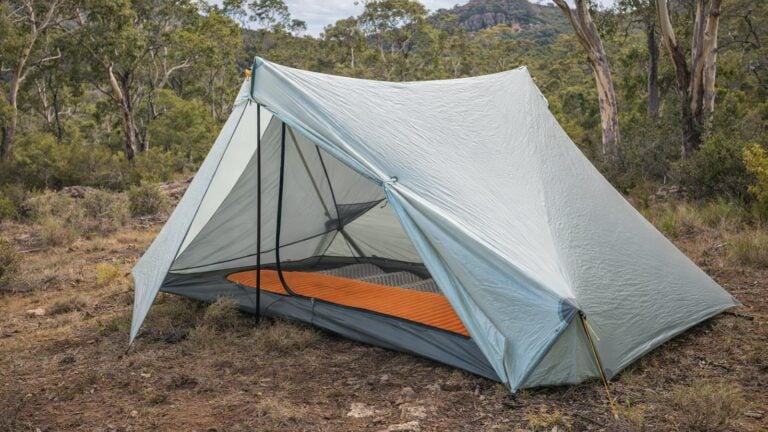
Some lightweight shelters use hiking poles as their primary structure instead of dedicated tent poles. These designs reduce pack weight by sharing equipment you are already carrying and appeal to experienced hikers who prioritise minimalism and efficiency.
Hiking pole tents and tarp-style shelters rely heavily on correct pitching, good campsite selection, and accurate weather judgement. They are typically non-freestanding, offer less insect protection, and provide limited margin for error if wind direction shifts or ground conditions are poor. In humid or buggy environments, they can be uncomfortable or impractical without additional components.
For confident and experienced hikers, these shelters can work well in predictable conditions and open terrain. For most Australian hikers, particularly those walking in variable weather, forested areas, or high insect activity, I think a conventional tent provides greater protection, consistency, and safety with fewer compromises.
Tent shapes and structural stability
The shape of a tent influences how it handles wind, sheds rain, and balances weight against strength.
Dome tents use crossing poles to create a freestanding structure. They are stable, easy to pitch, and versatile across different terrain, including rocky ground where pegs are limited. Their balanced shape handles wind reasonably well from multiple directions, making them a popular all-round choice.
Hoop tents use one or more curved poles to form an arched structure. They are often lighter than dome tents but rely more heavily on correct pegging and orientation to the wind. When pitched well, they can be very efficient, but poor site selection or loose anchoring can compromise stability.
Tunnel tents use parallel hoops to create long, low profiles with excellent internal space for their weight. They are efficient in strong winds when pitched end-on, but they require solid anchoring and good site choice. On exposed ground or in shifting winds, their reliance on pegs can be a limitation.
No design is inherently unsafe. What matters is understanding how each behaves in wind and weather, and choosing one that matches your experience level and likely campsites.
Weight, packability, and real carry costs
Tent weight matters, but I always weigh it against durability and function. Ultralight tents reduce pack weight but often rely on thinner fabrics and narrower safety margins. Heavier tents provide robustness but add fatigue over long distances.
Packability is also important. A tent that packs awkwardly or requires long pole sections can be difficult to carry inside or outside a pack. In rough terrain or scrub, poor pack integration can increase snagging and damage.
For most hikers, a balanced approach works best. Choose the lightest tent that still offers adequate weather protection, durability, and internal space for your typical trips.
Weather resistance and ventilation
Australian weather is often more about wind and rain than snow. A tent must shed water effectively, resist gusts, and ventilate well enough to manage condensation.
I look for full-coverage flies, solid pole structures, and adjustable vents. Good ventilation is not just about comfort. Excess condensation can soak insulation, reduce warmth, and create prolonged damp conditions that affect recovery and decision making on multi-day walks.
A common misunderstanding is that sealing a tent completely improves weather protection. In reality, controlled airflow is essential for keeping the interior dry.
Pitching, setup, and fatigue
How a tent pitches matters when you are tired, cold, or arriving late. Complex setups increase the chance of mistakes, especially in wind or rain. Freestanding designs are generally easier to manage on uneven or hard ground, while non-freestanding tents require more planning and good site selection.
I always practice pitching a new tent before relying on it in remote areas. Familiarity reduces setup time, improves storm worthiness, and lets you recognise when a site is unsuitable.
Common mistakes when choosing a tent
Many issues arise not from faulty tents, but from mismatched expectations.
Buying for rare extreme conditions rather than typical trips often leads to unnecessary weight and discomfort. Choosing based solely on advertised weight can result in fragile shelters that struggle in real weather. Underestimating condensation, particularly in coastal, forested, or humid regions, is another frequent problem.
Finally, ignoring personal comfort and recovery needs can turn a shelter into a liability. A tent that is technically adequate but unpleasant to use is less likely to be pitched early, maintained properly, or relied upon when conditions deteriorate.
Choosing a hiking tent is about aligning shelter performance with the environments you actually hike in. For most Australian hikers, I think a well-ventilated three-season, double-wall tent with proven stability offers the best balance of safety, comfort, and weight. I think in terms of realistic weather, typical campsites, and how tired I will be at the end of the day. A tent should reduce risk and support good decisions, not add stress or false confidence. When chosen carefully, it becomes a reliable part of your safety system, not just another item in your pack.