Hiking pole tents and tarp-style shelters sit between full tents and minimalist bivvys. They appeal to hikers looking to reduce pack weight and bulk by using equipment they already carry, most commonly hiking poles, as part of the shelter structure. When used well and in suitable conditions, these shelters can be effective. When used without sufficient experience or in the wrong environment, they reduce safety margins quickly.
In Australian hiking conditions, where weather can change rapidly and insects are common, these shelters demand more judgement than conventional tents. I’ve pitched both types often enough to know exactly where that judgement gets tested, and this guide explains what hiking pole tents and tarps are, how they work, why some hikers choose them, and where their limitations matter in real use.
What hiking pole tents and tarps are
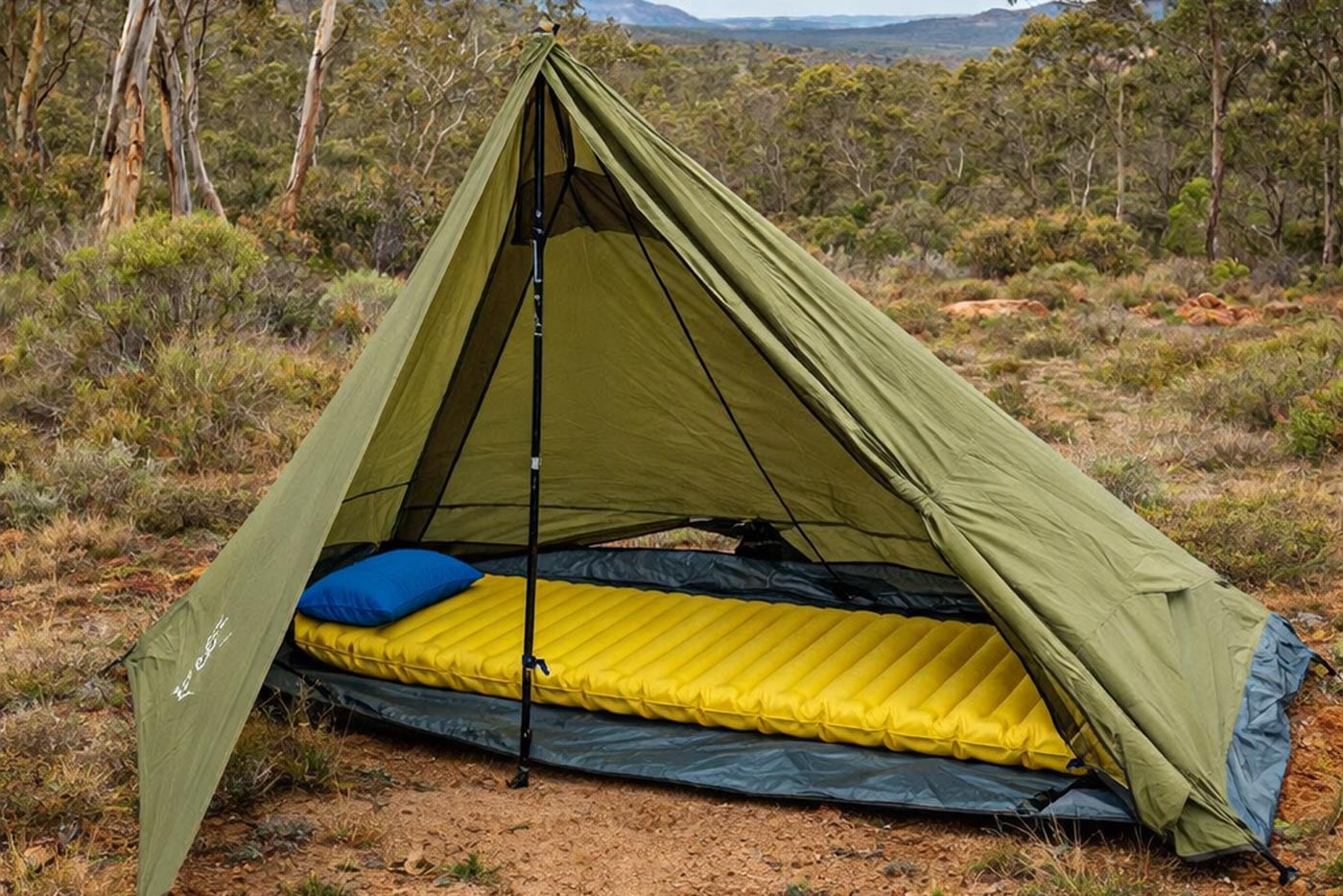
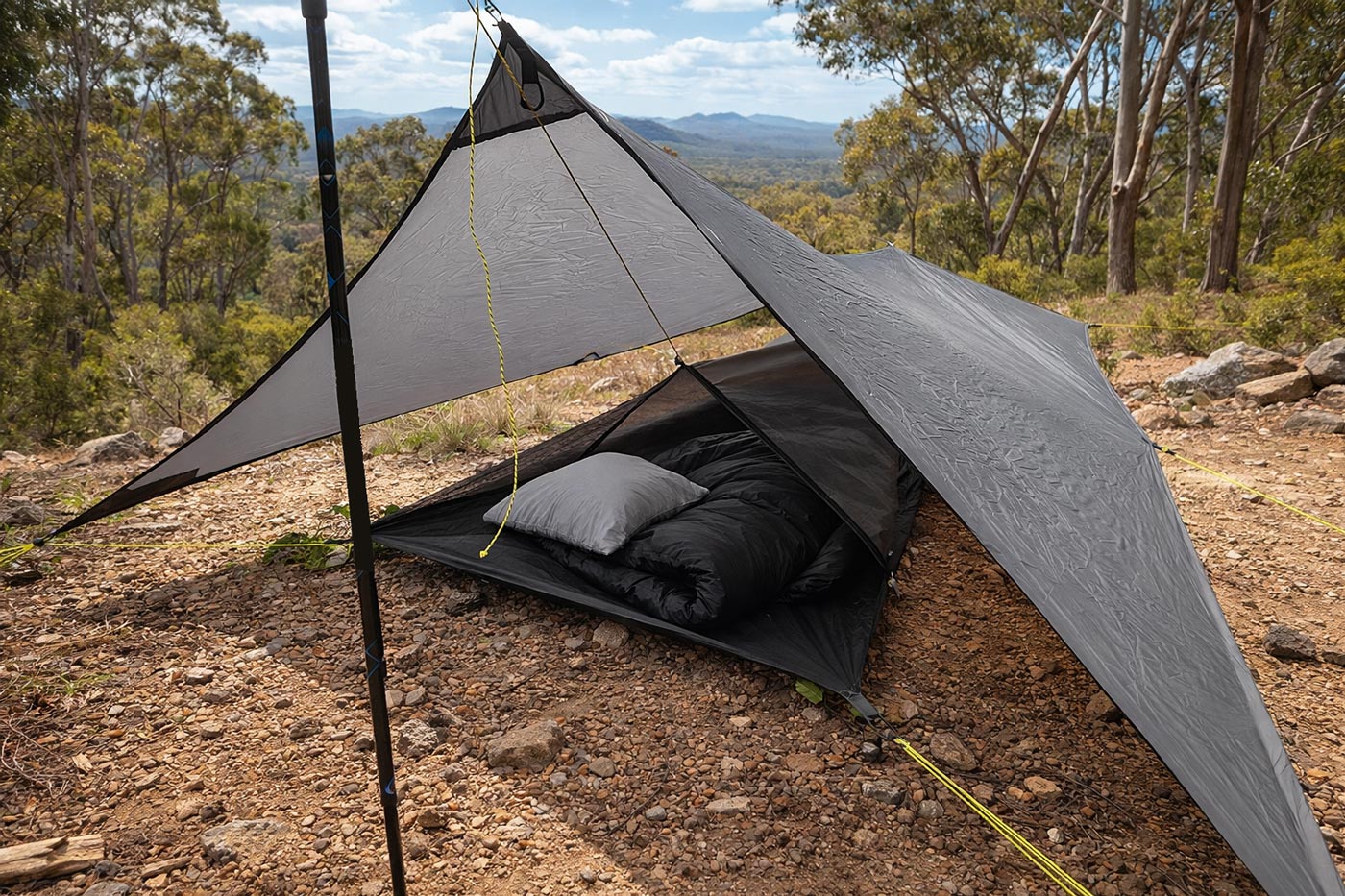
A hiking pole tent is a shelter that relies on trekking poles rather than dedicated tent poles for structure. The poles support tensioned fabric panels that form the shelter once pegged out correctly. A tarp-style shelter is an even simpler version, usually consisting of a shaped or flat sheet of waterproof fabric pitched with poles, guylines, and pegs to create cover from rain and wind.
Both designs reduce weight by removing dedicated poles and minimising fabric. Neither is freestanding, and both depend entirely on correct pitching, good anchoring, and appropriate site selection to perform as intended.
Why hikers choose these shelters
The primary reason hikers choose pole tents and tarps is weight reduction. By sharing equipment, such as using trekking poles already carried for walking, overall pack weight and volume can be reduced. These shelters also pack down small and can be flexible in how they are pitched, which appeals to experienced hikers who value efficiency and adaptability.
Some hikers also prefer the openness of tarp-style shelters in warm or dry environments. When conditions are settled, they can provide excellent airflow and a close connection to the surrounding landscape without the enclosure of a traditional tent.
Structure, pitching, and reliance on skill
Unlike freestanding tents, pole-supported shelters rely entirely on tension. Every peg, guy line, and pole angle contributes to the shelter’s stability. Small errors in pitch can lead to sagging fabric, poor runoff, reduced ventilation, or collapse in wind.
This reliance on skill matters when conditions deteriorate. Pitching a tarp or pole tent well when tired, in rain, or in gusty wind is significantly harder than pitching a conventional tent. In poor conditions, the margin for error is smaller, and the consequences of a poor pitch are greater. I’ve had to re-peg a tarp at midnight in rising wind, and it’s a different job entirely to doing the same thing calmly in daylight.
Weather protection and exposure
Hiking pole tents and tarps provide less consistent weather protection than conventional tents. While many pole tents have full enclosures, they often sit higher off the ground or rely on open ends for ventilation. Tarps are even more exposed, offering limited protection from wind-driven rain or shifting weather.
In Australia, sudden downpours, variable wind direction, and storms that arrive overnight can quickly overwhelm poorly pitched or lightly protected shelters. Without a rigid structure or fly-to-inner separation, managing prolonged rain becomes more difficult, and water can enter sleeping areas easily.
Insects and environmental factors
Insect protection is a major consideration. Many tarp setups offer no built-in insect barrier, and some pole tents use lightweight mesh that reduces airflow when fully enclosed. In mosquito-prone, coastal, or forested areas, this can significantly affect comfort and sleep quality.
Ground conditions also matter more with these shelters. Because they often have open or minimal floors, careful site selection is essential to avoid water pooling, runoff, or cold air settling around the sleeping area. Poor drainage that might be tolerable under a tent can become a serious issue under a tarp.
Condensation and ventilation trade-offs
One advantage often cited for tarp-style shelters is ventilation. In dry conditions, this can be true. However, when weather forces a more closed pitch, airflow is reduced and condensation can still occur, particularly in humid environments.
Pole tents with full enclosures can also suffer from condensation if ventilation is restricted to manage rain or wind. Without the buffer of a double-wall tent, moisture control relies heavily on pitch quality and site choice.
Comfort, recovery, and livability
These shelters offer limited internal space and very little protection for tasks other than sleeping. Changing clothes, organising gear, or waiting out bad weather often requires exposure to the elements. On short trips this may be tolerable. On multi-day walks, reduced comfort and poor recovery can compound fatigue and affect decision making.
While experienced hikers may accept these compromises for weight savings, they are often underestimated by those new to minimalist shelter systems.
Common mistakes and misunderstandings
A common misunderstanding is assuming hiking pole tents and tarps are simply lighter tents. In reality, they are different tools with different failure modes. Another mistake is choosing these shelters without considering insect pressure, ground conditions, or the likelihood of prolonged rain.
Some hikers also overestimate their ability to pitch effectively in difficult conditions. Practising in fair weather does not always translate to reliable performance when tired, cold, or rushed.
Making the call
Hiking pole tents and tarp-style shelters are not unsafe by default, but they are specialised options that demand experience and restraint, and I’d only reach for one when I know the conditions suit it. They work well for experienced hikers in settled weather, open terrain, and environments with low insect activity, particularly on short trips, fast-and-light objectives, or in regions where dry conditions are reliable. They can also earn their place as part of a broader shelter system, such as pairing a tarp with good ground insulation and weather awareness, rather than being relied on as a single piece of gear.
For most everyday Australian hikers, though, particularly on multi-day walks, in variable weather, or in forested and coastal regions, these shelters often reduce safety margins rather than improve them. The reliance on skill, exposure to insects, and limited ability to manage poor weather make them a poor default choice, and in many cases the modest weight savings do not outweigh the consistency, protection, and recovery benefits of a conventional tent. For hikers who value predictability, comfort, and resilience across changing conditions, a tent remains the most reliable shelter choice. For those with the experience to manage exposure and accept the trade-offs, pole tents and tarps can have a place, provided their limitations are clearly understood and respected.