Hartz Mountains National Park sits at the southern end of Tasmania’s Huon Valley, offering one of the state’s most accessible introductions to alpine walking. Rising above the surrounding farmland, the park’s high dolerite backbone forms a natural balcony over the vast south-west wilderness. From well-formed boardwalks and gentle alpine strolls to more demanding summit walks, Hartz delivers a powerful sense of Tasmania’s high country without requiring multi-day commitments or remote access.
Despite its accessibility, this is a genuine alpine environment. Weather can change rapidly at any time of year, snow is possible even in summer, and conditions on the plateau can shift from calm to hostile with little warning. Hartz rewards preparation, patience, and respect, offering a deeply atmospheric experience for those willing to slow down and read the landscape.
A landscape shaped by ice and time
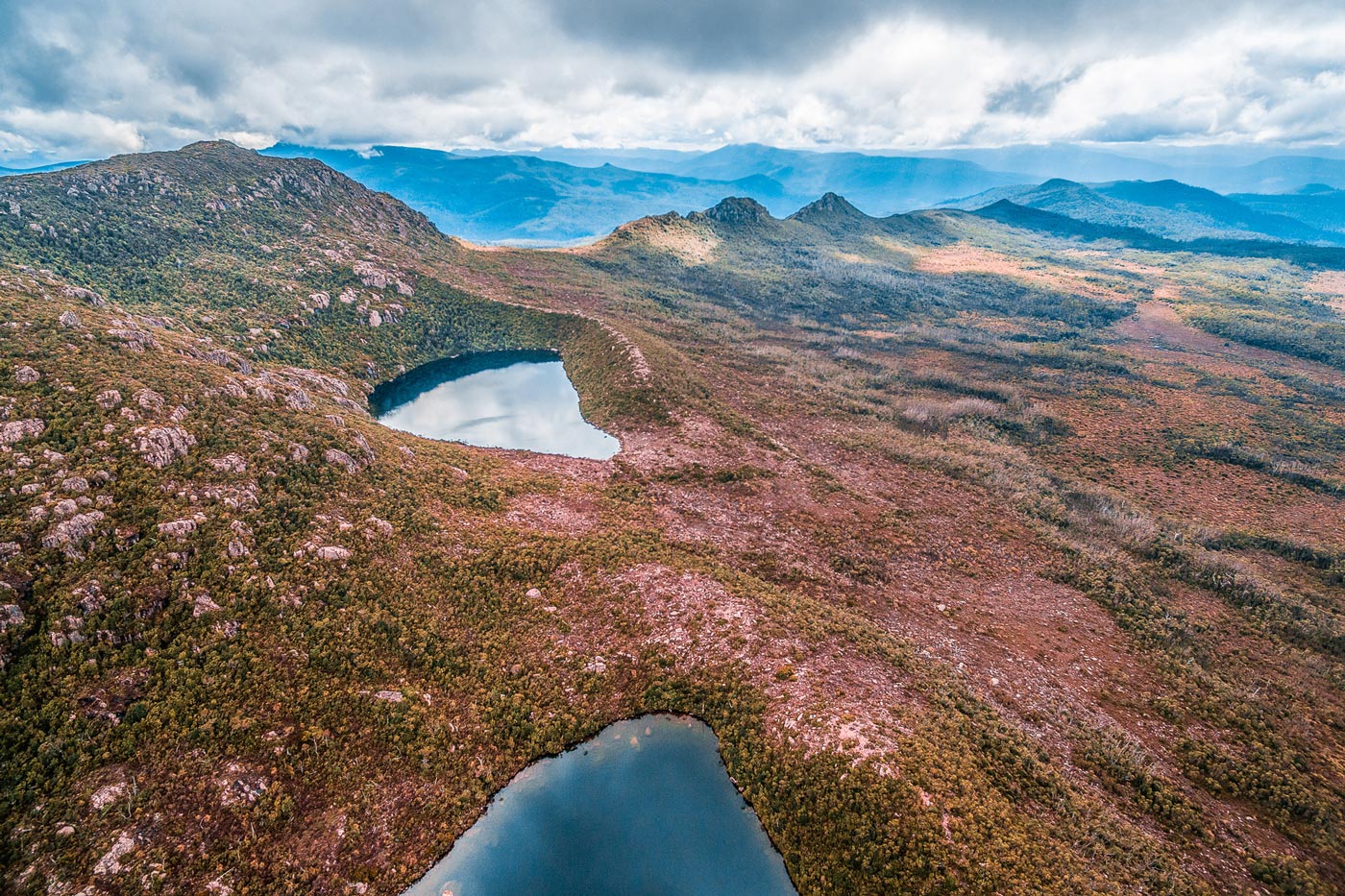
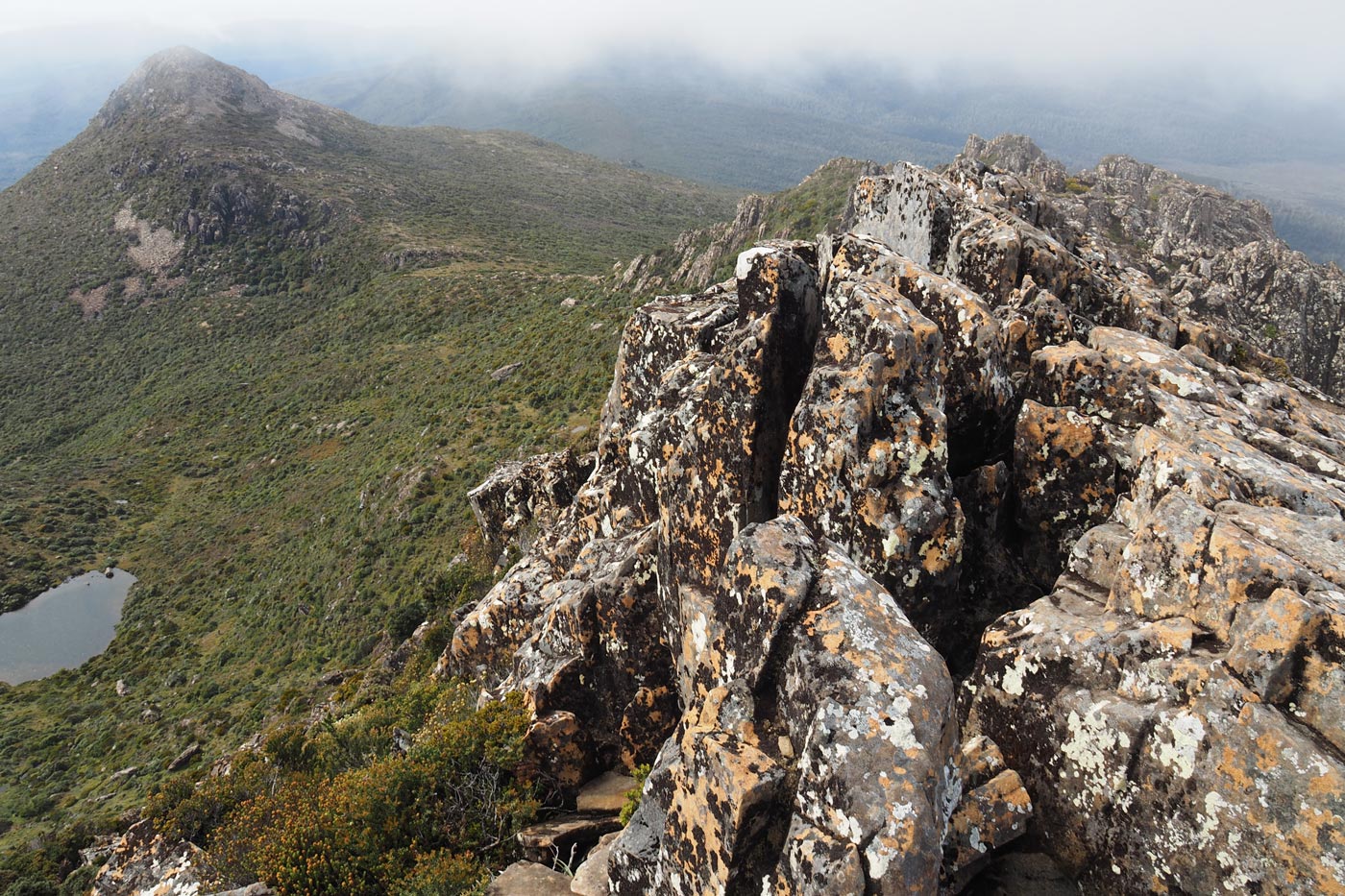
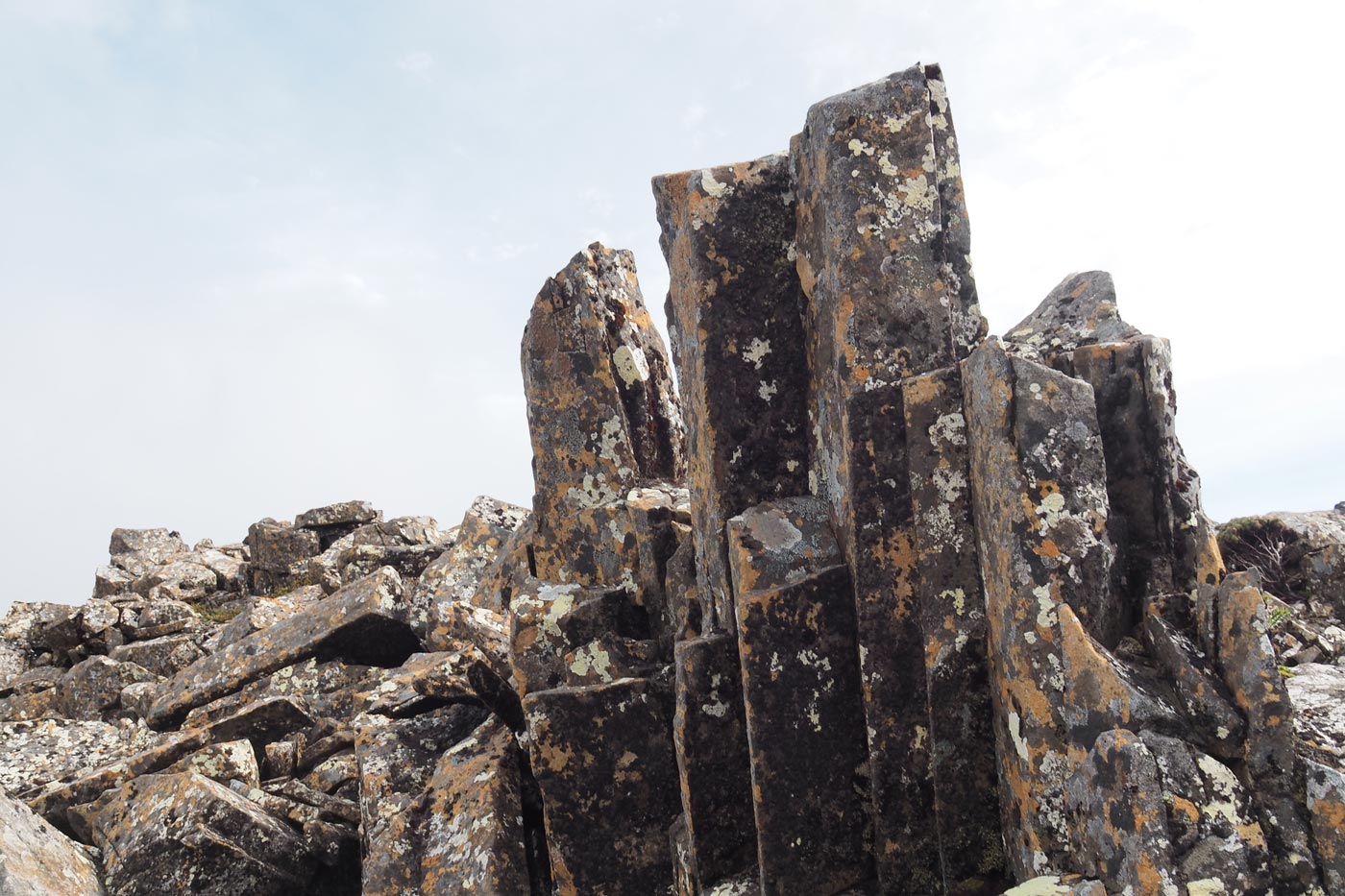
The defining feature of Hartz Mountains National Park is its long spine of dolerite, rising to 1,254 metres at Hartz Peak. This hard, resistant rock intruded into the earth’s crust during the breakup of Gondwana and now forms the backbone of the range, standing above softer sedimentary rocks at lower elevations.
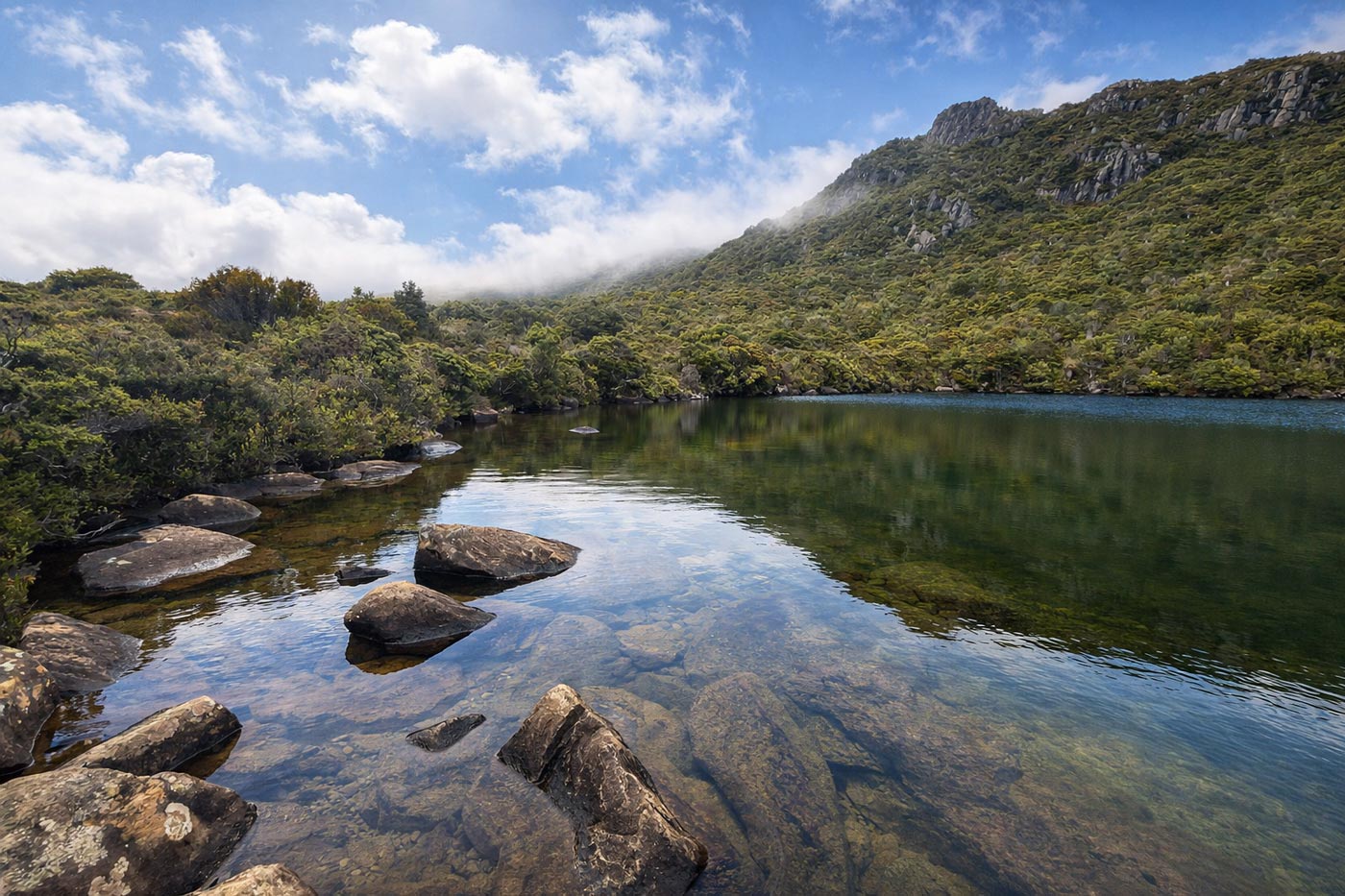
During the last Ice Age, glaciers carved cirques, tarns, and troughs across the plateau. Today, small glacial lakes sit tucked beneath ridgelines, and open alpine moorlands stretch between rocky outcrops. These features give Hartz its distinctive character and provide walkers with a clear glimpse into the processes that shaped Tasmania’s rugged south-west.
From many points along the plateau, views extend across seemingly endless mountain ranges toward the Southern Ocean, while turning back reveals gentler outlooks over the Huon Valley. This contrast between wild and settled landscapes is one of Hartz’s most compelling qualities.
Walking the Hartz Mountains
Hartz Mountains National Park is particularly popular with bushwalkers because it offers a wide range of well-graded day walks in a compact area. Tracks lead through cool rainforest, subalpine woodland, and exposed alpine terrain, with many walks achievable in a half day or less.
Short walks such as Lake Osborne provide an easy introduction to the park, following firm, well-formed tracks to a small glacial lake fringed by ancient King Billy pines. These accessible routes offer rich scenery without demanding significant time or experience, making them suitable for most visitors.
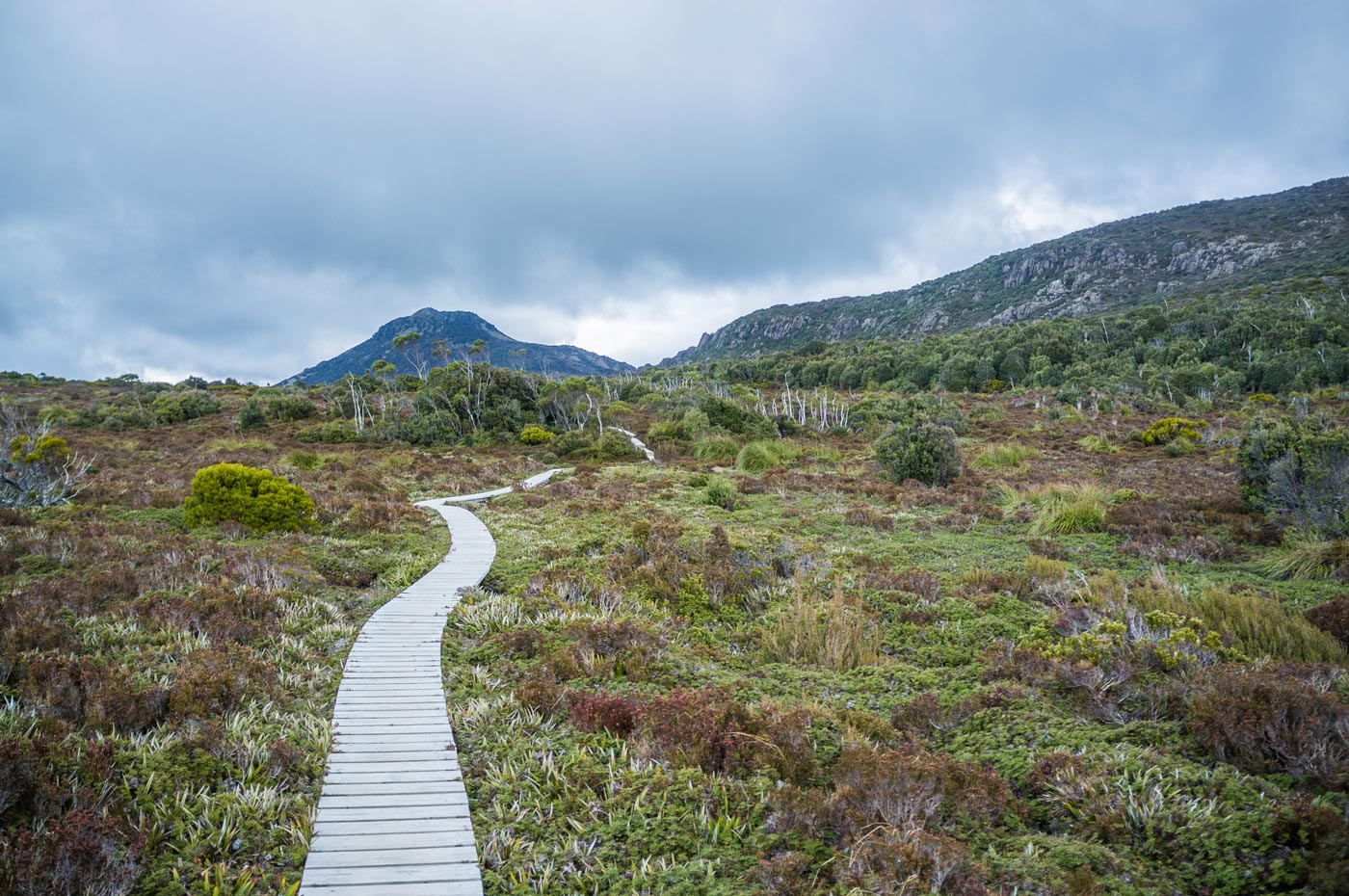
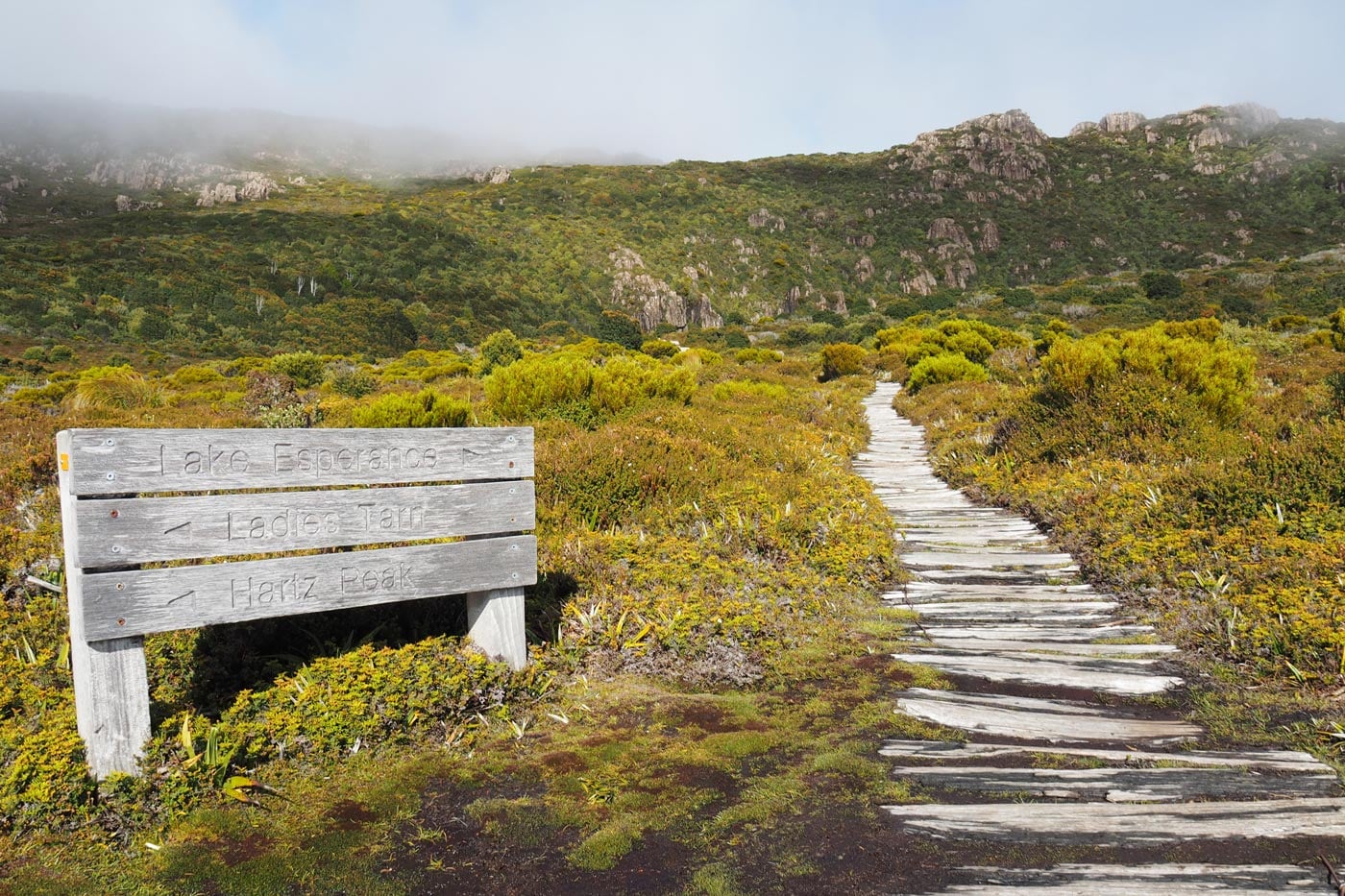
For those wanting to explore further, walks to Lake Esperance and Ladies Tarn venture deeper onto the alpine plateau. Boardwalks help protect fragile vegetation, but snow and ice can make surfaces slippery at any time of year. These walks balance effort and reward, offering classic alpine scenery and a strong sense of place.
The Hartz Pass walk sits at the heart of the park’s walking network, guiding walkers across open moorland toward the base of Hartz Peak. From here, the landscape feels broader and more exposed, and the influence of weather becomes more apparent. It is a walk that encourages awareness, observation, and flexibility.
For experienced walkers seeking a more demanding outing, Hartz Peak provides the park’s highest point and its most expansive views. While the route is considered accessible for an alpine summit, it remains exposed and unforgiving in poor conditions. Cloud, wind, and sudden temperature changes are common, and good judgement is essential.
Beyond the main tracks, some routes become rougher and less defined. These are best left to confident hikers with strong navigation skills and a willingness to turn back if conditions deteriorate.
Wildlife and alpine ecology
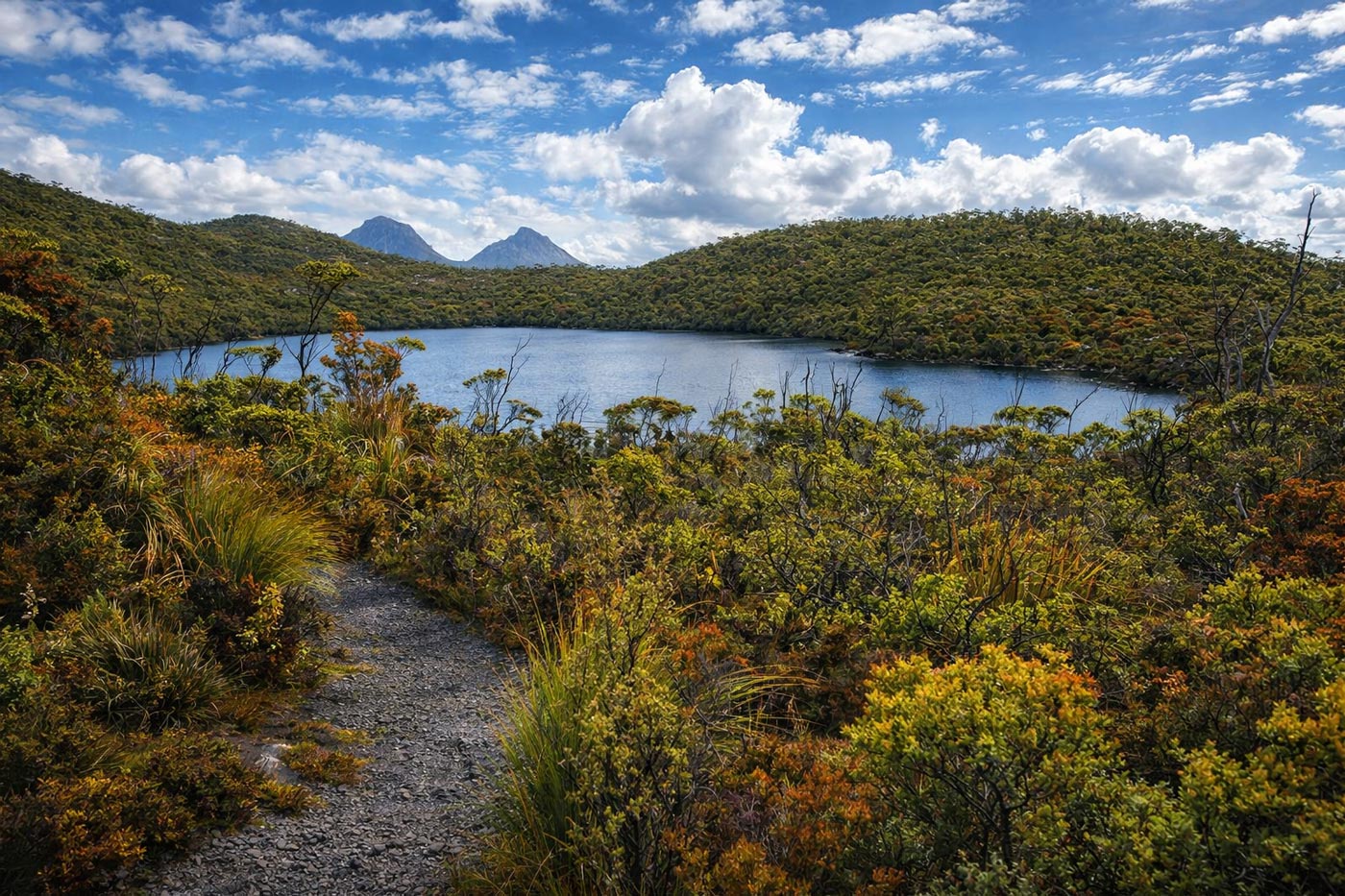
Hartz Mountains National Park protects a diverse range of plant communities shaped by altitude, exposure, and climate. Lowland forest gives way to subalpine woodland and open alpine heath, where cushion plants and hardy shrubs cling to waterlogged soils and fierce winds.
In late spring and early summer, the park is transformed by wildflowers, including the striking red blooms of the Tasmanian waratah. These displays add vivid colour to an otherwise muted alpine palette.
Wildlife encounters are often subtle rather than spectacular. Echidnas and platypus may be seen during the day, while wallabies, pademelons, and brushtail possums are more active at dusk. Birdlife includes honeyeaters, green rosellas, and eastern spinebills, with calls often carrying across the open plateau.
These ecosystems are sensitive and slow to recover from damage. Staying on formed tracks is essential, both for personal safety and for the protection of fragile alpine vegetation.
Cultural history and heritage
The Hartz Mountains area holds ongoing significance for today’s Tasmanian Aboriginal communities. The land is traditionally associated with the South East nation, with the Mellukerdee people linked to the Huon region. Aboriginal people moved between coastal and inland areas, drawing on a wide range of resources including shellfish, wallabies, and plant foods.
European use of the area began with timber-getters searching for Huon pine and routes west toward Port Davey. In the early twentieth century, eucalyptus oil extraction became an important local industry, leaving subtle traces across the landscape.
Recognised for its outstanding natural beauty, the area was first reserved as a Scenic Reserve in 1939 before being declared a national park. Today, Hartz forms part of the Tasmanian Wilderness World Heritage Area, reflecting its ecological and cultural importance.
Facilities and practical information
Facilities within Hartz Mountains National Park are basic but thoughtfully placed. Near the end of the access road, a visitor shelter provides protection from the weather, along with picnic tables and water. Accessible toilets are located nearby. Additional picnic facilities can be found near the Waratah Lookout track.
There is no reliable mobile phone reception in the park, and visitors should not rely on electronic devices alone for navigation or safety. Drinking water should be carried, and conditions should always be checked before setting out.
A valid parks pass is required for entry to Tasmania’s national parks.
There is no camping or accommodation within Hartz Mountains National Park. Geeveston is the closest town and the most practical base for visitors, with services, supplies, and accommodation options. The park can also be visited as a longer day trip from Hobart.
Getting there
Hartz Mountains National Park is approximately 90 kilometres south-west of Hobart, with a typical driving time of around 90 minutes. From Geeveston, follow Arve Road for about 13 kilometres to the clearly signposted park turn-off. The final 10.5 kilometres are unsealed.
Road conditions can change quickly, particularly in winter, and closures are common when snow or ice is present. Vehicles should not proceed in snowy conditions unless properly equipped with chains. There are no rangers based in the park, so visitors must be self-reliant.
Where possible, avoid driving at night, as wildlife is common on the access roads.
Seasonal conditions and safety
Hartz Mountains National Park experiences alpine weather year-round. Snow, rain, strong winds, and sudden temperature drops are all possible at any time, even when conditions are mild in the Huon Valley below. Boardwalks and steps can become icy, and cloud can reduce visibility to just a few metres.
Appropriate clothing and footwear are essential, including waterproof layers, warm insulation, and sturdy boots. Walk registration is required, even for short walks, and visitors must remember to sign out when they leave.
Fires are not permitted in the park, and fuel stoves only may be used where cooking is allowed.
A destination shaped by weather and patience
Hartz Mountains National Park is not a place to rush. Its rewards come from moving steadily, watching the sky, and allowing the landscape to reveal itself. On clear days, the views stretch deep into Tasmania’s wild south-west. In poor weather, the park takes on a raw, introspective mood that highlights the power of the alpine environment.
For walkers seeking an accessible but authentic high-country experience, Hartz offers something rare. It is a place where short walks can feel significant, where preparation matters, and where the mountains quietly set the terms. Find the best walks in Hartz Mountains National Park here at Trail Hiking Australia.




Love this National Park. We were lucky to have incredible views across to Fed Peak when we were last there.