Choosing a hike that matches a child’s ability, not adult expectations
Deciding whether a hike is suitable for kids is one of the most important choices a family can make before heading outdoors. Many problems on family walks do not come from poor behaviour or lack of motivation, but from choosing a walk that exceeds a child’s physical, emotional, or situational capacity.
This guide helps parents and carers assess a hike realistically. It focuses on terrain, conditions, exposure, and margins for error rather than distance alone, so families can make conservative, informed decisions before setting foot on the track.
Distance is rarely the most important factor
Distance is often the first thing people look at when choosing a hike, but for kids it is usually the least reliable indicator of difficulty. Short walks with steep climbs, rough footing, or prolonged exposure can be far more demanding than longer walks on gentle, well-formed tracks. Children also fatigue faster on uneven terrain, where balance and concentration matter as much as endurance. When assessing suitability, distance should always be considered alongside terrain and conditions.
Terrain, exposure, and consequences matter more
Ask yourself:
- Is the track smooth or uneven?
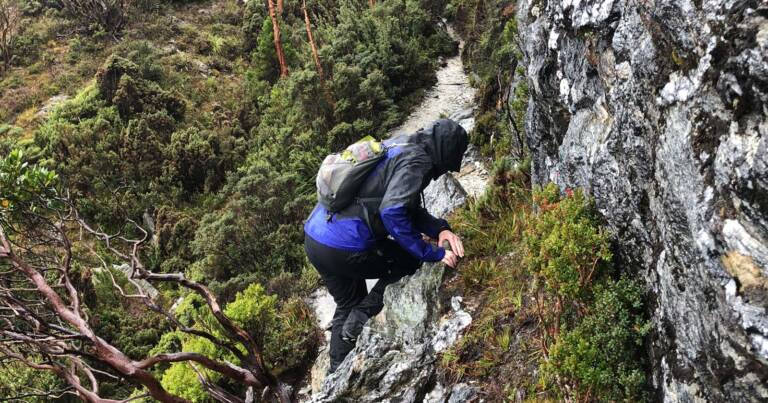
- Are there steep drops, narrow ledges, or slippery surfaces?
- What happens if a child stumbles or loses focus?
Kids are naturally curious and easily distracted. On tracks where a misstep has serious consequences, supervision needs increase and margins shrink quickly. A hike can be physically easy but still unsuitable if exposure is high.
Time, daylight, and turnaround points
Children move more slowly and require more frequent breaks. This means hikes often take longer than expected, especially when exploration, snacks, and rest stops are factored in.
Before committing to a walk, consider:
- total time on the track, not just distance
- daylight hours and seasonal changes
- clear turnaround points where the hike can be shortened if needed
A suitable hike allows you to turn back early without stress or pressure.
Weather and conditions amplify difficulty
Heat, cold, wind, and rain affect kids more quickly than adults. What feels manageable for an adult can become uncomfortable or unsafe for a child in changing conditions. Check forecasts carefully and consider how exposed the track is. Open ridgelines, alpine areas, and coastal walks offer little protection if conditions deteriorate. If the hike only works in perfect weather, it may not be suitable for kids.
Access, escape options, and support
Consider how easy it is to leave the track if something goes wrong.
- Are there multiple exit points?
- How far are you from help?
- Is mobile coverage reliable?
Walks close to roads, visitor centres, or populated areas provide better safety margins when hiking with kids, especially while they are gaining experience.
Matching the hike to the least capable child
When hiking as a family, the suitability of a hike is determined by the least capable child on the day. Age, fitness, confidence, mood, and recent health all matter. A walk that was suitable last month may not be suitable today. Good decisions are based on current conditions, not past success. Choosing conservatively builds confidence and keeps hiking enjoyable over time.