Most hikers don’t give theft much thought. We leave boots outside the tent, trekking poles leaning against a shelter wall, packs at camp while we walk down to the creek, and cars at remote trailheads for a day or a week at a time, generally expecting everything to still be there when we get back.
That’s mostly because hiking runs on trust. But trust isn’t the same thing as security. Gear does occasionally go missing from campsites and huts, and cars left at quiet trailheads do get broken into. Fortunately I haven’t had this happen to me, but I have friends who have returned from hikes to find their vehicles broken into or gear missing.
On the trail, what’s worth thinking about isn’t really the dollar value. A stolen wallet or camera is expensive and frustrating, but you deal with it once you’re home. Losing your rain jacket, warm layers, shelter, stove, navigation gear or PLB two days into a multi-day walk is a different kind of problem, because it changes whether you can safely finish the walk or even safely walk out.
So the question isn’t only what someone might want to take. It’s what you’d struggle to manage without. That applies in three places in particular: at the trailhead, at camp, and at the point where you drop your pack for a side trip.
At the trailhead
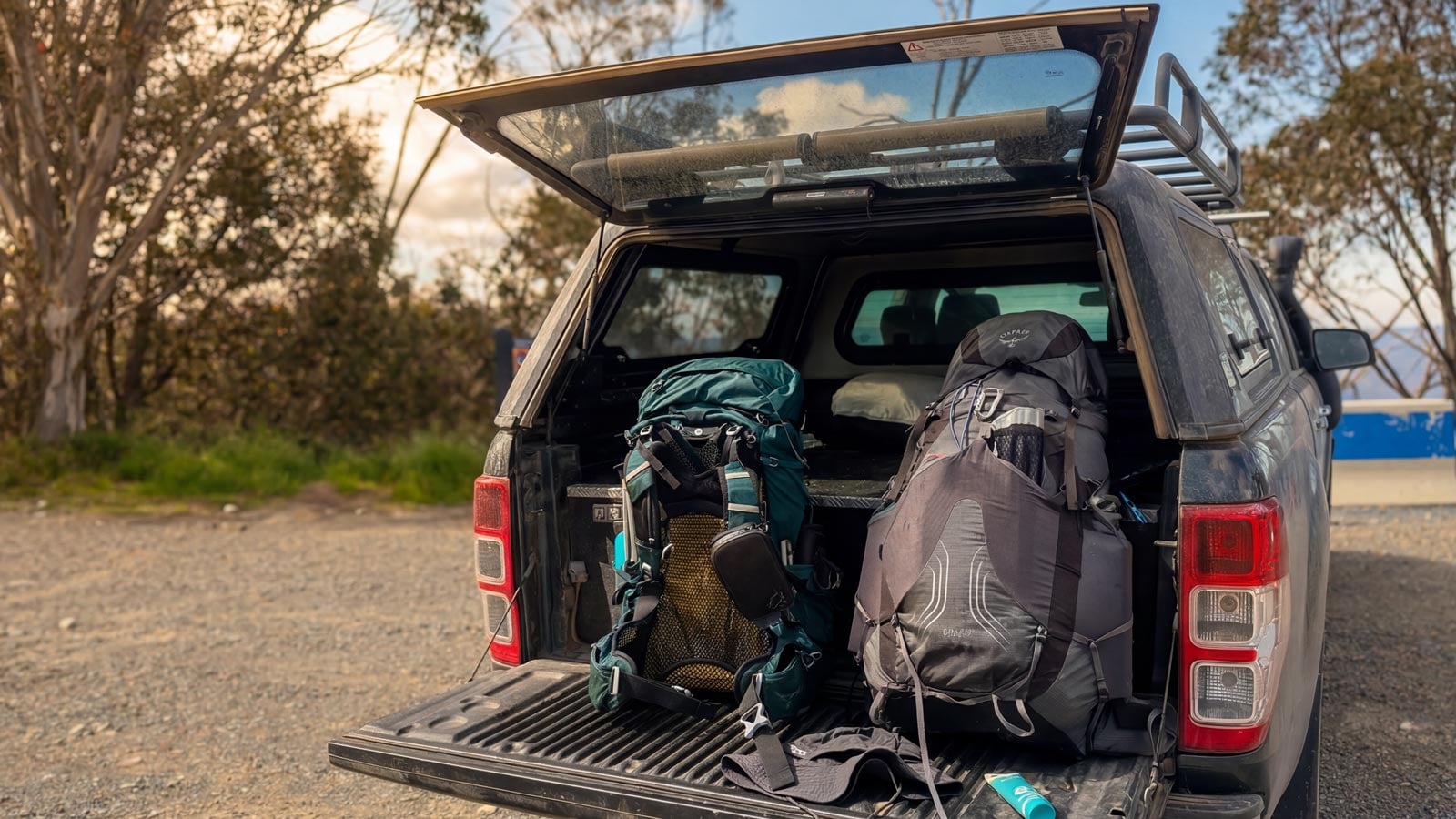
A car at a trailhead isn’t like a car outside the shops. It might sit there for a full day or a full week, often somewhere with very little passing traffic, and anyone who notices it can make a reasonable guess that the owner won’t be back soon.
The basics are simple. Take valuables with you or leave them at home rather than trying to hide them, lock the car, close every window, and leave nothing visible. That includes bags, jackets, charging cables and phone mounts, because anything on a seat suggests there might be more in the boot. Victoria Police, for example, advise against leaving valuables in a vehicle at all, and where something has to stay, to keep it out of sight in the boot or a locked glove box.
The same advice warns against leaving documents that show your home address, or house keys and garage remotes, because they can lead to a break-in at home later. For hikers this matters more than it does for most drivers. A car parked at a trailhead for four days also suggests roughly when you won’t be home either.
Your trip plan and your car
This is where two pieces of good advice pull against each other. Leaving trip intentions in the car is a long-standing bushwalking habit, so anyone searching for you knows where you were heading and when you planned to be back. But a note on the dashboard also tells anyone walking past that you’re gone for days, and roughly where you’ll be.
Leaving a copy with your trusted contact gives someone the information needed to recognise that you are overdue and raise the alarm. A second copy in the vehicle provides another source of information if the vehicle itself is what first causes concern. Keep that copy out of sight, in the glove box rather than on the dash or tucked behind the visor.
Hidden car keys
Some hikers leave the car key at the trailhead rather than risk losing it on the walk. It goes on top of a tyre, inside a wheel arch, under a rock or in a magnetic box. It’s especially common on car shuffles, or when a group expects to finish at different times.
The trouble is that these are obvious hiding places, and a car sitting at an empty trailhead gives anyone plenty of time to check them. It’s better to carry the key in a zipped pocket or clipped inside the pack lid. If more than one person needs access, give a second key to someone else in the group rather than leaving one with the car. On a linear walk, two groups starting at opposite ends and swapping keys when they meet solves the same problem without leaving a key behind. On overnight or multi-day walks, my wife and I carry a set of keys each, so if one gets lost or misplaced, we still have a way to get into the car.
Longer walks and car shuffles
The longer a car sits, the more it’s worth thinking about where it sits. Check what parking options are available before a longer walk, particularly if your car would otherwise be left at a quiet trailhead for weeks. Your accommodation at the start or finish, a caravan park or a friend’s place may offer a more suitable option, with permission to leave the car there and transport arranged to and from the track. A drop-off, a shuttle service or public transport avoids leaving your car at the trailhead.
When Julie and I hiked the Great South West Walk, we left our car outside the police station in Portland and checked in with them to let them know our plans before catching a shuttle to the trailhead. We certainly didn’t expect police to watch the car for us, but it felt like a better option than leaving it parked on a quiet dirt track for several days. It wasn’t secure parking, just a more visible place to leave it. We also checked back in with them when we returned, so they knew we were safely off the track.
At campsites and huts
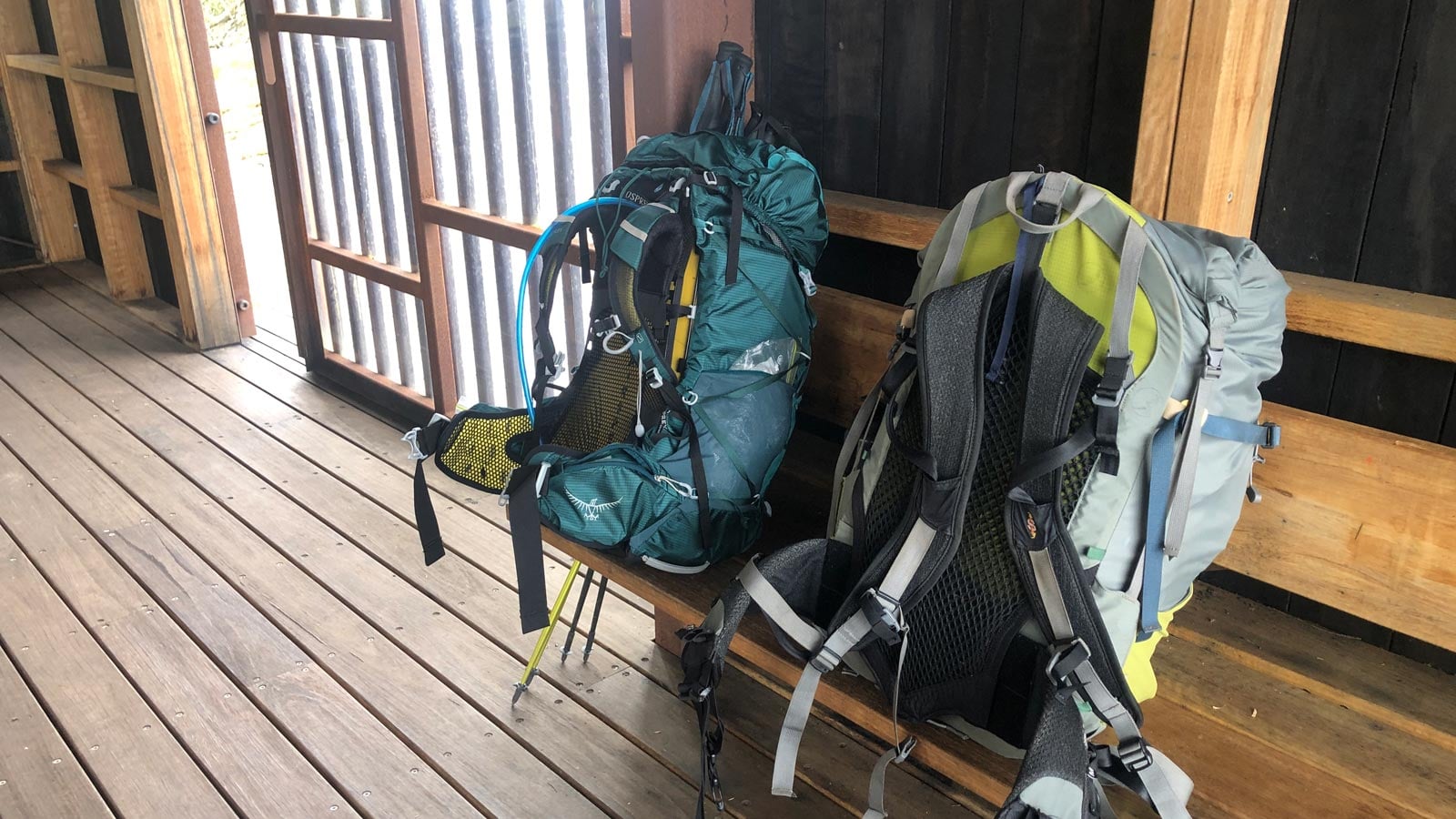
Shared campsites feel safe. The unspoken rule that hikers leave each other’s gear alone is one of the good things about bushwalking culture, and it’s worth protecting. But a shelter on a popular track might see dozens of people pass through in a week, and campsites near road access get visitors who aren’t necessarily hikers at all.
Julie and I had a good reminder of this on the Grampians Peaks Trail. We dropped our packs in one of the shelters while we spent about an hour exploring around the campsite. When we came back, there were around six people sitting in the hut. They were day hikers who had walked up from a nearby car park to have a look around. There was certainly nothing suspicious about what they were doing, but it did make me realise how casually we had left all our gear unattended in a place that wasn’t as isolated as it felt.
While you are at camp, keep small valuables on you or inside the tent with you rather than spread across a picnic table or shelter platform. Whenever you leave camp, take your phone, wallet, car keys and the navigation, communication and emergency equipment you need. An unattended tent is not secure storage, and gear left there cannot help you if something goes wrong while you are away.
The harder part is recognising which gear matters, because it isn’t always the expensive stuff. Trekking poles may not be the most expensive thing you’re carrying, but if you’re relying on them for a sore knee or a steep descent tomorrow, losing them changes your walk. The same goes for boots left outside the tent, a rain shell drying on a line, medication in a side pocket, or your stove and fuel on a trip where you’re cooking every meal.
None of this means sleeping with your arms wrapped around your pack. It just means bringing the important things in at night, and not leaving gear spread across a shelter when you head off to collect water or explore, particularly at busy sites or ones close to a road.
Leaving your pack for a side trip
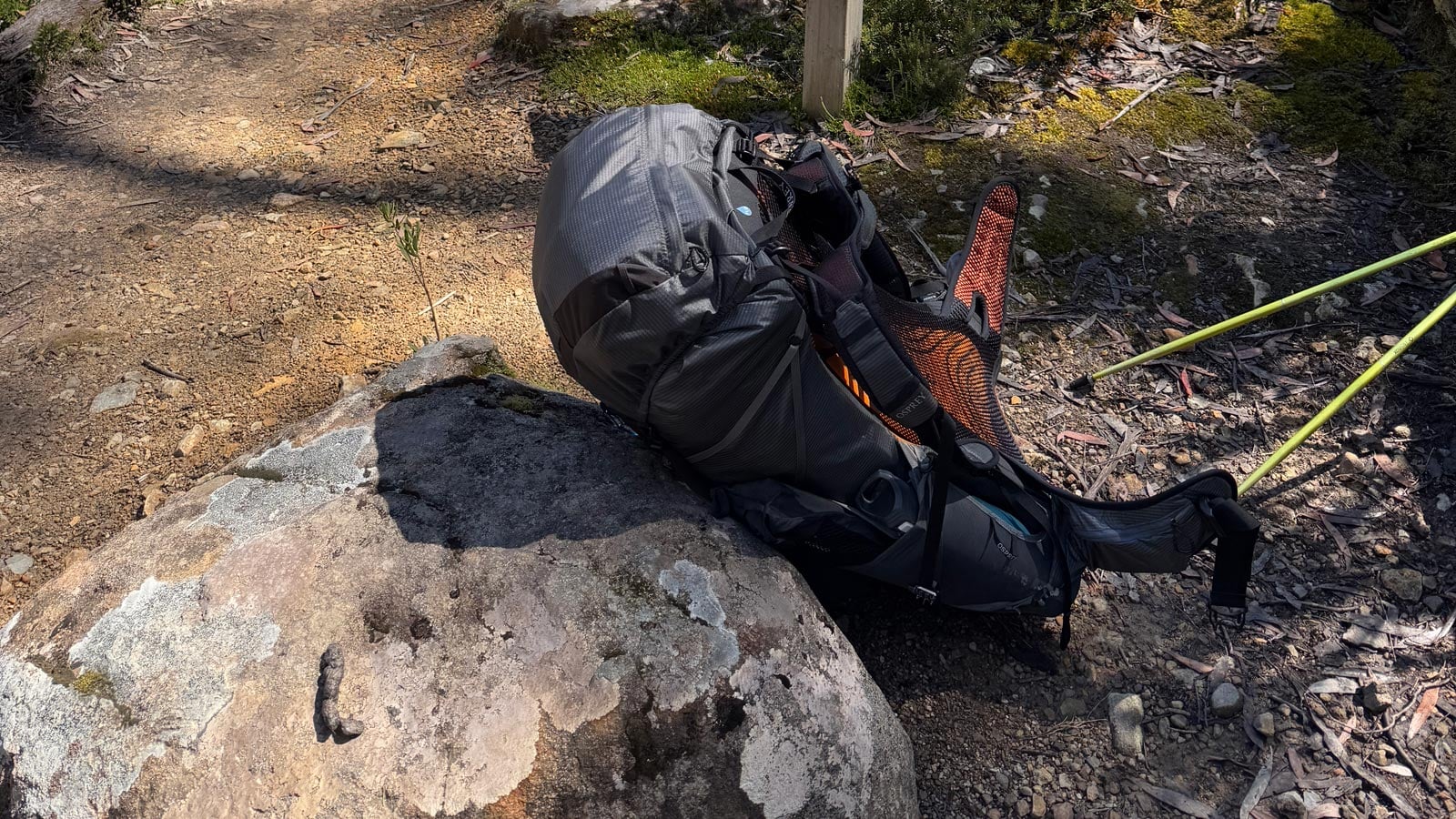
This one gets overlooked because it feels so normal. You reach a summit turn-off or a junction, drop the heavy pack and head off with water and a light daypack. Physically, it makes a lot of sense and I’ve done this plenty of times myself.
Julie and I faced exactly this decision on day one of the Alta Via 2 in the Italian Dolomites. We had the option of leaving our overnight packs at a junction and taking smaller packs on a nearby via ferrata to a summit. The return trip was around two hours, with a steep climb, so leaving the big packs behind would have made life considerably easier. But we were advised that the junction saw a lot of foot traffic and that leaving our packs unattended wasn’t a great idea. This was day one of a 12-day trek, and we didn’t want to come back to find our packs gone or our gear disturbed, so we carried them to the summit and back.
Before walking away, it’s worth weighing up how busy the spot is, how long you’ll be gone, and whether the pack is sitting where everyone passing will see it. Then think about what you’d actually do if it wasn’t there when you got back. A ten-minute detour from a quiet junction isn’t the same situation as a two-hour return trip from a busy junction on a popular track, late in the day with camp still ahead.
Whatever you decide about the pack, take what you couldn’t safely do without. Depending on the walk, that’s your phone, PLB or satellite messenger, navigation, water, any medication, a rain shell, a warm layer and a light source. That’s not only about theft. It’s the same kit you’d want if you rolled an ankle on the side trip and had to wait for help.
It can be tempting to stash the pack out of sight in the scrub. That creates its own problems. Thick scrub tends to look the same when you come back to it, so finding the exact spot isn’t always easy. You also trample vegetation getting in and out, and a pack tucked away off the track can look abandoned to other walkers. A pack left at a recognisable junction may also provide search and rescue crews with a clue about your movements if something goes wrong. It’s simpler to take what you can’t do without and leave the pack where you can find it. If the risk of losing it isn’t acceptable, carry it.
When security creates a safety problem
Precautions against theft shouldn’t separate you from the gear you’d need in an emergency. A PLB left locked in the car because it’s expensive and it’s “only a day walk”. Medication left in the glove box. Nothing carried on a side trip because the main pack is only ten minutes away. In each case, protecting the gear from theft has taken it away from the situation it’s there for.
The same applies if you come back and find someone going through your car or your gear. Don’t approach them. Victoria Police explicitly advises against confronting a thief following a vehicle break-in. The same priority applies at a campsite: keep yourself safe. If it’s safe, note a registration number or a description from a distance, move away, and report it. Gear and cars can be replaced.
Recording your gear before you go
It takes a few minutes to photograph your more expensive gear and note the serial numbers, particularly for a PLB, GPS, satellite messenger or camera. If anything is taken, it turns a vague police report into a useful one, and it makes an insurance claim far easier. It’s also worth checking whether your contents insurance covers gear away from home, and whether valuable portable items need to be listed separately. If a PLB is stolen, update its registration with AMSA so the record shows it’s no longer in your hands.
If something is stolen
Keep this practical. After a break-in, photograph the damage and avoid handling the car more than you need to before reporting it. Report the theft to police through the Police Assistance Line on 131 444 or your state police’s online reporting, and call 000 if the incident is happening now, the person is still there, or anyone is in immediate danger. Let the land manager know if it happened at a campsite or trailhead, usually the national parks or forestry agency for that area. Where a track has its own foundation or managing organisation, tell them too. Reports from the same trailhead or campsite can help land managers identify patterns and decide where preventive measures are needed. Reporting track issues is part of wrapping up after a hike anyway, and a theft belongs in that same report.
Theft isn’t something we should expect every time we head out, and nothing here should change how we feel about hiking or how we treat each other on track. It’s about knowing which of your things you depend on, and not leaving those where losing them would change the rest of your walk.
If you come across someone else’s unattended pack or vehicle and wonder whether something is wrong, read When Should an Unattended Pack or Vehicle Concern You? for police and search and rescue advice on assessing the circumstances, reporting concerns and leaving belongings undisturbed.
For more on what to check before setting off, see Heading Off and Settling In: The First Hour of a Hike.
For more on keeping food and gear secure from wildlife, see How to Keep Wildlife Out of Your Pack and Tent.