Every few metres meant ducking under one branch, wrestling the pack past a second, then stepping blind over a fallen trunk we couldn’t see the far side of. Julie went first for a while, then I did. We’d stopped talking except to call out where the next gap in the scrub might be, and somewhere in the last hour the day had quietly stopped being the day we’d planned.
We’d planned this one carefully, the way we plan most trips. A ridgeline traverse through The Razor-Viking Wilderness in the Victorian High Country, then a circuit back to the car. We’d studied the elevation profile, read what accounts of the route we could find, and settled on a conservative kilometre an hour along the spur and the ridge. Two days of water, carried against that number. Every part of it had been thought through. None of it was guesswork.
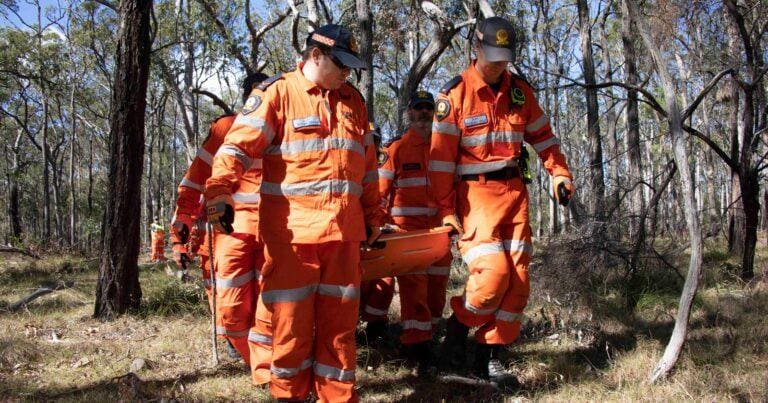
What none of that research told us was what years of regrowth after a bushfire actually does to a ridgeline. This wasn’t scrub you pushed through. It was structural: resprouted stems and fire-killed timber laced together in a way that had to be negotiated, piece by piece, rather than walked. Our kilometre an hour became less than five hundred metres. Every one of those metres cost something. By the middle of the day we weren’t hiking so much as working, hand and shoulder as much as leg, and the ridge ahead of us wasn’t getting any shorter for the effort.
Eight hours in, we still hadn’t reached the high point we’d planned to camp near. The water was going down faster than the distance should have allowed, because effort costs water regardless of how far it actually moves you. Nothing about the day announced itself as dangerous. There was no wind, no injury, no wrong turn. The weather held mild the whole time. It was just a plan, quietly failing to match the ground it had been written for.
There was a flat shelf a little further along, one of maybe three or four spots on that whole ridge wide enough to pitch on, and we stopped there to work out what we actually had left. Not what we’d started with. What was left. Julie checked the water. I checked the light. Neither of us said much. Continuing meant hours more of the same ground, with no guarantee of water before the next day was out. Staying meant admitting, out loud, that the plan we’d drawn up at the kitchen table wasn’t the plan we were actually living.
Part of me wanted to keep going, if only because the intended campsite still felt like the point of the day, and stopping short of it felt like failing at something, even though nothing had technically gone wrong yet. We talked about it longer than the decision probably needed. Then we agreed: we’d only push on in the morning if we could confirm water somewhere ahead. We couldn’t. So the next morning we turned around and walked back out the way we’d come.
What stays with me about that trip isn’t the difficulty of it. It’s that we’d done the preparation properly, and it still wasn’t enough to keep the day matching the plan. The pace estimate was based on real research. The water was calculated conservatively. One thing, the state of that regrowth, turned out different to what we’d assumed, and that was enough to put everything else under pressure. The preparation held up right up until the ground stopped agreeing with it.
We went back later and walked the same circuit from the other direction, watching the water more closely than we had the first time, moving slower than the plan called for just in case the ridge asked for it again. It didn’t, that time. I don’t know what the next ridge will ask for. I only know that whatever we’ve worked out for it, on paper, at a kitchen table, describes a place neither of us has actually stood in yet.
This essay is part of my Personal Reflections series, a collection exploring what hiking reveals about who we are.