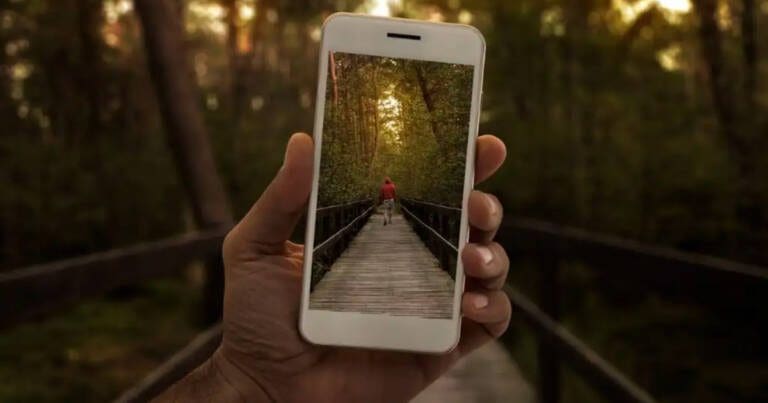
Most difficult situations on trail develop slowly. A plan drifts from the conditions it was built for, and by the time the risk is obvious, the options have already narrowed. That pattern has been the focus of this series so far, but not every risky moment on trail develops that way. Sometimes the risk isn’t a consequence of drift. It’s the decision itself, made deliberately, before a single step is taken. Standing past a safety barrier for a better angle. Walking out onto an exposed ledge for the shot. These aren’t decisions that emerge from fatigue or narrowing options late in the day. They’re often made early, sometimes before the hike has even started, when someone has already pictured the photo they want and the route is chosen to get it.
A 2025 study of 509 Australians, from researchers at UNSW and Griffith University, looked directly at this pattern. They found that how dangerous people believed the behaviour to be did not significantly predict whether they had taken a risky photo. What predicted it was whether people expected their audience to approve, and whether they had already formed the intention to do it. Perceived social approval was the strongest factor in the study, and it moved closely with intention, while risk perception on its own explained almost nothing. The rest of this series has looked at how judgement erodes under pressure: fatigue narrowing attention, time pressure compressing decisions, small deviations accumulating until the original plan no longer matches the conditions on the ground. In that pattern, the person rarely set out to take the risk. The risk arrived gradually, often without being clearly recognised at the time.
This is different. The danger may be understood; it simply isn’t the only thing influencing the decision. This isn’t necessarily judgement that has degraded over hours on trail. It is judgement being directed towards a different reward, with the person still making a decision, but one where safety is competing against recognition, identity, belonging and the anticipated reaction to the image. This is the part that matters for anyone trying to reduce this kind of incident. If the driver were poor risk perception, the fix would be more warning signs and better safety messaging, but the study suggests risk information alone may be insufficient when social reward is exerting a stronger influence. That reframes the problem: the trade is being influenced by an audience that is nowhere near the ledge and will bear none of the consequences. The audience rewards the image. It does not share the exposure.
Restraint is difficult to make visible online. A photograph shows where someone stood, not the edge they chose to stay back from, the route they declined, or the moment they decided conditions weren’t right after all. Too often, the hike that gets the engagement is the one where someone stood too close to the edge, while the hike where someone turned back because conditions weren’t right is rarely seen at all, which is part of why it rarely gets treated as the more impressive decision. That’s really the shift this research points to. If risk perception barely predicts the behaviour, and social approval does, then the fix isn’t more warning signs telling people something is dangerous, since most people taking the photo already know that. What’s missing is any visible reward for the alternative: recognising sound judgement, restraint and a decision to turn back as evidence of competence in their own right, not as the absence of a better story.
None of this means stripping challenge or genuine risk out of the outdoors. It means being honest about where some of these decisions actually come from. Some risky choices on trail aren’t drift or judgement gradually eroding under pressure. They’re made deliberately, because the expected reward from an audience feels more immediate than a danger that audience will never share in. Warning signs speak to a danger most people already understand. What actually drives the decision is an audience that rewards the image and never has to answer for the risk behind it.
This essay is part of the Human Factors in Hiking series, exploring behaviour, awareness and decision-making on the trail. Explore the series →
Reference: Cornell, S., Piatkowski, T., Brander, R. W., & Peden, A. E. (2025). The Influence of Social Media on Outdoor Risk-Taking Behaviours: Understanding the Role of Social Norms, Intentions, and Perceptions Among Australians. Health Promotion Journal of Australia. https://doi.org/10.1002/hpja.70133