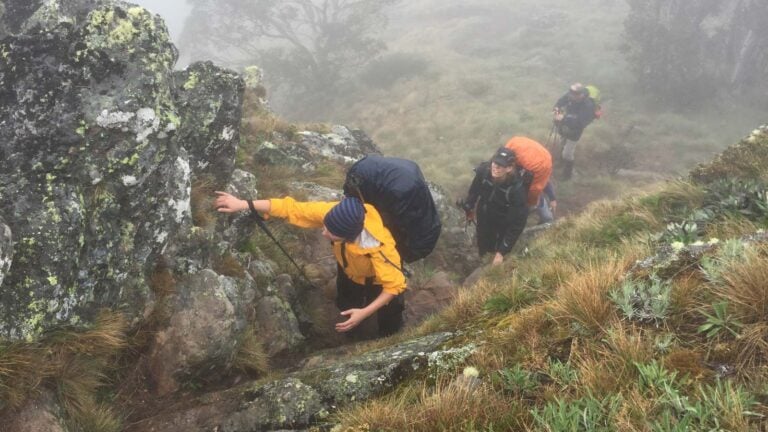
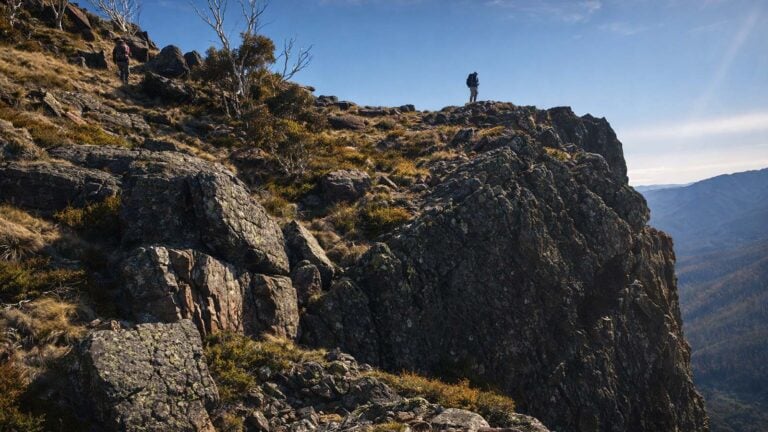
On many hikes through the Australian bush, the track feels easy to follow. The path is defined, the direction of travel is clear, and there is little need to think about navigation. You move steadily, relying on the track itself to guide you. It is often only when you step a short distance off the track that this changes. You move a few metres to step around vegetation, find a place to rest, or leave the trail briefly. When you look up again, the path is no longer immediately clear. The landscape appears unchanged in every direction.
I’ve had multiple hikers describe variations of this experience. One woman explained that she stepped just 15 or 20 metres off the track to find some privacy. When she turned back, she couldn’t immediately see the path. The bush looked the same in every direction. What followed was not panic, but confusion. She moved, stopped, tried to reorient, and gradually lost any sense of where the track was. It took close to an hour before another hiker heard her calling out.
This is not usually a dramatic loss of direction. It is a quieter shift. You begin to orient yourself using memory rather than confirmation. You pick a direction that feels right and start moving, expecting the track to reappear. The Same-Same Effect describes what happens when the environment provides too few distinct features to support reliable orientation. In large areas of Australian bush, the landscape repeats itself. Trees, ground cover and sightlines look similar in every direction, and without strong reference points, small errors become difficult to detect.
The shift is subtle. It begins with a minor deviation, a moment of inattention, or a simple decision to move around an obstacle. At the time, these actions feel reasonable. There is nothing to indicate that anything significant has changed, yet positional certainty has already started to erode.
What is happening is an interaction between the environment and human perception. In many parts of the Australian bush, there are few strong reference points. No distinct peaks, no obvious lines of travel, and little variation in the landscape to anchor direction. The brain looks for patterns and continuity, but when everything appears similar, it fills gaps with assumption. Direction is inferred rather than verified, and memory begins to replace confirmation.
Movement then compounds this effect. A small deviation, repeated over distance, places you further from your intended line than expected, without any clear signal. Because the terrain offers few distinguishing features, there are limited cues to indicate that this drift is occurring. Attention also narrows in practical ways. When off track, people often focus on immediate tasks such as navigating around vegetation or watching foot placement. This reduces awareness of the broader environment and weakens the ability to maintain a clear sense of position relative to the track.
As conditions become more demanding, this process accelerates. Fatigue, heat, and time pressure increase cognitive load, making it more likely that assumptions remain unchallenged. Checking position feels unnecessary or is delayed, and the environment continues to appear manageable, reinforcing the belief that nothing is wrong. In effect, the Australian bush often functions as a low-feedback environment. The cues needed to confirm position are limited or absent, and without those signals, it becomes difficult to recognise that anything has changed until the margin for easy recovery has already reduced.
In the field, this matters because the gap between perceived and actual position grows quietly. A few metres off track is easy to correct when the point of departure is still known. The same distance becomes far more significant once orientation is uncertain. Time increases, movement slows, and the search for the track becomes less direct. Uncertainty replaces confidence, and what began as a brief step off track develops into something that needs deliberate navigation to resolve.
The problem is never really a single mistake. It’s the gradual loss of feedback between the hiker and the environment, and as that feedback weakens, small errors get harder to catch and correct. The Same-Same Effect shows that navigation isn’t just about tools or technical skill. It’s about maintaining continuous awareness of position in country that offers little help doing it. In the Australian bush, where visual repetition is common, staying found depends on recognising that drift early, before it becomes genuine disorientation.
In the Australian bush, getting lost rarely begins with a wrong turn. It often starts when the landscape stops giving you anything to confirm your position against, and small deviations go unnoticed until they’ve added up to something real.
This essay is part of the Human Factors in Hiking series, exploring behaviour, awareness and decision-making on the trail. Explore the series →