Weather changes are just part of hiking, and most experienced walkers expect the forecast won’t hold perfectly through the whole day. A clear morning giving way to rising wind, falling temperature, or cloud moving in isn’t unusual. In open terrain, a broad ridge or an alpine plateau, that shift is often uncomfortable but manageable. Wind picks up, visibility drops, and the landscape still allows movement in several directions. Descending to lower ground or retracing the route usually stays possible.
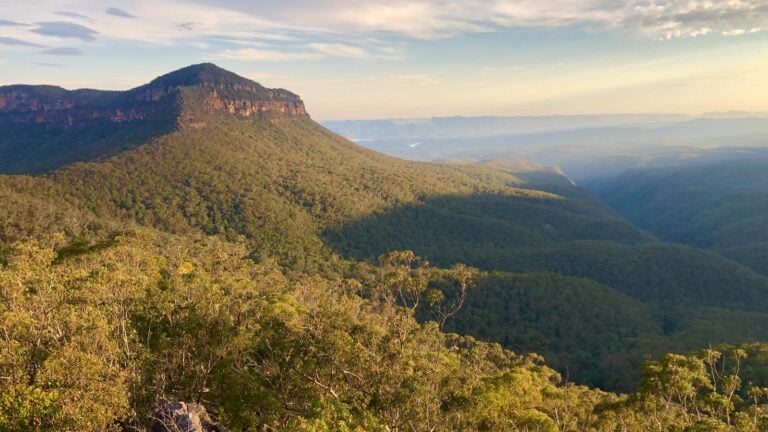
Other parts of the landscape behave very differently under the same weather. A narrow gully, a steep spur, a cliff-bounded valley can offer far fewer options once conditions start deteriorating. Progress might only be possible in one direction, and reversing course can be considerably harder than continuing forward. From a distance, both situations just look like bad weather. On the ground, the shape of the terrain is what actually decides whether hikers keep their options or gradually lose them.
Most hiking discussions focus on the environmental hazards themselves, wind, cold, heat, storms, and those conditions are real and can place real stress on the body. But weather alone rarely determines how serious a situation actually becomes. How much it matters depends heavily on the terrain hikers happen to be in when it hits. Exposure describes terrain where hikers feel the conditions directly but still keep freedom of movement, a windswept ridge or open hillside can be uncomfortable or physically demanding while still leaving retreat genuinely possible. Entrapment is different: it’s what happens when the landscape itself starts limiting those options. Steep gullies, cliff bands, narrow ridgelines or dense vegetation can gradually take away the ability to change direction or retreat safely, regardless of how the weather’s behaving.
The shift from exposure to entrapment is usually subtle. Early in a route, terrain often feels open and manageable, the track clear, the slope moderate, direction flexible. As the landscape changes, it can start guiding movement into more constrained terrain without that feeling like a deliberate choice. A spur narrows as it climbs. A valley steepens into a gully. Cliffs appear on either side of a ridge. None of these necessarily creates an immediate problem, the route still looks passable and progress keeps happening, but with every step the number of real alternatives can be quietly shrinking. What started as a simple walking route can become a corridor where turning around gets genuinely harder, without any single moment marking that change.
This distinction becomes most visible once conditions actually deteriorate. In exposed terrain, worsening weather tends to push hikers toward descending, retracing their route, or finding shelter on lower ground, uncomfortable, but still genuinely possible. In entrapped terrain, the same weather change plays out very differently. Slippery rock, rising water, dropping temperature or reduced visibility can hit sections that were already hard to reverse before the weather turned. The real problem isn’t just that conditions got worse. It’s that the terrain no longer offers an easy way to respond to that change.
Entrapment rarely happens through one dramatic moment. It usually develops through a sequence of individually reasonable decisions made while the terrain still felt manageable: following a spur because it looks like the clearest route up, descending a gully because it offers the most obvious line through steep country, staying on a ridge because the track is still visible ahead. Each decision makes sense in the moment. The terrain’s still passable, the objective still feels achievable. It’s only later that it becomes clear the landscape around you has quietly narrowed what was actually available.
Understanding the difference between exposure and entrapment changes how terrain gets read in the first place. Instead of seeing it purely as scenery or difficulty, it becomes something that either preserves or removes choices as you move through it. Open terrain can expose you to real weather and physical stress, but it usually leaves room to manage those conditions flexibly. Constrained terrain can look sheltered or protected while gradually limiting the ability to retreat or adapt. Recognising that pattern helps explain why some incidents happen even to experienced hikers in weather that wasn’t, on its own, extreme.
Weather creates stress in the bush. Terrain decides whether you still have options for responding to it.
This essay is part of the Human Factors in Hiking series, exploring behaviour, awareness and decision-making on the trail. Explore the series →