Pack weight usually gets decided before the day even starts. Gear gets laid out, choices get made about what’s coming and what’s staying behind, and each decision feels reasonable on its own. An extra layer in case conditions change. A bit more food for safety. A piece of gear that might come in handy. None of it feels excessive individually. Together, it shapes how the whole day plays out.
At the trailhead, the pack feels manageable. The weight sits comfortably, movement feels controlled, and nothing about it looks like it’s going to become a limiting factor. The shift, when it comes, is gradual.
Load creep is rarely the result of one heavy item. It builds from a series of small additions, each one adding a little more than originally intended, and because each addition felt justified on its own, the total rarely gets reassessed once the pack’s actually on. What changes isn’t just the number on the scales. It’s how that extra weight interacts with everything else the body’s trying to do through the day.
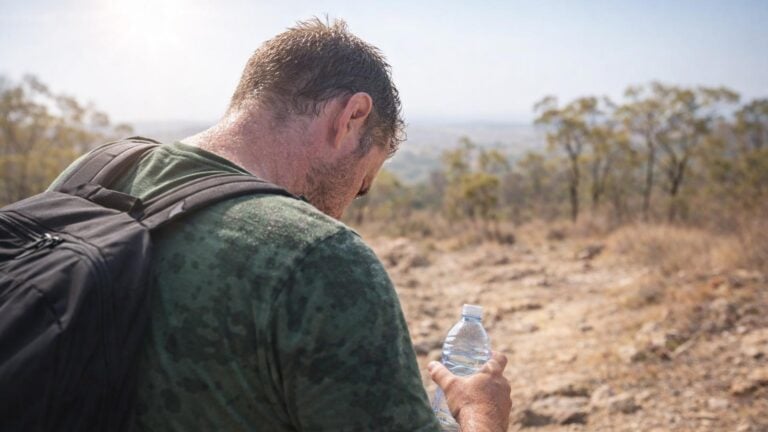
As the day goes on, the cost of carrying it becomes harder to ignore. Effort climbs incrementally. Climbs demand more energy than they would have with a lighter pack. Descents put more strain on joints and balance. None of it feels dramatic at first, but it accumulates, and the body works harder to hold the same pace it would have managed easily that morning. Heart rate creeps up. Muscles fatigue sooner. The small stabilising movements that keep you steady on uneven ground get a little less precise. None of this feels like a crisis in isolation. It’s easy to absorb without ever stopping to reassess, which is exactly why it usually doesn’t get reassessed.
Picture a long day with a sustained climb. A hiker carrying a bit more weight than planned might not notice any difference early on, pace steady, breaks short, the route unfolding as expected. As the climb continues, though, that extra load starts interacting with fatigue. Breaks stretch a little longer. Recovery takes more time. The effort needed to hold pace keeps climbing. At this point the plan itself still looks intact, same distance, same route. What’s actually changed is the condition of the person carrying it out.
This is where load starts affecting more than physical performance. As fatigue builds, the cognitive capacity available for attention, navigation and reassessment shrinks along with it. Attention narrows down to the immediate task, foot placement, breathing rhythm, and the ability to take in the bigger picture, a change in terrain, a navigation cue, how much daylight’s left, starts to fade. That’s not a failure of awareness. It’s simply what happens under increased demand. As cognitive capacity drops, reassessment gets less likely, because stopping to check position or review the plan takes real effort, and continuing forward takes less. Small decisions start shifting without anyone deciding to shift them. A junction gets passed with less scrutiny than it deserves. A change in terrain gets noted but not properly weighed. A slower pace gets accepted without anyone recalculating what that means for the rest of the day. Each of these is reasonable on its own. Together, they add up to something different.
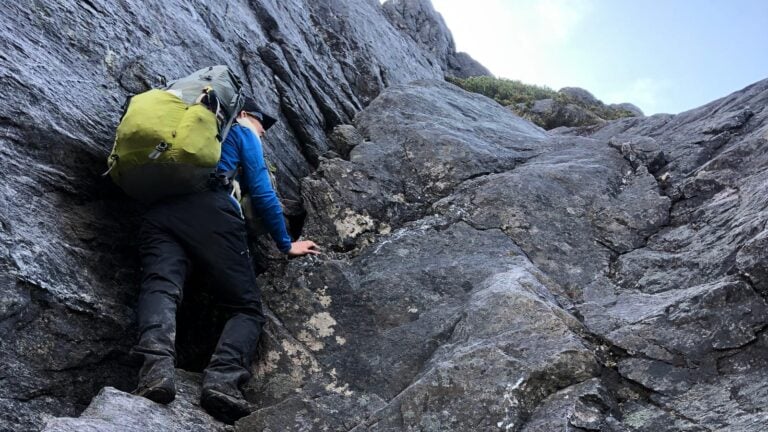
Load changes movement directly too. A heavier pack raises the stakes of a small misstep, especially on uneven or descending ground, where balance matters more and reaction time matters more. What would have been a minor slip under a lighter load can carry real consequence once fatigue’s built up alongside the weight. Extra weight increases fatigue, fatigue reduces cognitive capacity, reduced capacity affects decisions, and those decisions shape pace and route choices, which in turn shape how much time and exposure the rest of the day involves. Each part feeds the next, and small changes matter more the further into that chain you already are.
Load usually gets thought about purely in terms of comfort, whether the pack feels fine on the shoulders at the trailhead. What that misses is that a pack that feels only slightly heavier that morning can genuinely change how decisions get made hours later, in ways that have nothing obviously to do with the weight itself.
Load creep doesn’t announce itself as a problem. It doesn’t fail anyone at the trailhead. It works quietly underneath the day, showing up eventually as fatigue, narrowed awareness and small decisions carrying more consequence than they would have that morning. The real question was never whether each individual item was worth carrying. It’s how all of it together shapes the ability to move, notice and decide clearly as the day wears on.
This essay is part of the Human Factors in Hiking series, exploring behaviour, awareness and decision-making on the trail. Explore the series →



Have you ever regretted packing that extra snack or piece of gear on a hike? What do you find makes the biggest difference?
Only thing I’ve regretted is when i took hiking poles.
Otherwise I take what is relevant to where I’m heading.
I usually find I use every single thing in my pack. The only exceptions – which I’m happy to NOT use – are the first aid kit and the wet weather gear!
Hip flask….essential…some hikes…
Miller Rosie Pretentious Posie I hear you there. Have done that a few times for special occasions.
I’m a dinosaur who carried packs before ultralight gear and a camera/accessories. 40kg was with a food drop… luckily 8kg was stashed after end of day 1, which made the Eastern Arthurs easy in comparison
Darren Hocking you carried 40kg, or 32+ the food drop? Either way, I can’t even contemplate how that would feel. Hats off to you. Camera gear certainly adds a lot of weight and bulk.
12kg camera gear, 8kg food & fuel drop, base pack with 1 weeks food, tent, clothes, stove etc was 20kg. The yoyo track from the old Tahune picnic shelter was solid destroying and it followed contours and felt like half the time was spent walking away from destination or at least right angles. I’m glad I won’t do that again. Almost equaled by carrying out a 10L pail of client poo from Walls of Jerusalem when I worked for a Tasmanian Expeditions. Double bagged but still visions of leakage plagued me.
Darren Hocking both adventures sound like challenges you wouldn’t want to do again. Hope you got some great pics after all the effort (not of the poo)
My first hike was overnight to Wilson’s Prom lighthouse with a large group. I hadn’t had time to train and I had crap gear and shoes. The worst was that I was asked to bring the couscous – 4kg. When we got to the lighthouse I was in a world of pain. I unpacked the couscous and was then told that I was supposed to distribute it amongst the group in the carpark. The return next day was even more painful and I couldn’t walk for a week.
I’ve always been careful about the packing list ever since 😆
Melanie Dunkley 4kg of couscous, must have been a decent group. Doesn’t sound like a fun experience for your first overnighter. Hope you enjoyed staying at the lighthouse though. Beautiful spot.
Trail Hiking Australia there were 20 of us in 2 cottages. I absolutely loved it and the food was excellent 😄. I have returned to the lighthouse several times since. I’m a much better hiker nowadays!
I wish some of my commanding officers from my time in the Army had read this article.
🤣🤣🤣
Dan McNab hahah. I’ll bet.
Dan McNab “Oh…and everyone’s loading up a couple of 60mm bombs and a belt of 7.62 to help out the weapons’ platoon.”
Murky Murk or your seco says “You’re good with the GLA, and good on the radio….
🤦♂️🤦♂️🤦♂️
Dan McNab Hahhahahha that’s my buddy. Attached to an infantry unit with the FO.
Oh and the laser range finder plus tripod. 😂
Always be on the look out for the Good Idea Fairy… she’s one persuasive chick.