Preparation is static. Field conditions are not.
Some of the most instructive trips I have undertaken were not the ones that went wrong. They were the ones where a well-researched plan began to quietly degrade under field conditions.
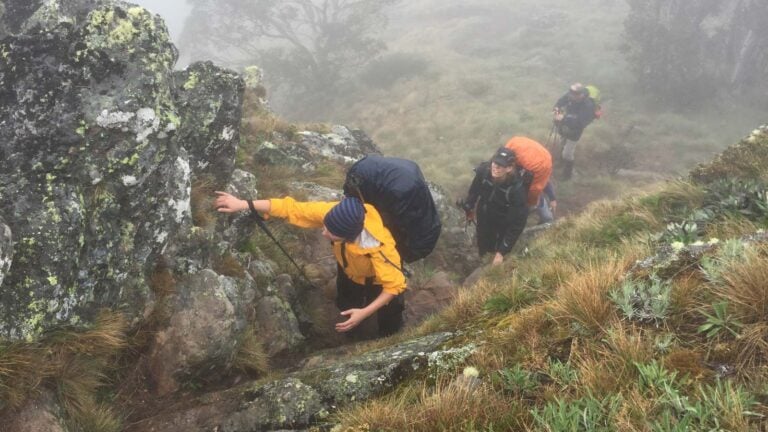
On one multi-day hike through remote Victorian bushland, my wife and I had planned a ridgeline traverse followed by a circuit return. On paper, it was straightforward. We had researched the terrain, studied profiles, read past accounts and estimated our pace conservatively. We planned for roughly one kilometre per hour along the spur and ridge. We carried what we believed was a sensible two-day water allocation based on that estimate.
The assumptions were reasonable.
What we had not fully accounted for was the density of regrowth following bushfires years earlier. Sections of the ridge were choked with thick undergrowth and fallen timber. Movement slowed to less than 500 metres per hour. Every hundred metres required physical negotiation. Progress was deliberate, frustrating and energy-intensive.
After eight hours of sustained effort, we had still not reached our planned high point for the day. Based on our actual pace, our intended campsite was several hours away. At the same time, we were drawing more heavily from our water allocation than expected due to the physical effort involved.
Nothing dramatic had happened. We were not lost. We were not injured. The weather was mild. But the system we had built around a set of assumptions was beginning to erode.
On reaching one of the few flat shelves along the ridge, we stopped and reassessed. Continuing as planned meant committing to several more hours of slow travel with uncertain water access ahead. The margin between effort, hydration and daylight was narrowing.
We chose to camp where we were and agreed that we would only proceed the following morning if we could confirm a reliable water source nearby.
We could not.
So we retraced our steps the next day and exited the way we had come. Later, we completed the same circuit from the opposite direction, maintaining larger margins throughout.
What interests me about that trip is not that it was difficult. It is that we were prepared.
The plan was detailed. The pace estimate was based on research. The water calculations were conservative. And yet once a single environmental variable proved wrong, the entire system began to strain.
This is where many hiking incidents begin.
Not with recklessness.
Not with obvious incompetence.
But with reasonable assumptions interacting with changing conditions.
Preparation, as it is commonly understood, is static. It is a checklist completed before departure. Water carried. Route mapped. Weather checked. Equipment packed.
Field conditions are not static.
Vegetation density changes over time. Fire history alters movement rates. Heat and terrain increase water demand. Fatigue accumulates faster than expected. Progress slows. Daylight shortens. Decision pressure increases.
None of these shifts are dramatic in isolation. Together, they compound.
The real vulnerability is not a lack of preparation. It is the erosion of margin.
Margin exists in time, water, energy and exit options. When progress slows, time margin shrinks. When effort increases, energy and hydration margins shrink. When terrain becomes slower than expected, exit options narrow.
If those changes are not recognised early, the original plan begins to exert psychological pressure. There is a tendency to “just push on” to the intended campsite or waypoint because that was the plan. Momentum becomes its own argument.
In our case, the shelf campsite represented a decision point. It was not scenic. It was not ideal. But it restored margin. It allowed us to reassess before committing to further uncertainty.
That is what robust systems look like in practice.
Not perfect planning. Not flawless execution. But the willingness to recognise when assumptions have shifted and to recalibrate before pressure builds.
Well-prepared hikers still get caught out when they mistake a well-constructed plan for a resilient system.
A resilient system expects friction. It expects slower-than-anticipated movement. It expects variability. It protects margin deliberately rather than assuming it will remain intact.
The question is not whether you have prepared thoroughly. The question is whether your system remains robust when one or two of your assumptions prove wrong.
Field conditions rarely announce failure dramatically. They erode it quietly.
The earlier that erosion is recognised, the more options remain available.
Field takeaway
When one core assumption changes, pause and reassess immediately. Do not wait for multiple margins to shrink at once.
This essay is part of the Human Factors in Hiking series, exploring behaviour, awareness and decision-making on the trail. Explore the series →