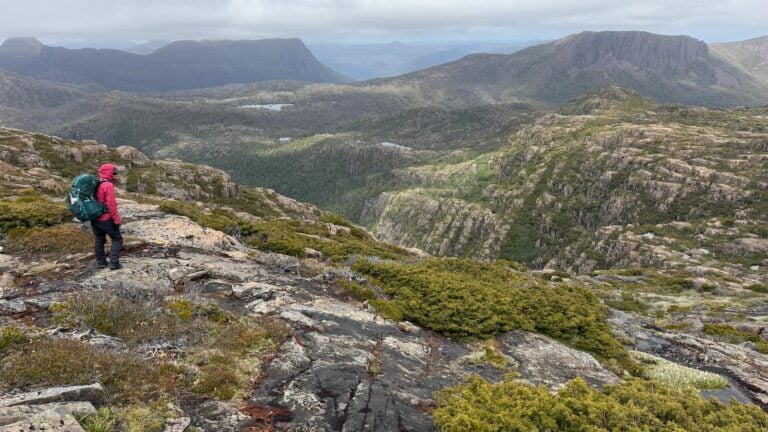
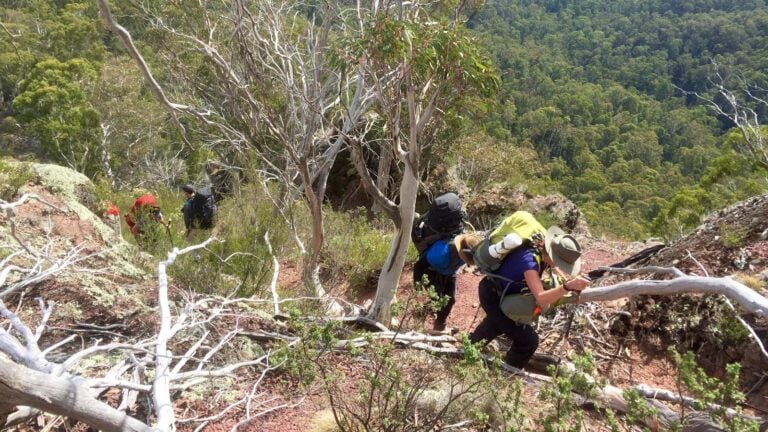
Late in the afternoon on a long hike, groups sometimes pause on a ridge or a saddle to look ahead at what’s left. The destination might already be visible somewhere in the distance, a hut, a junction, a campsite, the carpark, sitting beyond one more valley or along the next stretch of track. From up there, the remaining distance often looks manageable. The terrain ahead doesn’t necessarily look dangerous. The group’s already covered a long section of the route, and stopping short of where they’d planned to end up can feel like a genuine disappointment after everything already put in.
Someone usually says something simple. “We’ll just push on.” The reasoning feels straightforward: the destination’s close enough to reach before dark, the group still feels capable, and turning back or stopping early feels unnecessary when the goal’s already in sight.
This moment shows up in a lot of hiking accounts because it reflects a genuinely natural pattern. Once people commit to a goal, they tend to organise their effort around actually reaching it, and as the day goes on, the destination starts to feel like the logical conclusion the whole day’s been building toward. Adjusting the plan late can feel like abandoning something already earned through effort. The phrase itself rarely reflects recklessness. More often it’s a quiet, genuine confidence that the remaining section will be fine. The problem is that by the time this moment arrives, the conditions the day actually started under may have already shifted well past what was assumed that morning.
Every hour spent walking adds to the investment in the original plan. Distance covered, elevation gained, effort spent, all of it builds a sense that the destination should be reached, and that investment creates real momentum. Once a group’s committed to a direction and kept steady progress going for most of the day, continuing forward usually feels easier than stopping to reconsider it. Meanwhile, several quieter pressures are often building alongside that momentum. Fatigue slows pace and concentration. Water might be lower than expected. Daylight keeps shrinking. None of these on their own demands an immediate change of plan, but together they leave less room to absorb any further delay or complication, and momentum tends to make that gradual tightening harder to notice while it’s happening.
Two psychological tendencies reinforce the decision to keep going. The first is sunk cost: once a group’s already put significant time and effort into reaching a particular point, stopping short can feel wasteful, like discarding effort already spent. The second is optimism about what’s still ahead, terrain not yet walked tends to get imagined as a little easier, a little faster, or a little closer than it actually turns out to be. Together, these make continuing feel entirely reasonable. The destination looks attainable, the group’s already come a long way, and pushing on feels like the natural next step rather than a real decision at all.
The real difficulty is that by the time this moment arrives, the day may already have drifted well past the conditions the original plan assumed, a certain pace, a certain level of fatigue, a certain amount of daylight left at each stage. As the day unfolds, those assumptions shift quietly: slower terrain, longer breaks, more energy spent than expected all chip away at the balance the plan was built on. When a group decides to push on, they’re often still working from the expectations that shaped the morning’s plan, not the conditions actually in front of them by late afternoon.
From inside the decision, continuing rarely feels reckless. The destination’s visible, the route ahead looks straightforward, and the day’s gone well so far, so pushing on feels like a logical extension of what’s already been working. The real difficulty isn’t that single decision in isolation. It’s the accumulation of everything that came before it, all the small adjustments that quietly used up whatever margin the day started with for absorbing one more thing going wrong. When momentum, sunk cost and optimism line up together, they can quietly delay the moment when a different call might genuinely have been the safer one.
None of this means pushing on is always the wrong call. Plenty of hikes end successfully after exactly this kind of decision. What’s worth understanding is that the forces shaping that moment are rarely neutral. They’re shaped by momentum, by what’s already been invested, and by expectations about what’s still ahead that may no longer match what’s actually there.
“We’ll just push on” sounds like a simple call in the moment. It’s usually the result of momentum, prior effort and optimism quietly doing the deciding before the actual judgement gets a say.
This essay is part of the Human Factors in Hiking series, exploring behaviour, awareness and decision-making on the trail. Explore the series →