Every year between May and November, tens of thousands of whales travel along the NSW coastline. Humpbacks make up most of what you’ll see, heading north to warmer Queensland waters in the first half of the season and returning south toward Antarctica from around September onwards. Southern right whales are less common but show up along the south coast, particularly later in the year.
Most people watch whales from dedicated lookouts or boat tours. But some of the best land-based whale watching in NSW happens from coastal walking tracks that follow clifftops, headlands and elevated coastline where whales travel close to shore.
The key is knowing which walk suits which time of year. The season isn’t uniform. Different stretches of coastline peak at different points, and the species you’re likely to see can change depending on whether you’re watching the northward migration or the return south.
When to Go
| Region | Best Months |
|---|---|
| Sydney | June to July |
| Central Coast | June to July |
| Port Stephens | May to October |
| Byron Bay | May to November |
| South Coast | May to November |
| Far South Coast | September to December |
Understanding the Season
May to July is when the northward migration is in full swing. Sydney-area walks like Cape Baily and Fairfax Walk at North Head are particularly good during this window. Humpbacks moving up the coast tend to travel closer to shore here, and June and July are consistently the most active months for Sydney whale watchers.
August to October covers a transition period. The northward migration winds down and the southward return begins. Sightings are still reliable along most of the NSW coast, and this is when you start to see whales travelling in larger groups.
September to December is the standout window for the far south coast. The Light to Light Walk near Eden catches the return migration as whales head back to Antarctic feeding grounds. Southern right whales are also more commonly seen here during this period. It’s a different experience to the Sydney-area walks and arguably the most spectacular whale watching of the entire season.
Best Whale Watching Walks in NSW
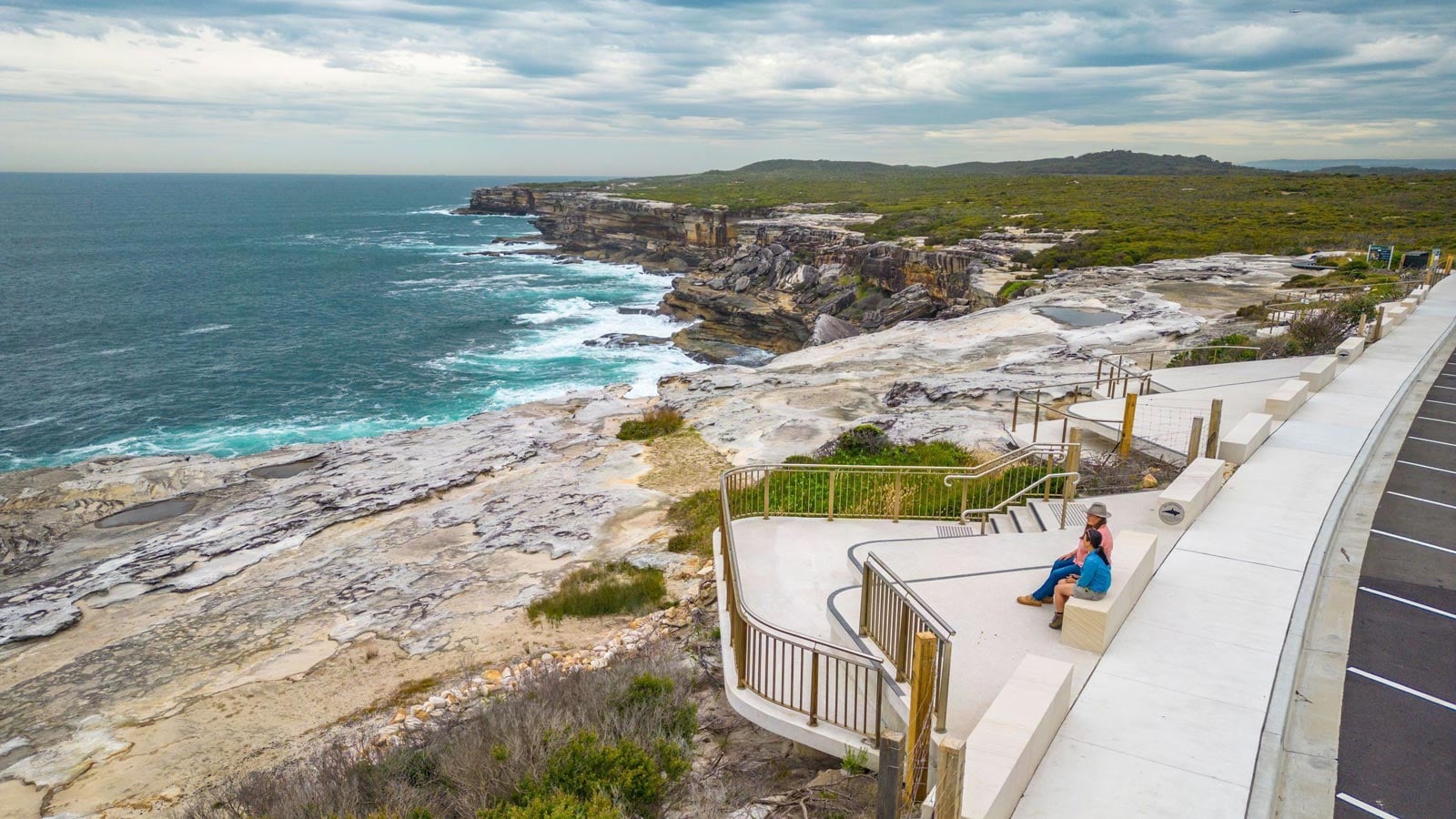
Cape Baily Walking Track, Kamay Botany Bay National Park
9km return | Grade 2 | Half day | Sydney
Starting from Cape Solander in Kurnell, this is one of Sydney’s best-known whale watching hikes and for good reason. The clifftop track follows dramatic sandstone formations with uninterrupted ocean views, and the whale viewing platform near the start is one of the closest vantage points to the water you’ll find anywhere along the coast. Humpbacks have been spotted as close as 200 metres offshore during peak season.
The best months here are June and July. Sightings are possible from May through to October, but mid-winter is when this walk really earns its reputation.
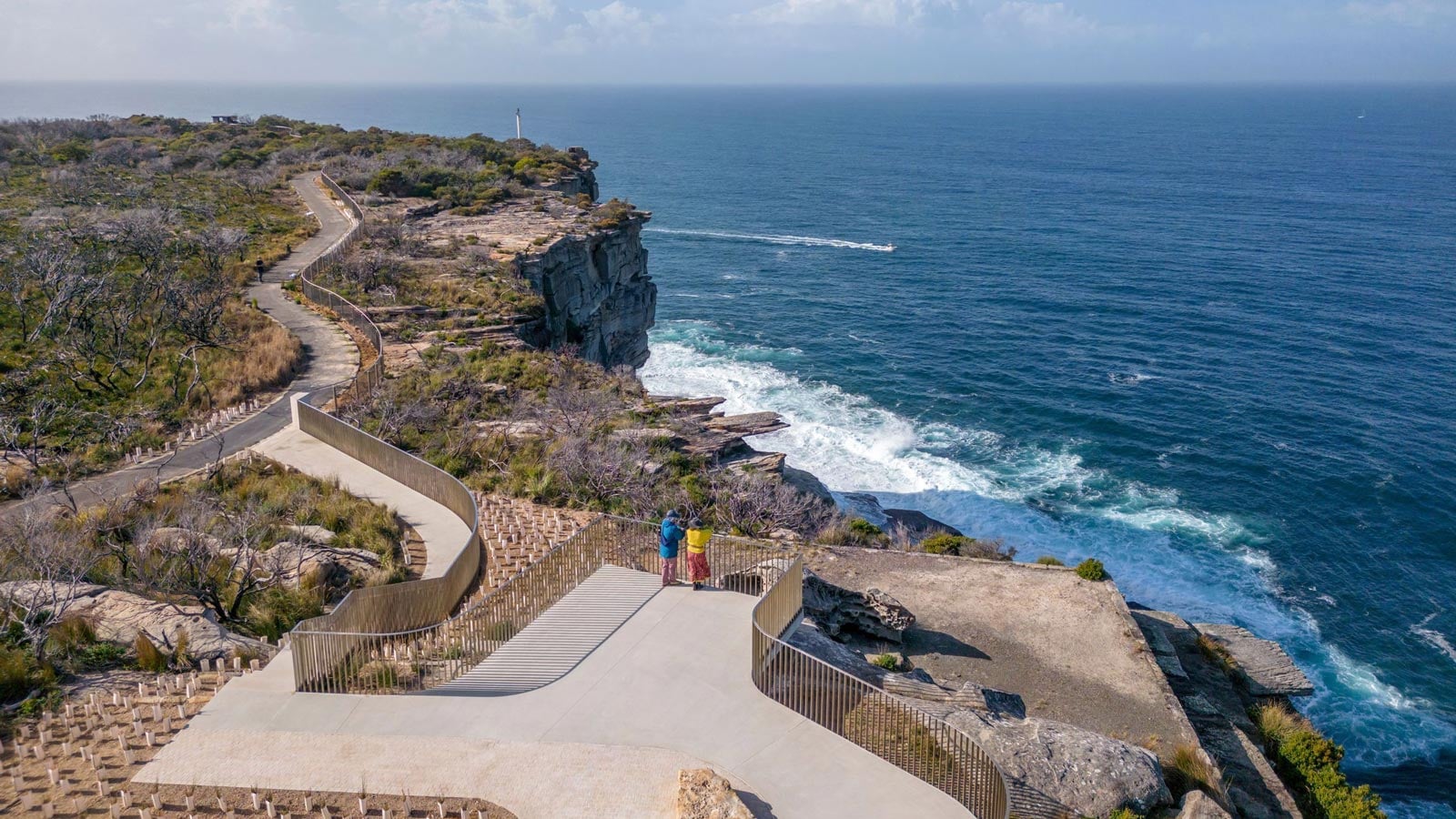
Fairfax Walk, Sydney Harbour National Park
1km loop | Grade 1 | Short walk | Sydney
North Head in Sydney Harbour National Park is a headland with serious elevation above the ocean, and the Fairfax Walk makes the most of it. The loop is short, paved, and wheelchair accessible, which makes it the most accessible whale watching walk on this list. Two lookouts deliver sweeping views across the ocean and back into the harbour.
Don’t let the short distance fool you. The height gives you a wide field of view, and whales are regularly spotted here from June through to October. Good option if you’re after a reliable coastal whale watching spot without committing to a full day on the trail.
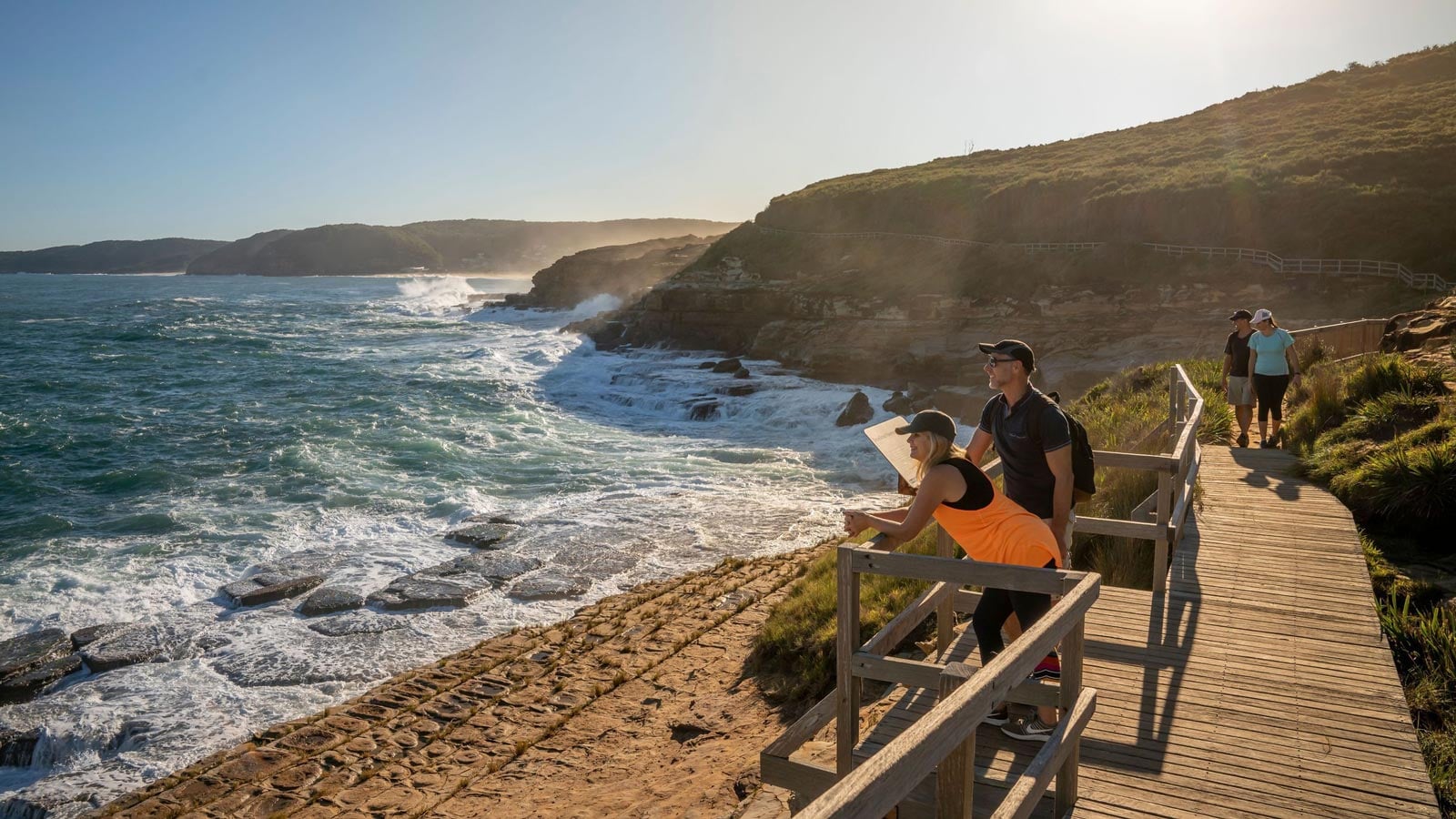
Bouddi Coastal Walk, Bouddi National Park
8.5km one way | Grade 3 | Half day | Central Coast
An hour north of Sydney, the Bouddi Coastal Walk runs from Putty Beach to MacMasters Beach through one of the Central Coast’s best pieces of coastline. The track moves between shaded coastal forest and open sandstone headlands, with boardwalk sections winding through coastal heath and regular lookouts over the Pacific.
Gerrin Point is the standout for whale watching. The elevated position gives you a long view up and down the coast, and during the migration season humpbacks are commonly spotted moving along the water below. Camping is available at Putty Beach and Little Beach, so this works well as an overnight trip during the season.
Sightings are possible from May through to October, with the migration at its most active in June and July.
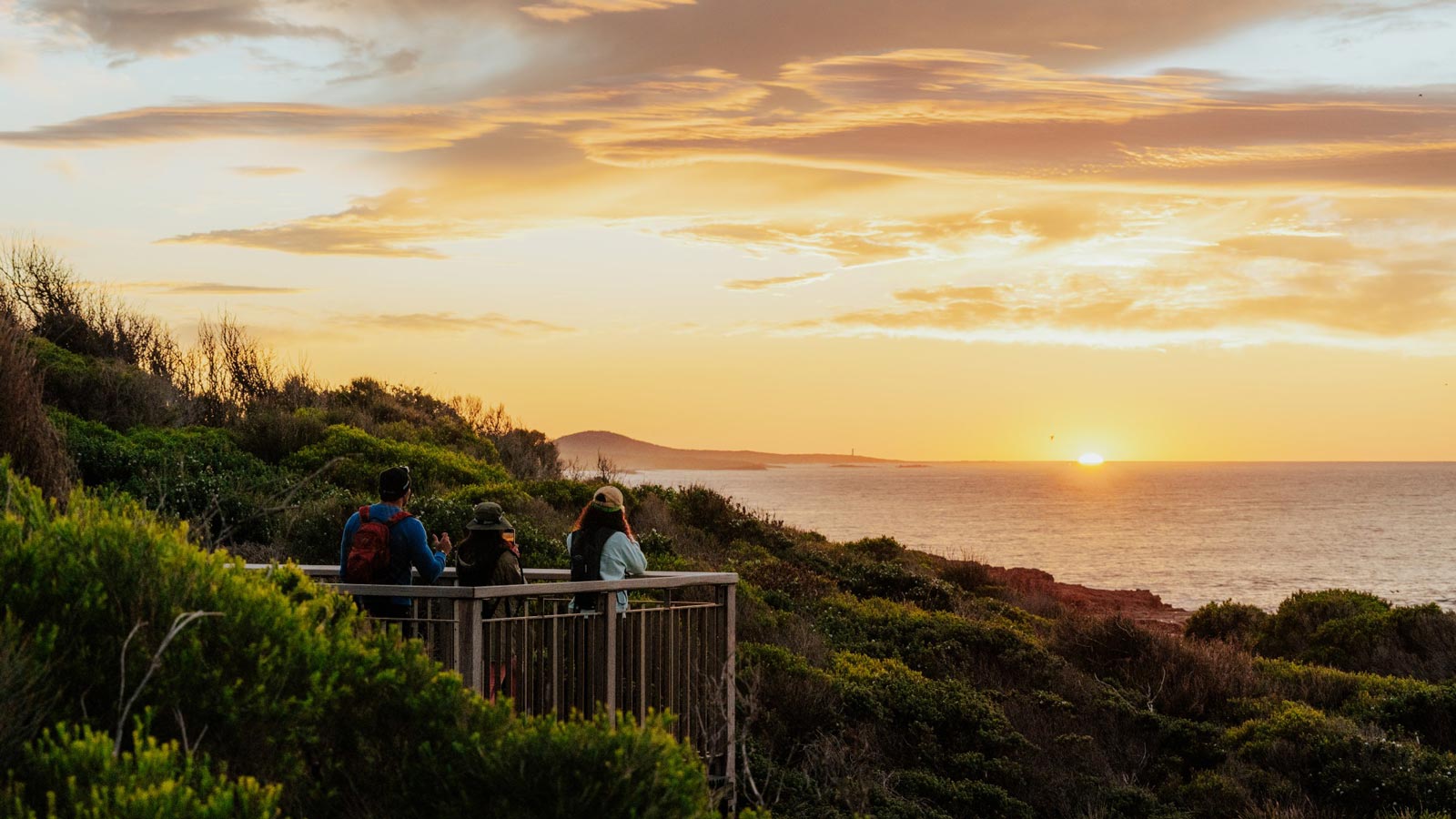
Tomaree Coastal Walk, Tomaree National Park
27km one way | Grade 3 | 2-3 days | Port Stephens
One of the NSW Great Walks, the Tomaree Coastal Walk runs along 27 kilometres of the Port Stephens coastline from Tomaree Head at Shoal Bay to Birubi Point at Anna Bay. It crosses headlands, beaches, rock platforms and lookouts, and the elevated sections give you extended views over open ocean where whales, dolphins and sea eagles are regularly seen.
You can tackle this over two to three days or walk shorter sections as day trips. Either way it’s a serious coastal walk that offers a lot more than just whale watching. The wider Port Stephens area is also one of the better spots along the NSW coast for dolphin sightings year-round.
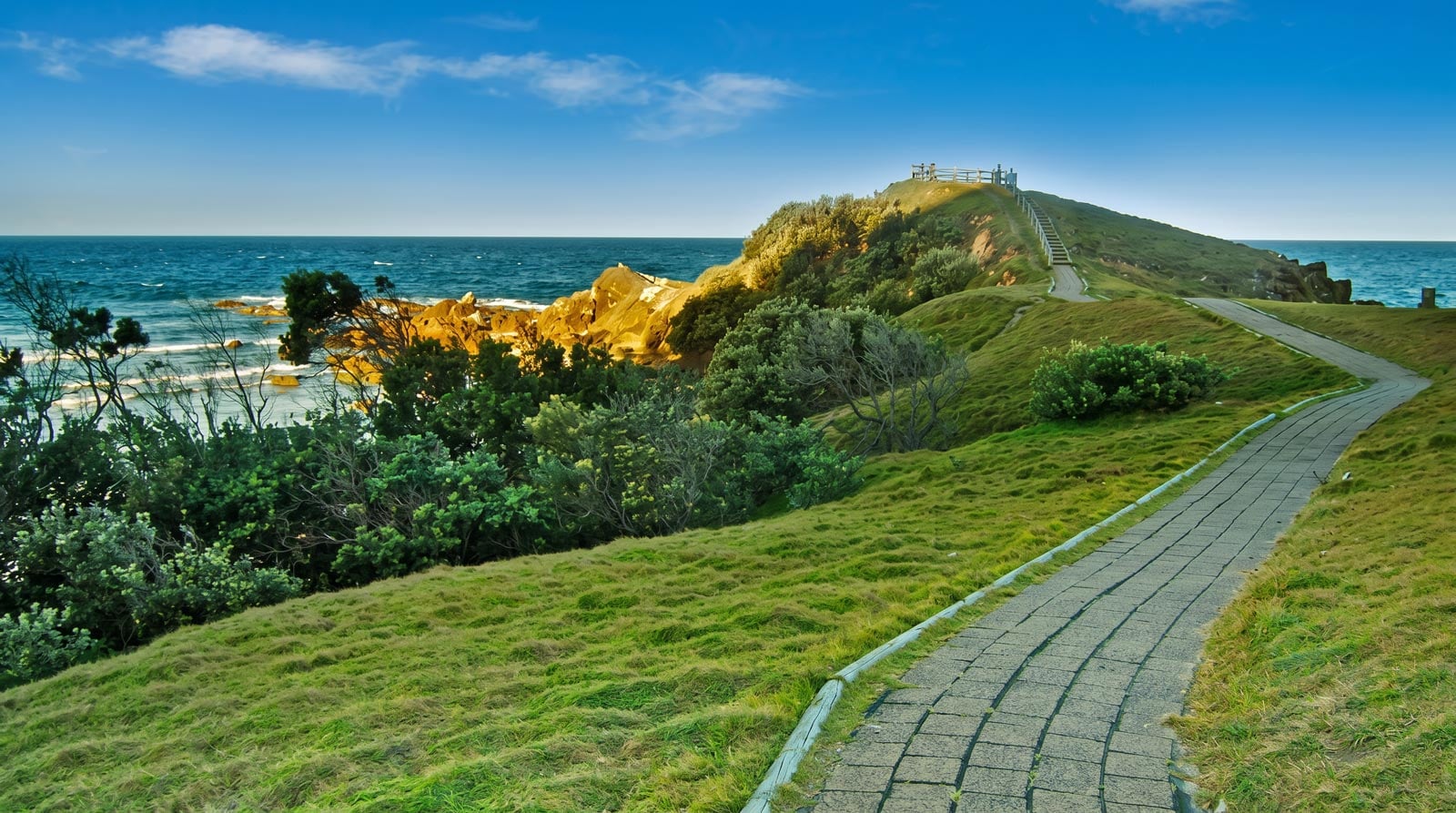
Walgun Cape Byron Walking Track, Walgun Cape Byron State Conservation Area
4km circuit | Grade 3 | Short walk | Byron Bay
Walgun Cape Byron Walking Track →
At Australia’s most easterly point, this walk packs a lot in. The 4km circuit moves through coastal rainforest, open grassland, clifftops and beach access, all while keeping the ocean in view for most of the route. The Cape Byron Lighthouse sits high on the headland and is one of the best natural vantage points on the entire east coast.
Whale watching is possible here from May through to November, which is one of the longest windows on this list. Humpbacks are the main attraction, but dolphins, turtles and seabirds are regular companions. This far north, you’re watching whales that are well into their migration rather than just beginning it, which can mean larger groups and more surface activity.
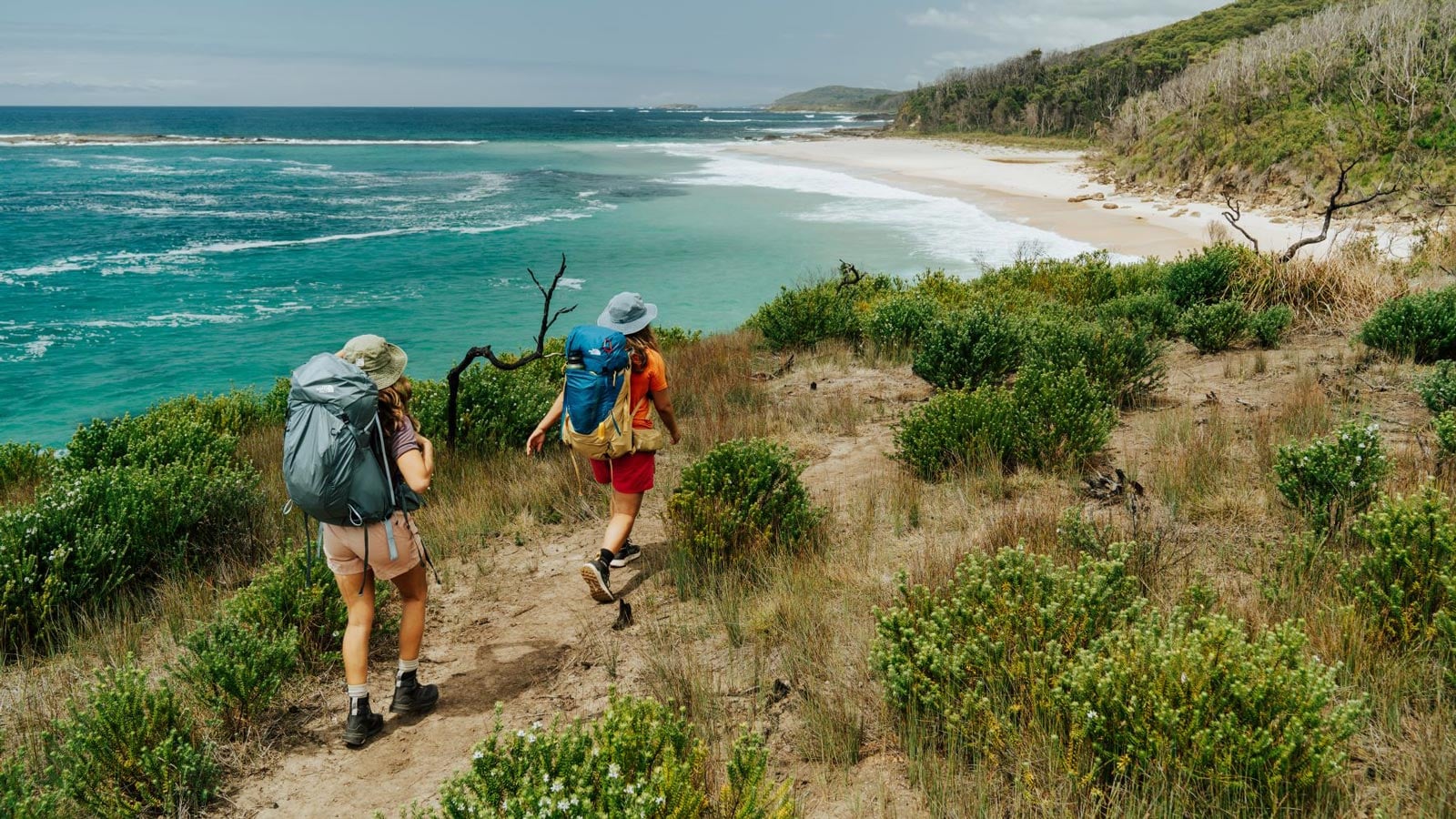
Murramarang South Coast Walk, Murramarang National Park
34km one way | Grade 4 | 3 days | South Coast
Murramarang South Coast Walk →
One of the more remote whale watching hikes in NSW, the Murramarang South Coast Walk runs 34 kilometres between Pretty Beach and Maloneys Beach through some of the least-visited coastline in the state. Secluded bays, striking rock platforms and rare spotted gum forests that run right down to the beach make this a genuinely different experience to the walks further north.
Whale watching from the coastal lookouts is possible from May to November. Eastern grey kangaroos are almost certain on the beaches, and white-breasted sea eagles are a regular overhead presence. The combination of remote coastline and multi-day format means you have time to slow down and actually watch.
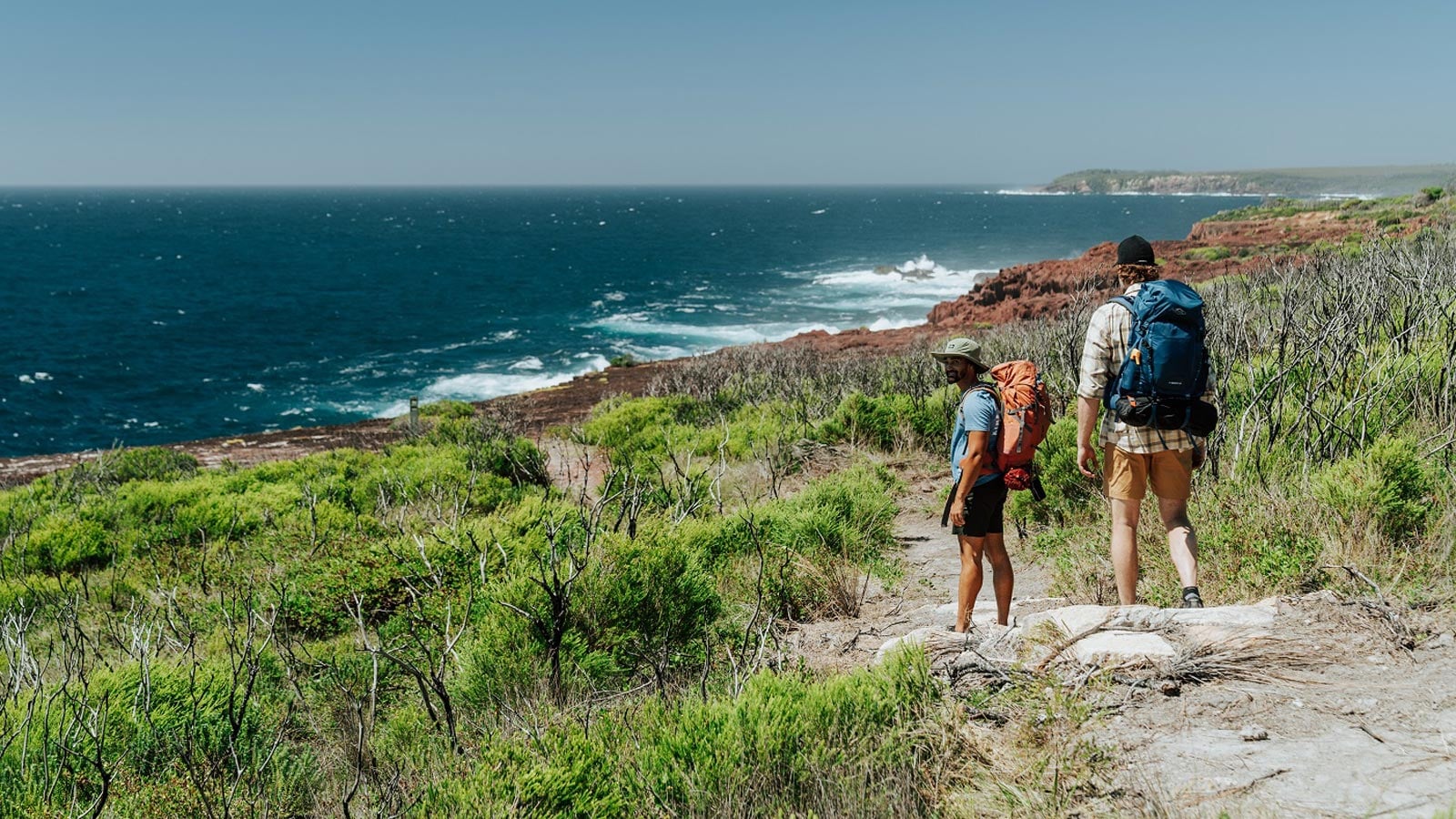
Light to Light Walk, Beowa National Park
32km one way | Grade 4 | 3 days | Far South Coast
Save this one for later in the season. The Light to Light Walk near Eden runs between Boyds Tower and Green Cape Lightstation through 32 kilometres of rugged far south coast. Windswept headlands, sheltered bays, red-rock platforms and quiet beaches make up the terrain, and the landscape is genuinely wild in a way that feels different to the more visited coastal walks further north.
What makes this walk stand out for whale watching is the timing. September to December catches the return migration south, when humpbacks and southern right whales are heading back toward Antarctic feeding grounds. Southern right whales are more commonly seen here than anywhere else on this list. The elevated headlands and lookouts at Boyds Tower and Green Cape put you directly above some of the best vantage points on the entire coast.
If you can only do one multi-day whale watching walk in NSW, this is the one to plan around.
Practical Notes for Whale Watching Hikes
Timing your walk around conditions matters. Calm, clear days with low swell give you the best visibility offshore. After rough weather, the ocean surface is too disturbed to spot blows or movement at distance. Early morning light is also easier to scan than afternoon glare.
Height is your friend. The higher the lookout, the wider the field of view. Elevated headlands like Cape Byron, North Head and the Light to Light lookouts give you a much better chance than flat beach-level tracks.
What to look for. Start with the blow, the tall column of mist that appears when a whale surfaces to breathe. Humpbacks produce a distinctive bushy blow up to three metres high. From there, watch for the slow roll of the back and the tail fluke on the dive. Surface activity like breaching and pec slapping tends to be more common in the morning.
Stay safe near edges. Clifftop tracks require the same attention as any exposed walking. Stay behind barriers at formal lookouts and keep a safe distance from cliff edges, particularly on wet or windy days.
For a full list of NSW coastal walks, browse the NSW trail listings →.
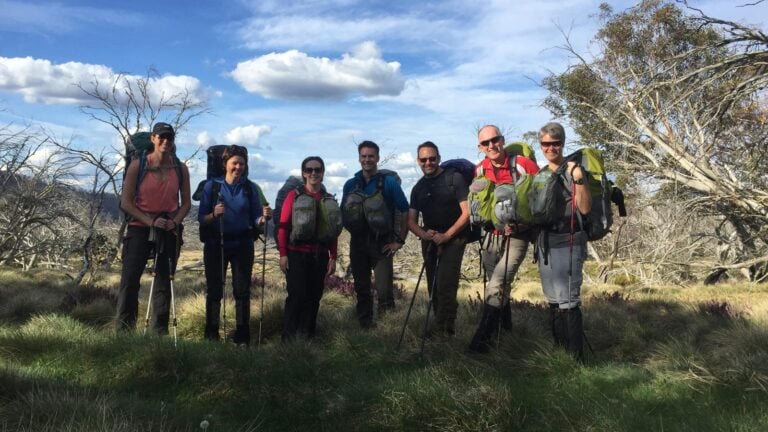
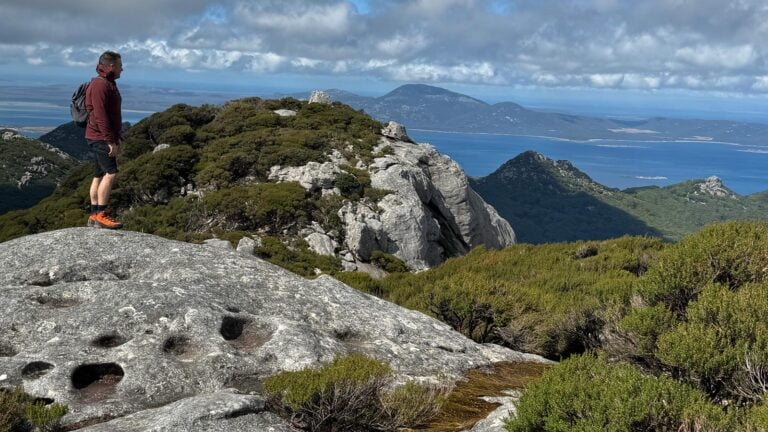





Have you ever spotted a whale on a coastal hike, either in NSW or another state? I’ve spotted a few off the coast of Victoria.