Most group hikes start with a shared sense of confidence. Plans have been talked through, roles are loosely understood, and everyone assumes decisions will keep getting made together as the day goes on. Early on, that usually works well. People point out changes in the terrain, question a route choice, add whatever they’re noticing, and the group moves at a pace that feels comfortable for everyone.
That dynamic can shift as conditions change, and it rarely shifts abruptly. It usually starts with small increases in effort: the terrain runs slower than expected, heat builds, navigation gets less clear, progress falls behind the plan. None of those things are unusual on their own. Together, they start putting real pressure on how the group is actually functioning.
As that pressure builds, decision-making tends to centralise. Whoever’s leading starts setting the pace more firmly. Decisions get made faster, and suggestions from others get acknowledged without really being explored. The group moves with less discussion, not because anyone disagrees, but because keeping the flow going feels easier than interrupting it. Social dynamics shift alongside this. Less experienced members start assuming someone else has a clearer read on the situation. More experienced members start feeling responsible for keeping things moving. Anyone who notices something uncertain may hesitate to raise it, especially if raising it would slow the group down or push back on a direction that’s already been chosen. None of that is unusual behaviour. It’s a normal part of how people act in groups. What changes is how those normal behaviours interact with the environment once things start going less smoothly.
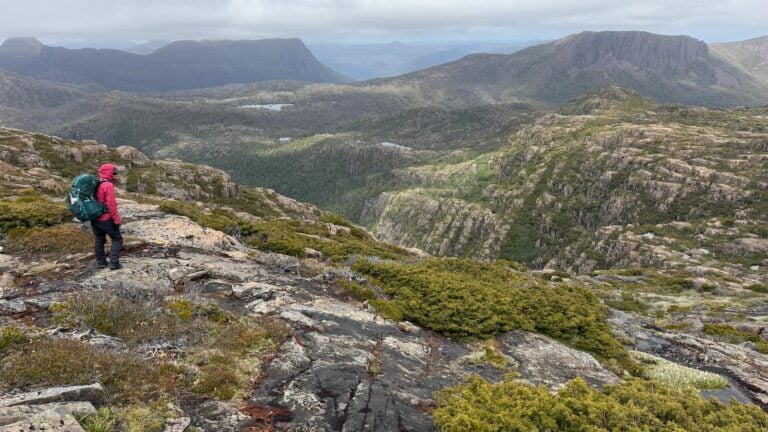
Someone once described a day to me that captures this well. A group of five was moving through mixed terrain, and the track had gone faint across a series of scrub-covered ridges. Route decisions had been open and shared early in the day, but by mid-afternoon, running behind schedule, the group had settled into following a single line set by whoever seemed most confident. At one point the track disappeared entirely into dense vegetation. There was a brief pause, but no real reassessment, just an assumption the line would reappear further on. Nobody wanted to suggest turning back to confirm the last known point, so the group kept going. Over the next hour, movement slowed as the terrain got harder, and while the group kept following the same line, their actual certainty about where they were kept eroding. When they finally stopped to check, they’d drifted well off the intended route.
None of the individual decisions in that sequence look unreasonable on their own. Continuing felt efficient. Trusting the most confident person felt logical. Avoiding unnecessary stops felt like keeping momentum. What actually changed was the interaction between leadership, social pressure and terrain, not any single choice.
As navigation got less certain, what the moment actually called for was more deliberate checking. What happened instead was the opposite: decisions got faster, the threshold for stopping rose, and interrupting the group’s movement started to feel like it cost more than simply continuing did. Navigation uncertainty went unaddressed early, which meant movement continued, which built fatigue, which narrowed attention and made reassessment even less likely. As the day wore on, daylight ran shorter, adding its own pressure to keep the pace up, and each of these things reinforced the next. Group dynamics amplify all of this. When one person keeps moving confidently, it makes everyone else less likely to question the direction. When the group’s already behind, suggesting a pause feels disruptive even to someone who’s genuinely unsure. Uncertainty can be sitting there, recognised, and still go unvoiced. From the outside it all looks functional, the group’s moving, decisions are being made, but the quality of those decisions can already be slipping well before anyone notices.
It matters because groups get assumed to be safer than individuals by default. More people usually does mean more knowledge and more perspective, and under stable conditions that’s often true. Under real strain, groups can actually become less responsive to uncertainty, not more. Decision-making centralises, communication drops off, and social pressure discourages the reassessment that would normally catch a problem early. Just having other people there can create a feeling that the situation is understood, even when nobody’s actually confirmed it.
Leadership is what determines how this plays out. Good leadership isn’t just about giving direction, it’s about maintaining the conditions that let the group keep functioning well: making room for input, actively encouraging reassessment when something changes, recognising when someone’s confidence needs testing rather than just following. Without that, leadership can narrow things down without meaning to. The group moves more efficiently, but with less actual feedback going into each decision. What starts as coordination quietly becomes compression.
None of this means group dynamics under strain cause problems by themselves. What they do is shape how a group responds once a problem starts emerging. When uncertainty gets met with continued movement instead of a genuine check, small errors compound. It’s rarely one bad call. It’s a series of individually reasonable decisions interacting under conditions that kept shifting underneath them.
Groups don’t usually fail because someone made a poor decision. They fail when the pressure of the day leaves no room left for that decision to be questioned.
This essay is part of the Human Factors in Hiking series, exploring behaviour, awareness and decision-making on the trail. Explore the series →