How you store your gear between hikes shapes how well it performs on the next one. Improper storage causes wear that shortens the life of a tent, sleeping bag, or mat well before it’s worn out from actual use, and the fix is usually simpler than people expect.
Tents, sleeping bags, and sleeping mats each have their own storage quirks, because they fail in different ways under the wrong treatment. This article walks through what actually protects each one, so trips don’t get cut short by gear that’s degraded sitting in a cupboard.
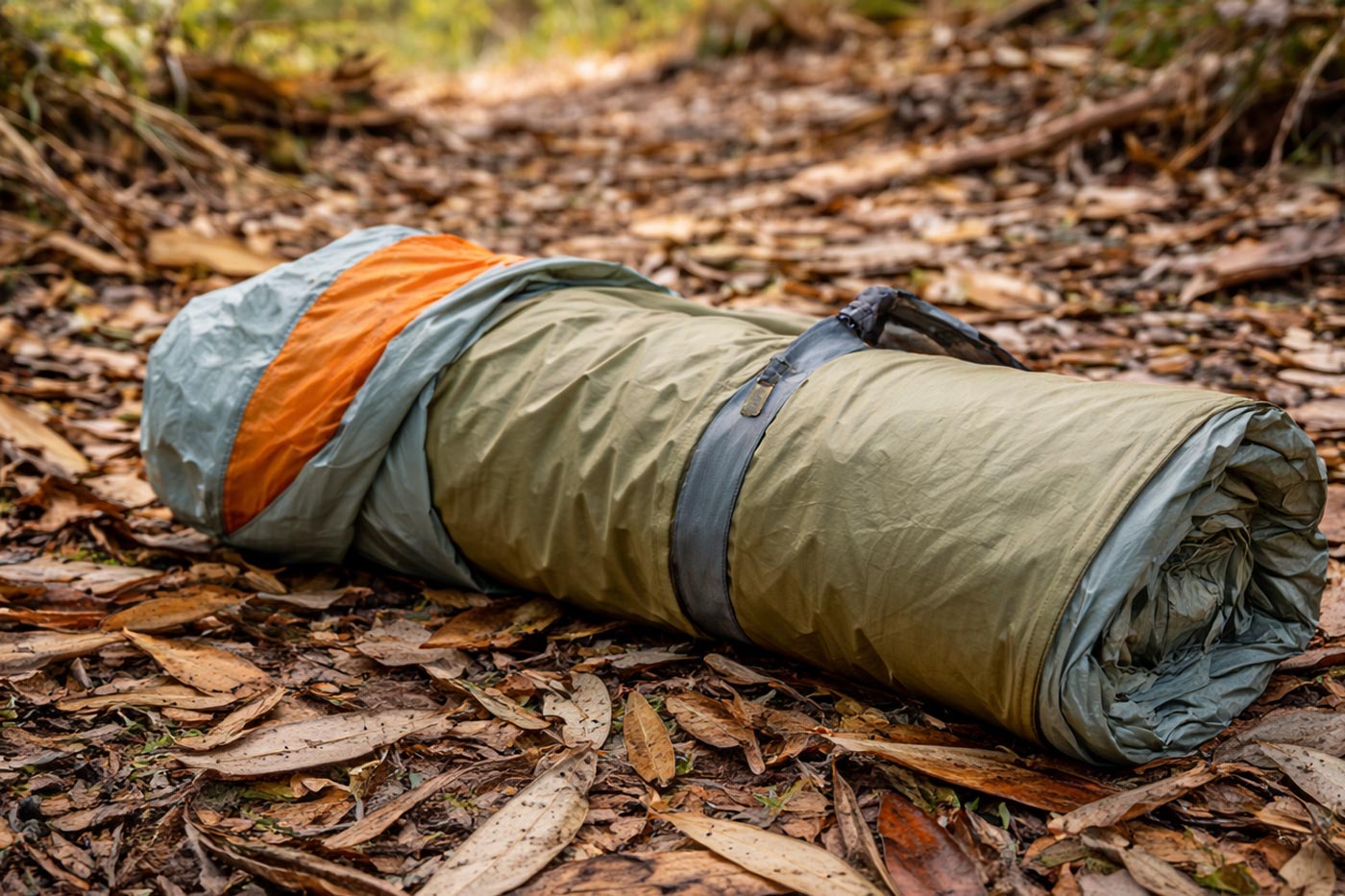
Tents: stuffing versus rolling
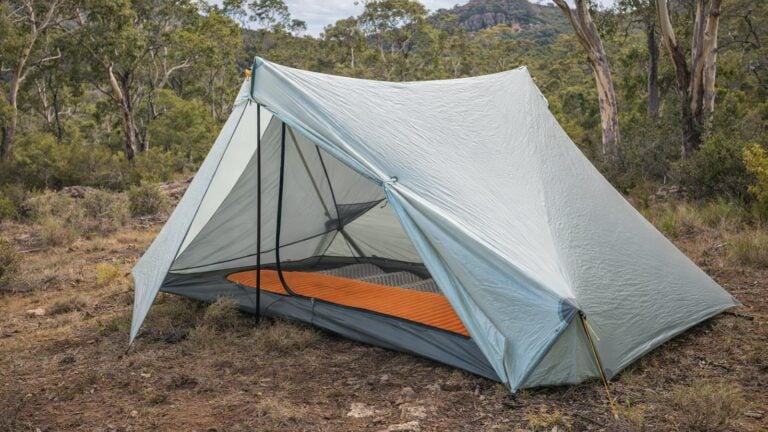
Tents are built to withstand wind, rain, and sun, but how you pack them away matters just as much to their longevity as how they perform in the field. Stuffing a tent, rolling it loosely and pushing it into its sack without much concern for how neatly the fabric folds, is the fastest way to pack up, and it’s genuinely space-efficient. The cost is that regular stuffing creases the fabric and puts stress on the seams, which weakens them over time and can eventually lead to water leakage. It can also wear down the waterproof coating, especially if the tent goes in still damp or dirty.
Rolling the tent carefully instead reduces that stress. It takes more time and can actually be bulkier than a stuffed tent when packed tightly, but it minimises creasing and protects the coating, particularly when the tent is stored dry.
In practice, I treat these as suited to different situations rather than picking one over the other permanently. If I’m in a hurry between hikes, stuffing is fine as long as the tent is completely dry first, since a damp tent left stuffed is how mildew gets a foothold. For storing a tent at home for an extended period, rolling is the better habit, because it keeps the fabric and seams under less ongoing stress. A reasonable compromise is stuffing for travel and rolling for storage when the tent isn’t going anywhere for a while.
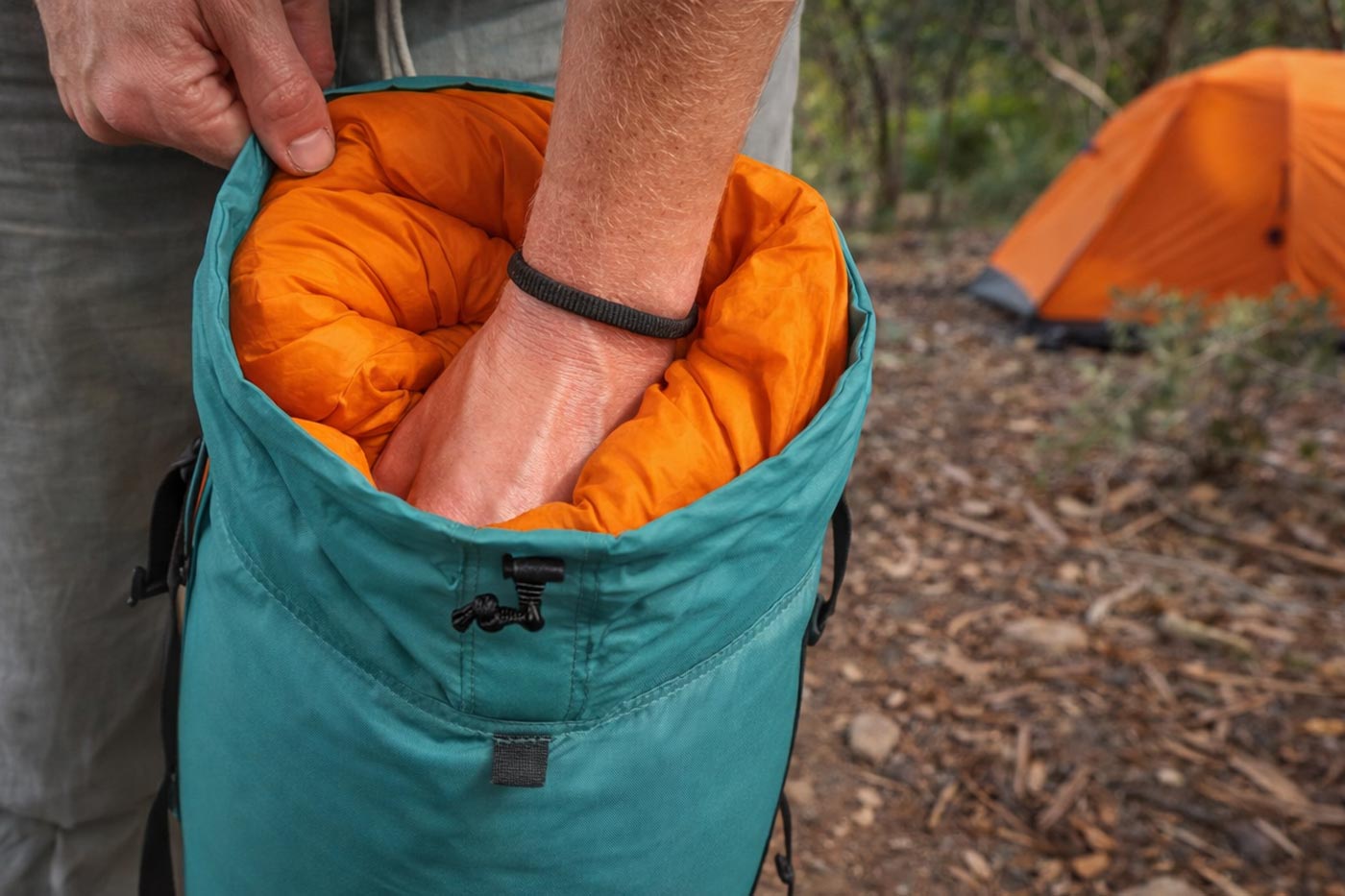
Sleeping bags: stuffing versus hanging
A sleeping bag’s storage matters as much as choosing the right one in the first place, because improper storage causes the insulation to lose loft, which directly reduces how warm the bag keeps you. Stuffing a sleeping bag tightly into its sack is fast and space-efficient, which is exactly what you want on the trail, but doing it regularly, especially compressing it too tightly, can flatten the loft in the insulation, particularly down. If the bag isn’t fully dry before it goes in, moisture also gets trapped, which leads to mildew or odour.
Storing a bag loosely or hanging it avoids all of that. It takes up more room, which is the only real downside, but it prevents compression and preserves the quality of the down or synthetic fill, keeping the bag’s warmth intact over years of use rather than one season.
The practical split is the same as with tents: stuffing is fine for the short term, during a trip, as long as you’re not over-compressing it and it’s fully dry first. For anything longer, especially storage at home, storing the bag loosely or hanging it in a dry, cool place is what actually protects the loft.
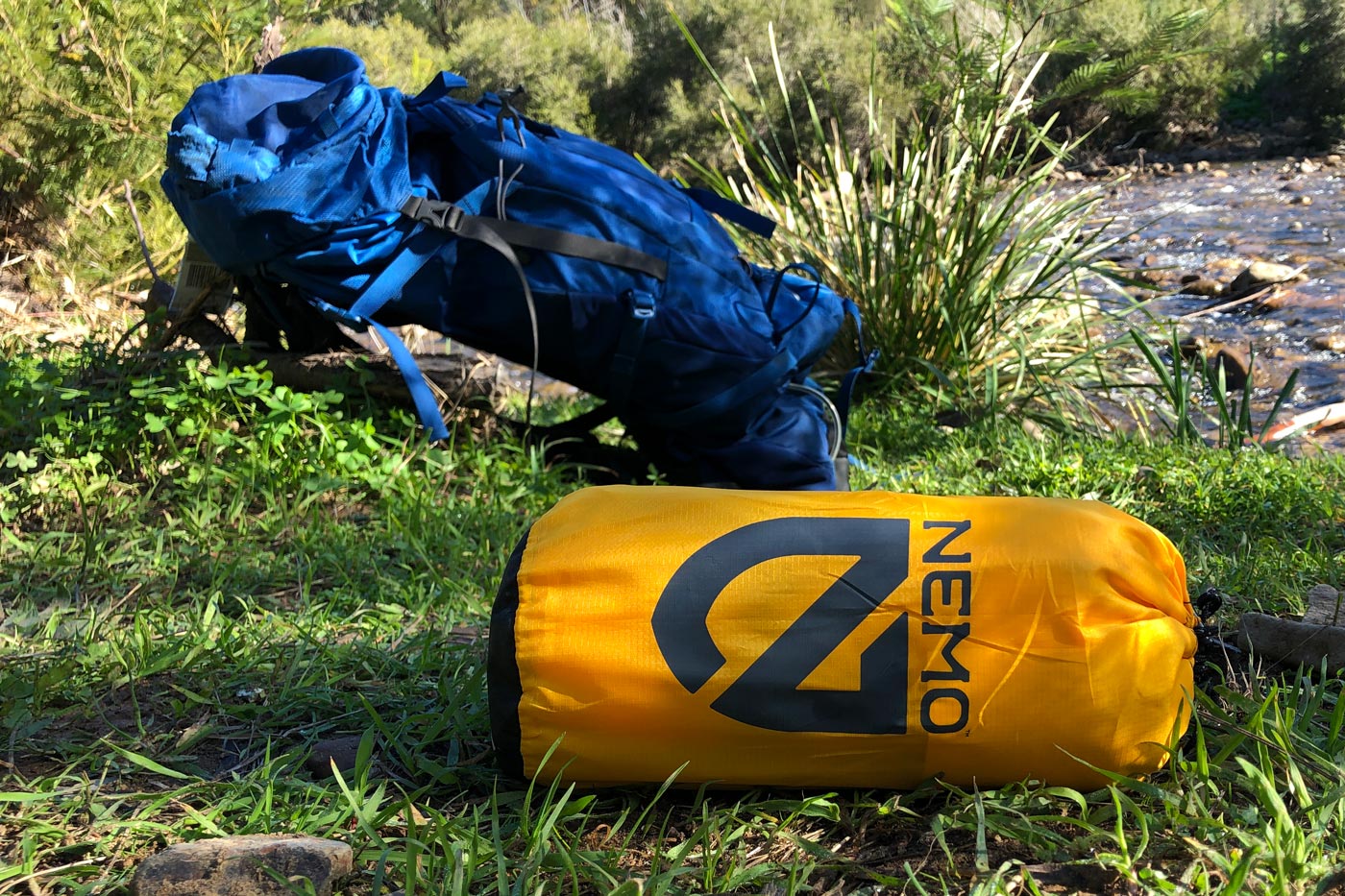
Sleeping mats: rolling versus stuffing
Sleeping mats, especially inflatable or self-inflating ones, are more prone to damage from rough handling than people assume, so storage matters here too. Stuffing a mat into its sack is quick and saves space, the same appeal as with tents and bags, but if you stuff an inflatable mat too tightly, you risk stressing the seams and valves, which is exactly where punctures and leaks start. Repeated stuffing over time also wears down the material generally, shortening the mat’s working life.
Rolling the mat carefully, avoiding sharp folds or creases, protects the seams, valves, and fabric, and compresses the mat more evenly than stuffing does, without concentrating pressure on any one spot. It just takes longer, which matters if you’re eager to pack up after a long day.
Short-term, stuffing a mat is fine as long as you’re not overly tight about it and the mat is dry first. For anything longer-term, rolling is the better habit, because it keeps the material and seams under less stress over repeated pack-downs.
Across all three, the same few habits do most of the work. Dry everything thoroughly before packing or storing it, because damp tents, bags, and mats are exactly where mildew takes hold, and that kind of damage doesn’t reverse. Store gear in a cool, dry place out of direct sunlight, since UV and heat degrade fabrics and coatings over time regardless of how carefully you’ve folded anything. Avoid leaving gear compressed for long periods, a breathable storage sack that lets things sit loosely is worth the extra space it takes up. And it’s worth actually checking gear periodically for mildew, damage, or wear rather than assuming it’s fine, because catching a small problem early is what keeps it from becoming the reason a trip gets cut short.




I used to always meticulously roll my gear, the same way it came out of its packaging. Now my tent and sleeping bag get stuffed.
Trail Hiking Australia Came across a Finnish trend of stuffing your sleeping bag in your ruck last. Pushing it around all the items to take up the gaps and free space…
I’ve never tried it but it makes total sense in terms of maximising space. 🤔
Murky Murk it does make total sense. I do that with my puffer jacket but haven’t tried my sleeping bag or quilt.
Trail Hiking Australia I might give it a try and see if it messes with my pathological need to have everything neatly compartmentalised. 😅
Murky Murk hahahah. I totally hear you there. The thought of just stuffing it in, messes with my head too
Always stuff!
My sleeping bag even has stuff don’t roll in it’s packing instructions
Fold roll the tent. Stuff the sleeping bag.
Stuff when using, roll while storing for the tent, roll my sleeping bag when using and mesh sack for storage.
everything is stuffed and squashed.