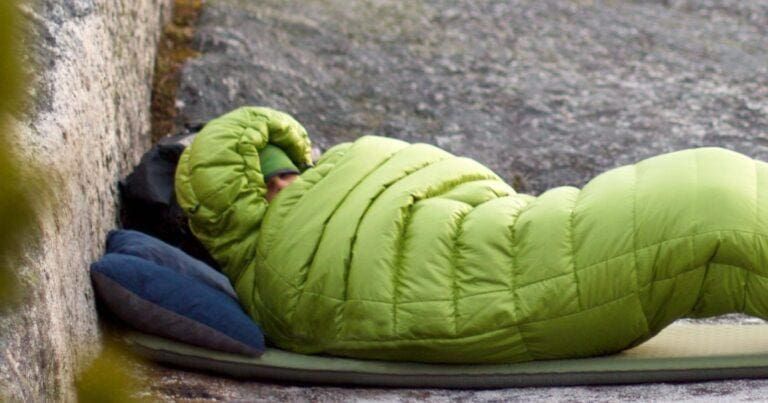
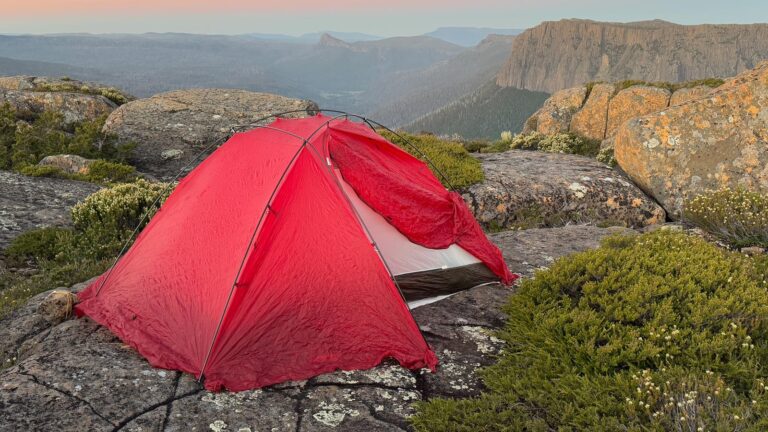
A good night’s sleep on the trail is not about owning the warmest sleeping bag or the thickest mat. It comes from how all the parts of your sleeping setup work together as a system. Many hikers run into trouble because they treat sleeping bags, mats, and quilts as separate purchases rather than parts of a single problem. They upgrade one item, still sleep cold, and assume they chose badly. In reality, the system was incomplete or unbalanced.
I’ve seen this trip up plenty of hikers who’d bought good gear and still spent the night shivering. This guide explains how hiking sleeping systems work, what each component does, and why failures usually happen at the gaps between them.
What is a hiking sleeping system?
A hiking sleeping system is the combination of gear that keeps you warm, supported, and protected while sleeping overnight. At a minimum, it includes:
- Top insulation, such as a sleeping bag or quilt
- Ground insulation, usually a sleeping mat
- Shelter and site choice, which control wind and moisture
- Clothing and head insulation, which fine-tune warmth and comfort
Emergency insulation, such as a lightweight bivvy or spare thermal layer, adds redundancy to the system. In Australian conditions, wind shifts, unexpected rain, or sharp temperature drops can expose weaknesses quickly. A small backup layer can prevent a minor comfort issue from escalating into a safety problem.
Each part plays a different role. If one part is weak or mismatched, the entire system underperforms.
Warmth does not come from one item doing all the work. It comes from reducing heat loss in multiple directions at the same time.
Why sleeping bags alone are not enough
Sleeping bags are designed to trap warm air around your body. That works well on top and around the sides, but it breaks down underneath you. When you lie on a sleeping bag, the insulation beneath you is compressed. Compressed insulation cannot trap air, and trapped air is what provides warmth. This is why even very warm sleeping bags feel cold if used without adequate ground insulation. This is also why adding a warmer sleeping bag does not fix a cold night caused by a poor sleeping mat. The heat loss is happening downward, not upward.
The critical role of the sleeping mat
The sleeping mat is the foundation of the entire system.
Its primary job is insulation, not cushioning. Comfort matters, but warmth matters more. A mat with insufficient insulation will allow body heat to transfer into the ground, which can rapidly drain warmth even in mild conditions. In Australian conditions, this catches people out regularly. Nights can be cold at elevation, in alpine areas, and even at sea level after rain. The ground temperature often matters more than the air temperature. If you are sleeping cold, the mat is often the limiting factor, even when the sleeping bag looks appropriate on paper.
How quilts change the system
Quilts work on the same principle as sleeping bags but remove insulation from underneath you entirely. Instead of relying on compressed insulation, quilts depend on the sleeping mat to provide all ground insulation. This can be very effective when used correctly. Quilts can save weight and pack smaller, but they demand better system awareness.
Because quilts are open-backed, they rely on:
- A well-insulated sleeping mat
- Good draft control
- Careful setup
Inadequate mats or poor sealing around the edges are common causes of cold nights with quilts. This is not a flaw of quilts, but a system mismatch.
Heat loss happens in multiple directions
Your body loses heat in several ways while sleeping:
- Downward into the ground
- Upward into cooler air
- Sideways through drafts
- From exposed areas like the head, neck, and feet
A sleeping system must address all of these.
Focusing only on the sleeping bag ignores where heat is actually escaping. Many cold sleepers discover that fixing drafts, improving head insulation, or upgrading a mat makes a bigger difference than changing bags.
Why temperature ratings are only part of the story
Sleeping bag temperature ratings are useful, but they assume ideal conditions and a complete system.
Ratings typically assume:
- A specific sleeping mat insulation level
- No wind exposure
- Dry conditions
- A well-fed, rested sleeper
Real hiking conditions rarely match these assumptions. Fatigue, humidity, wind, and insufficient calories all reduce your ability to stay warm. This is why two people can have very different experiences in the same bag on the same night. Understanding the system helps you interpret ratings realistically rather than taking them at face value.
Australian conditions amplify system weaknesses
Australian hiking conditions create unique challenges for sleeping systems:
- Large day–night temperature swings
- High humidity in coastal and forested areas
- Cold ground even in mild air temperatures
- Wind exposure in alpine and open terrain
These factors make ground insulation, draft control, and moisture management especially important. A system that works well overseas or in theory may underperform locally if these elements are ignored. I’ve been caught out by a “mild” forecast more than once, only to find the ground colder than the air had any right to suggest.
Why sleep failure affects safety
Poor sleep on the trail affects more than comfort. Inadequate insulation increases fatigue, slows recovery, reduces cognitive sharpness, and raises the risk of poor decisions the following day. In cold conditions, a failed sleep system can also increase hypothermia risk, particularly when combined with fatigue, wet clothing, or insufficient calories. A reliable sleep system is therefore not a luxury item. It is a stability system that supports judgement, mobility, and resilience.
Common sleeping system mistakes
Most problems come from predictable misunderstandings:
- Using a warm sleeping bag on a poorly insulated mat
- Assuming thickness equals insulation
- Ignoring head and neck warmth
- Relying on temperature ratings without context
- Treating quilts and bags as interchangeable without adjusting the rest of the system
Fixing these issues usually requires adjusting the balance of the system, not replacing everything.
How to think about upgrades
When improving your sleeping setup, it helps to ask:
- Where is heat being lost?
- Which part of the system is doing the least work?
- Is the issue comfort, insulation, or drafts?
Often the most effective upgrade is the least obvious one. A better mat, improved pillow support, or a small change in setup can dramatically improve sleep quality and warmth, and it’s usually the first place I look before I consider replacing a perfectly good sleeping bag.