Advantages, limits, and real-world trade-offs
The grip and wrist strap are the main contact points between you and your hiking poles. While they don’t affect how a pole packs down or fails structurally, they have a major influence on comfort, fatigue, control, and how confidently you use poles over a long day. It’s tempting to treat grips and straps as an afterthought, but in my experience using them well is often the difference between sore hands and a comfortable hike.
This guide explains the main grip materials and strap types, what each does well, where each falls short, and how those trade-offs matter in Australian hiking conditions.
Why grips and straps matter more than people expect
Grips and straps determine how force is transferred from your body into the pole. Over thousands of pole plants, small differences add up.
This becomes especially noticeable when external factors force a change in how poles feel. For example, on international trails like the Inca Trail, regulations require rubber tips to protect stone surfaces. Rubber tips change the feedback through the pole, and when that happens, grip comfort and vibration management suddenly matter much more. When you can’t change the tip, the grip becomes the main way to manage comfort.
In Australian conditions, long fire trails, hard-packed tracks, heat, and sweat place similar demands on hands and wrists.
Grip materials
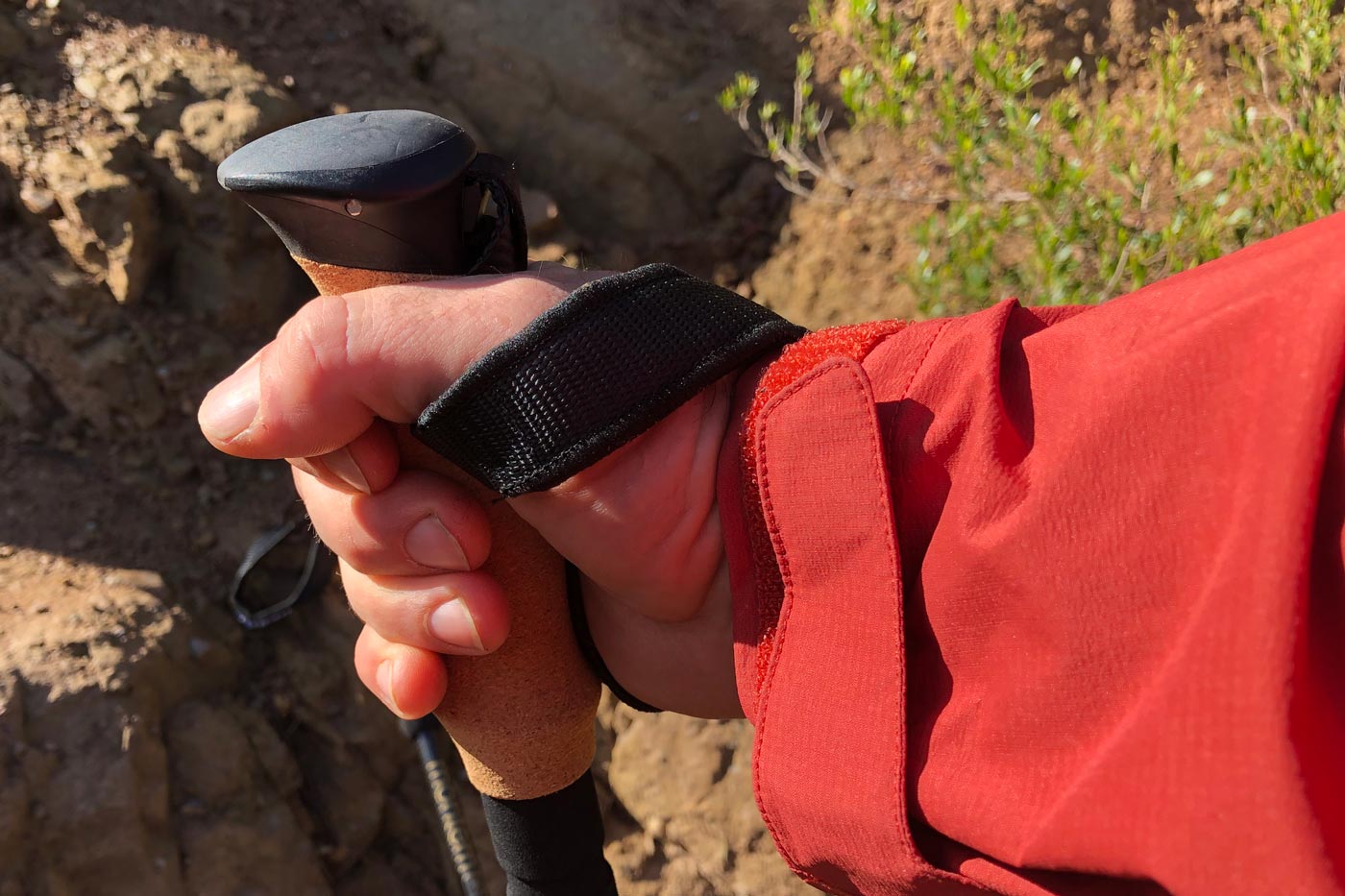
Cork grips
Cork grips are widely used and generally well suited to Australian conditions.
Advantages: Cork conforms slightly to the shape of your hand over time, improving comfort. It absorbs sweat rather than becoming slippery and tends to stay more neutral in temperature, feeling less cold in winter and less clammy in heat. For long days and multi-day walks, many hikers find cork reduces hand fatigue, and it’s the grip I default to for that reason. Cork also provides some natural vibration dampening, which helps on hard-packed tracks and fire trails.
Limitations: Cork can chip or crack if abused and takes longer to dry once saturated. It also degrades over time if repeatedly exposed to sweat and UV.
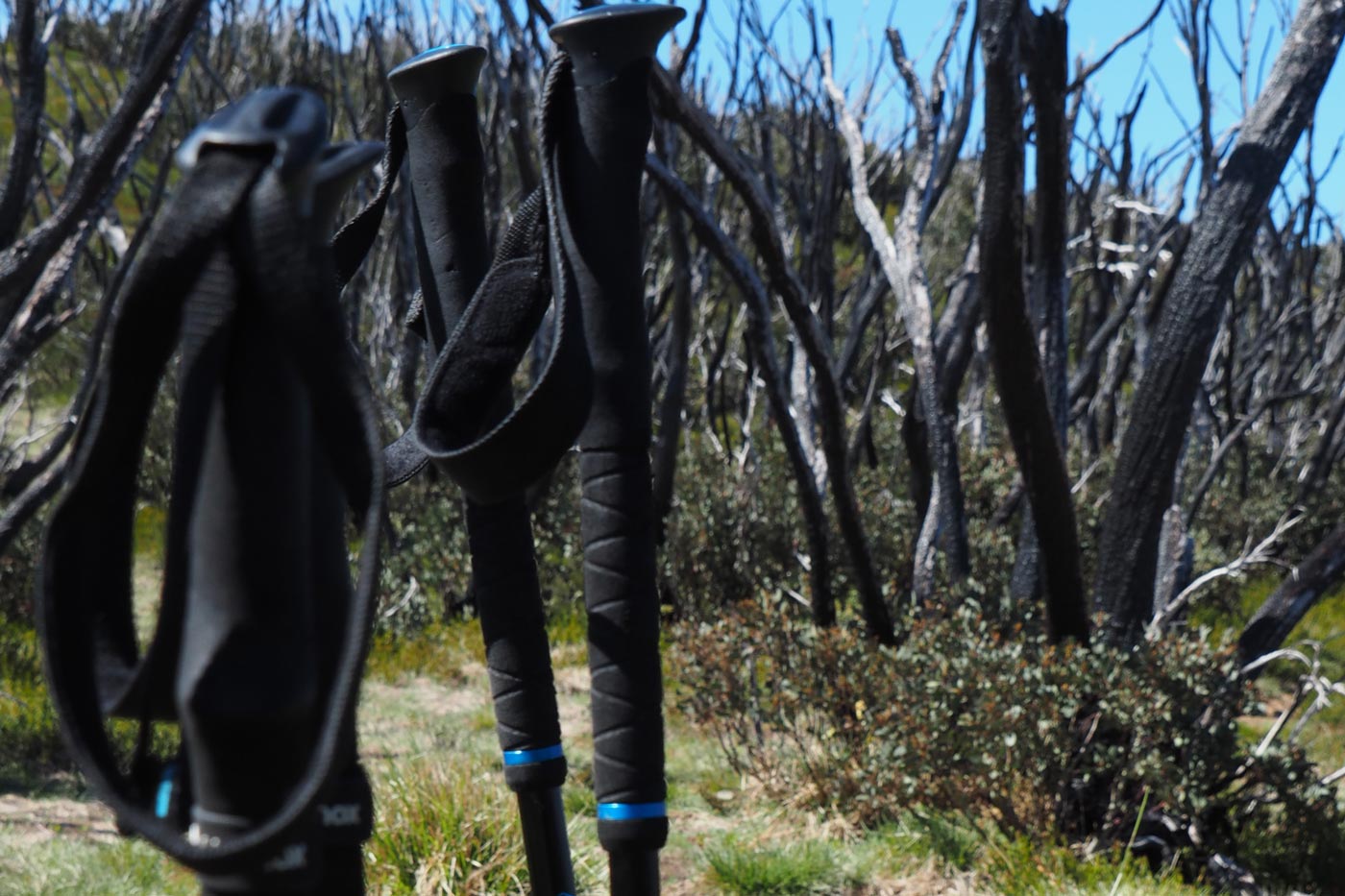
Foam grips
Foam grips are lightweight and often extend further down the shaft.
Advantages: Foam is comfortable, light, and performs well in cold conditions. Extended foam grips allow you to choke down on the pole during traverses or short climbs without adjusting pole length, which is very useful on uneven terrain.
Limitations: Foam absorbs sweat and rain and can become soggy or slippery. In Australian sun, foam can perish over time if not cared for.
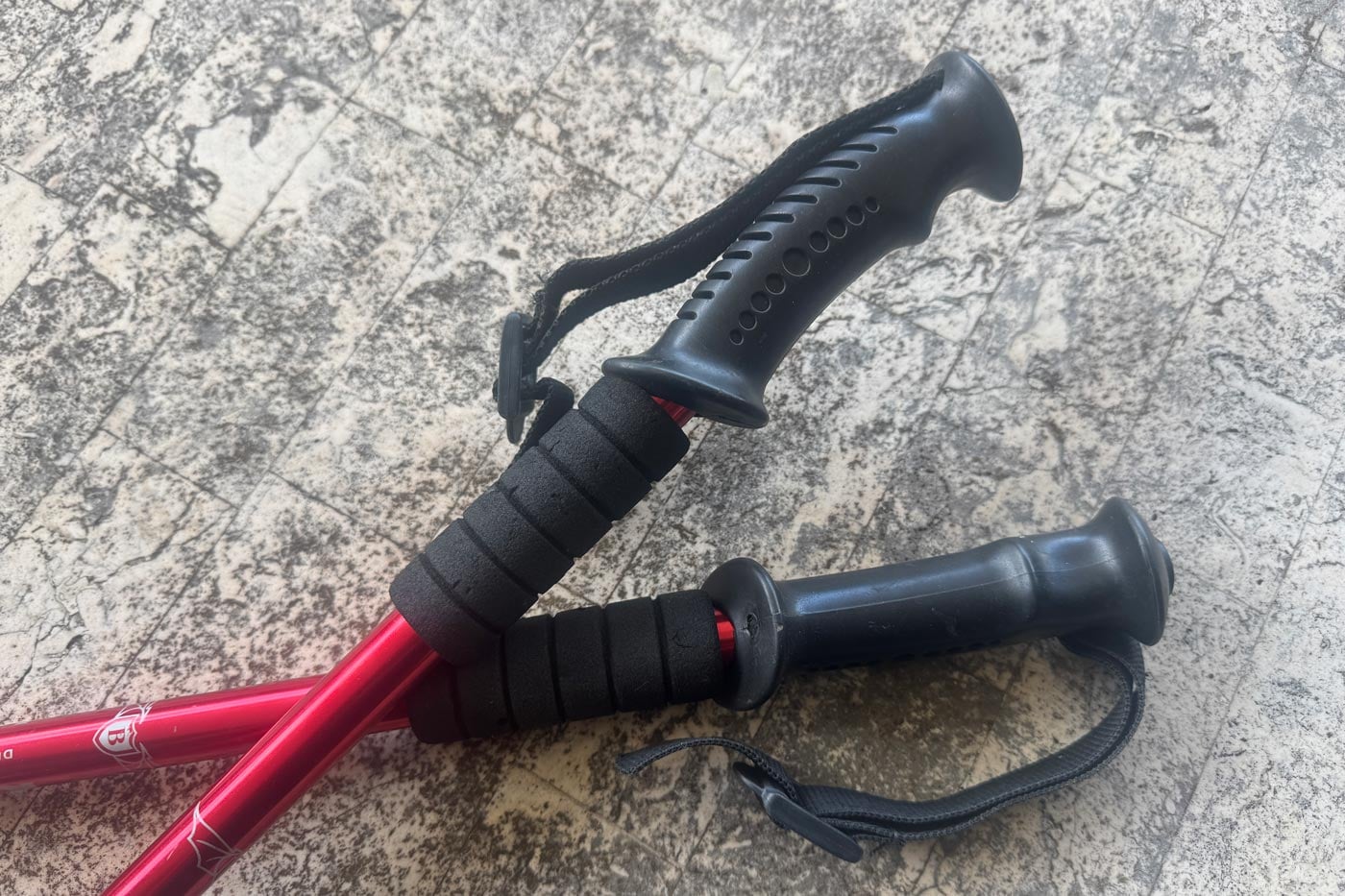
Rubber or dense synthetic grips
Rubber and dense synthetic grips prioritise durability.
Advantages: They are tough, long-lasting, and easy to clean. They tolerate abrasion and rough handling better than cork or foam.
Limitations: Rubber grips transmit the most vibration. On hard-packed fire trails, combining rubber grips with carbide tips can lead to significant hand fatigue, tingling, or numbness over long distances. They can also become slippery with sweat in warm weather.
Grip shape, extensions, and hand placement
Some grips include ergonomic shaping or palm shelves designed to spread load across the hand. These can improve comfort for some hikers but feel awkward for others. Extended grips are particularly useful in Australian terrain. They allow quick hand repositioning on side slopes or short climbs without stopping to adjust pole length.
On steep descents, I find real relief in placing my palm directly on the rounded top of the grip, rather than relying on grip strength or straps. This “palm-down” method allows you to lean on the pole more comfortably and reduces strain on the hands and wrists.
Wrist straps: what they do
Wrist straps are designed to transfer some load from your hands to your arms, reducing how tightly you need to grip the pole. Used correctly, straps can significantly reduce hand fatigue. Used poorly, they do very little or can even create problems.
How straps should be used
Your hand should come up through the strap from below, then rest on top of it while holding the grip. This allows the strap to support downward force without cutting into the wrist.
Many hikers simply slide their hand down onto the grip with the strap dangling. This provides almost no benefit and leads to over-gripping. Because this technique is counter-intuitive, a simple diagram is often helpful for beginners.
Strap types and comfort
Padded straps
Padded straps distribute pressure more evenly and are more comfortable when poles are heavily weighted, such as on long descents. They do absorb water and take longer to dry, but for most hikers the comfort trade-off is worthwhile.
Lightweight or minimalist straps
Narrow straps dry quickly and save weight but can dig into the wrist under load and provide less support.
Strapless setups
Some hikers remove straps entirely. This eliminates any entanglement risk but shifts all load to grip strength. Over long distances or on descents, this often increases fatigue.
Critical safety note: water and straps
When crossing streams or rivers, always remove your hands from the straps.
Hiking poles can be very helpful for balance in moving water, but straps introduce a serious risk. If you slip in fast-flowing water, being tethered to your poles can trap your arms or act like an anchor, making it much harder to recover or stand up. In water crossings, control matters more than load transfer. Loosen or avoid straps entirely.
Vibration and micro-fatigue
Over a long day, repeated small impacts create cumulative fatigue. Thousands of pole strikes on hard surfaces transmit micro-vibrations into the hands and wrists. Grip material plays a big role here. Cork and foam dampen vibration better than rubber. Rubber grips combined with hard tips on firm surfaces are the most likely to cause tingling or numbness over time.
If you regularly hike on fire trails or formed tracks, grip choice can make the difference between finishing the day comfortable or with sore, fatigued hands.
Maintenance and longevity
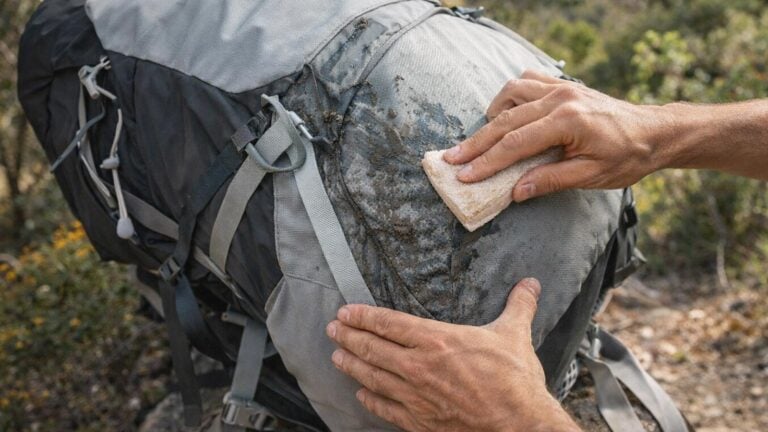
Australian heat, UV, sweat, and dust are hard on grip materials. Sweat contains salts and oils that can cause foam to perish and cork to rot over time. After multi-day walks or very hot hikes, wiping grips down with a damp cloth and mild soap helps extend their life and maintain grip.
Allow grips to dry fully before storage and avoid leaving poles in hot cars for extended periods.
Matching grips and straps to your hiking
There is no single best grip or strap for everyone.
- Long, hot walks favour cork or breathable foam
- Cold conditions favour foam
- High durability use favours rubber
- Varied terrain favours extended grips
- Knee-sensitive descents favour padded straps and correct strap use
- Technical terrain and water crossings favour loose or unused straps
Comfort should be judged over hours, not minutes.
Grip and strap design doesn’t change how strong a hiking pole is, but it strongly influences how long and how well I can use it. Comfort, vibration, sweat management, and wrist loading all matter over time, and using straps correctly and choosing grip materials that suit your terrain can reduce fatigue and help you keep using poles effectively when you need them most. As with most hiking decisions, understanding the trade-offs matters more than chasing a particular material or feature.
Explore related guides
- How and when to use hiking poles
- Types of hiking poles: advantages, limits, and real-world trade-offs
- Using hiking poles effectively: technique for ascents and descents
- Carbon fibre vs aluminium hiking poles: real-world strength and failure
- Why use rubber tips on hiking poles
- Broken or damaged hiking poles: what you can safely do
- How to straighten a bent hiking pole: on the trail and at home