Daypacks are often treated as simple gear. They shouldn’t be. For many hikers, a daypack is the pack they use most often, and it’s regularly expected to do far more than it was designed for.
I don’t think choosing a daypack is about litres alone. It comes down to understanding how long I’ll be out, what conditions I’m walking in, how much water I need to carry, and how the pack behaves once it’s loaded. In Australian conditions, these factors matter far more than whether a pack feels light or comfortable in a shop.
This guide explains how I choose a daypack that carries weight properly, manages heat, and supports real-world bushwalking rather than optimistic assumptions.
What a daypack actually has to do
A daypack is designed for single-day outings where overnight shelter and sleeping systems aren’t required. That doesn’t mean the load is light, or that the consequences of poor choices are low.
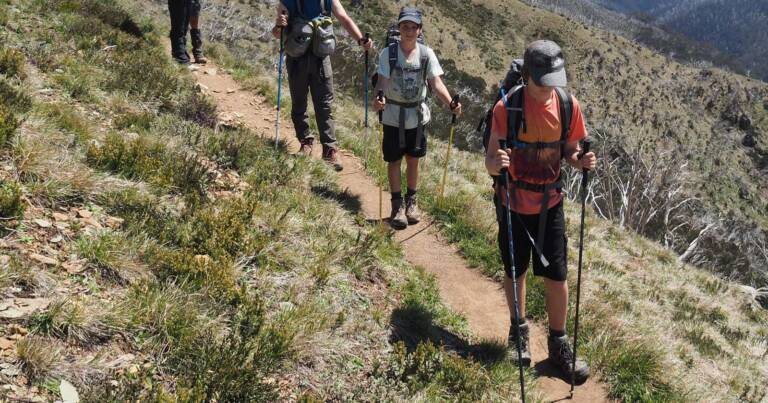
A typical Australian day hike may still require multiple litres of water, food for a full day, weather protection and insulation, first aid and emergency equipment, and navigation and communication devices. The difference between a daypack and an overnight pack is duration, not responsibility, so a serious daypack still has to carry weight efficiently and stay stable for hours at a time.
This is where many commuter or travel packs fall short. They’re built to carry laptops, not litres of water.
Why litres are only the starting point
Daypacks are commonly sold in the 11 to 35 litre range, and that spread exists because day hiking varies enormously.
In Australia, capacity is often driven by two things that rarely appear together in overseas advice: water and seasonal clothing. In summer, I might need four to five litres of water, which alone consumes significant weight and internal volume. In winter, that water is often replaced by bulky insulation such as a puffer or fleece and a hardshell jacket.
For many Australians, a daypack in the 28 to 32 litre range becomes the sweet spot, because it can handle heavy water carries in summer, bulky clothing in winter, and safety and emergency gear year-round. Smaller packs around 15 to 20 litres are often viable only for short, predictable walks, coastal tracks, or cooler conditions with reliable water, and they leave little margin when conditions change. I’d rather carry a bit of spare volume than run out of room the one day conditions turn, since that spare space is what gives a pack flexibility rather than being wasted.
Structure, hip belts, and where the weight actually goes
Many daypacks are lightly structured or completely frameless, which works fine for very light loads but becomes uncomfortable surprisingly quickly. Once a daypack load climbs above about six to eight kilograms, structure starts to matter. Without it, the pack slumps, effective torso length shortens, and weight shifts onto the shoulders, and the result is fatigue, poor posture, and reduced control on uneven terrain. A daypack with a light framesheet, a minimal internal stay, or a well-designed back panel will carry moderate loads far more comfortably than a soft pack with thick padding, because padding only disguises the problem for a while, while structure is what actually solves it.
This is also where hip belts come in, and it’s worth understanding the difference between the two types. A simple 25 mm webbing belt is for stability. It stops the pack bouncing or swinging. A padded hip belt is for weight, and it transfers load onto the hips. I don’t expect a piece of webbing to save my shoulders from a four-litre water carry. For longer days, rough terrain, or hot conditions where water weight is unavoidable, a padded hip belt makes a meaningful difference to comfort and control.
Fit still matters on a daypack
Daypacks are often sold as “one size fits most,” which encourages people to ignore fit altogether. I think that’s a mistake.
Even without adjustable torso length, a daypack should sit close to the spine rather than pulling backward, have shoulder straps that wrap smoothly without gaps, and position any hip belt on the hip bones, not the waist. A poorly fitting daypack can be just as fatiguing as a poorly fitting overnight pack, especially over long distances.
Water carry drives real-world design
In Australian conditions, water is often the heaviest single item in a daypack, so a good daypack needs to let a hydration bladder sit flat against the back panel, or let bottles be carried symmetrically on both sides. Bladders shouldn’t slump as they empty, and bottles shouldn’t create side-to-side imbalance. Packs without internal sleeves or effective compression often feel fine early in the day and sloppy by mid-afternoon.
If a daypack carries water poorly, it will never feel right, no matter how refined it looks.
A typical Australian day load for a 25 to 30 litre pack might include a 3 L bladder plus a 1 L bottle for water, lunch and snacks for food, a PLB or satellite communicator, first aid with two snake bandages, and a headlamp for safety, a rain shell, lightweight mid-layer, and sun hat for clothing, and a map, compass, phone or power bank, and small knife for navigation and tools. That’s not an excessive list. It’s what a realistic Australian day hike actually calls for.
Ventilation matters more on day walks
Day hikers often move faster than overnight hikers, generating more metabolic heat, so in Australian summer conditions back ventilation can matter more on a daypack than on a larger overnight pack. Suspended mesh or trampoline-style back panels allow airflow between the pack and the body, improving cooling and reducing sweat buildup. There is a trade-off: these designs move the load slightly further from the spine. On a daypack carrying six to ten kilograms, the cooling benefit often outweighs the small stability penalty, particularly on formed tracks, which is why I don’t dismiss mesh backs outright.
Access, external carry, and durability
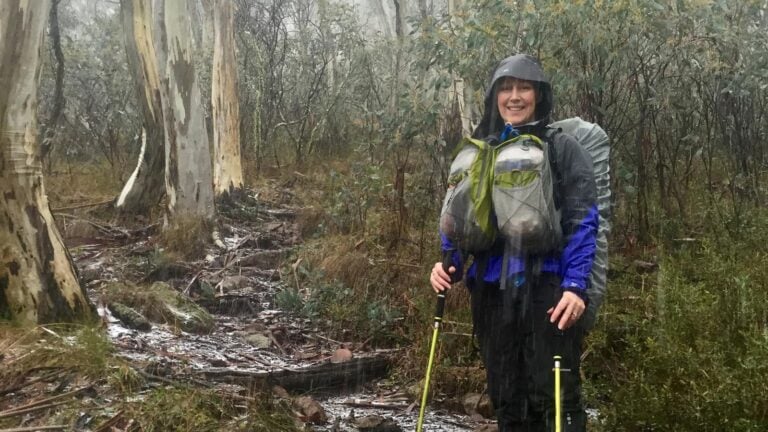
Daypacks benefit from a clearly defined “wet or dirty” zone. A large front stretch or shove-it pocket is genuinely useful for wet rain jackets, gaiters after creek crossings, a sit pad, or snake bandages that need to come out fast. Keeping wet or muddy items out of the main compartment protects food, insulation, and electronics, and makes repacking simpler during the day.
I try to pack for the trail, not the tailgate. It’s easy to pack neatly at home. It’s much harder to find critical gear on a windy ridge or in driving rain. Emergency items should be accessible without opening the main compartment, because the last thing I want is to be searching for a snake bandage while my heart rate is already climbing. That’s not a convenience issue. It’s about staying composed when it counts.
Daypacks are also often used off-track, through scrub, or on overgrown trails, and lightweight fabrics designed for urban or travel use can wear quickly in Australian bush conditions. A slightly heavier fabric is often a sensible trade-off for durability and longevity, particularly if the pack is used frequently.
Mistakes I see repeated
Some patterns come up again and again: choosing the smallest pack possible rather than the right one, ignoring seasonal volume changes, assuming daypacks don’t need structure or hip belts, treating water as an afterthought, and confusing commuter packs with bushwalking packs.
These mistakes rarely show up early. They show up late in the day, in heat, or when conditions deteriorate.
A good daypack feels unremarkable when everything is going well. It doesn’t demand constant adjustment or compensation. When I’m choosing one, I prioritise realistic water carry, structure over padding, ventilation appropriate to conditions, and access to safety-critical items. A daypack chosen this way stays useful across a wide range of Australian walks, rather than being perfect for one and frustrating for many.
Where to go next
If your day walks regularly push into heavier loads or longer hours, the boundary between daypack and overnight pack may be closer than you think.
Related guides include:
- How to choose a hiking pack: a practical decision framework
- How much weight should a hiking pack carry: limits, comfort, and safety
- How to fit a hiking pack properly: comfort, load transfer, and control
- How to pack a hiking backpack: load balance, access, and efficiency
Together, these guides help ensure your daypack is chosen for how you actually hike, not how you hope conditions will behave.