Hiking poles are often treated as a single piece of gear, but there are several different types, each built around specific compromises. Many of the frustrations hikers experience come from using a pole type that does not suit the terrain, pack weight, or style of hiking they actually do.
This guide explains the main types of hiking poles, how they differ, and what those differences mean in real Australian hiking conditions. My goal isn’t to tell you what to buy, but to help you understand what each type does well, where it struggles, and how those trade-offs affect safety and comfort on the track.
Why pole type matters
The design of a hiking pole affects far more than weight. It influences how easily poles can be adjusted on hills, how they behave when snagged in scrub, whether they can be packed away safely, how they fail when overloaded, and whether they can be used to pitch a shelter.
Choosing a pole type is largely about managing consequences. Some designs prioritise simplicity and efficiency but offer little forgiveness. Others add weight or complexity in exchange for adaptability and safety margin.
Adjustable (telescopic) hiking poles
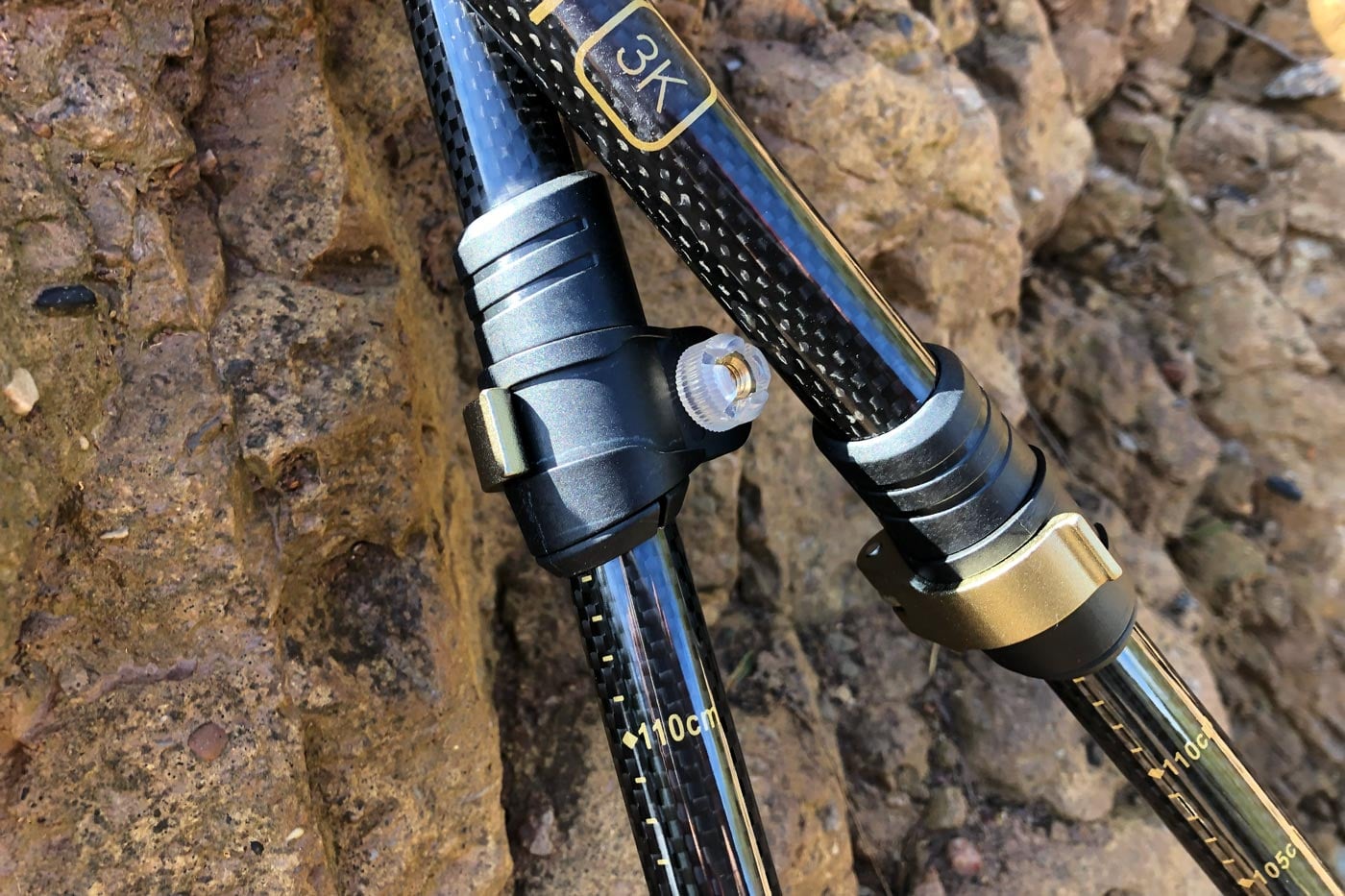
Adjustable poles are the most commonly used type among Australian hikers. They usually consist of two or three telescoping sections secured by a locking mechanism.
Advantages
Adjustable poles can be lengthened or shortened to suit ascents, descents, and traverses. This makes them well suited to varied terrain, long days, and multi-day hikes where conditions change frequently.
They can be shortened for creek crossings, stowed during scrambles, adjusted for different pack weights, and set to specific heights for trekking pole tents. For many hikers managing knee pain, the ability to lengthen poles on descents provides meaningful relief by improving braking support.
Limitations
Adjustable poles rely on locking mechanisms that can wear or slip. In dry, dusty Australian environments such as fire trails, alpine spurs, or arid regions, fine grit can work its way into both twist and lever locks. A simple maintenance habit helps: periodically taking adjustable poles apart and wiping the sections with a dry cloth can prevent locks from slipping when you’re putting weight on them during a descent.
Adjustable poles are also slightly heavier than simpler designs, though the difference is often smaller than expected.
Best suited to
Adjustable (telescopic) hiking poles are suited to everyday Australian hiking, including mixed terrain, off-track travel, multi-day trips, knee-sensitive descents, and situations where poles may need to be packed away or used to support a shelter. This is the type I reach for most often, precisely because it adapts to whatever the day throws at it.
Fixed-length hiking poles
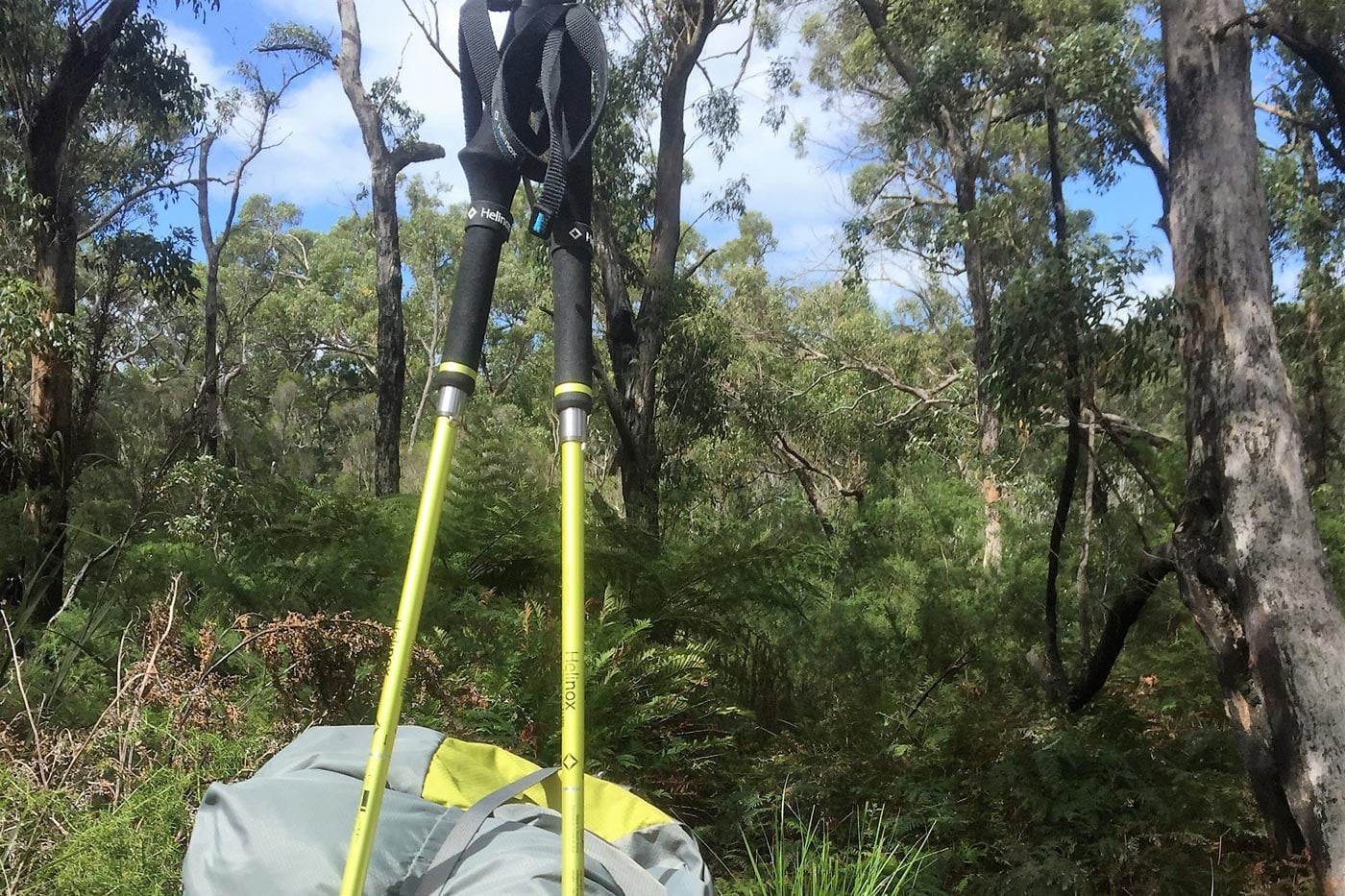
Fixed-length poles are a single, non-adjustable length, typically chosen based on the hiker’s height.
Advantages
With no moving parts, fixed-length poles are mechanically simple, light, and very stiff. There are no locks to fail and no adjustments to manage. When used on consistent terrain, they can feel precise and efficient.
Limitations
Fixed-length poles cannot be lengthened for descents or shortened for climbs. On steep downhills, this often forces the hiker to lean further forward than is ideal, reducing the amount of braking support the poles can provide. For hikers using poles primarily to manage knee pain, this can be a significant drawback.
They are also awkward to carry when not in use and are poorly suited to scrambling, dense scrub, or situations where hands need to be free. Fixed-length poles are generally incompatible with trekking pole tents unless the shelter is designed for that exact length.
Best suited to
Fixed-length hiking poles are best suited to formed tracks, consistent terrain, and hikers who prioritise simplicity and low weight over adaptability.
Folding (Z-style) hiking poles
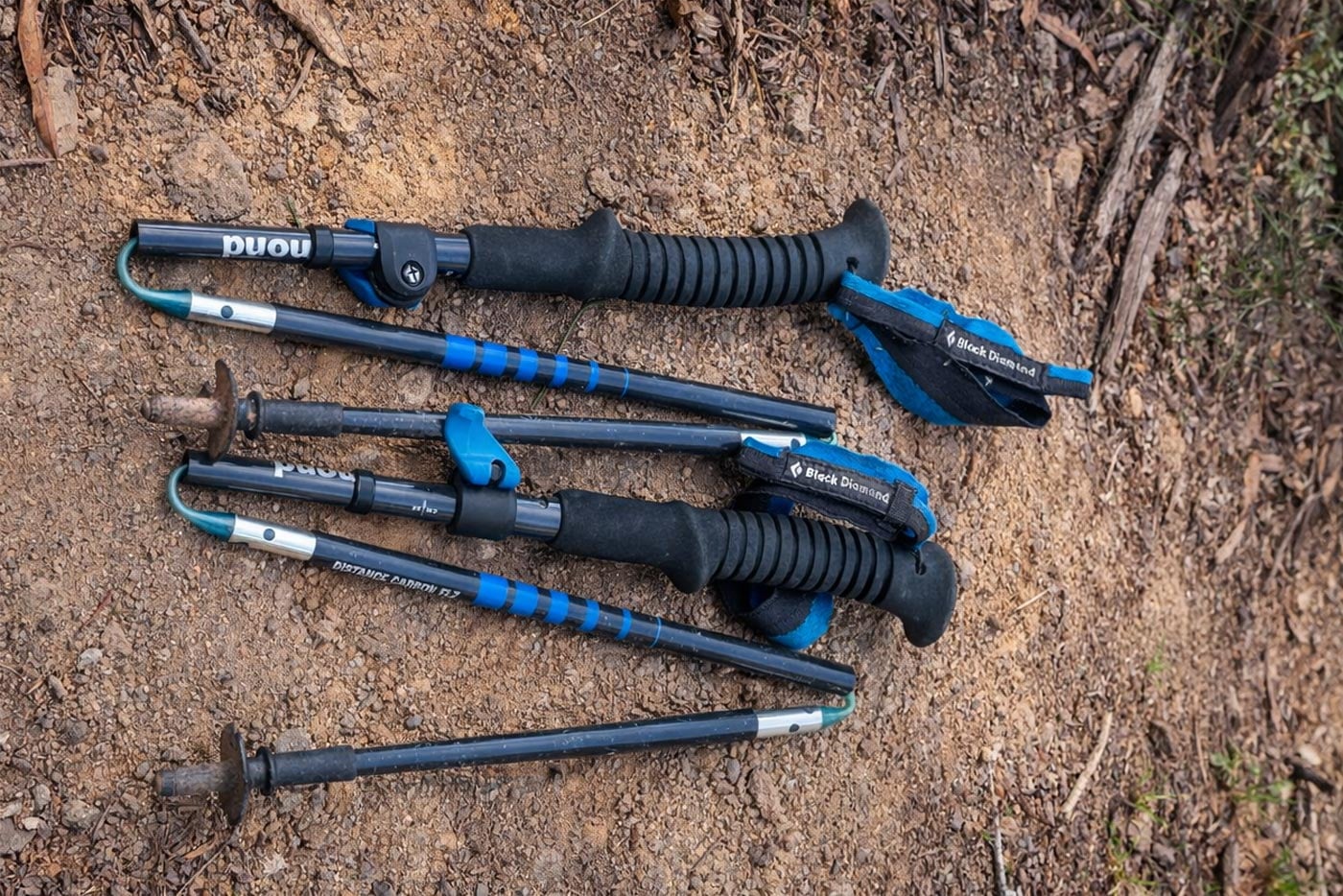
Folding poles use multiple short sections connected by an internal cord and collapse into a compact bundle.
Advantages
Their primary advantage is packability. Folding poles stow quickly and compactly, making them easy to carry during scrambles, rocky sections, or travel. They are convenient for hikes where poles are used intermittently rather than continuously.
Limitations
Folding poles rely on an internal cord system, and if that cord fails, the pole becomes completely unusable and cannot be repaired in the field. In remote Australian terrain, I’d treat this as a serious consideration rather than a minor inconvenience. On a multi-day walk in places like the Western Arthurs or the Victorian High Country, failure of an internal cord can effectively end the trip. Folding poles are also generally less tolerant of side loading and sustained heavy use, particularly in thick scrub.
Best suited to
Z-style hiking poles are best suited to trips where packability is critical and terrain is not remote or heavily overgrown.
Locking systems and reliability
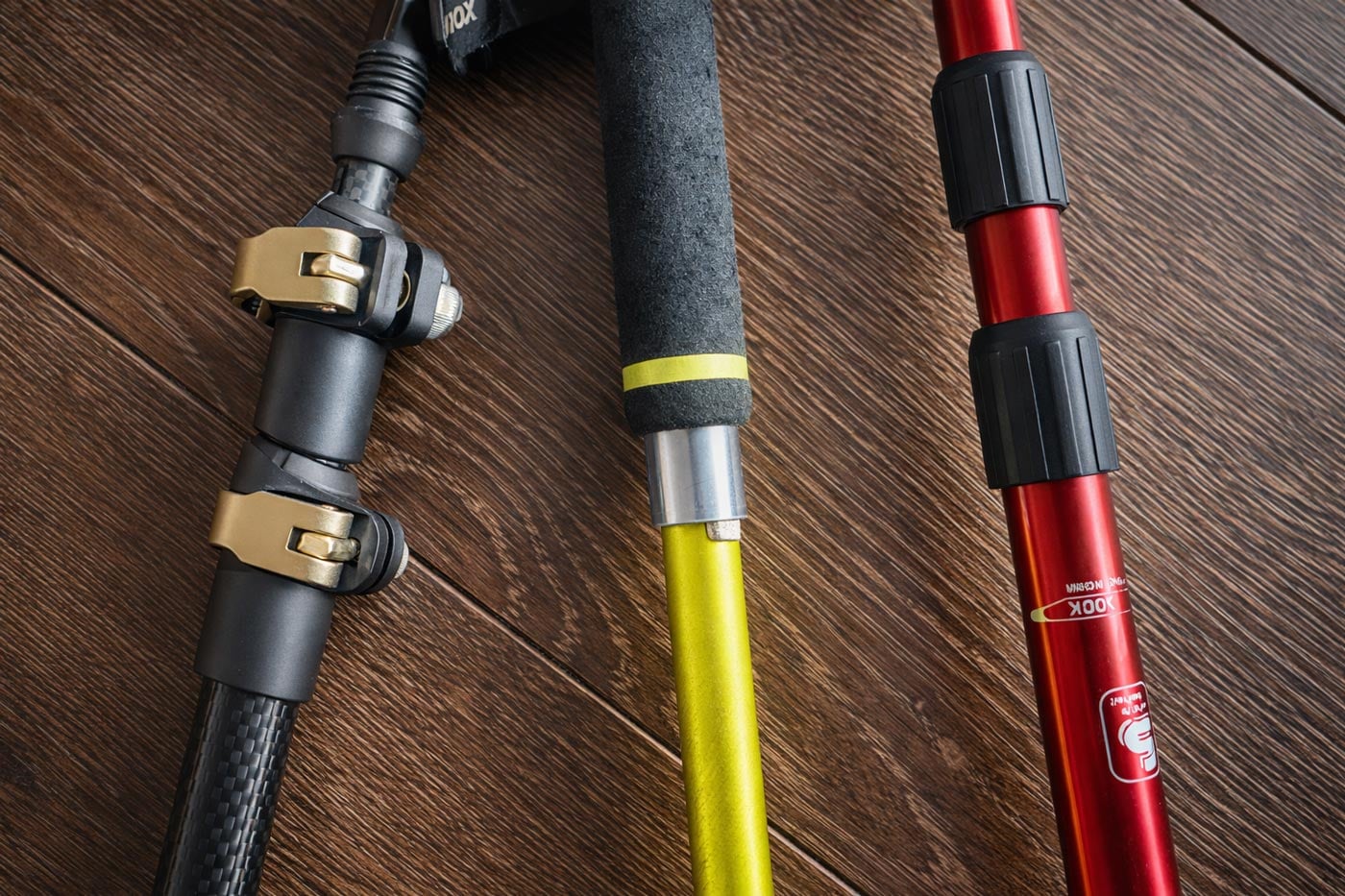
Locking systems matter most on adjustable hiking poles, but their design has direct implications for reliability, predictability, and how much margin you have if something goes wrong.
Understanding the main lock types helps explain why some poles cope better with dust, wear, and long-term use than others.
1. External lever locks
External lever locks use a cam or clamp on the outside of the pole to hold sections in place. They are easy to inspect, easy to adjust, and relatively tolerant of Australian conditions such as fine dust and grit. Because the mechanism is visible, problems are usually obvious before they become serious. The trade-off is slightly higher weight and more external components that can be knocked or bent.
2. Internal twist locks
Internal twist locks rely on an expanding mechanism inside the pole shaft that grips when the sections are twisted. They are lighter and cleaner in appearance but more sensitive to dust, moisture, and wear. When they start to slip, failure can be sudden and unpredictable, particularly under load on descents. Because the mechanism is hidden, issues are harder to diagnose on the track. I’m wary of these for exactly that reason.
3. Push-button or snap-lock systems
Some adjustable and folding poles use spring-loaded push buttons or snap locks that engage through holes in the shaft. These systems allow fast length changes and compact packing but rely on small internal components. If the button does not fully engage, the pole should not be trusted for load-bearing use. They tend to fail decisively rather than gradually.
Why predictability matters
In steep or remote terrain, a locking system that slips without warning is a greater risk than one that is heavier but predictable. For everyday Australian hiking, reliability and consistency usually matter more than small weight savings, particularly when poles are used to manage knee pain, balance on descents, or support shelters.
Material strength and wall thickness
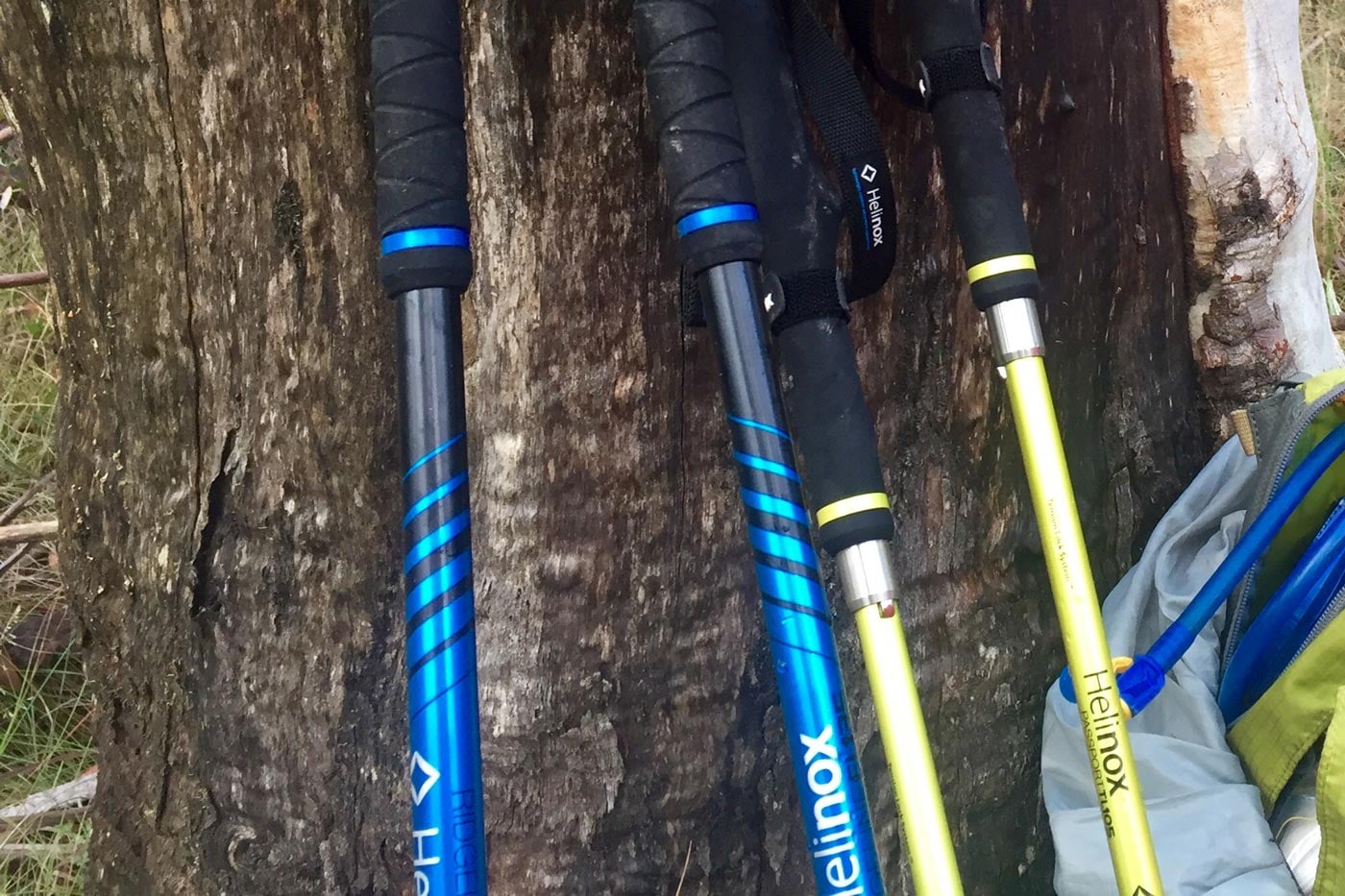
Not all poles of the same material behave the same way. Some poles use thinner walls to reduce weight, while others are built thicker to increase durability. Thinner-walled poles feel light and responsive but have less tolerance for side loading, snagging, or misuse. Thicker-walled poles weigh more but provide a greater margin for error, particularly off-track or when fatigue affects judgement.
This difference matters more in Australian conditions, where scrub, rocky terrain, and long days can place unpredictable loads on poles.
Packing, scrambling, and when poles become a liability
Pole type strongly affects how manageable poles are when not in use. Adjustable and folding poles can be shortened or stowed, making them safer during scrambles, creek crossings, or dense vegetation. Fixed-length poles are awkward in these situations and often end up being carried by hand or snagging behind the hiker.
If you regularly move through terrain where poles are only useful some of the time, packability becomes a safety issue, not just a convenience.
Interaction with shelters
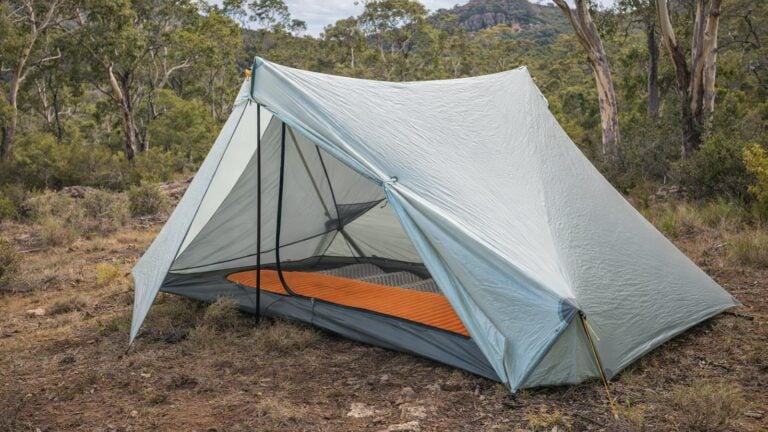
Many lightweight tents rely on trekking poles for support and require specific pole heights, often around 120 to 125 centimetres. If you plan to use poles for a trekking pole tent, check the required height carefully. A folding or fixed-length pole that only reaches 115 centimetres may leave your shelter sagging or unusable in strong wind or rain.
Adjustable poles provide the most flexibility for shelter use and are generally better suited to sustained overnight loads.
Weight in real terms
Weight differences between pole types are often overstated. The difference between a robust aluminium adjustable pole and a minimalist carbon folding pole is frequently less than the weight of two muesli bars. That saving may be appealing, but I’d ask whether it’s worth the reduction in durability or adaptability, especially when pushing through thick scrub or hiking in remote areas.
Comparison at a glance
| Pole type | Key strength | Main limitation | Best suited to |
| Adjustable (telescopic) | Flexibility, terrain adaptability | Lock maintenance | Most Australian hiking |
| Fixed-length | Simplicity, stiffness | No adjustment, poor packability | Formed, consistent tracks |
| Folding (Z-style) | Compact storage | Internal cord failure | Scrambling, travel, short trips |
Different types of hiking poles exist because they solve different problems. Adjustable poles prioritise flexibility and adaptability. Fixed-length poles prioritise simplicity and efficiency. Folding poles prioritise packability. Each comes with trade-offs that become more or less important depending on terrain, remoteness, fatigue, and what happens if something fails.
For everyday Australian hikers, I don’t think the best pole is the lightest or simplest one. It’s the one that matches how you actually hike and gives you the greatest safety margin when conditions are less than ideal, which for most people on most trips still means an adjustable pole with a lock you trust.
Explore related guides
- How and when to use hiking poles
- Using hiking poles effectively: technique for ascents and descents
- Carbon fibre vs aluminium hiking poles: real-world strength and failure
- Hiking pole grips and wrist straps
- Why use rubber tips on hiking poles
- Broken or damaged hiking poles: what you can safely do
- How to straighten a bent hiking pole: on the trail and at home