Suunto Vertical 2 Sports Watch – A reliable GPS watch for serious bushwalking in Australia
Why a GPS watch can be useful on the trail
A GPS watch can be a valuable tool for bushwalking. It can help with time and distance planning, tracking elevation gain, recording routes, and confirming your position when visibility drops or a track becomes unclear. In remote parts of Australia, where mobile coverage is unreliable or non-existent, having navigation tools on your wrist can provide an extra layer of situational awareness.
That said, a GPS watch should never be your only form of navigation. I always encourage hikers to carry multiple navigation methods for redundancy. A paper map, compass, and good planning remain essential. Technology can fail, batteries can run flat, and signals can drop out. A GPS watch should support good decision making, not replace it.
Why I’ve trusted Suunto in the field
Several years ago, after repeated GPS accuracy issues with a Garmin Fenix 5 across multiple replacement units, I moved to a Suunto Traverse Alpha. That decision was driven by field performance rather than brand preference. I needed a device I could trust when distance, time, and navigation actually mattered.
One example from that period highlights why accuracy is important. Both watches tracked the same hike at the same time. The Suunto recorded 13.45 kilometres, while the Garmin recorded 14.31 kilometres. My iPhone and a handheld GPS closely aligned with the Suunto. This was not a one off. Across varied terrain, the Suunto and handheld GPS remained consistent.
GPS distance can vary for many reasons. Chipsets and antennas differ, some devices smooth tracks while others over record small deviations, and terrain, canopy, signal quality, and even how a watch is worn can affect results. This is why hikers sometimes feel a walk was longer or shorter than advertised. A GPS track is only as good as the data it collects.
The Fenix 5 is now an older model, and newer Garmin watches appear to have improved significantly. This background explains why I have continued to trust Suunto devices in the bush.
Testing the Suunto Vertical 2
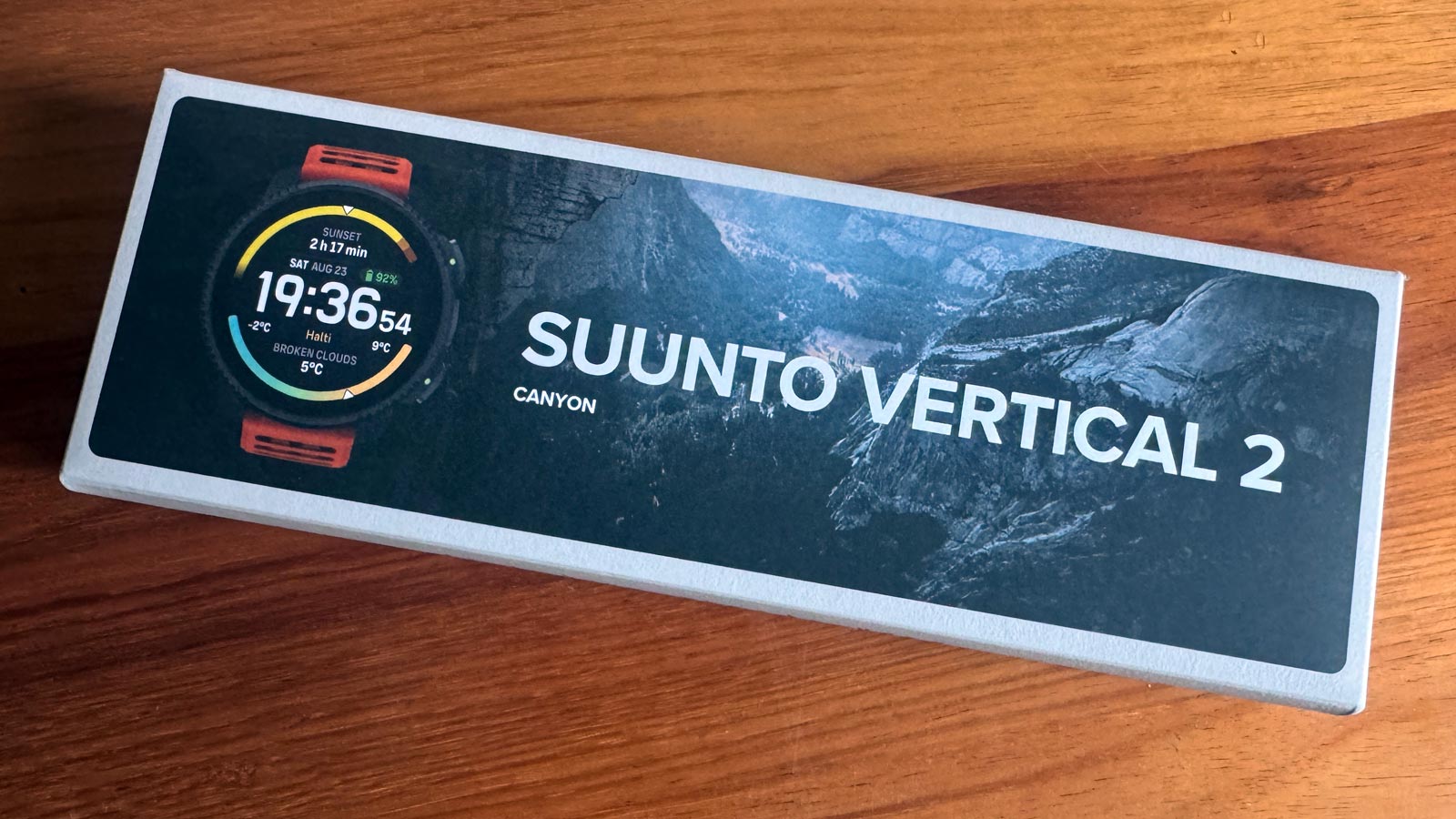
In December 2025, I received a Suunto Vertical 2 in the Canyon colourway to field test and review. The watch was provided for testing, and my intention was to use it naturally on hikes I already had planned over the Christmas and New Year period, then share honest, experience-based feedback with the Trail Hiking Australia community.
I was not aiming to run side by side comparisons or controlled tests. This review is based on real world use across half day hikes, longer day walks, and overnight trips in varied terrain, ranging from relatively flat walks to routes with more than 1200 metres of elevation gain.
Setup and first impressions
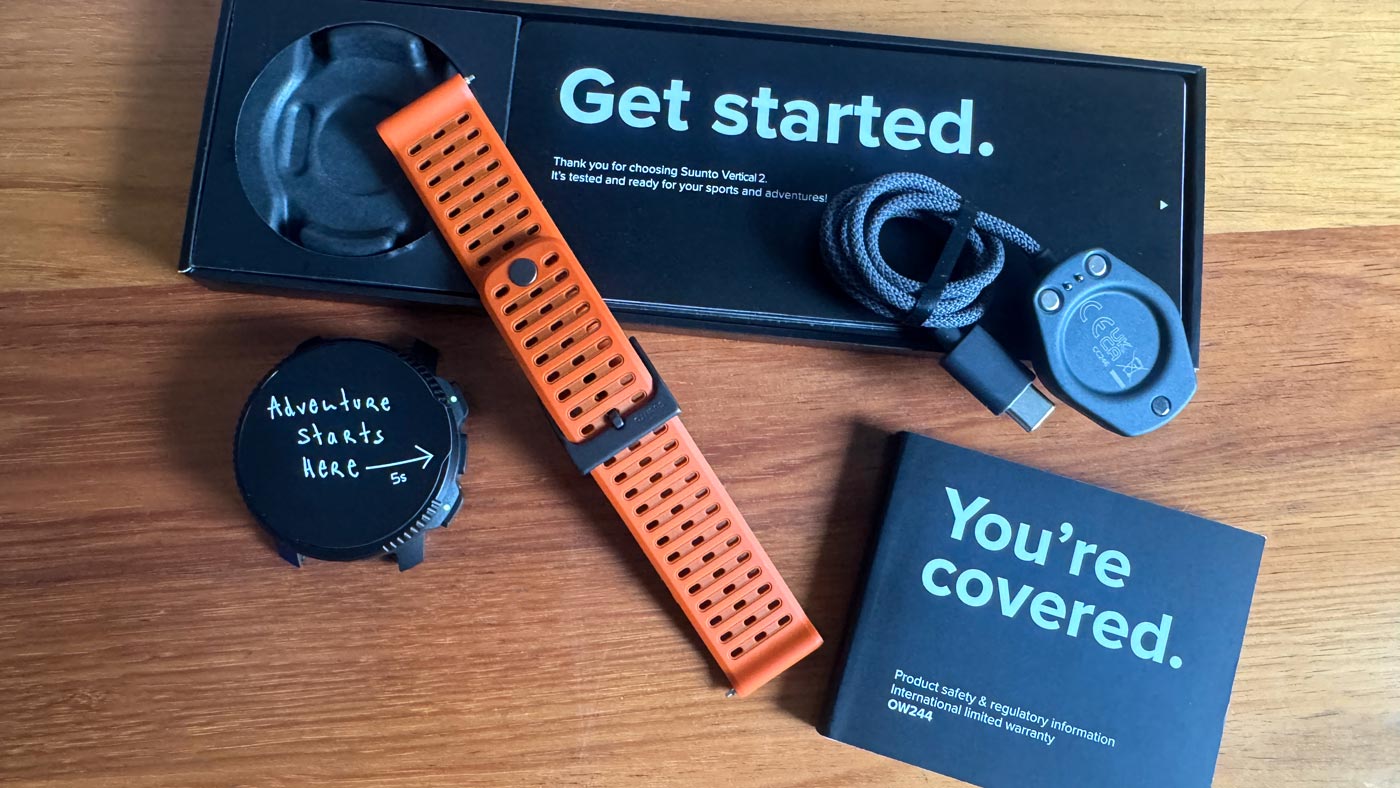
The watch arrived in professional, well-presented packaging. Initial setup instructions were clear. After attaching the band and powering on the watch, I followed the on-screen prompts, downloaded the Suunto app, created an account, and paired the watch via Bluetooth.
The first software update was not completely smooth. I encountered a pairing issue that required resetting the watch and restarting the process. After restarting my phone, removing the watch from Bluetooth settings, and trying again, the update completed successfully.
Once configured, the Vertical 2 supports Wi-Fi updates, which makes future firmware updates far easier and avoids relying solely on Bluetooth connections. This largely resolves the early setup frustration I experienced.
Downloading offline maps took longer. To load Victorian maps, the watch needed to be connected to Wi-Fi, placed on the charger, and paired with the phone. The download process took around an hour. This is something worth doing well before your next trip rather than the night before.
Learning the watch
The Suunto Vertical 2 has a lot of features. With more than 150 sport modes available, it can feel overwhelming at first. My focus was purely on bushwalking, so I ignored anything that was not relevant to hiking.
Initially, I left the manual in the box. I like to see how intuitive a device is without instructions. For the most part, the interface was easy to understand. Button presses, swipes, and taps felt logical, and I was able to access core functions without frustration. I only referred to the manual later when I wanted to explore deeper settings.
After a few evenings setting the watch up the way I wanted, it was ready for the field.
Performance on the trail
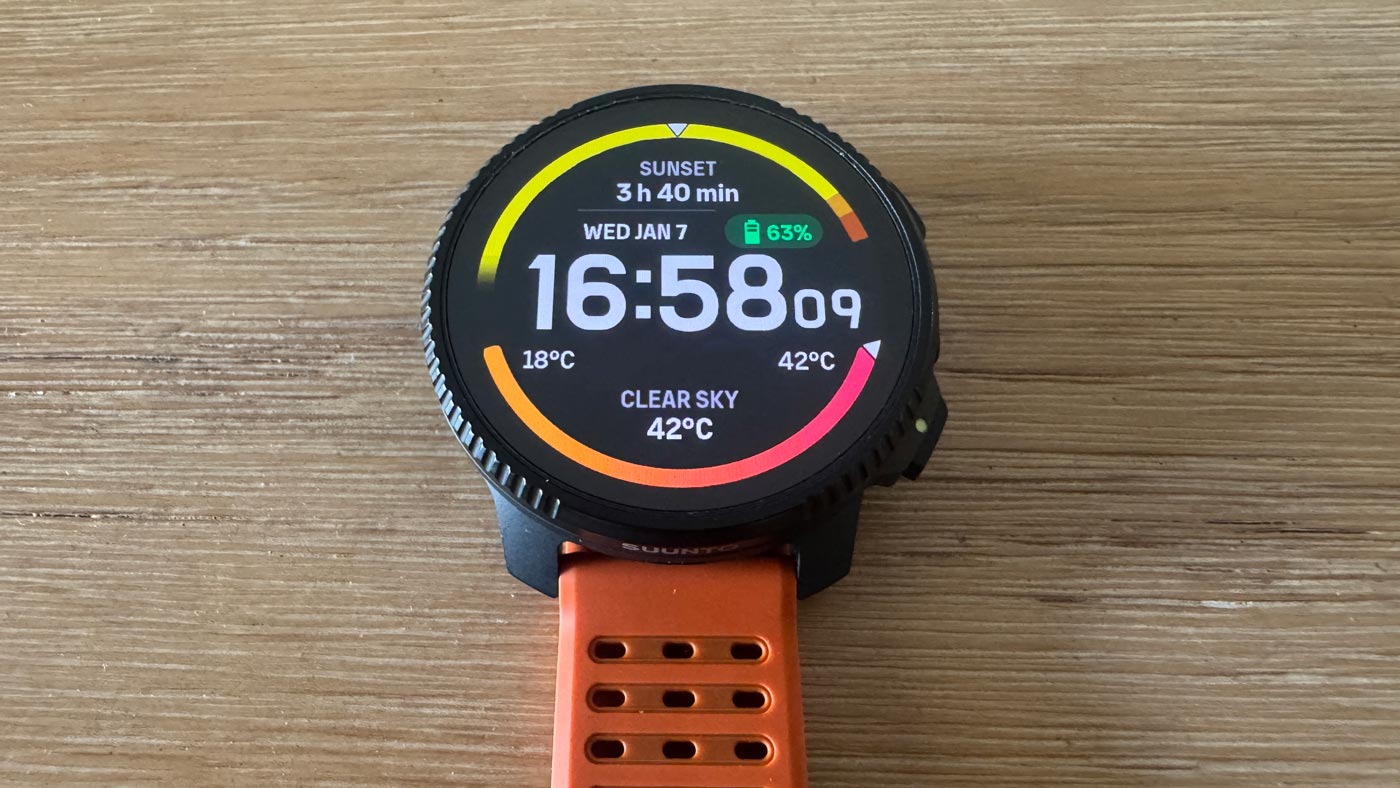
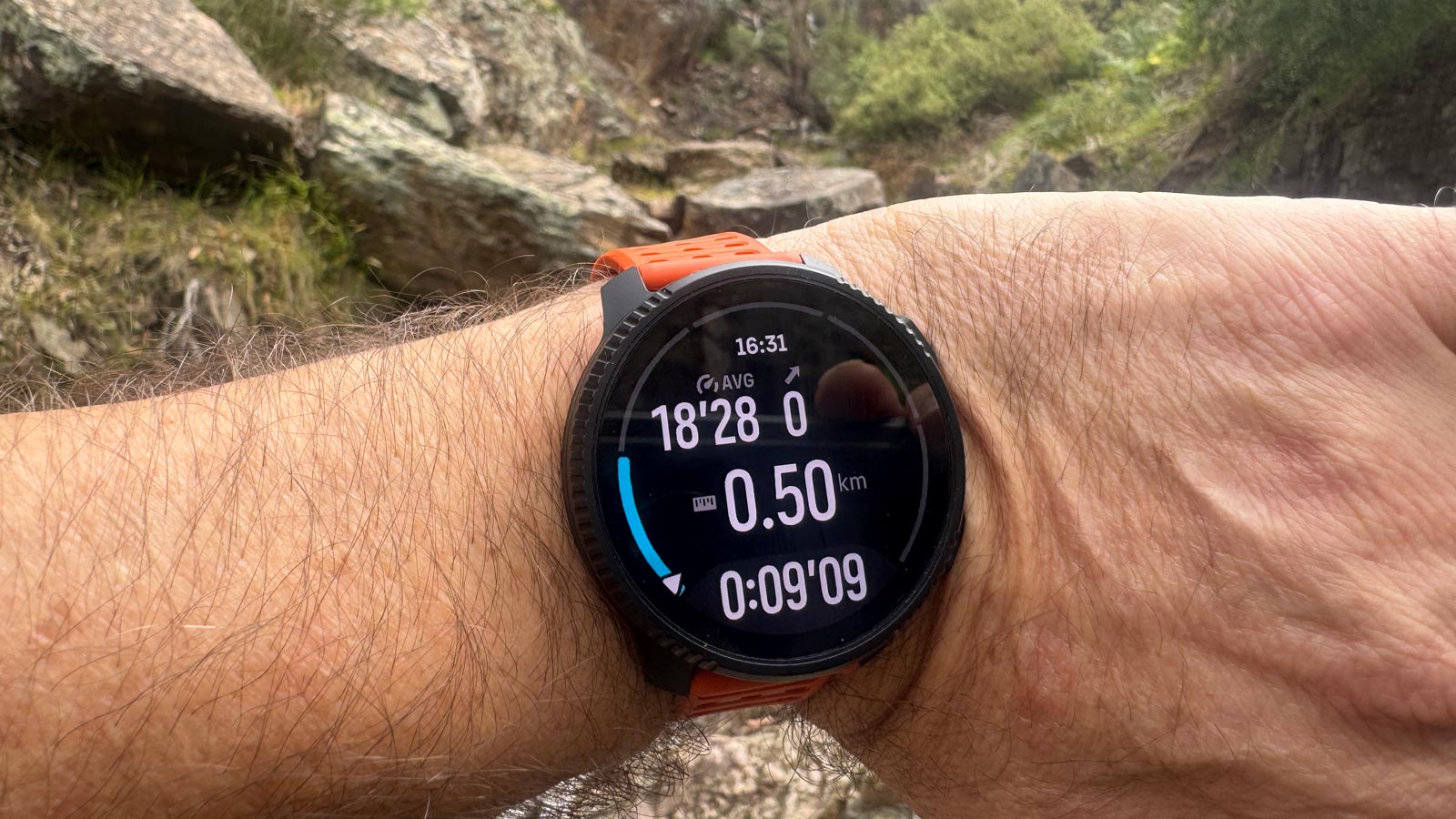
The Suunto Vertical 2 is a significant step up from my old Traverse Alpha. The standout change is the display. It uses an LTPO AMOLED screen with brightness up to 2,000 nits. In practical terms, this makes a noticeable difference on the trail. Even in harsh Australian sun, the screen remains clear and readable, something earlier AMOLED displays struggled with.
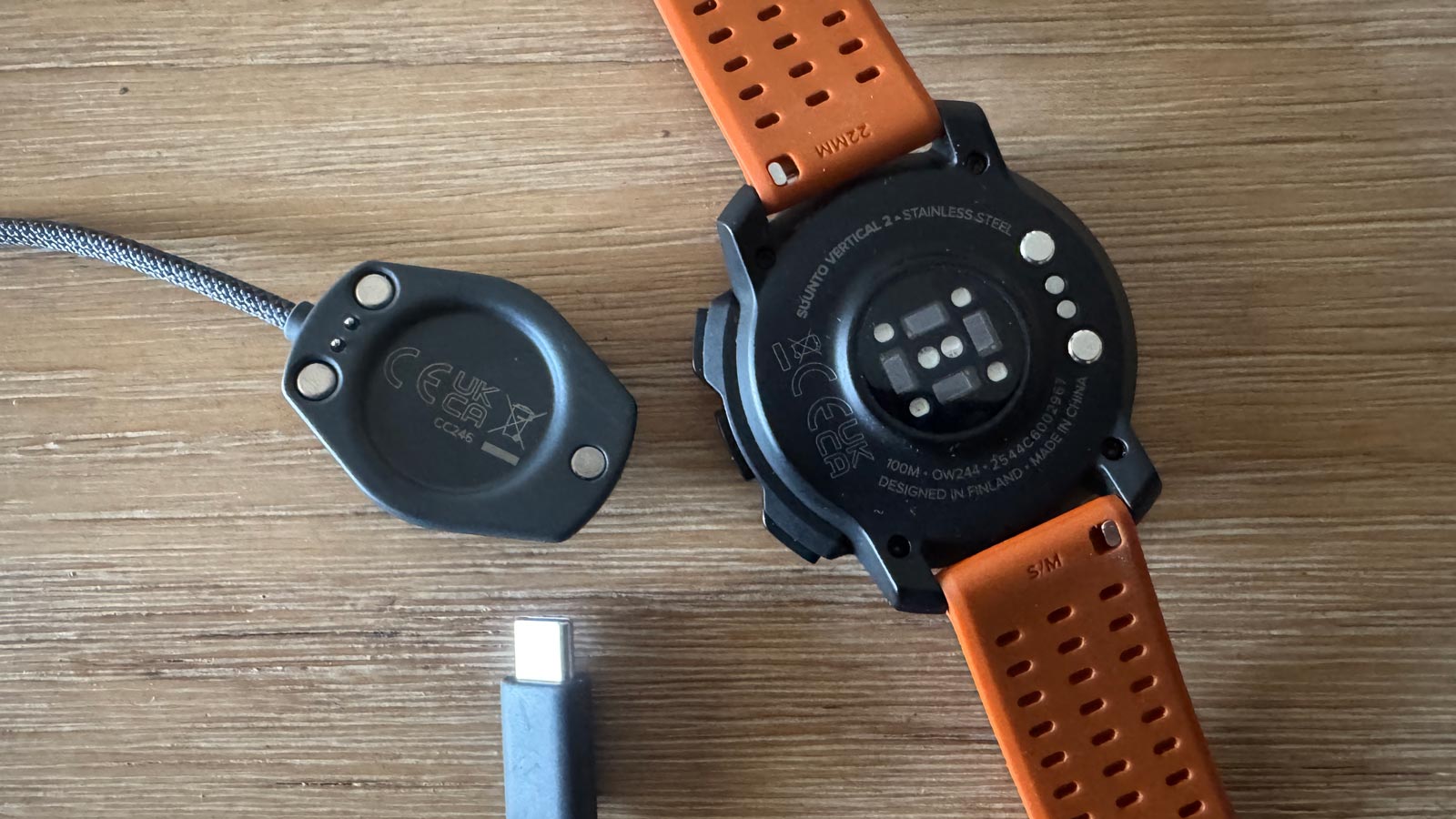
Charging note: The Vertical 2 Canyon (AMOLED) model does not include solar charging. Suunto moved away from the solar ring in this generation to support the LTPO AMOLED display, as current solar technology is difficult to integrate with AMOLED screens. In real world use, the extended battery life largely offsets the absence of solar charging.
The watch remains easy to operate with gloves thanks to physical buttons, which I strongly prefer in cold, wet, or alpine conditions.
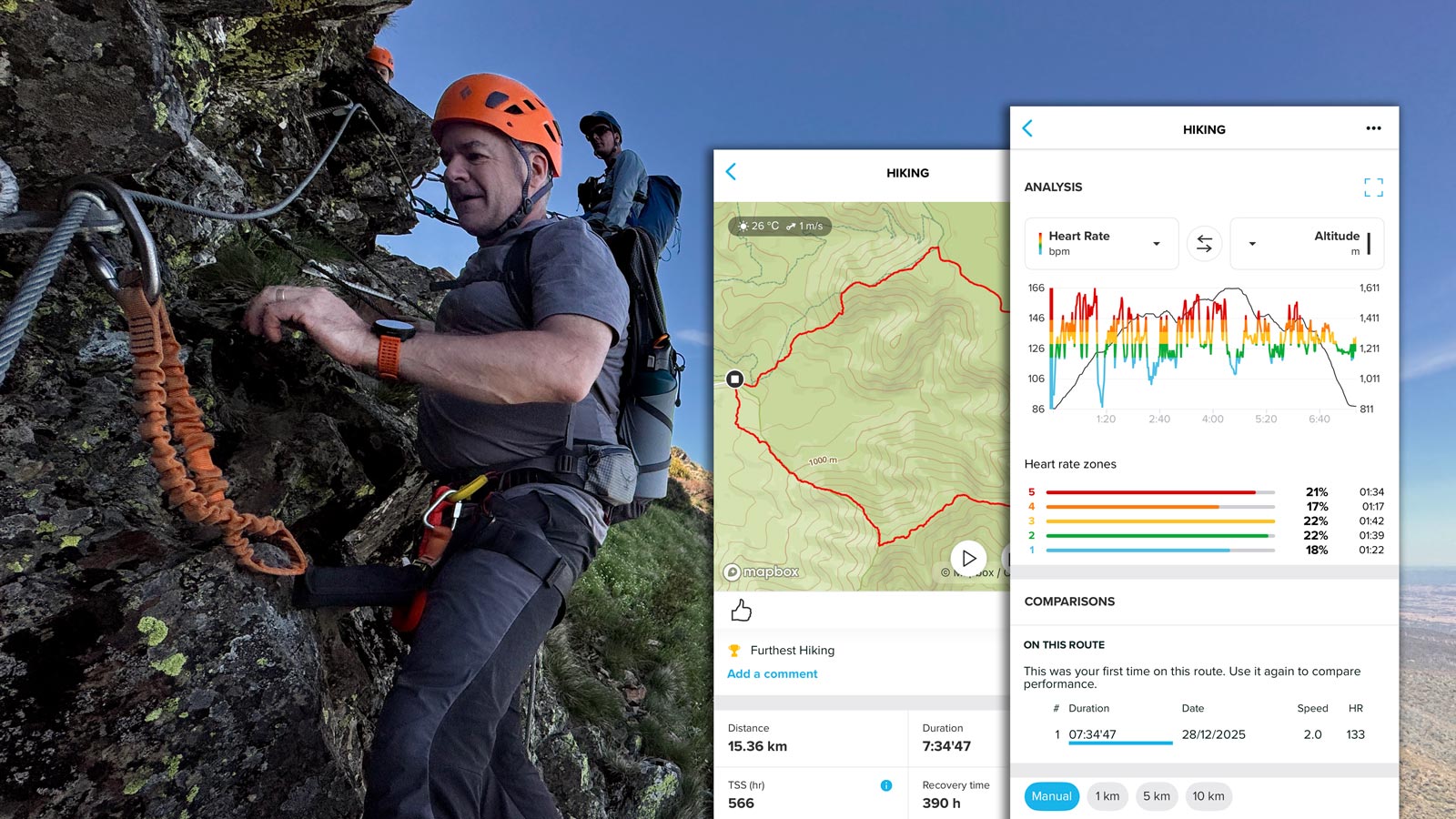
Durability has been excellent. The watch shrugged off scrapes and knocks during rocky ascents, including an accidental test on Rockwire’s via ferrata at Mount Buller. It also handled heavy rain without issue, with water resistance rated to 100 metres.
Battery life has been one of the biggest standouts. Older GPS watches often struggled to deliver realistic performance when tracking, especially on longer days. I was used to getting around eight hours from a charge, which made multi day hikes more difficult and required carrying a larger power bank.
The Suunto Vertical 2 delivered far beyond that. In its most accurate GPS mode, it offers up to 65 hours of tracking and up to 20 days of daily smartwatch use. After five days of hiking and recording activities, my watch had used around 50 percent of its battery.
The integrated LED flashlight is genuinely useful, saving me from digging out a headlamp for finding gear in a dark tent or navigating a midnight toilet run. It includes white and red-light modes, with red being particularly valuable for preserving night vision. Importantly for bushwalkers, the flashlight also includes SOS, alert, and breathing modes, making it more than just a convenience feature and adding a meaningful safety function.
Navigation and mapping
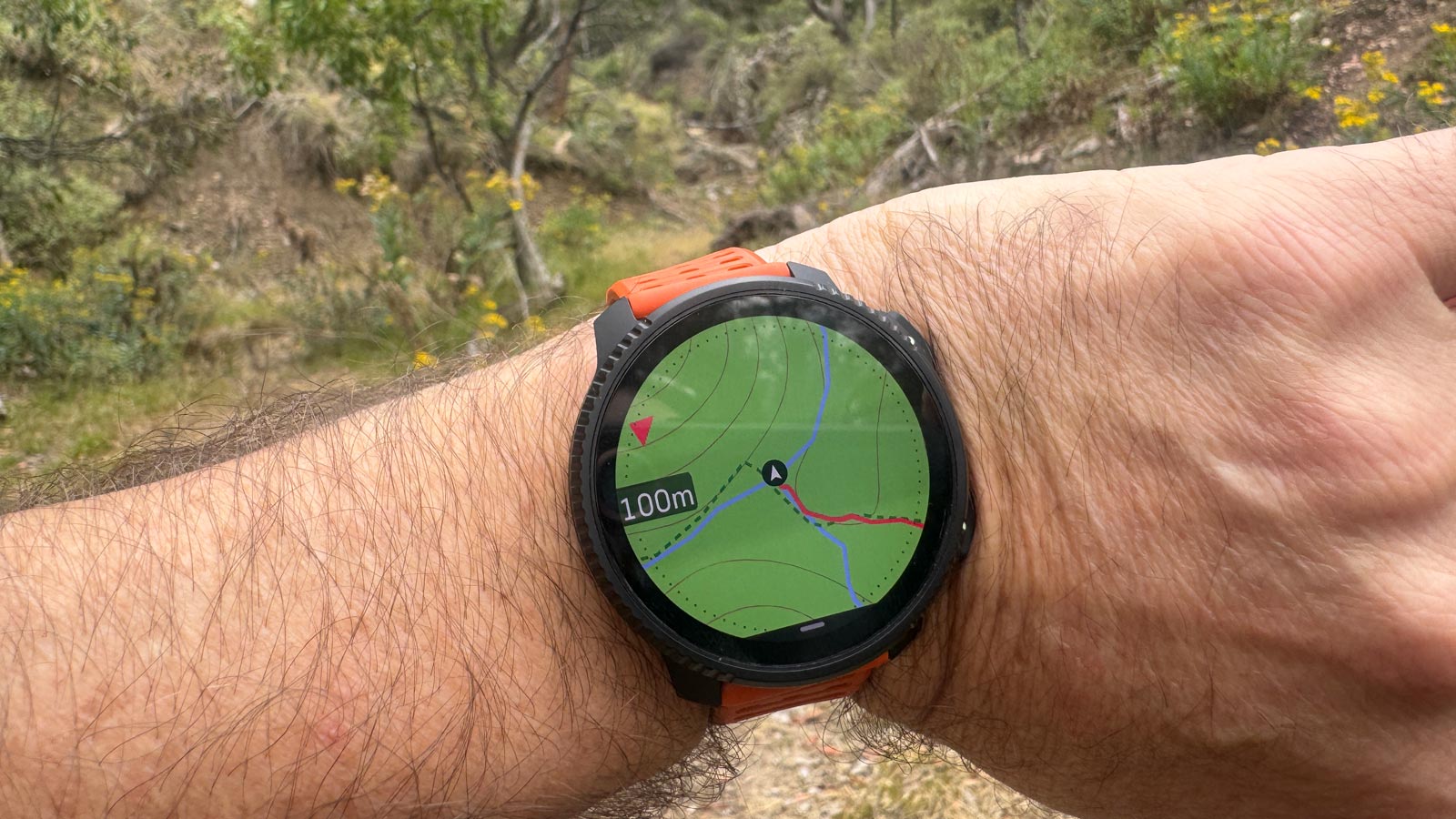
For bushwalking, navigation is where the Suunto Vertical 2 really shines. Free, high detail offline maps stored on the watch are invaluable in areas with no phone coverage. Tracks are clearly visible, and map zooming retains enough contour and terrain detail for practical, on the go map reading.
Dual band GPS significantly improves accuracy in challenging terrain such as forested areas, steep gullies, alpine environments, and deep valleys. Waypoints, breadcrumb trails, snap to route guidance, and points of interest all work together to provide strong situational awareness.
Snap to Route works well on defined tracks and popular trails, but for off track or exploratory bushwalking, standard breadcrumb navigation remains the primary tool. This suits how I prefer to navigate, particularly in remote or lightly tracked environments.
When you stray from a planned route, the watch clearly alerts you and shows how far you are from your original line, without automatically rerouting. I see this as a positive. I want to make my own decisions about alternate routes rather than follow turn by turn directions designed for roads.
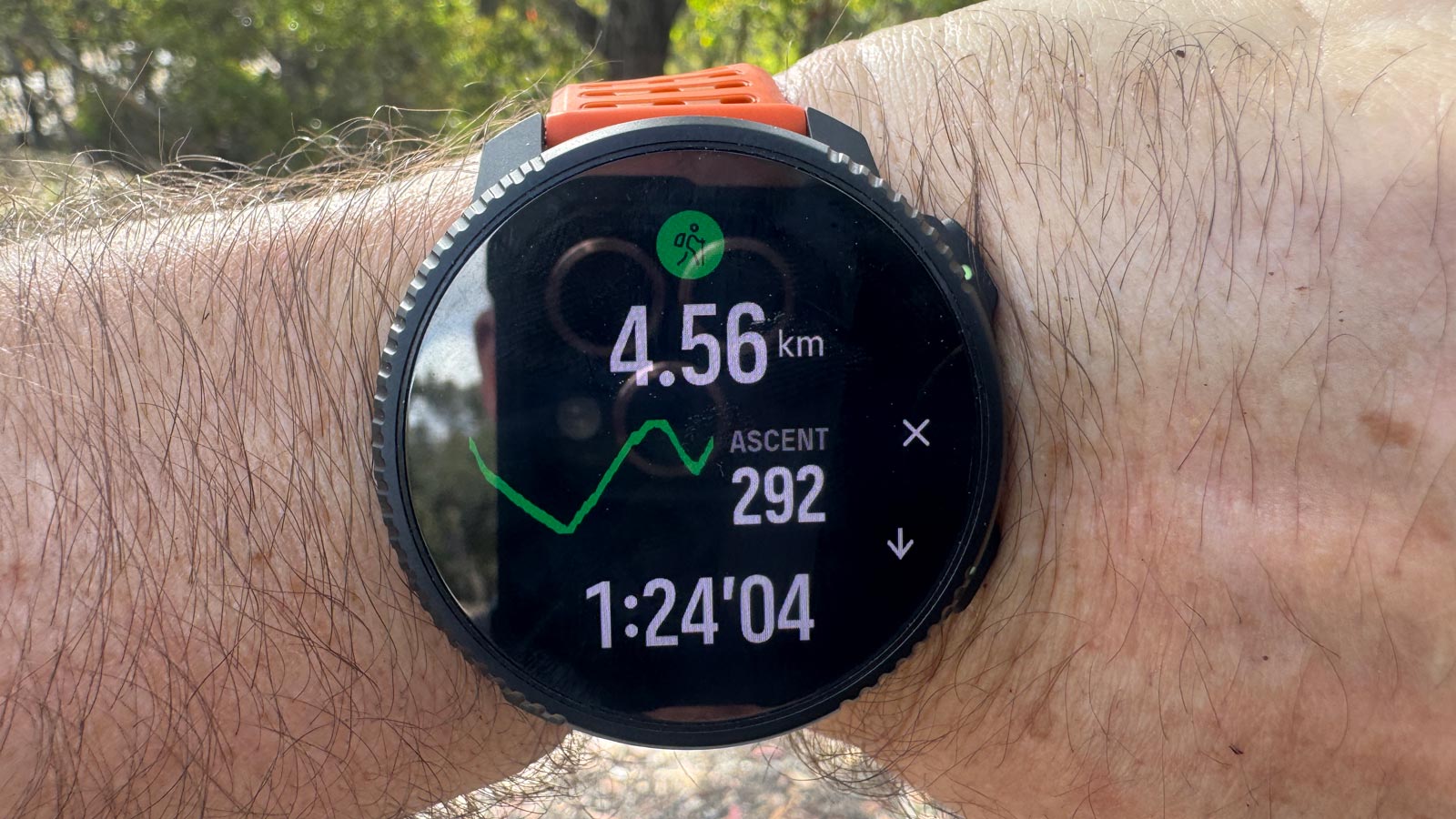
Climb guidance is particularly useful on longer ascents, showing your position on a climb, the gradient, and how much vertical distance remains. Combined with the barometric altimeter and fused GPS elevation data, ascent and descent figures felt reliable throughout testing.
Weather related tools, including barometric trend data, storm alerts, and sunrise and sunset times, add another layer of awareness when conditions or daylight are marginal, particularly in exposed alpine areas.
Using the Suunto app
The Suunto app pairs the watch to your phone via Bluetooth and handles route planning, data syncing, and post hike analysis. Creating routes on your phone and sending them to the watch is straightforward. This is useful if you like following a planned route, although the offline maps also make it easy to navigate directly on screen.
The app allows you to analyse hikes, review long term trends, explore detailed maps and heatmaps, and share routes if you choose. Connecting to third party services such as Strava was simple. While the app includes fitness and recovery insights, I treated these as secondary to navigation reliability and battery performance.
Note: The Suunto app requires a compatible smartphone that meets Suunto’s minimum system requirements. If you are using an older device, it is worth checking compatibility on the Suunto website before purchasing.
What matters most for Australian hikers
Bushwalking in Australia often involves long distances, remote locations, limited phone coverage, and highly variable terrain. The most valuable features in a GPS watch are long battery life for multi day trips, reliable offline navigation, accurate elevation data, and a compass with declination correction for off track travel.
The Suunto Vertical 2 excels in these areas. It feels designed for real outdoor use rather than fitness tracking alone.
What I liked
- Excellent GPS accuracy with reliable dual band tracking
- Outstanding battery life for long and multi day hikes
- Extremely bright LTPO AMOLED display that remains readable in harsh sun
- Durable build with physical buttons that work well with gloves
- Integrated LED flashlight with white, red, SOS, and alert modes
Things to consider
- Wrist based heart rate accuracy can be inconsistent during rapid changes, and a chest strap may be needed for precision
- Some advanced training metrics found in other watches are not present
- Custom sports modes require some initial setup if you want very specific data fields
- The flashlight defaults to 50 percent white light and does not remember the previous setting, which can be jarring if you are trying to stay low profile at a campsite
Specs at a glance
- Model tested: Suunto Vertical 2 Canyon (Stainless Steel)
- Weight: 87 g
- Case size: 48.6 mm
- Display: LTPO AMOLED, up to 2,000 nits
- Glass: Sapphire crystal
- Bezel: 316L Stainless Steel
- Water resistance: 100 m
- Battery (GPS): Up to 65 hours (Dual-band / Performance mode)
- Battery (Daily): Up to 20 days (Smartwatch mode)
- Mapping: Free offline maps with route navigation
- Safety Features: Integrated LED Flashlight (White, Red, SOS, Alert)
- Connectivity: Bluetooth, Wi-Fi (for map & firmware updates)
- Charging: Magnetic USB.
- Internal Storage: 32 GB (for free global offline maps)
Full specifications: For a complete list of technical specifications, visit the Suunto Vertical 2 product page on the Suunto website.
Recommended retail price: $1,099.99 AUD (for the Suunto Vertical 2 Canyon)
The Suunto Vertical 2 is a robust, reliable GPS watch built for remote Australian bushwalking. By trading solar charging for a highly readable 2,000-nit LTPO AMOLED display without sacrificing its class-leading 65-hour GPS battery life, Suunto has delivered a watch that is both easy to read and genuinely resilient in the field.
It prioritises navigation accuracy and dependable, set-and-forget battery performance over flashy smartwatch features, and it does not try to replace good planning or sound navigation skills. That balance is exactly why it works so well for bushwalking.
This is the kind of reliability I would want for a week on the Larapinta Trail, the Overland Track, or any extended remote walk where battery life, navigation confidence, and durability genuinely matter.
A selection of the Suunto Vertical 2 screens and modes I relied on most while bushwalking.


Do you have any photos from this hike?
Your photos can help others plan. Share shots from along the trail so fellow hikers know what to expect.
Disclosure: The Suunto Vertical 2 was provided by Suunto for field testing. All observations and opinions in this review are my own and based on real world use while bushwalking.