The Australian Paralysis Tick (Ixodes holocyclus) is one of the most medically significant arthropods on the continent, and I don’t think that’s an exaggeration. It causes more than itching. It can trigger life-threatening allergic reactions, induce progressive paralysis, and permanently alter how your immune system responds to red meat.
For hikers and bushwalkers in eastern Australia, I’d treat tick awareness as a practical safety requirement, not optional preparation. The old advice was to pull ticks out quickly, but that advice is now considered dangerous, and what you do in the first few seconds after finding a tick matters more than most hikers realise.
Understanding Australian ticks
Not all ticks in Australia carry the same risk, but three species are relevant to hikers.
The paralysis tick (Ixodes holocyclus) is the primary concern. It is found along the eastern seaboard from Far North Queensland down through New South Wales and into Victoria, inhabiting coastal and sub-coastal bush, rainforest margins, long grass and dense scrub. It is the species responsible for tick paralysis in humans and animals, anaphylaxis, and mammalian meat allergy.
The brown dog tick (Rhipicephalus sanguineus) is found across much of Australia and attaches primarily to dogs, though it will bite humans. It is less likely to be encountered on bush trails but is relevant if dogs accompany hikers.
The bush tick (Haemaphysalis longicornis) is widespread in eastern Australia and bites both animals and humans. It does not carry the same paralysis risk as Ixodes holocyclus but can cause local irritation and is often misidentified by hikers.
For most trail contexts in eastern Australia, it’s the paralysis tick that demands the most preparation, so that’s what the rest of this guide focuses on.
How to identify a paralysis tick
The paralysis tick looks different at each life stage, and knowing what you’re looking for matters, because misidentification leads to mismanagement.
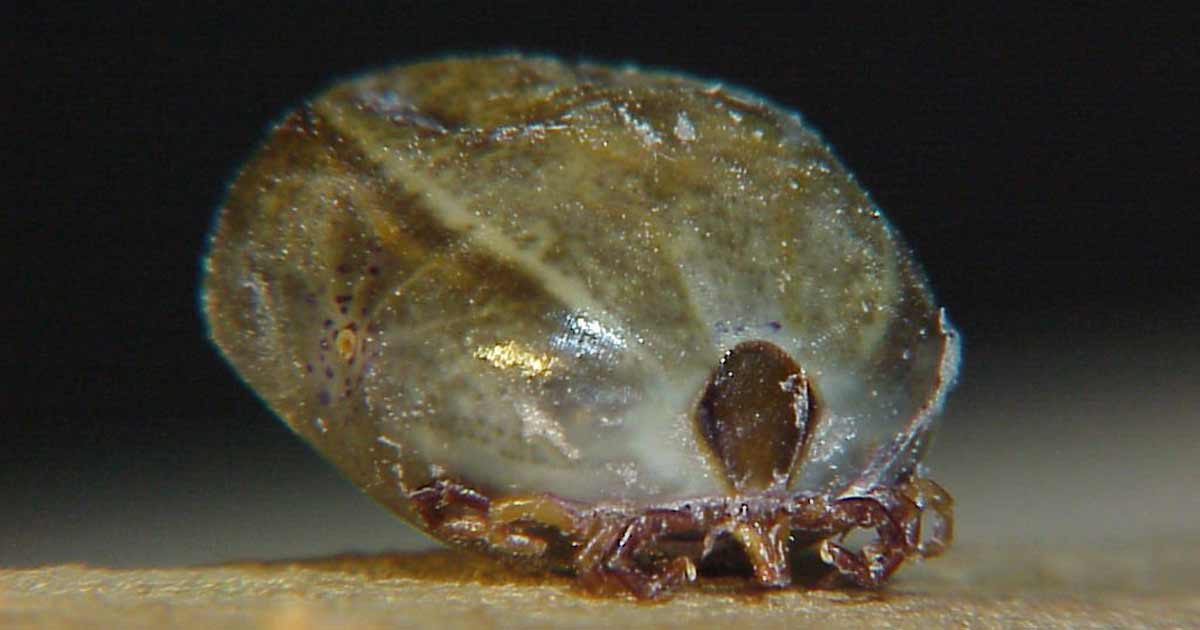
Adults are the most commonly recognised stage. An unfed adult female is oval and flat, approximately 3 to 4mm long, brown to reddish-brown, with a dark shield-shaped marking near the head called a scutum. A distinctive identification feature is leg colouration: the first and fourth pairs of legs are noticeably darker brown than the second and third pairs, which are beige. As the tick feeds and becomes engorged, the body swells to 10mm or more and turns grey-blue. The bite is painless, so most people do not know they have been bitten.
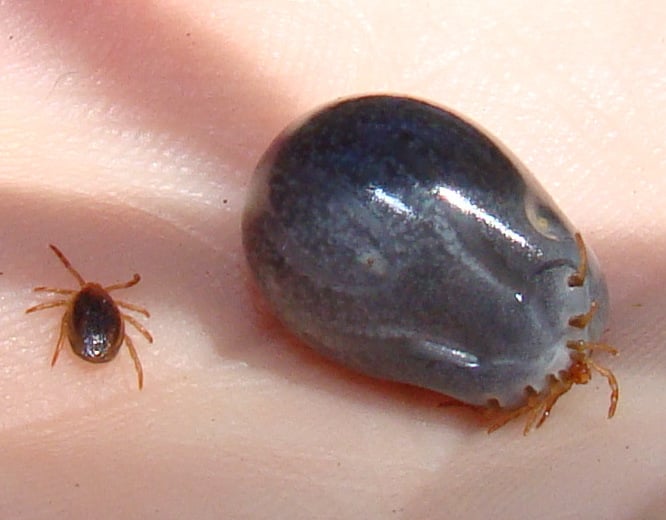
Nymphs are approximately 2mm, roughly the size of a poppy seed. They have eight legs like adults but are much smaller and lighter in colour. Most people who are bitten by a nymph do not see the tick. They notice an intensely itchy red welt at the bite site instead.
Larvae are approximately 1mm, smaller than a full stop. Unlike nymphs and adults, larvae have only six legs, and they are near-invisible to the naked eye. You may feel them moving on skin before you can see them. A cluster of larvae causes what many people call a “grass tick infestation,” which is worth correcting as a common misconception: grass ticks and seed ticks are not separate species. They are larval paralysis ticks (I. holocyclus). The same applies to the common names shell back and blue bottle. These all refer to the same species at different life stages.
Ticks do not drop from trees. They quest on low vegetation, grass, shrubs and leaf litter, waiting to transfer onto a passing host by contact, and after attaching, they crawl upward toward warm, sheltered areas.
The life cycle: larvae, nymphs and adults all bite
The paralysis tick passes through three active life stages: larva, nymph and adult. Each stage requires a blood meal to progress, and each stage will bite humans.
Many hikers who collect dozens of bites after walking through long grass or dense scrub have no idea they are dealing with tick larvae at all. The bites look like a fine rash or scattered red dots, and the source appears to be nothing more than dust or debris on the skin. You may feel them moving before you can see them.
Ticks tend to move upward on the body after contact, which is why many are found in warm, sheltered locations: the scalp, behind ears, the neck, armpits, behind the knees and the groin.
Tick paralysis: mechanism, symptoms and what to do
The paralysis tick injects a neurotoxin through its saliva while feeding. This toxin interferes with nerve-to-muscle communication, progressively disrupting the body’s ability to control movement.
The timing here matters, and it’s worth getting right. The Australian Centre for Disease Control notes that a paralysis tick usually needs to remain attached for 4 to 5 days before it has injected enough toxin to cause paralysis, and Healthdirect notes that symptoms may begin a few days after the bite, though onset can vary. That’s longer than a lot of people assume, which is exactly why regular body checks matter: finding and removing a tick well within that window is what prevents paralysis from developing at all.
Symptoms include:
- General weakness and fatigue
- Unsteady gait or difficulty walking
- Flu-like symptoms without fever
- Tingling or numbness in the limbs
- Difficulty swallowing
- Facial weakness or drooping
- Breathing difficulty in severe cases
Children are at significantly higher risk of rapid progression to severe paralysis than adults, partly due to lower body mass relative to the toxin dose. Symptoms can escalate quickly once they begin, so pay particular attention to any child who has been in tick habitat and develops unexplained weakness, a changed voice or difficulty walking.
The single most important intervention is finding and correctly removing the tick. Once the tick is removed, symptoms can continue to worsen for the next 24 to 48 hours before they stabilise and begin to resolve, though recovery can take days to weeks in serious cases.
If paralysis symptoms are present, the person requires urgent medical evacuation. This is not a situation for monitoring and waiting. In remote terrain, activate your communication device and call for rescue.
Mammalian meat allergy: the consequence most hikers have never heard of
One of the most significant and underappreciated consequences of tick bites in Australia is the development of mammalian meat allergy, also known as alpha-gal syndrome (AGS).
When a paralysis tick feeds, it injects saliva containing a sugar molecule called alpha-gal (galactose-alpha-1,3-galactose). This molecule is found in the tissues of most mammals other than humans and other primates. In some people, repeated tick exposure triggers an immune response against alpha-gal, and after that sensitisation occurs, eating mammalian meat, including beef, lamb, pork and kangaroo, can provoke an allergic reaction.
What makes this allergy unusual is its delayed onset. Unlike most food allergies, reactions to alpha-gal typically occur three to six hours after eating, and that delay makes the trigger genuinely difficult to identify. People may experience hives, gastrointestinal symptoms, difficulty breathing or anaphylaxis, hours after a meal they ate without immediate concern.
Australia has among the highest rates of alpha-gal syndrome and tick paralysis in the world. It is primarily the eastern paralysis tick that causes mammalian meat allergy in Australia, with females accounting for around 60 percent of diagnosed cases. Mammalian meat allergy can develop after bites from any blood-feeding life stage of the paralysis tick, including larvae, nymphs and adults.
A large Australian study of more than 1,000 people found those having heart attacks were 12 times more likely to carry alpha-gal antibodies than healthy people. Strikingly, most of those patients were unaware they had a meat allergy at all. Their immune systems were responding to alpha-gal without obvious allergic symptoms, yet the underlying inflammation appeared to be contributing to cardiovascular risk.
Annual case numbers in Australia remained relatively stable until 2020 but have since grown rapidly, averaging 22 percent growth year on year. By 2024, 787 people nationwide had tested positive for alpha-gal antibodies, though researchers estimate around 90 percent of that increase reflects greater awareness and testing rather than a true rise in disease prevalence.
If you notice allergic reactions to red meat in the weeks or months after a tick bite, see your GP and ask specifically for an Alpha-galactose ImmunoCAP blood test, because most doctors will not offer this unprompted.
For hikers, the implication is clear to me: every tick bite carries a small but real risk of permanent dietary change. The best protection is avoiding bites in the first place, and removing ticks correctly when they are found.
Tick removal: why the old advice was wrong
For many years, standard first aid advice was to remove a tick as quickly as possible using tweezers applied close to the skin. That advice is now known to be problematic, particularly in Australia, because when a tick is grabbed, squeezed, levered or treated with substances such as methylated spirits, kerosene or Vaseline, it responds by injecting more saliva. That saliva contains the neurotoxin responsible for paralysis and the allergens responsible for sensitisation. Disturbing the tick is the mechanism of harm, which is why the method of removal matters as much as removing it promptly.
For adult ticks: use an ether-containing aerosol freeze spray, such as Wart-Off Freeze or Tick-Off, applied directly to the tick. In most cases, ether-containing sprays will kill the tick within five minutes, and the tick can then be left to drop off on its own. If the tick does not drop off after freezing, do not attempt to remove it yourself. Leave it in place and seek urgent medical assistance.
For nymphs and larvae: these are too small to treat effectively with freeze spray. Apply a small dab of Lyclear Scabies Cream (5% permethrin) directly over the tick. Leave it for 30 minutes. The tick should die and drop off. If it does not, leave it in place and seek medical assistance. Lyclear is available from pharmacies without prescription. Permethrin is highly toxic to cats, so keep treated clothing and any product away from cats.
What not to do:
- Do not pull, twist or lever the tick out
- Do not squeeze the tick body with fingers or broad-tipped tweezers
- Do not apply methylated spirits, kerosene, petrol or Vaseline
- Do not try to burn the tick off
- Do not scratch around an attachment site before you know whether a tick is present
After any tick removal, monitor the site and the person for allergic or paralysis symptoms. A tick that was feeding for hours before discovery has had time to inject saliva.
Ticks and dogs
Dogs hiking in tick habitat face serious risk. Tick paralysis in dogs is a veterinary emergency and progresses faster than in humans. A dog may be walking normally one afternoon and unable to stand the next morning.
Early signs in dogs include a change in bark, weakness in the hindquarters, laboured breathing and reluctance to eat. If any of these signs appear after time in tick habitat, seek veterinary attention immediately. Do not wait to see whether symptoms improve, because paralysis can progress rapidly to respiratory failure.
Correct removal technique applies to dogs as it does to humans. Do not squeeze or pull. Use freeze spray for adult ticks and seek veterinary assistance if unsure.
Tick prevention products safe for dogs are not safe for cats, so always consult your vet before using any product on or near cats. Preventive products including tick collars, spot-on treatments and chewable tablets provide significant protection for dogs, but no preventive product offers complete immunity. Body checks after every outing remain important regardless of what preventive measures are in place.
Prevention and body checks
Reducing tick exposure is more reliable than managing tick bites after the fact, and this is where most of the practical control actually sits.
Clothing
Long pants tucked into socks reduce the amount of exposed skin ticks can access. Wear closed shoes in tick country, never sandals. Light-coloured clothing makes it easier to spot ticks before they attach. Wide-brimmed hats reduce tick access to the scalp in dense scrub. Check clothing carefully before going back inside.
Ticks can survive cold water washing and reattach to skin later. After hiking in tick country, put clothes through a hot dryer for at least 20 minutes, because this kills any ticks remaining in clothing.
Permethrin-treated clothing
Permethrin applied to clothing and gear provides additional protection and remains effective after multiple washes, though efficacy degrades over time. Products such as Equip Debugger are available from outdoor retailers as sprays, and pre-treated garments are also available. Permethrin is not applied directly to skin, and it is highly toxic to cats, so keep treated clothing away from cats.
Repellents
Apply repellent to all exposed skin before entering tick country, not just to clothing. DEET (20 to 50%) has the strongest evidence base against Ixodes holocyclus. Higher concentrations extend duration of protection, not strength. Picaridin is an effective alternative with less odour. Oil of lemon eucalyptus has been tested specifically against the Australian paralysis tick and shown to be as effective as DEET at four hours in laboratory conditions, though it requires more frequent reapplication. Choose products with an APVMA registration number on the label. Reapply every two to four hours, sooner if sweating heavily. If using sunscreen, apply it first and repellent on top.
Trail behaviour
Stay on formed trails where possible, and avoid brushing against overhanging vegetation and long grass at trail margins. Ticks do not pursue hosts across open ground. Contact occurs when hikers move through vegetation.
Body checks
Check yourself as soon as you come inside. Remove all clothing before checking, as ticks can hide in folds and seams. Use a mirror or ask a companion to check areas you cannot see, and use good lighting, because larval ticks are near-invisible.
Focus on warm, sheltered areas where ticks prefer to attach:
- Scalp and hairline
- Behind and inside ears
- Back of the neck
- Armpits
- Around the waistband
- Groin and inner thighs
- Behind the knees
- Between the toes
Check children carefully after any time in coastal bush or long grass, paying particular attention to the scalp, behind ears and neck. Any unusual bump, spot or itch in a typical attachment area warrants investigation. Do not scratch at anything you cannot identify in tick country.
When to escalate
Most tick bites result in local irritation resolved with correct removal and monitoring. However, escalate immediately if any of the following occur.
Anaphylaxis: difficulty breathing, rapidly spreading hives, swelling of the face or throat, dizziness or collapse following a tick bite. Administer a prescribed adrenaline autoinjector if available and call for emergency assistance.
Tick paralysis: progressive weakness, unsteady walking, difficulty swallowing, numbness in the limbs, facial drooping or any sign of breathing difficulty, particularly in children. This is a medical emergency requiring urgent evacuation.
Mammalian meat allergy reaction: hives, gastrointestinal distress or breathing difficulty occurring three to six hours after eating red meat, particularly in anyone with a history of tick bites in eastern Australia. This pattern is characteristic of alpha-gal syndrome and requires medical assessment. When you see your GP, mention the tick bite specifically and ask for an Alpha-galactose ImmunoCAP blood test.
Possible mast cell condition: if you have had a severe or unusual reaction to a tick bite, ask your GP about a mast cell tryptase blood test. Elevated tryptase can indicate mastocytosis, a condition that significantly increases the risk of severe anaphylaxis from tick bites.
Queensland Tick Typhus: fever, headache, muscle pain, a dark scab or sore at the bite site, or a spreading rash developing within two weeks of a tick bite may indicate Queensland Tick Typhus, a bacterial infection transmitted by ticks. There is no routine upfront blood test. Tell your GP you were bitten by a tick and describe your symptoms. It responds quickly to doxycycline when identified early.
Systemic symptoms: persistent fatigue or joint pain beyond two weeks after a tick bite also warrants medical review and a mention of the tick exposure.
In remote terrain, any neurological or respiratory decline is a rescue situation. Do not wait for symptoms to stabilise before activating emergency communication.
What to carry in tick country
- An ether-containing aerosol freeze spray (Wart-Off Freeze or Tick-Off) for adult ticks
- Lyclear Scabies Cream (5% permethrin) for nymphs and larvae
- A hand lens or phone macro lens for identifying small ticks
- A prescribed adrenaline autoinjector for anyone with known tick allergy
The paralysis tick is a genuine hazard for hikers and bushwalkers across eastern Australia, and its risks extend well beyond the immediate bite to include progressive paralysis, severe allergic reactions and long-term dietary consequences through mammalian meat allergy. Awareness, appropriate clothing, repellents, thorough body checks and correct removal technique reduce that risk significantly. The critical shift from old advice is this: do not disturb a tick before killing it. Freeze an adult tick, treat nymphs and larvae with permethrin cream, and do not pull.
Most bites cause minor irritation. Some require prompt management. A small number become emergencies. Knowing which is which, and knowing what to do in each case, is what separates a prepared hiker from an unprepared one.
Further reading
- Tick Allergy guidance from the Australasian Society of Clinical Immunology and Allergy (ASCIA)
- Tick Repeller: evidence-based tick prevention information
- Dangers of Arthropods to Hikers and Bushwalkers in Australia
- Leeches: How to identify, avoid and remove them
Always consult a healthcare professional for tick-related health concerns. This article is for general information only and does not constitute medical advice.