Back Pain While Hiking: Load Mechanics, Hip Strength and Prevention
Back pain during or after a hike is common, but it’s rarely random. In most cases, it reflects a mismatch between load, conditioning, posture and terrain demands, rather than a single structural fault.
Understanding how pack mechanics and fatigue affect the spine allows hikers to reduce risk early and prevent minor discomfort from progressing into persistent pain.
Why hiking stresses the back
Hiking places the spine under sustained load. Even a moderate pack alters your posture, shifts your centre of gravity, and increases muscular demand through the lumbar and thoracic regions, which is why back discomfort during or after a hike typically comes down to one or more of the following:
- Excess pack weight
- Poor pack fit or load distribution
- Prolonged forward lean
- Weak hip and trunk stabilisers
- Sudden increases in distance or elevation
- Accumulated multi-day fatigue
In my experience the spine itself is rarely the sole issue. More often, fatigue in the surrounding muscles reduces stability, and that’s what lets mechanical stress accumulate over time.
The moment arm effect: why packing position matters
Where you place weight inside your pack affects spinal strain more than most people realise. When heavy gear sits far from your back panel, it creates a longer moment arm, which acts like a lever pulling your torso backward, so your back muscles have to work harder just to keep you upright against that pull. The further the weight sits from your spine, the greater that leverage effect, which is why packing heavy items close to your back reduces the lever force and decreases muscular demand throughout the day.
I don’t think of good packing as just about balance. It’s about reducing mechanical strain you don’t need to be carrying.
Hip belt mechanics: carrying weight on the skeleton
A well-fitted hip belt should transfer most of the pack’s weight onto your pelvis rather than your shoulders. It needs to sit directly over the iliac crest, the firm bony shelf at the top of your hip bones. If it sits too high on the soft waist or too low on the hips, the pack sags, and when that happens the weight shifts back onto the shoulder straps, increasing thoracic and upper back strain.
Common signs of poor belt placement include:
- Persistent shoulder pressure
- Numb or tingling arms
- Upper back fatigue early in the day
When it’s positioned correctly, your pelvis bears the load through bone, which is what reduces the muscular demand on your spine.
Downhill braking and how forces move through the body
Downhill walking introduces repeated braking forces that travel upward through the body. During descents, the hips, knees, ankles and trunk all work together to control movement. Fatigue or reduced hip strength may alter movement patterns and contribute to back discomfort, but I wouldn’t describe it as a simple hand-off of load from the glutes to the lumbar spine, the relationship is more complex than that.
Broadly, the load moves like this:
- Feet absorb impact
- Calves and quadriceps control descent
- Glutes help stabilise the pelvis
- Reduced hip and glute function may leave the lower back doing more of the work
In my experience, when the hips aren’t controlling movement well, the lumbar spine often ends up taking on more of the stabilising role, and over time that can increase strain and discomfort, particularly late in long descents. That’s part of why I rate hip and glute strength as worth training for, especially if you’re regularly hiking with a loaded pack.

Posture and variety on long days
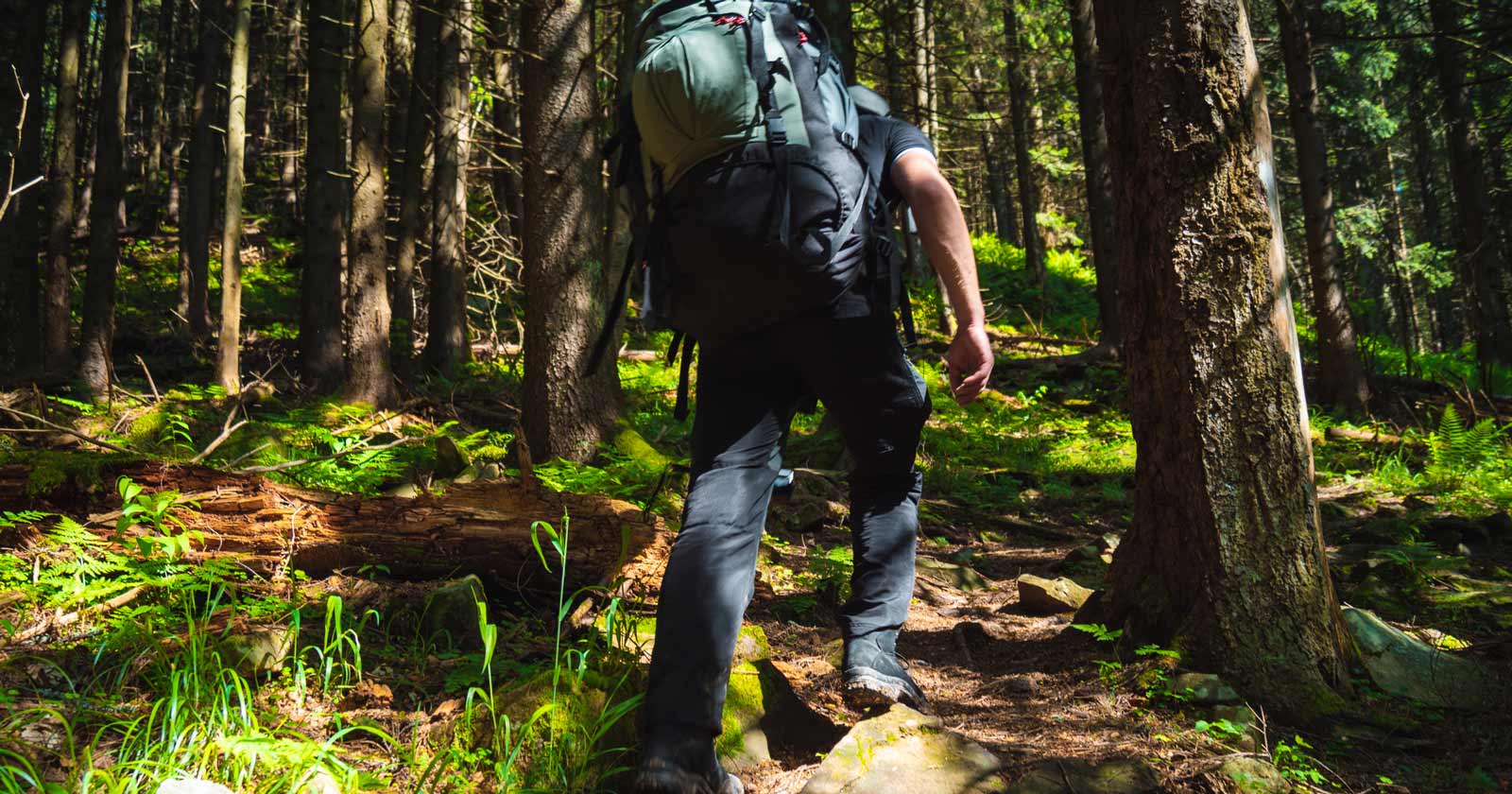
Sustained forward lean increases lumbar strain. Some lean is natural on climbs, but holding one posture for hours increases fatigue, so on long fire trails or gradual terrain I make small deliberate changes:
- Occasionally shift hand position on shoulder straps
- Adjust trekking pole height slightly
- Change grip position
- Vary stride length
These small changes redistribute muscular demand and stop any single region of the back reaching its fatigue threshold too early. I’d call that movement variety being genuinely protective, not just a comfort habit.
Deconditioning and load spikes
In my view, one of the strongest predictors of back pain is sudden change rather than cumulative distance. Examples include:
- Increasing pack weight without progressive training
- Attempting significantly longer distances
- Transitioning from flat tracks to steep terrain
- Beginning a multi-day hike without conditioning for consecutive days
The spine tolerates stress well when it’s exposed to it gradually, but abrupt spikes increase injury risk.
Prevention strategies
None of this is complicated, but it does need to be deliberate.
Carry only what you actually need. Efficient gear systems reduce mechanical load and cumulative fatigue on their own, before you’ve changed anything else.
Pack fit matters just as much as pack weight:
- Position heavy items close to the back panel
- Ensure the hip belt sits firmly on the iliac crest
- Tighten load lifters to stabilise the upper pack
- Recheck strap tension during the day
Small adjustments early can prevent hours of strain later in the day.
I’d also prioritise strengthening hips and trunk:
- Gluteal strength
- Hip stabilisers
- Trunk endurance
Reduced hip and glute strength may leave the lower back taking on more of the work, so building strength higher up the chain is one way to protect the structures lower down, even though the relationship isn’t a simple one-to-one transfer.
Finally, condition progressively. Train with the weight you intend to carry, include hills and controlled descents, and give your tissues time to adapt rather than jumping straight to the load and terrain you’re planning for the actual hike.

When to stop and reassess
Back pain accompanied by any of the following needs caution, not the usual wait-and-see approach:
- Pain radiating down one or both legs
- Numbness or weakness
- Loss of bladder or bowel control
- Severe pain following a fall
These aren’t typical fatigue-related symptoms. If any of them develop in a remote area, I’d treat it as a high-priority evacuation situation rather than something to push through to the next campsite, because neurological signs point to potential nerve involvement and need urgent medical assessment.
Back pain while hiking is usually the result of load mechanics, fatigue and conditioning, not structural damage. Pack position affects leverage, hip belt placement determines load transfer, and progressive training reduces risk. Hip and glute strength appears to play some role in protecting the lower back during descents, though the exact relationship is more complex than a straight line from tired glutes to a sore back. In my experience, preparation and early adjustment, rather than pushing through discomfort, are what actually keep the spine coping well on long hikes.
Explore related guides
- Foot Fatigue and Load Management for Hikers
- Toe Protection and Downhill Impact Management for Hikers
- Muscle Cramps While Hiking: Fatigue, Eccentric Load and Prevention
- Managing Knee Pain While Hiking
- How to Prevent Common Hiking Injuries
- What to Do If You Are Injured on a Hike
- Choosing the Right Backpack for Hiking
- Load Carrying and Mobility System





I think my occasional back pain is age related. If anyone has tips for making me younger, that’d be appreciated.
Trail Hiking Australia same!