Packing for an overnight or multi-day hike isn’t about carrying everything you might need. It’s about carrying the right systems to manage shelter, warmth, safety, food, and fatigue as conditions change under you. I’m chasing reliability and resilience here, not comfort at any cost.
Here’s how I think about what to pack for overnight and multi-day hikes in Australia, and more importantly, why each category matters. Rather than a rigid checklist, I want to give you a framework you can adapt to terrain, season, distance, and your own experience.
Think in systems, not items
Every overnight hike I’ve done well relies on a small number of core systems working together:
- Carrying system
- Shelter and sleep system
- Navigation and safety system
- Clothing and weather protection
- Food and hydration
- Personal care and hygiene
If one system fails, the others often compensate, which is exactly why I think about packing this way rather than chasing a longer gear list. Once you see the systems, the individual items make a lot more sense, starting with the one carrying all the others.
Carrying system
Your pack is the foundation of everything else. It has to comfortably carry the total weight of your gear, food, and water for the duration of the hike.
Capacity depends on trip length, season, and the bulk of your gear rather than distance alone, and a well-fitted pack matters more to me than brand or features ever will.
In Australian conditions, I treat waterproofing as a layered system rather than a single barrier. A pack liner is the primary layer, but critical items like your sleeping bag and dry clothes should be double-bagged inside individual dry bags and then placed inside the liner. If you slip in a creek or get caught in prolonged rain, these are the items you need to stay dry no matter what.
Key considerations:
- Fit and load transfer
- Capacity appropriate to trip length
- Layered waterproofing strategy
- Accessibility for frequently used items
Shelter and sleep system
Once your pack is sorted, the next thing I think about is recovery, because your shelter and sleep system is exactly that. Poor sleep compounds fatigue, reduces decision-making quality, and increases injury risk over multiple days.
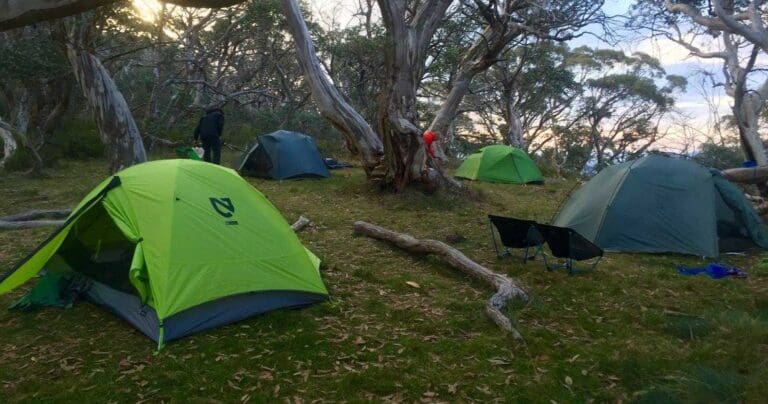
Shelter choice depends on environment and exposure. Tents, tarps, bivvies, and hammocks all have valid use cases, and the real skill is understanding wind, rain, insects, and ground conditions where you’re actually hiking. A footprint or groundsheet can extend shelter life but isn’t always required.
A sleep system needs insulation from above and below. A sleeping bag or quilt provides warmth, while a sleeping mat stops heat loss to the ground, and in Australian conditions I’d say the mat often matters more than the bag. Comfort items like a pillow are optional, but on multi-day trips they can genuinely improve your recovery.
Navigation and safety system
With shelter and sleep covered, safety systems are what let you use them with confidence. They should be realistic and layered rather than excessive.
Always carry a physical map and compass and know how to use them. Digital navigation is a powerful supplement but should never be your only option, because phones burn through battery fast when they’re searching for signal. On multi-day hikes I keep my phone in Flight Mode and only enable GPS when I need it, which can dramatically extend battery life.
Carry a power bank sized for the length of the trip and cold conditions.
For emergencies, I’d strongly recommend a Personal Locator Beacon or satellite communicator for overnight and remote hikes. These are single-purpose safety tools, not substitutes for planning or judgement.
A first aid kit should reflect the trip, group size, and duration. I focus mine on blister care, wound management, and pain relief rather than hypothetical survival scenarios. A headlamp or torch is essential even if you don’t plan to walk at night, and a whistle remains one of the lightest and most effective signalling tools you can carry.
Clothing and weather protection
Your safety systems only work if you can actually stay functional in the conditions, which is where clothing comes in. I pack it as a modular system, not as outfits.
Base layers manage moisture. Insulation layers manage warmth when you’re stationary or in cold conditions. Shell layers manage wind and rain. The exact combination depends on forecast, elevation, and exposure.
Australian conditions often mean cold rain, strong wind, and rapid weather changes rather than sustained snow, so waterproof and wind-resistant layers matter even when temperatures are mild.
Footwear takes significantly more stress on overnight and multi-day hikes than on a day walk. Feet often swell over consecutive days, especially in warm conditions or under load, so a shoe that feels perfect on day one can become painful by day three. As a general guide, I’d want roughly a thumb-width of space in the toe box to accommodate that swelling.
Sock choice, blister prevention, and drying strategies matter more as trip length increases. Gaiters, gloves, hats, and buffs are conditional tools that earn their place based on terrain and season, not items I’d pack automatically.
Food and hydration
Once you’re warm, dry, and can navigate safely, food and water are what keep you moving. Food is fuel, not entertainment. On multi-day hikes, appetite often drops while energy needs actually rise.
I choose food that’s calorie-dense, easy to prepare, and familiar, because simple meals cut down on decision fatigue at the end of long days. Cooking systems should be reliable, easy to use in wind, and appropriate to group size, and I always plan fuel conservatively rather than cutting it fine.
Hydration planning matters just as much. Know where water is available, how reliable those sources actually are, and what treatment method you’ll use. Filters, chemical treatment, and boiling all have trade-offs. Carry enough capacity to manage dry sections or unexpected delays.
Personal care and hygiene
Small hygiene decisions have an outsized impact on comfort and health over multiple days, and this is the system I see people underprepare for most often.
A toilet system is not optional. Depending on location, this may mean a trowel for burial or a carry-out system. In some sensitive environments, such as parts of the Western Arthurs or sections of the Larapinta Trail, carrying out human waste is mandatory. Always check local park regulations and conditions before your hike.
Other essentials include:
- Hand hygiene supplies
- Sunscreen and lip protection
- Personal medications
- Menstrual hygiene items if required
Managing waste responsibly is part of Leave No Trace practice. Carry out what you carry in. Simple organisational tools such as zip-seal bags help keep hygiene manageable inside your pack.
Optional gear and what people overpack
Once the core systems are sorted, what’s left is optional, and it’s not automatically frivolous, but I think it should be chosen deliberately rather than out of habit.
Examples include:
- Lightweight chair or sit pad
- Camera equipment
- Camp shoes
On longer trips, small comfort gains can lift morale and help recovery. On shorter or more technical trips, simplicity usually wins. The pattern I see most often when people overpack is:
- Multiple clothing items serving the same function
- Gimmick survival gear with little real use
- Excess cooking equipment
- Redundant backup items
Every item should have a clear role. If two items solve the same problem, one can usually go.
Seasonal and environmental overlays
Everything above still has to flex with conditions, because packing changes with the environment, not the calendar.
In alpine environments, you may need additional insulation, traction, and weather protection, but for most Australian winter hiking that doesn’t automatically mean ice axes or avalanche equipment. Those tools require specific terrain and training most trips simply don’t call for.
In warmer months, sun protection, insect management, and water capacity often matter more than insulation. Shoulder seasons tend to demand the most adaptable systems of all, since conditions can swing dramatically over a single trip.
A good packing list doesn’t guarantee a good trip. Sound judgement, preparation, and adaptability matter more than gear volume ever will. I’d rather you start with proven systems, customise them for the conditions in front of you, and refine them over time based on what you actually learn out there. The best packing list is the one that keeps evolving with you.
For those who prefer a structured reference, a free downloadable overnight and multi-day packing checklist, and meal planner, are available and can be adapted to suit your own hiking style and destinations.