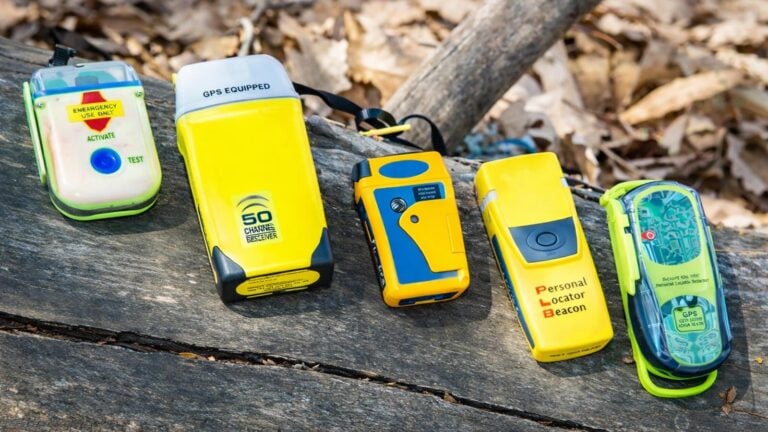
Keeping your PLB in perfect working order
A Personal Locator Beacon is a last-line device. It’s designed to function after other systems have failed, once self-rescue is no longer possible, which is exactly why it needs to be ready even though it might sit unused in your pack for years. It doesn’t need daily attention, but it does need deliberate care, and that care comes down to four things: how you store it, how you manage the battery, how disciplined you are about testing it, and whether it’s properly registered.
Where you carry it
Most people keep their PLB in the backpack, which is fine as long as it’s in a dedicated pocket or external mounting point where it’s protected but still accessible, secured with a clip, tether or carabiner so it can’t be lost, and positioned somewhere you could reach it quickly even if you were injured. That last point matters more than it sounds: the whole reason a PLB is worth carrying is that it works when you can’t rescue yourself, so it needs to be reachable in exactly the situation where you might not be moving well. Don’t cram it tightly in among hard gear, don’t rest heavy items directly on top of it, and don’t use the pack as a seat or pillow if that risks crushing the beacon.
There are situations where the pack isn’t the right place at all. If you take your pack off for a break or a short side trip, you risk leaving your emergency device behind with it. A waist belt or chest harness keeps the PLB attached to you at all times, which is often the most reliable option for that reason. An external harness pouch improves both how quickly you can reach it and how visible it is to the rest of your group. A dry bag adds moisture protection, but avoid overpacking the bag or compressing the device inside it. Whichever option you use, accessibility is the point: a PLB buried deep in a pack is slower to deploy under stress, and stress is exactly the condition you’ll be in when you need it.
Battery care and servicing
PLB batteries typically have a service life of approximately five to ten years, depending on the manufacturer and model, so check the printed battery expiry date regularly and replace or service the battery before it expires rather than after. Avoid prolonged exposure to extreme heat, such as inside a vehicle, and follow the manufacturer’s servicing guidelines rather than attempting unauthorised battery replacement if specialist servicing is required. Even if the self-test light activates after the battery has expired, that doesn’t guarantee full emergency performance, which is exactly why replacing it before expiry matters rather than waiting for a warning. For the testing procedure itself, see Testing your personal locator beacon (PLB).
If it goes off, on purpose or by accident
Accidental activation can divert search and rescue resources away from a genuine emergency, so it’s worth understanding your beacon’s activation process thoroughly, making sure the activation switch is properly secured during transport, and avoiding storing it anywhere that pressure or movement could trigger it. If it does go off by accident, turn it off immediately and contact AMSA on 1800 641 792. There’s no penalty for accidental activation, but reporting it promptly prevents unnecessary escalation.
If you activate it intentionally and your situation then improves, don’t switch it off straight away. Try to establish two-way communication first, by mobile phone, satellite communicator, or 000 if it’s available, and confirm directly with authorities that rescue is no longer required before you turn the beacon off. Doing it in that order is what prevents confusion within the search and rescue system.
Registration ties it together
None of the above matters as much if the beacon isn’t registered, because registration is what allows authorities to quickly identify you and contact your emergency contacts once it’s activated. Make sure your beacon is registered and current with the Australian Maritime Safety Authority (AMSA). You can also read Preparing your PLB for your next hike for more on getting it ready before you go.
Final note
None of this is complicated: check the expiry date, keep it somewhere you can reach it, keep the switch secured, get it registered. The reason it’s worth doing properly is that by the time you actually need the beacon, there’s no chance to go back and fix a battery you let expire or a registration you never got around to. Looking after it now is what makes it perform exactly as designed when you need it to.
Additional resources
- Registration: Register your PLB with AMSA
- Testing: How to test your PLB safely
- Maintenance guide: PLB Tips Guide (AUS/NZ)
Reference: Australian Maritime Safety Authority