Hiking stove gas canisters look simple, but they influence safety, performance, logistics, and even legal considerations on the track. They determine how reliably you can cook, how your stove behaves in cold or windy conditions, whether you can legally travel with your gear, and how safely it can be used around shelters.
This guide explains what hiking stove gas canisters are, how they work, where they struggle, and the rules that apply to using and transporting them in Australian hiking contexts. My goal here isn’t to tell you what to buy, but to help you understand the limits of the system so you can plan accordingly and avoid problems before they happen.
Quick reference
Best use: Three season hiking, boiling water, short to moderate trips.
Strengths: Lightweight, simple, widely available, fast boil times.
Weaknesses: Poor performance in sustained sub-zero conditions, limited simmer control, transport restrictions.
Fuel standard: EN417 threaded canisters using a Lindal valve.
Transport: Car and ferry only with declaration where required. Not permitted on planes.
What hiking stove gas canisters are
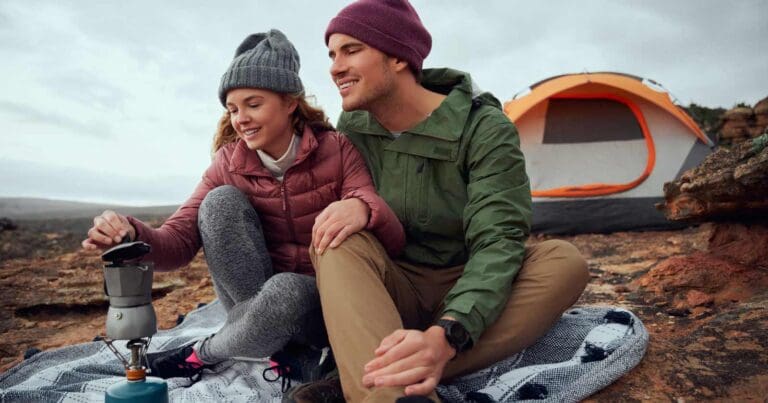
Most hiking stoves in Australia use small, lightweight, pressurised gas canisters that either screw directly onto the stove or connect via a hose. These are commonly referred to as EN417 canisters and use what is known as a Lindal valve. This is the familiar screw threaded valve found on hiking specific gas canisters from outdoor brands.
This distinction matters. Lindal valve canisters are not the same as the long, thin bayonet style butane canisters often sold cheaply in hardware stores for catering stoves. Those bayonet canisters are not designed for hiking use. They are more vulnerable to accidental disconnection, perform very poorly in cool conditions, and are generally unsafe to carry in a pack.
Hiking stove gas canisters are designed for short duration cooking tasks such as boiling water or reheating simple meals. They are not designed for extended cooking, high heat output over long periods, or use in enclosed spaces.
Fuel blends and why they matter
Most hiking stove canisters contain a blend of isobutane and propane, sometimes with a small amount of normal butane. Each gas behaves differently.
Isobutane vaporises more reliably in cool conditions than standard butane. Propane performs even better in the cold but creates much higher internal pressure, which is why it is only used as a component of a blend rather than on its own in these small canisters.
Cheap blue canisters commonly found in hardware stores often contain a much higher proportion of normal butane. These work acceptably in warm weather but can fail completely in cool or cold conditions. This is why so-called four-season blends from hiking brands continue to function long after cheap butane canisters stop producing usable pressure.
This is not a quality issue. It is a physics issue.
Stove compatibility and common misunderstandings
Most modern hiking stoves sold in Australia are compatible with EN417 threaded canisters, regardless of brand. Despite marketing differences, a Jetboil canister will usually work with an MSR stove, and vice versa.
Problems tend to come from handling rather than compatibility. Cross threading, overtightening, dirt in the valve, or leaving a stove attached during storage can all damage the seal and lead to slow leaks.
Integrated stove systems often feel more powerful because they manage wind and heat more efficiently, but they are still constrained by the same fuel physics as any other gas stove.
Cold weather performance and practical field tips
Gas canisters lose efficiency as temperatures drop because the fuel inside struggles to vaporise. As gas leaves the canister, the remaining fuel cools further, compounding the problem. This is why frost often forms on the outside of the canister during use.
There are several practical ways I manage this on the track.
Sleeping with the canister in the foot of your sleeping bag keeps it close to body temperature overnight and can make the difference between a quick morning boil and a frustrating wait.
Placing the canister in a shallow bowl of water while cooking prevents it from dropping below freezing, as long as the water remains liquid. This is often more effective than insulating the canister alone.
Using a small piece of closed cell foam under the canister stops it from losing heat directly into frozen ground or snow.
These techniques improve performance, but they do not turn a gas stove into a true winter system.
The high-altitude paradox
Many hikers assume stoves perform worse at altitude. In reality, lower air pressure makes it easier for gas to vaporise, meaning a canister can sometimes function at slightly lower temperatures than it would at sea level.
The trade-off is oxygen. Thinner air can lead to incomplete combustion, increasing the risk of carbon monoxide production. It can also cause piezo igniters to fail, as the spark struggles to jump in low density air.
At altitude, I always carry a backup lighter or matches and stay especially vigilant about ventilation.
Fuel planning for multi day trips
One of the most common questions hikers ask is whether they have enough gas.
A practical baseline for boil only meals is around 12 to 15 grams of gas per person, per day. This usually covers a hot drink in the morning and rehydrating dinner at night. Winter trips, snow melting, or very windy conditions can easily increase this by 25 percent or more.
A simple planning trick is to write the full weight of the canister on the base with a marker. At any point during a trip, you can weigh it and know exactly how much fuel remains.
At home, a float test can also be used. Place the canister in water. An empty canister floats high, while a full one sits lower. Many brands print a scale on the side that allows you to estimate remaining fuel based on the waterline.
Heat management and Australian conditions
Cold is not the only concern. Heat is a serious and often overlooked risk in Australian conditions.
Manufacturers set 50 degrees Celsius as a hard storage and transport limit for canisters. That’s a conservative safety margin rather than a sign the canister is close to failing, since canisters are engineered to withstand pressures well beyond that before actually bursting. Even so, it’s a limit worth respecting, because 50 degrees is a temperature easily reached in a hot car, the top of a pack exposed to summer sun, or near reflective surfaces.
Highly polished pots or tightly wrapped wind reflectors can reflect heat downward onto the canister, causing it to overheat and vent gas through the safety seal. This can look dramatic and is extremely dangerous if ignored.
I keep canisters shaded, well ventilated, and away from reflected heat, always.
Using stoves near tents and shelters
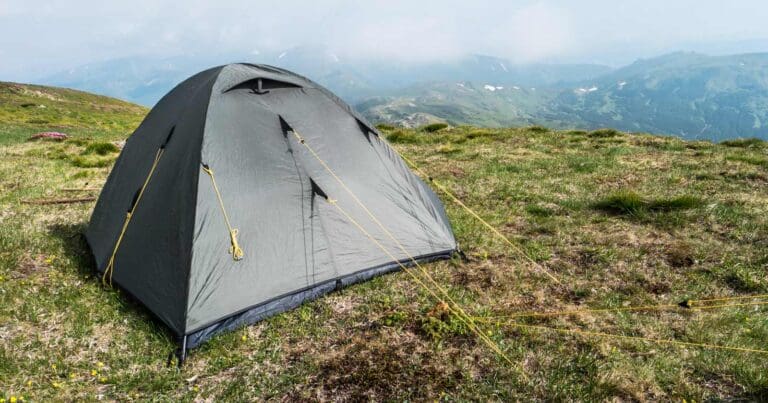
Gas stoves should never be used inside a hiking tent, including the sleeping area.
Using a stove in a vestibule is sometimes done in poor weather, but it carries real risk and should not be considered normal practice. If it is done at all, it should only be in a large, well-ventilated vestibule with doors fully open, the stove positioned near the edge, and the user fully alert and ready to shut it down instantly.
Carbon monoxide poisoning, fire, and tent ignition remain real risks even in these conditions.
Transport rules and travel realities
Gas canisters are classified as dangerous goods, even when empty.
They are allowed in private vehicles but should not be left in hot cars or stored where heat can build up. They are not permitted on aircraft, whether in carry on or checked baggage, on domestic or international flights.
The Spirit of Tasmania (TT-Line) allows vehicle passengers to carry up to 18 x 250g butane or propane camping canisters, in their original packaging with the manufacturer’s cap in place, provided they stay in the vehicle. No declaration is needed for this quantity, and there’s no special dangerous goods locker requirement at that scale. Foot passengers travelling without a vehicle should declare their canisters at check-in, where they are tagged for collection at disembarkation. Ferry policies are reviewed periodically, so confirm current limits directly with TT-Line before you travel.
For trips involving flights, plan to purchase fuel at your destination.
Storage, lifespan, and disposal
Gas canisters do not have a formal expiry date, but seals and valves degrade over time. Long term storage should be cool, dry, and away from heat sources.
Always remove the stove from the canister during storage. Leaving it attached can damage the seal and cause slow leaks.
Disposal rules vary by council in Australia. Most recycling facilities require canisters to be fully depressurised and visibly punctured. Tools such as a Crunchit make this safer and more consistent and increase the likelihood that the canister will actually be recycled.
Never attempt to refill disposable hiking gas canisters.
A note on refilling and adapters
Adapters that allow refilling hiking gas canisters from BBQ bottles or other sources are widely sold online. While tempting, this practice is strongly discouraged.
EN417 canisters are manufactured as non-refillable. The steel is thinner than refillable cylinders and not designed for repeated pressure cycles. The Lindal valve is also rated for limited use. Each attachment wears the internal seal, increasing the risk of valve failure.
Refilling also risks overfilling. Industrial filling leaves headspace to allow gas expansion. A completely full canister exposed to heat has no room to expand, which can lead to catastrophic failure.
Many people attempt to refill with pure propane. Propane pressure is more than double that of isobutane blends and exceeds the safe rating of most hiking canisters, particularly in warm conditions.
In Australia, transporting refilled disposable canisters may also create legal and insurance issues if an incident occurs.
For those seeking to reduce waste, safer alternatives include liquid fuel stoves or certified refillable systems designed for repeated use.
Field craft for multi day trips
On a short weekend walk, efficiency is convenient. On a long trip, it becomes critical.
Always use a lid when boiling water, as boiling without one can waste up to 20 percent more fuel. Avoid running the stove at full power unless necessary. Reducing output slightly often improves overall efficiency and shortens total burn time.
In cold conditions, sleep with your canister and start the day with a warm fuel source. Small habits like this make a noticeable difference over multiple days.
Gas canisters are a small piece of gear with outsized consequences. Understanding how they behave in cold, heat, altitude, and during transport lets me make deliberate decisions rather than relying on luck, and good planning with simple equipment prevents problems that are much harder to fix once I’m already on the track.