Navigation in Poor Visibility
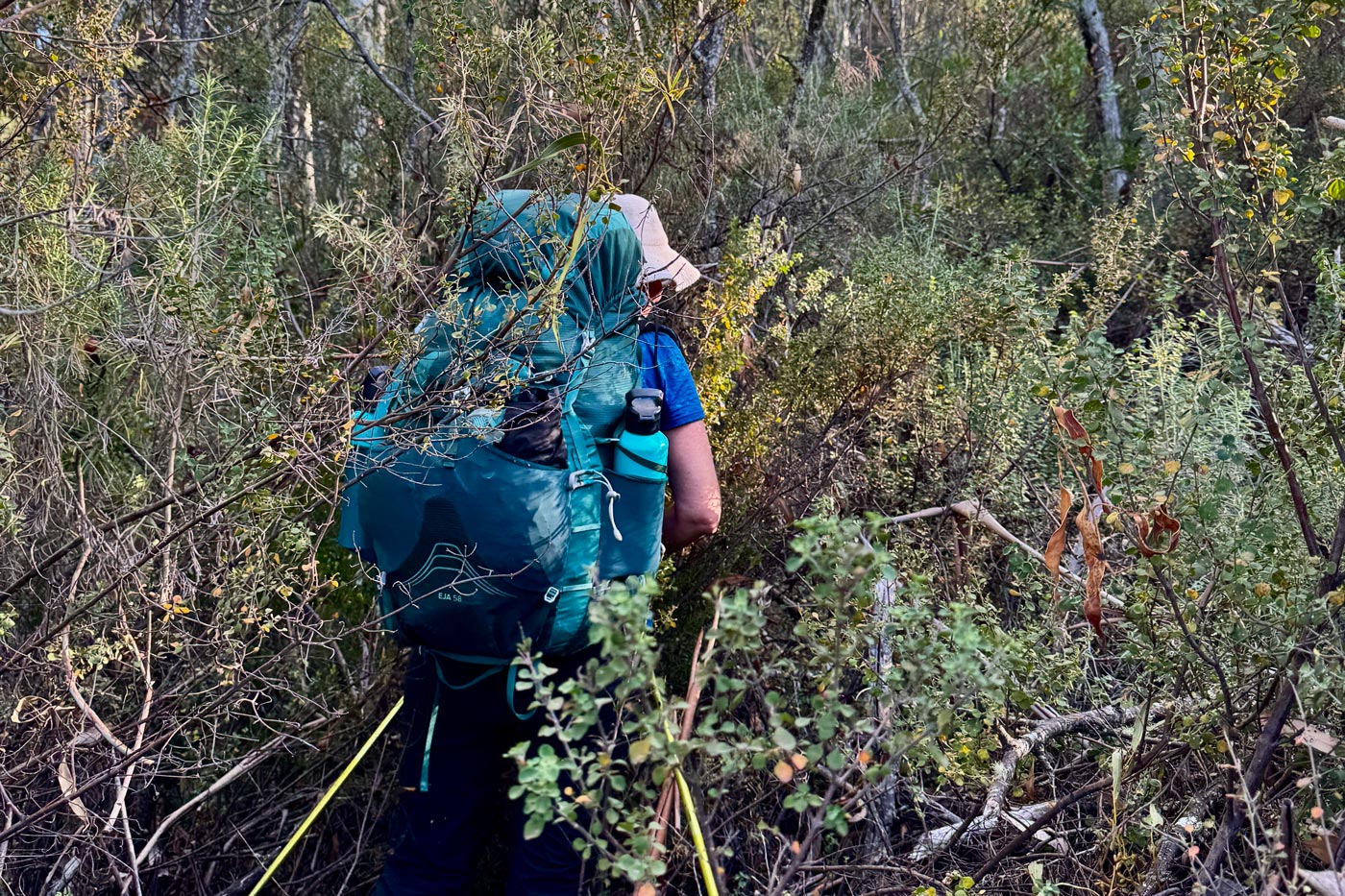
In the bush, visibility is your primary feedback loop. When it fails, the landscape changes fundamentally. Landmarks disappear, distances become difficult to judge, and familiar tracks can seem unfamiliar. In Australian conditions, reduced visibility is not limited to alpine whiteouts. It can result from fog, heavy rain, low cloud, smoke from bushfires, dense vegetation, darkness, or even flat light on exposed ridgelines. In many parts of Australia, dense vegetation is the most common cause of reduced visibility, even on clear days. When visibility drops, navigation errors become more likely and small uncertainties can escalate quickly.
This article sits within the Navigation and Positioning system, one of the core Trail Hiking Australia Safety Systems. Poor visibility does not create new navigation principles. It removes visual confirmation and increases reliance on discipline, terrain interpretation, and deliberate movement. When you cannot see far ahead, your margin for error narrows.
This guide explains how to manage navigation when visibility deteriorates, how to prevent compounding errors, and when to stop moving altogether.
Why poor visibility increases risk
In clear conditions, hikers constantly validate their position against the landscape. You see a ridgeline ahead, confirm the direction of a valley, or identify a distinctive peak in the distance. These visual cues reinforce your understanding of where you are. When visibility drops, that constant feedback disappears.
Without distant reference points, it becomes easier to drift off a bearing, miss a track junction, descend the wrong spur, or misjudge slope angle. In dense bush, you may not notice gradual changes in direction. In fog or smoke, features can appear suddenly and distort your perception of scale. At night, even familiar terrain can feel disorienting.
Poor visibility rarely causes hikers to become lost instantly. It increases uncertainty. If that uncertainty is not managed early, small directional errors can compound.
Adjust your expectations immediately
The moment visibility deteriorates, adjust your pace and mindset. Slowing down is not weakness. It is deliberate risk management.
Reduce speed so you can monitor terrain carefully. Shorten the distance between checks of your map, compass, or GPS. Increase communication if hiking in a group. Confirm direction more frequently than you would in clear conditions. Assume that errors are more likely and act accordingly.
If you planned a long off-track section or a complex route, reconsider whether it remains appropriate in current conditions. Poor visibility increases cognitive load and fatigue. What felt manageable in clear weather may no longer be reasonable.
Use bearings deliberately, not casually
When distant landmarks are obscured, compass work becomes more important. If you need to travel off track or across open ground in fog or low cloud, set a clear bearing from your map and follow it deliberately.
Pick short, intermediate reference points where possible. In low visibility, this may mean walking to a nearby tree, rock, or terrain feature aligned with your bearing, then resetting. Avoid long, unconfirmed movements.
In open terrain with very low visibility, groups can use a controlled “leap-frog” technique. One person walks forward to the edge of visibility while others confirm alignment on the bearing using voice or whistle correction. Once positioned correctly, the group moves to that person and repeats the process. This reduces cumulative drift when there are no obvious intermediate landmarks.
If terrain forces you to detour around obstacles, consciously re-establish your bearing once clear. Drifting around fallen timber, scrub, or rocky outcrops without resetting direction is a common cause of gradual deviation.
If you are unfamiliar with taking and following bearings, review compass use techniques before relying on them in marginal conditions.
Trust contours more than distant guesses
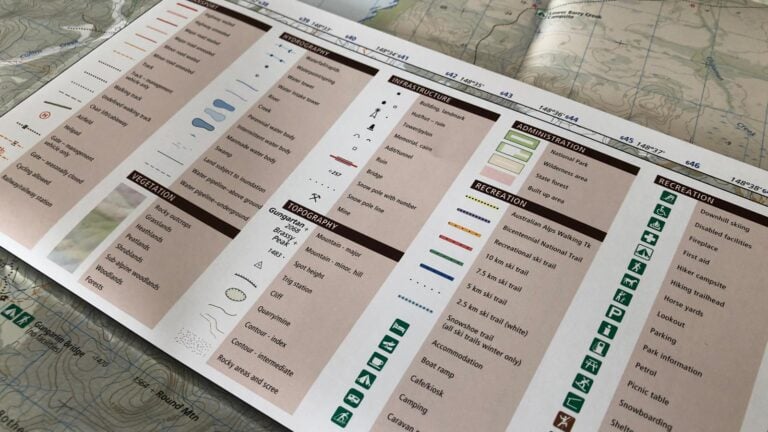
In fog or smoke, the ground beneath your feet becomes your most reliable reference. Contour lines on a topographic map describe the shape of the land regardless of visibility. Pay attention to slope angle, direction of fall, drainage lines, and the feel of ridges and spurs.
Ask yourself simple terrain questions. Are you ascending when the map shows descent? Does the slope fall away on the side you expect? Are you crossing a shallow saddle or traversing a steeper side slope? These tactile and gradient cues can confirm position even when you cannot see far.
If terrain does not match what the map predicts, stop and reassess. Do not continue moving in the hope that clarity will return.
Use handrails and aim off deliberately
In poor visibility, aiming for a precise point can increase risk. Instead, navigate toward a larger, linear feature that acts as a safety boundary. This technique is known as handrailing.
A ridgeline, creek, fence line, coastline, or prominent spur can serve as a reliable reference. By intentionally aiming slightly to one side of a known linear feature, a technique known as aiming off, you ensure that when you reach it you know which direction to turn. This reduces uncertainty compared to trying to intersect an invisible point in fog or smoke.
Linear features simplify decision-making. They reduce the chance of missing a target entirely and provide immediate confirmation once reached. In some situations, these same features can also act as catching features, providing a clear signal that you have travelled too far.
Managing navigation at night
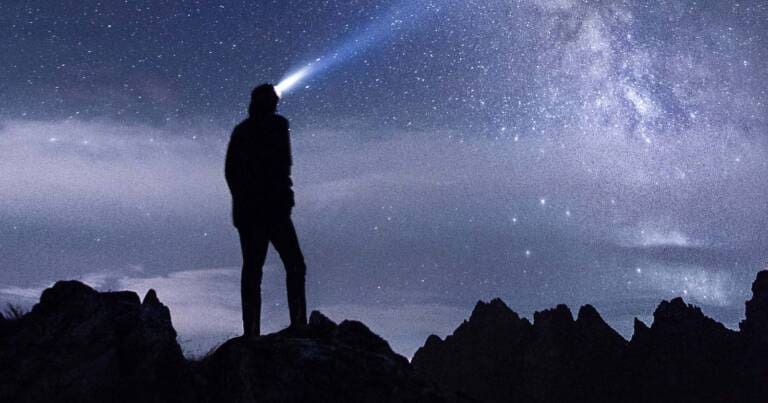
Night hiking reduces visual range even in clear weather. Headlamps create a narrow cone of light that can exaggerate shadows and flatten terrain. Depth perception decreases and reflective track markers may be harder to spot than expected.
Headlamp settings matter. A lower beam can reduce glare in fog or rain by limiting backscatter, which occurs when light reflects off moisture in the air. Red light mode can help preserve night vision during map checks, though it reduces detail. Adjust brightness deliberately rather than defaulting to maximum output.
If hiking after dark, slow down significantly. Confirm junctions carefully. Check your position more often than you would during daylight. Fatigue often peaks in the evening, increasing the likelihood of mistakes.
If uncertainty grows, treat night navigation like any other reduced-visibility scenario. Stop, confirm, and relocate only if confident. Darkness alone is rarely an emergency, but compounding errors can become one.
For more detailed considerations, see Hiking at Night: Planning, Navigation, and Safety.
Smoke and bushfire conditions
In Australia, smoke from distant bushfires can dramatically reduce visibility even when you are far from active fire fronts. Smoke can obscure ridgelines, distort light, and reduce air quality.
If visibility drops due to smoke, prioritise conservative decisions. Monitor wind direction and be alert to changing fire conditions. If you are unsure about your route or the broader safety situation, consider retreating along a known path rather than continuing into unknown terrain.
Poor visibility combined with active fire risk is a situation where early, conservative decisions are appropriate.
Know when to stop moving
Poor visibility becomes dangerous when you continue moving without confidence. If you cannot confirm your position, cannot maintain a reliable bearing, or find that terrain repeatedly contradicts your expectations, stop.
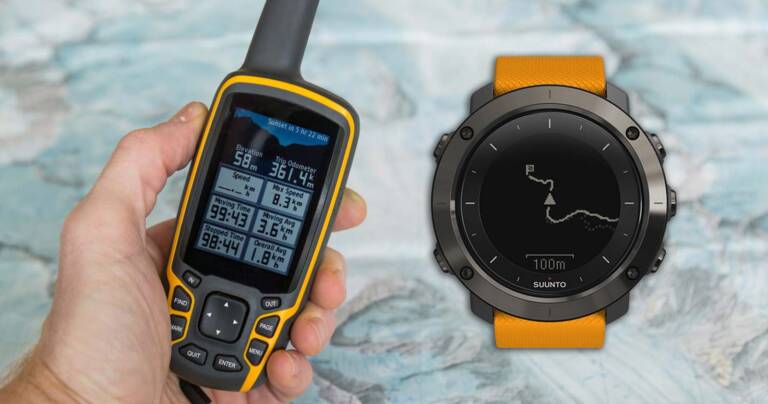
Stopping is a stabilising action. Wait for conditions to improve if safe to do so. Reassess your map. Check devices calmly. Eat, hydrate, and reduce stress before deciding on the next action.
If conditions are deteriorating and you cannot self-correct, escalate appropriately. Use emergency communication devices if your safety is at risk. Poor visibility alone is not usually an emergency, but it can contribute to one if combined with injury, exposure, dehydration, or fatigue.
Preparation reduces the impact of poor visibility
Managing navigation in poor visibility begins before you leave home. Study your route in advance. Understand major ridgelines, drainage patterns, junctions, and escape options. Carry independent navigation tools and know how to use them.
Leave trip intentions so others understand your plan. Monitor weather forecasts and be prepared to adjust objectives. Build navigation skills in moderate conditions before relying on them in marginal ones.
Before leaving, build a written route plan for sections where visibility may be compromised. Record waypoints with grid references, distances between them, bearings and back bearings for key legs, and the terrain features that confirm each one. In clear conditions this feels redundant. In fog, smoke, or whiteout it becomes your primary reference. Carry backup power for any digital navigation device, a flat battery in poor visibility removes a critical layer of redundancy.
Poor visibility is a predictable feature of Australian hiking. Fog rolls in, smoke drifts across ranges, storms develop quickly, and darkness falls. The goal is not to eliminate uncertainty. It is to prevent uncertainty from escalating into loss of control.
Strong navigation discipline, slower movement, deliberate bearings, intelligent use of handrails, and early decision-making preserve safety when you cannot see far ahead.




Ooo yeah. We once got caught out on the Cathedral Ranges in a rainstorm. Some bits were dicey as. At least, we knew which direction to keep heading 😅
Murky Murk that would get pretty dicey up there. Only really two ways to go safely.
Trail Hiking Australia TBH I was more worried about lightning and we got off the ridgeline as soon as practically possible.
Murky Murk oh yeah, that would be a bit frightening. Not a good place to be
Trail Hiking Australia Nope. 😅
Critical in mountains everywhere. Learned this first in Scotland. When it’s clear weather, you look around at the mild hills and can’t imagine getting lost, let alone in trouble. Then the cloud sweeps in and visibility is measured in a few metres, and might stay that way, along with the cold, for days. Pre-GPS, my hosts always had topo maps, compass and altimeters to locate themselves, but always were ready to get out early and abandon the walk when the signs and changes indicated a pressure drop.
Ben Marshall that’s a great example. Mountain environments everywhere seem manageable in clear weather, and then feel completely different once cloud drops and visibility shrinks to a few metres. That shift is exactly when small errors can start compounding. Really like your point about being ready to abandon the walk early when conditions change. That decision, made before things escalate, is often more important than any specific tool. GPS has changed navigation, but it hasn’t replaced judgement.