Elevation changes how terrain behaves. It affects weather, exposure, route choice, fatigue, and decision-making. Yet many hikers focus heavily on horizontal distance and overlook vertical position. Knowing how high you are, how quickly you are gaining or losing elevation, and how that relates to the terrain around you is a core navigation skill.
This article sits within the Navigation and Positioning system, one of the core Trail Hiking Australia Safety Systems. Altimeters do not replace map reading or compass work. They strengthen terrain awareness by adding a third dimension to your navigation. When used deliberately, vertical awareness reduces uncertainty, confirms position, and prevents small errors from compounding.
This guide explains what an altimeter does, how it works, when it is useful, and how vertical awareness supports safe hiking in Australian conditions.
What is an altimeter?
An altimeter measures elevation above sea level. Most hiking altimeters are barometric, meaning they estimate altitude based on air pressure. As you ascend, air pressure decreases. As you descend, it increases. By measuring these changes, the device calculates your elevation.
Many GPS watches and handheld GPS units include barometric altimeters. Some devices rely purely on satellite data to estimate elevation, but barometric readings are generally more precise over short distances when properly calibrated. Many modern units also use automatic calibration, where GPS data is used periodically to correct or “zero” the barometric sensor. This reduces drift for less experienced users, but it does not remove the need to understand how the system works.
An altimeter does not tell you where you are on a map by itself. It tells you how high you are. When combined with contour information and terrain interpretation, that height becomes powerful confirmation.
Why vertical awareness matters
Most navigation errors are thought of horizontally. A missed junction. A wrong spur. A bearing drift. But many of these errors are accompanied by vertical clues that hikers overlook.
If your map shows that a saddle sits at 980 metres and you are reading 1,050 metres on your altimeter, something is wrong. If you expected to descend into a valley but your elevation continues to increase, that discrepancy is valuable information. Vertical awareness provides an early warning that your assumptions may not match reality.
In Australian terrain, many spurs can appear similar from above. Descending the wrong spur may not feel obvious immediately. However, if your elevation drops far more quickly than expected compared to your planned route, that vertical mismatch often reveals the mistake sooner than noticing a small horizontal bearing error in dense vegetation.
Elevation also influences weather and exposure. In alpine areas such as the Snowy Mountains or Tasmania’s Central Highlands, a difference of a few hundred metres can mean a significant drop in temperature and increased wind. Understanding your height relative to surrounding terrain helps you anticipate these changes.
Confirming position with contours and aspect
Topographic maps represent terrain shape through contour lines. Each contour line connects points of equal elevation. When you combine contour interpretation with an altimeter reading, you can narrow your possible location significantly.
Slope aspect, the direction a slope faces, adds another layer of precision. If your altimeter reads 1,200 metres and you know you are standing on a south-facing slope, you can often isolate your position on the map quickly. Elevation plus slope direction creates a far more precise location fix than elevation alone.
For example, if you know you are somewhere along a ridgeline between two peaks and your altimeter reads 1,240 metres, you can identify which contour band you are likely within. If the ridge undulates and you are on a west-facing slope at that height, your potential position narrows further.
This technique is especially useful in poor visibility, dense vegetation, or featureless terrain where distant landmarks are obscured. While you may not see the next peak clearly, you can confirm whether you are ascending or descending as expected and whether the slope orientation matches your plan.
For more detail on reading contour lines, see Reading Topographic Maps for Hiking in Australia.
Calibrating a barometric altimeter
Barometric altimeters require calibration. Because they rely on air pressure, changes in weather can affect readings even if you remain at the same height. A drop in atmospheric pressure due to an approaching front can cause your altimeter to indicate a gain in elevation.
To maintain accuracy, calibrate your altimeter at known elevation points. Trailheads, summits with marked elevations, huts, and trig points (triangulation survey stations with precisely recorded elevations) are ideal. If your map indicates a specific height and your device differs significantly, adjust it.
During multi-day hikes, recalibrate periodically, especially if weather conditions change. Treat the altimeter as a reference tool that requires active management rather than passive trust.
Rapid pressure changes associated with approaching fronts or unstable weather can cause noticeable drift over a short period. If cloud closes in during a frontal change, assume your altimeter may be trending with pressure rather than reflecting true elevation. In these situations, recalibrate at the next known height if possible and cross-check with GPS and terrain features rather than relying on a single data source.
Limitations and common mistakes
Altimeters are helpful, but they are not infallible.
Common mistakes include:
- Failing to calibrate at the start of a hike
- Ignoring gradual drift caused by pressure changes
- Using elevation data in isolation without checking terrain shape
- Assuming GPS-derived elevation is always precise
An altimeter reading that contradicts your map or terrain expectations is not automatically wrong, but it should prompt reassessment. Cross-check elevation with slope direction, drainage patterns, and known features.
Like all navigation tools, altimeters are for confirmation, not justification.
Vertical awareness in different Australian terrain
In alpine and escarpment environments, elevation is often the primary organising feature of the landscape. Ridgelines, spurs, and saddles are defined clearly by height. In these areas, altimeters are particularly valuable.
In dense forest or off-track bushwalking, where sightlines are short and terrain features subtle, knowing whether you are gaining or losing height can prevent gradual drift onto the wrong spur.
In flatter regions, such as parts of inland Australia, elevation changes may be less dramatic but still meaningful. Subtle rise and fall lines influence drainage, vegetation, and route efficiency.
Vertical awareness is not about chasing numbers. It is about integrating height and slope orientation into your understanding of terrain.
Using altimeters for pacing and decision making
Elevation gain contributes significantly to fatigue. A short, steep climb can require more energy than a longer, gradual ascent. Monitoring cumulative ascent can help manage pacing and expectations.
If you planned to reach a ridge at 1,100 metres before reassessing weather and your altimeter reads 1,050 metres after sustained climbing, you know you are close. That knowledge supports calm decision-making.
Conversely, if you expected to descend to safer terrain but your elevation remains high, you may need to reconsider your route before exposure increases.
Vertical data adds context to both navigation and risk assessment.
When an altimeter is most useful
An altimeter is particularly valuable when:
- Navigating in fog, smoke, or darkness
- Traversing complex ridgelines or spurs
- Identifying saddles or high points
- Managing exposure in alpine terrain
- Relocating after uncertainty
It is less critical on well-marked, low-relief tracks, but even there it can support pacing and awareness.
Altimeters and the broader navigation system
An altimeter does not replace map, compass, or GPS. It complements them. Map reading provides terrain shape. A compass provides direction. GPS provides position estimates. An altimeter adds vertical confirmation.
Together, they create layered redundancy. If one data source feels uncertain, others can confirm or challenge your assumptions.
Vertical awareness strengthens the Navigation and Positioning system by reducing ambiguity. It gives you another independent way to detect when something is not aligning with your plan.
Navigation is three-dimensional. Ignoring elevation removes an entire layer of information that the landscape is offering you. An altimeter is not essential for every hike, but developing vertical awareness is. Whether through a device or careful reading of contours and slope aspect, knowing how high you are and how that relates to surrounding terrain sharpens judgement and improves safety margins.
In Australian conditions, where terrain can be subtle, weather can shift quickly, and visibility can deteriorate without warning, understanding elevation is another way to prevent small navigation errors from becoming larger problems.
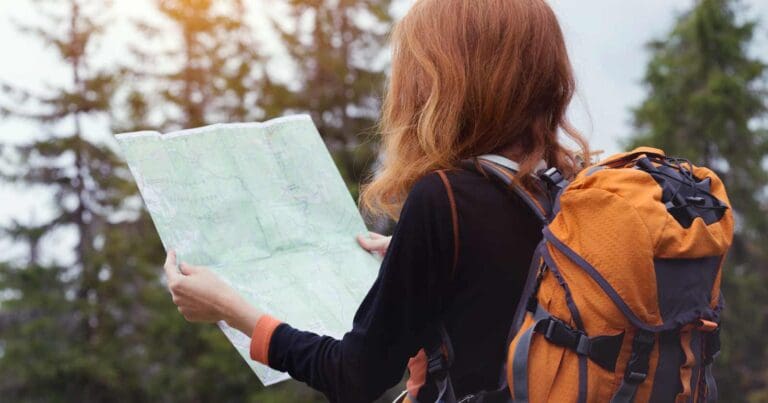
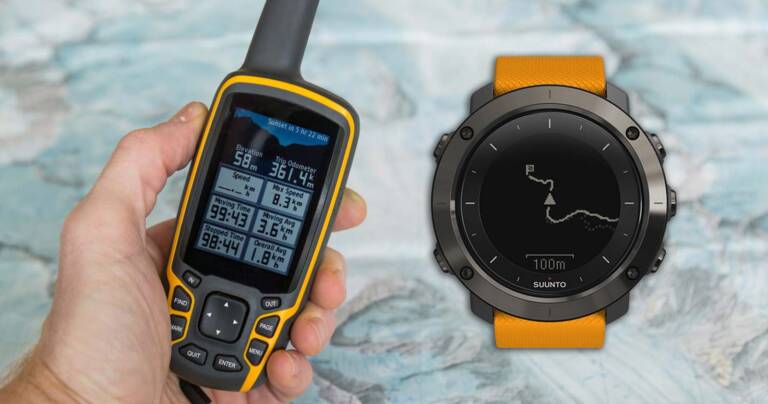




For anyone thinking why would I need this stuff, imagine hiking off-piste in full cloud cover with close to zero vis, or in thick forest. Being able to find the contour you’re on – whether on a paper map for the super old-school brigade or your satellite device – can be the difference between having a rough idea of where you are and being utterly lost.
Ben Marshall that’s exactly it. When visibility drops in cloud, scrub, or dense forest, your world shrinks to a very small circle. In those conditions, lateral features disappear, but vertical position still exists. If you know you should be on the 920 metre contour and your altimeter says 860, that’s a clear signal something isn’t lining up. It doesn’t replace map and compass skills. It strengthens them. Contour awareness gives you another reference point to confirm, or challenge, your assumptions before a small drift turns into a major navigation error.
Well said.
Ben Marshall when Julie and I were traversing the Du Cane Range in Tassie last year, the cloud closed in and visibility dropped to just a few metres. In that kind of terrain, features blend together very quickly. Ridges feel like spurs, shallow saddles feel like summits, and it’s easy to drift without realising it. Being able to confirm our elevation against the map gave us an anchor point. We knew which contour band we should be holding and whether we were creeping too high or losing height unintentionally. In those few hours, vertical awareness wasn’t theoretical. It was the difference between controlled movement and second guessing every step.
Trail Hiking Australia If cloud has closed in suddenly, I wouldn’t be trusting the calibration of an altimeter, as the pressure would likely have just changed. Perhaps as a last resort… but in that situation I’d be using GPS in the first instance
Victor Ra Good thing GPS based altimeters are a thing 👍🏻
Victor Ra you’re absolutely right that rapid pressure change can affect a barometric altimeter. That’s why calibration matters, particularly ahead of frontal weather.
In cloud or low visibility, I wouldn’t rely on any single tool in isolation. GPS gives you positional data, while a barometric altimeter gives you vertical trend and contour confirmation. Used together, and cross checked against the map, they’re far more powerful than either alone.
It’s not about replacing GPS. It’s about adding another layer of information, especially in terrain where holding the correct contour is critical.
Trail Hiking Australia GPS gives you altitude, provided you’re fixed to 4 or more satellites. If GPS fails, sure, use anything at your disposal.
Victor Ra you have nailed the point of the article. It’s about using a combination of tools, and not solely relying on one.