Starting to hike
Starting to hike does not require special knowledge or expensive gear. It requires understanding what makes a hike manageable and matching your choice to your actual fitness and experience. The difference between a first hike that goes well and one that goes poorly is usually not gear or luck. It is planning that fits the reality of the walk, not the fantasy version of it.
Understand time, not just distance
How long a hike takes depends on terrain, elevation, your fitness, and your pace. A guidebook time is a starting point for someone with average fitness on average conditions. Your hike will take longer if you are new to hiking, if the terrain is rough, or if the elevation is significant. Plan using the guidebook time, then add time for your actual fitness level.
Time and distance planning explains how to estimate realistically. The key is finishing with daylight and energy left, not arriving exhausted at dusk. A walk that takes six hours is a different proposition from one that takes three hours, and your first hike should be something you finish comfortably, not something you barely finish.
Use the hiking time calculator to work through time estimates for your specific walk. Input the distance, elevation, terrain type, and your fitness level to get a realistic duration.
Match the terrain to your fitness
A short, steep walk can demand more from your legs than a longer, flat one. Track grading helps you understand what to expect. Grade 2 and Grade 3 tracks usually suit beginners. Steep descents are particularly hard on knees and joints when you are not used to them, so choose terrain where you can move at a controlled pace both up and down.
Start with a walk you can finish feeling strong, not exhausted. Confidence develops through success, not through pushing to your absolute limit on the first attempt. You can choose more demanding terrain on your second or third hike.
Know your fitness honestly
Overestimating your fitness is the most common beginner mistake. Ask yourself: How far can I walk at a comfortable pace before I feel tired? How do I respond to sustained climbing? How do my knees feel on descents? Be honest. If you spend most of your week sitting, a full day of hiking is a significant physical demand.
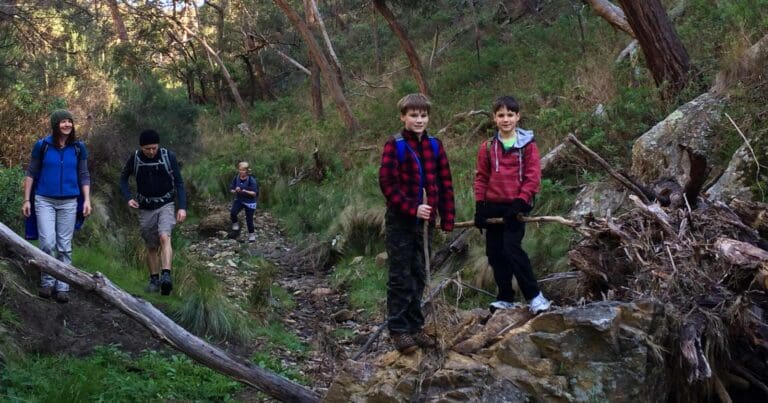
Group hiking can help here. Walking with someone more experienced means you have feedback on your pace and you can ask questions about what is normal. Hiking in a group also provides a margin if something unexpected happens.
Choose gear that works, not gear that looks good
You need clothing that protects you and a pack that fits comfortably. Clothing for hiking should:
- Keep you dry and cool in heat (avoid cotton; use synthetic or wool)
- Protect you from sun, insects, and scrub
- Allow movement without restriction
- Include a rain jacket even on clear days, because Australian weather changes quickly
Your pack should carry the essentials: navigation tools (map and compass), enough water, regular snacks, first aid kit, torch, and extra clothing. Do not overthink it. A simple pack that fits well is better than an expensive one that does not.
Plan what you actually need to carry
The Ten Essentials covers what matters. For a day hike, the key additions are:
- Sufficient water. In warm Australian conditions, this often means more than you expect. How much water should you carry explains the reasoning.
- Food. Simple snacks like nuts, fruit, and sandwiches provide steady energy without complexity. Lightweight hiking food covers options.
- A mobile phone, but do not rely on reception. Carry a map and compass that you know how to use.
Pack deliberately and keep weight manageable. A lighter pack means you move more comfortably and finish with energy left.
Understand why hiking matters: decision-making
Hiking is not just physical. Your decisions on trail shape how the day goes. Decisions about pace, when to stop for food, when to turn back if weather changes, or whether to push on despite fatigue all affect your safety and enjoyment. Good decisions come from:
- Being rested and fed, not exhausted and hungry
- Being hydrated consistently, not thirsty
- Understanding weather and track conditions before you leave
- Knowing when to stop and turn back
Leave No Trace reminds you that your impact on the trail shapes the experience for everyone else. Trail etiquette covers how to share the trail with other users.
Progress gradually
Your first hike should be one you finish easily. Your second can be longer or slightly more demanding. Over several hikes, you develop sense for your own pace, how your body responds to climbing, how weather affects you, and what gear actually works for you. This progression is how you build genuine confidence. It is not about proving something. It is about understanding yourself on trail.
Start with familiar areas or clearly marked, well-used tracks. Progress to less familiar terrain or slightly longer distances. Eventually, if you want it, remote or more challenging hikes become manageable because you have built the skills and confidence through incremental experience.
Practical steps for your first hike
- Choose a walk that takes 2-4 hours and matches Grade 2 terrain.
- Check weather and track conditions before leaving.
- Carry the essentials.
- Leave trip intentions with a trusted contact. Tell them when to expect you back and when to call for help if you have not checked in.
- Start early and finish with daylight remaining.
- Notice how you felt, what worked, and what did not, and plan your next hike based on that learning.



Chris Wells