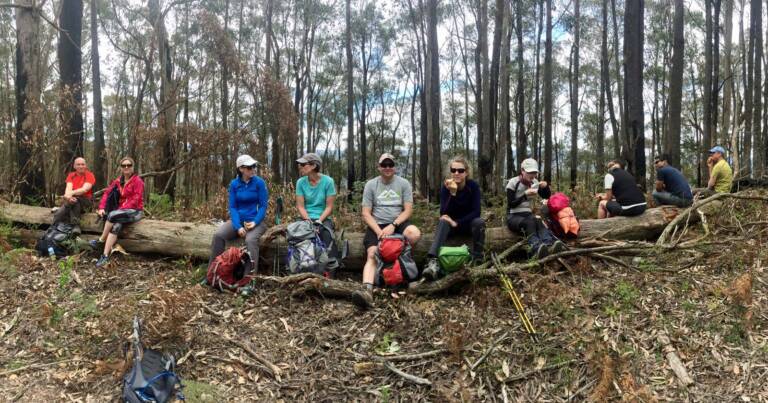
Hiking in a group can be one of the most rewarding ways to get out on the trail: more support, more shared knowledge, company on the harder days. But it also adds responsibilities that solo hiking doesn’t, because decisions now involve more than just you, and the risk doesn’t disappear just because you’re not walking alone. This page works through what group hiking involves and points to the detail behind each part.
Why people hike in groups
People choose to walk together for companionship, shared experience and mutual support. It brings real practical advantages too: shared navigation, combined knowledge, and help close at hand if something goes wrong. None of that removes personal responsibility though. Every hiker is still accountable for their own preparation, decisions and safety, whatever the group’s size or however experienced the leader is.
Risk doesn’t transfer to the group
Joining a group doesn’t hand your risk over to the group or its leader. Everyone still has a role in staying informed, carrying appropriate gear, and speaking up when something feels wrong. That holds whether it’s an informal walk with friends or a more organised outing.
Planning takes more work with a group
Group hikes need more planning than solo walks because there’s more to account for: group size, fitness variation, communication, turnaround times. Skip that planning and you end up with rushed decisions, separated hikers, and risk that builds through the day rather than being managed early. Getting a group of hikers together covers how to plan realistically and match people to a suitable route.
Group size matters more than most people think
Larger groups are harder to manage, move more slowly, and leave a bigger footprint on the tracks and country they pass through. They’re also more likely to spread out, miss a decision, or lose cohesion altogether. Why keeping hiking groups small matters goes through the safety, pace and environmental reasons in full.
Managing the group once you’re moving
Once you’re on the trail, keeping a group together takes active management: controlling pace, managing spacing, assigning clear roles such as a leader and a “whip” at the back, and regrouping regularly. This matters most on steep terrain, in poor visibility, or once fatigue sets in. How to keep your hiking group together covers the practical strategies for that.
Staying switched on as an individual
Being part of a group is not a reason to switch off your own awareness. You still need to understand the route, carry your own essential gear, monitor your own condition, and stay engaged with navigation and decisions rather than handing all of that to someone else. How to keep yourself safe on a group walk covers what that looks like and how self-reliance within group settings actually works.
When things go wrong anyway
Even with good planning, things can still go wrong. Knowing how to respond when a group member becomes separated or lost matters, and our guide on what to do when a group member becomes lost hiking covers the immediate actions, communication and decisions that situation calls for.
Group hiking works best when everyone treats it as shared effort rather than shared shortcut: planning properly, sizing the group to the hike, managing it actively on the trail, and staying personally switched on the whole way through. Use this page as the starting point, then follow the links above for the detail that applies to your situation.





What’s your favourite hiking memory from a group adventure, and how did it enhance your experience on the trail?