Most hikes look uneventful from the outside. The track’s clear, the weather’s stable, the group’s moving at a steady pace, and there’s no single moment that stands out as risky. That’s not the absence of a safety system working. It’s what a safety system looks like when it’s working well: quiet, continuous, and easy to miss precisely because nothing’s gone wrong.
There’s no visible checklist being worked through and no obvious structure to point to. Decisions are being made constantly, in small increments, without most of them ever being consciously registered as decisions at all.
What it actually looks like in practice
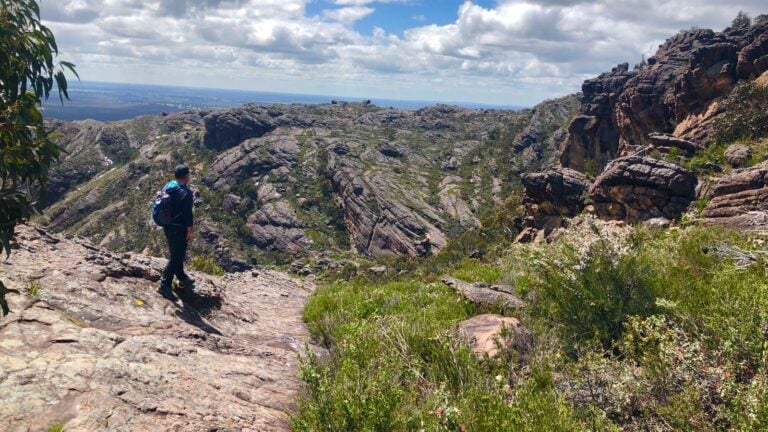
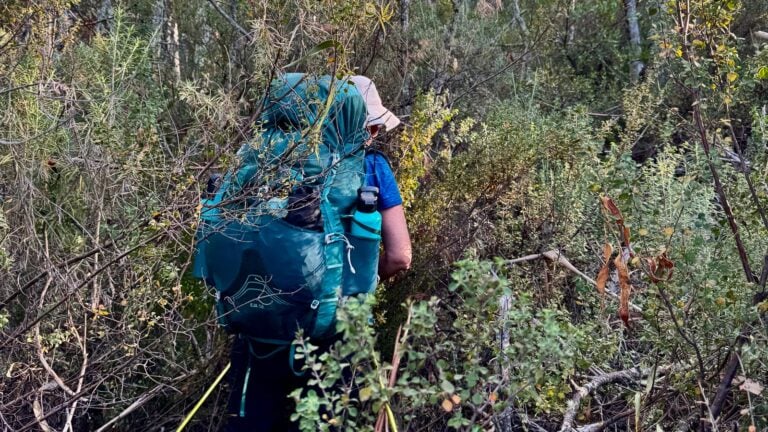
Picture an ordinary day hike. The track steepens slightly, and pace eases back without anyone really deciding to slow down, it just happens. An hour later, heat’s building, and the group takes a break a little earlier than planned. Further on, the track goes less distinct for a stretch, and there’s a moment of checking the map and confirming direction before continuing. Later still, wind picks up on an exposed ridge, and a layer goes on.
None of these are significant on their own, and most of them wouldn’t be described as decisions if you asked the hiker about them afterward. Together, they’re the actual content of a safety system in operation: small adjustments, made continuously, in response to how the terrain, the weather and the hiker’s own state are interacting at that moment.
How the adjustments connect through the day
As a day like this goes on, those adjustments start feeding into each other rather than staying separate. Small climbs accumulate, the pack starts to feel heavier than it did that morning, water gets used a little faster, and pace drops a fraction. Individually, none of this matters yet. There’s still plenty of time, the plan still looks achievable, and the gap between what was expected and what’s actually happening stays small.
But it’s already connected. Slower pace means less water used per hour, which changes how the remaining supply gets rationed. Longer or more frequent breaks change how the day’s timing lines up against daylight. When the track goes indistinct, checking direction more often pulls attention away from noticing fatigue or how exposed a section is becoming. Nothing has broken. Attention and effort have just been redistributed toward whatever needs it most right now.
Where it starts to compound
Add a section of exposed terrain and the picture gets more layered again. Wind picks up, the temperature feels colder than expected, a layer goes on, and that changes how quickly the body heats back up once walking resumes. Clothing, pace and temperature regulation are now genuinely interacting rather than sitting as three separate concerns.
Fatigue starts to shift from purely physical into something that affects decision-making too. Choices get simpler by default, options narrow, and there’s a pull toward sticking with the current plan rather than stopping to properly reassess it, because stopping and thinking now costs more effort than it did earlier in the day. This is the point where the interactions matter most, not because anything’s gone wrong yet, but because several factors are now genuinely influencing each other at the same time rather than sitting independently. A decision to hold the current pace affects hydration. Hydration affects energy. Energy affects the quality of decisions. Decisions affect navigation and timing. Each piece feeds the next.
Why this can’t be a checklist
The absence of an obvious problem doesn’t mean nothing’s changing. There’s rarely a clean moment where a hike shifts from controlled to not, it’s a gap between planned and actual conditions that widens slowly, and the only real question is whether it’s being kept small through continuous small adjustment or allowed to grow until the options run out.
That’s why this can’t be reduced to a checklist. A checklist assumes conditions hold still long enough for a list of completed tasks to guarantee safety. A real hike doesn’t hold still. What actually functions as the safety system is awareness of how these small things are interacting as they happen, and the willingness to adjust early enough that the gap never gets a chance to grow.
What matters isn’t whether any single element, hydration, pace, navigation, fatigue, is managed perfectly in isolation. It’s whether the interactions between them get noticed early enough that pressure doesn’t have room to build. A safety system isn’t something you follow. It’s something you maintain, by staying aware of how small changes across several things at once are actually connecting.
This essay is part of the Hiking Safety Systems in Practice series, exploring how interconnected systems shape safety, decisions and outcomes on the trail. Explore the series →
Explore the Safety Systems
If this way of thinking is new to you, these resources go further into how risk develops across a hike, and how to manage it more effectively: