Ancient Volcanic Peaks Above the Sunshine Coast Plain
Overview
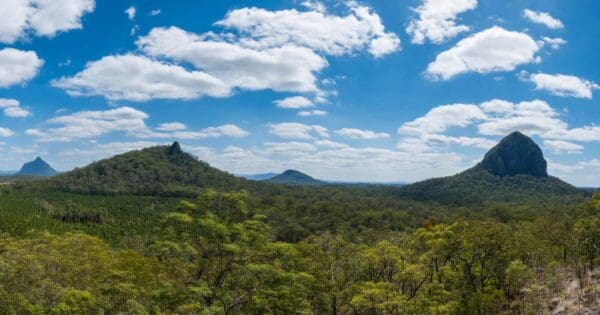
Glass House Mountains National Park protects a striking cluster of volcanic plugs rising from the low country of south-east Queensland, about 70km north of Brisbane near the township of Glass House Mountains. The park covers 3,037ha and brings together steep rocky peaks, eucalypt forest, rainforest remnants and coastal heath in one compact but varied landscape.
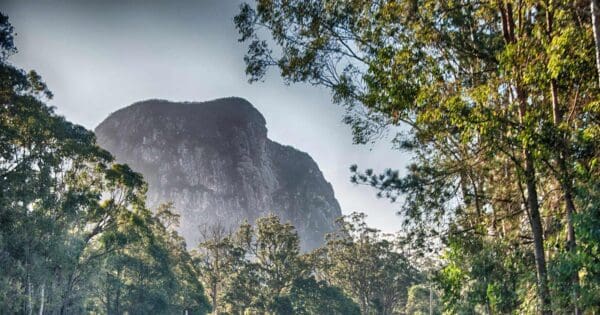
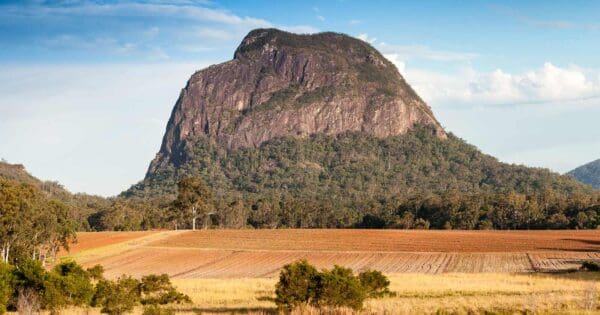
These mountains were formed about 24 million years ago and are recognised as the best example of an eroded central volcano complex in Australia. That geology gives the park its strong visual character, with isolated crags standing well clear of the surrounding plain and creating a landscape that feels quite different from the broader Sunshine Coast hinterland.
Highlights
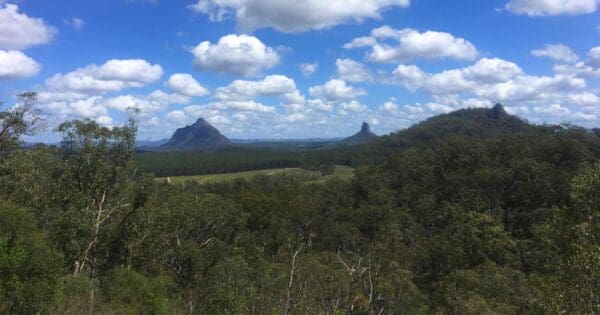
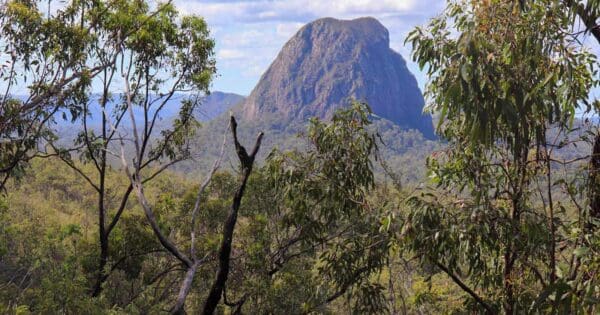
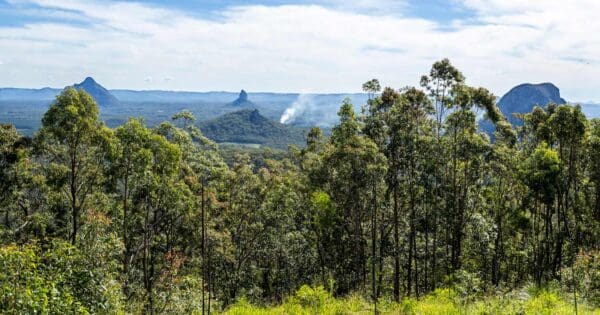
The defining feature here is the line-up of sharp, craggy peaks that seem to rise abruptly from farmland, forest and coastal plain. Their exposed rock faces, unusual shapes and wide separation from one another make the whole area easy to recognise even from a distance.
Beyond the mountains themselves, the scenery shifts quickly between rocky summits, forested slopes and lower heath country. That contrast is part of what makes the park memorable. It is not one continuous mountain range, but a collection of distinct landforms scattered through the landscape, each adding to the sense of scale and drama.
Best Time to Visit
The cooler months from autumn to spring are usually the most comfortable time to spend in this part of south-east Queensland, when clearer air often sharpens the outline of the peaks and walking conditions are generally more pleasant than in the humid summer months. Seasonal changes also shape what you notice here, with wildflower displays a feature in some areas at the right time of year.
Plants and Animals
For a relatively small park, Glass House Mountains National Park protects an impressive range of habitats. Across the park there are 24 regional ecosystems, from hinterland rainforest remnants and eucalypt open forest to coastal heath communities and gallery rainforest on alluvial plains. That mix supports a high concentration of species of conservation significance in a landscape that has otherwise been heavily cleared and fragmented.
Notable plants recorded here include Mount Emu she-oak, swamp stringybark, Christmas bells and Mount Beerwah mallee. The park also supports a range of significant fauna, including glossy black-cockatoos, giant barred frogs, wallum froglets, wallum sedgefrogs and the Oxleyan pygmy perch. Some of the heath and wetland areas are especially important as reference sites for wallum vegetation and the species that depend on it.
Culture and Heritage
The park has extremely high cultural values and is managed in cooperation with Traditional Owners. Official park management material specifically links the western sections of the national park to the Jinibara People through a native title determination and an Indigenous Land Use Agreement covering protected areas.
The broader Glass House Mountains landscape is also recognised on the National Heritage List for its Indigenous significance, with recorded evidence of Aboriginal culture and long connection to the area including burial places, rock art sites, axe grinding grooves, quarries and signs of past camping places. The peaks remain individually important in Aboriginal traditions and continue to hold spiritual significance for Aboriginal people of the region.