Granite Peaks, White Sand and the Curve of Wineglass Bay
Overview
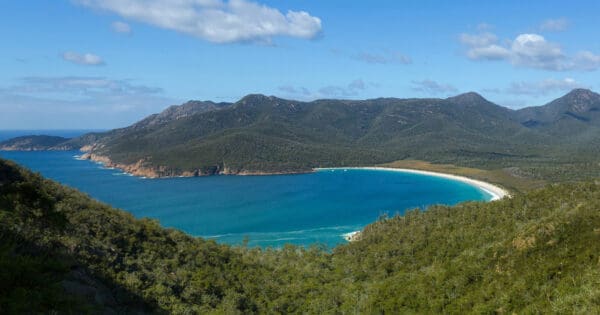
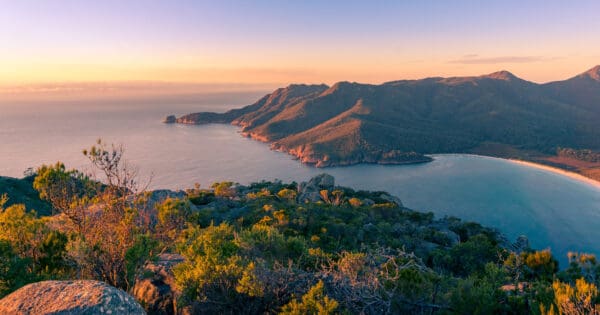
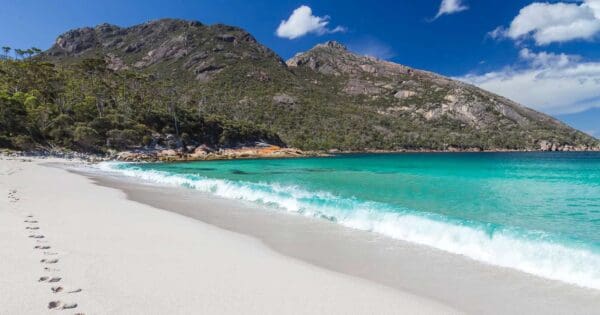
Freycinet National Park sits on Tasmania’s east coast on the Freycinet Peninsula, near Coles Bay, and is one of the state’s oldest national parks. It is the kind of place people recognise at a glance: a sweep of pale sand, clear water and a line of pink and grey granite rising straight from the shoreline.
What makes the park feel so distinctive is the way its landscapes change over a short distance. Sheltered bays, rocky coves, surf beaches and low coastal heath all sit beneath the Hazards, with the Friendly Beaches adding a long, open stretch of sand further north. The peninsula itself was formed over 400 million years ago and is made up of two eroded granite blocks linked by the sand isthmus that forms Wineglass Bay.
Highlights
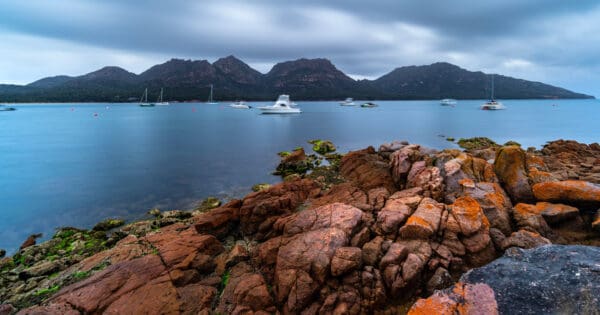
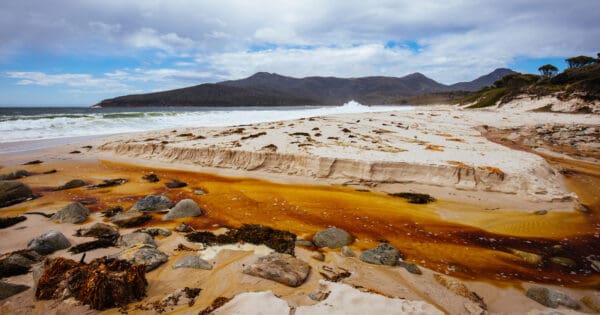
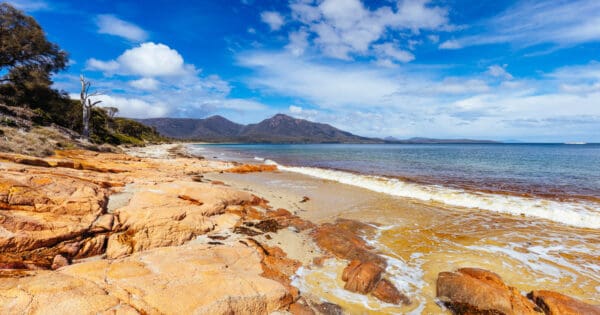
The scenery here is all about contrast. The Hazards dominate the park with steep granite slopes above calm turquoise bays, while elsewhere the coast opens into broad white beaches and weathered orange lichen-covered rocks. That mix of hard stone, bright water and pale sand gives Freycinet its unmistakable look.
Wineglass Bay is the best-known natural feature, but it is far from the only one. The Freycinet Peninsula is one of Tasmania’s most scenic coastal areas, and the separate Friendly Beaches section shows another side of the park altogether: long, exposed shoreline, big sea views and a more open coastal character.
Best Time to Visit
Freycinet is popular year round, but the warmer months are when the coast is at its most inviting and the park is especially busy. Summer suits people who want long daylight hours and settled beach weather, while spring and autumn are often a good middle ground, with milder temperatures and fewer crowds around the main sights.
Winter has its own appeal on this coast. The light can be crisp and clear, and the waters off the peninsula are regularly visited by humpback whales during the colder months.
Plants and Animals
Despite its famous coastal views, Freycinet also protects a strong range of plant and animal life. Heathlands, forests, dunes and shorelines create a patchwork of habitats, which is why the park supports varied vegetation communities and correspondingly diverse fauna.
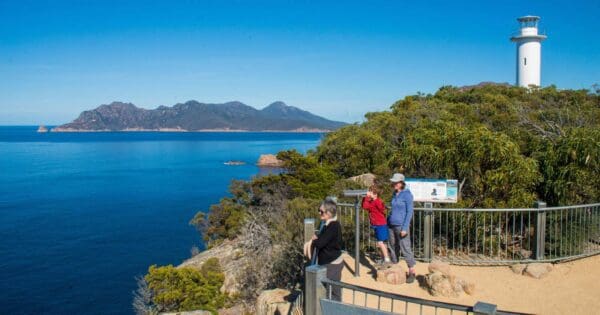
On land, Bennett’s wallabies, pademelons and echidnas are commonly seen, while seals sometimes rest on offshore rocks. Birdlife is another strong point, from small nectar-feeding species through to larger coastal birds. Around headlands and lookouts, white-bellied sea-eagles and Australasian gannets are among the birds that may be seen overhead or out over the water. Wildflowers and orchids can be found through much of the year.
Culture and Heritage
Freycinet National Park lies within the territory of the Oyster Bay nation, and the peninsula and Schouten Island are associated in historic records with the toorerno-maire-mener clan. Significant Aboriginal places occur along the coastlines, dunes and estuaries, including shell middens, rock quarries, rock shelters and stone artefacts. These places remain an important and continuing part of Tasmanian Aboriginal cultural connection.
The park also holds evidence of later European use, including old mine shafts, abandoned huts, whaling remains and shipwreck sites. It was reserved as a national park in 1916, alongside Mount Field, making it Tasmania’s oldest national park.