Sorry, no records were found. Please adjust your search criteria and try again.
Sorry, unable to load the Maps API.
Explore stunning hiking trails of Cocoparra National Park
Discover the diverse trails of Cocoparra National Park, New South Wales, offering hikes and walks for all skill levels and interests. Find your perfect adventure today.
Discover 5 hiking trails in Cocoparra National Park
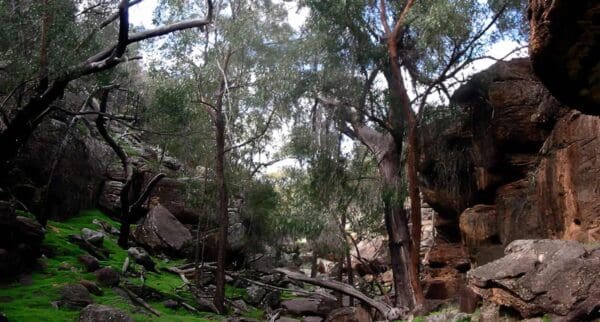

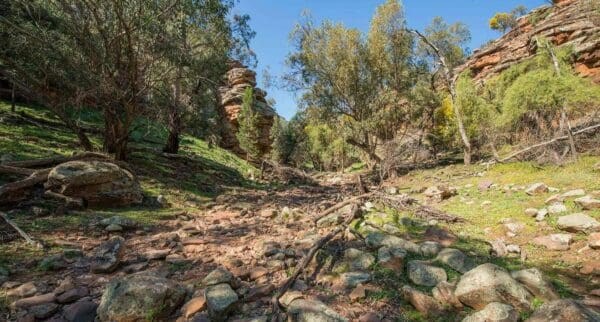

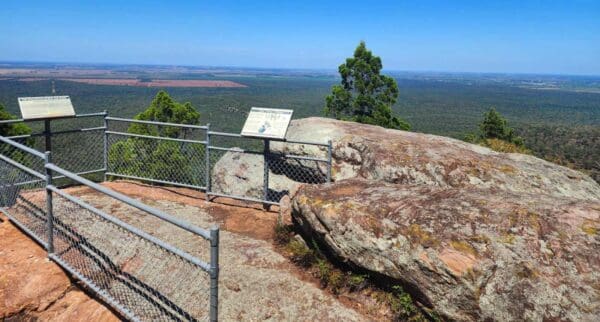
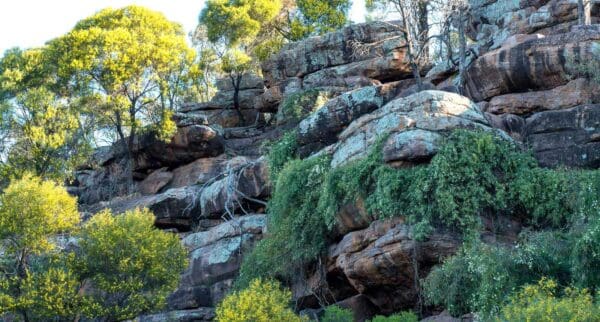
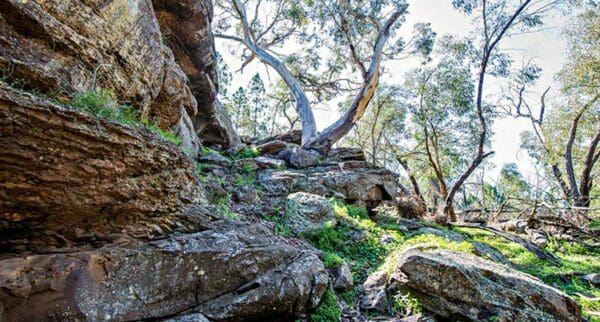
Rugged sandstone country rising from the Riverina plains
Overview
Cocoparra National Park sits about 25 kilometres north-east of Griffith, where the Cocoparra Range lifts abruptly out of the largely flat Riverina country. That contrast is what gives the park its strong sense of place. From the surrounding farmland and plains, the range appears as a long, rocky backbone, with steep eastern escarpments and a western side cut into deep valleys and narrow glens.
This is a relatively compact area, but it feels much bigger once you are among the folded ridges, rocky overhangs and creek lines. The park protects an important remnant of semi-arid range country in south-western New South Wales, along with a mix of habitats that stand out in a heavily cleared district.
Highlights
The defining feature here is the range itself. Upper Devonian sandstones, conglomerates and shales have been folded into the Cocoparra Syncline and worn down over time into the jagged hogback landform that shapes the skyline today. The result is a landscape of craggy ridges, broken escarpments, deep valleys and seasonal waterfalls that can look stark and dry in one season, then green and running after good rain.
Views are a big part of the experience. The higher points look out across wide Riverina plains, while lower in the park the scenery becomes more intimate, with narrow creek-cut gullies, rock faces and sheltered pockets of vegetation. In a region better known for broad agricultural country, the range feels unexpectedly rugged.
Best Time to Visit
Spring is usually the standout, when wildflowers are at their best and the park’s birdlife is especially active. After rain, the creeks, waterfalls and ground layer respond quickly, softening the dry ranges with fresh growth and more colour.
Wet winters can also leave water lingering longer in the falls and soaks, which adds another dimension to the landscape. In drier periods the appeal shifts to the clear outlines of the ridges, the open woodlands and the long views over the plains.
Plants and Animals
Cocoparra protects semi-arid vegetation that is richer on these sandstone ranges than on many nearby landforms. Black cypress pine woodland is the most widespread plant community, especially on the hill slopes, mixed with species such as Dwyers gum, red stringybark and currawong. Ridge-tops are more open, while lower slopes and valley floors carry white cypress pine, bimble box, mugga ironbark, kurrajong and yellow box along stream lines.
The park is also known for its birdlife. Emus, parrots, cockatoos, wrens, raptors and honeyeaters are all part of the mix, and glossy black-cockatoos, hooded robins, speckled warblers, varied sittellas, grey-crowned babblers, diamond firetails and shy heathwrens have all been recorded here. Kangaroos are commonly seen as well. Among the plants, several rare or threatened species occur on the range, including Cocoparra pomaderris.
Culture and Heritage
The Cocoparra Range is part of the traditional lands of the Wiradjuri nation, and the park and adjoining reserve lie within the area of the Threeways Local Aboriginal Land Council. The name Cocoparra is linked to the Aboriginal word cocupara, describing the kookaburra.
Aboriginal occupation of the range is reflected in nearly 60 recorded sites across the park and reserve, mainly open campsites as well as scarred trees. Survey work has shown that the protected valleys and stream lines were important places of use, particularly when food resources along the major rivers were limited.
Find more places to explore…
Help expand the trail collection!
Know of an official trail not listed on Trail Hiking Australia? I’m focused on showcasing the best tracks managed by land managers, and I’d love your help! Sharing a trail adds to our community and helps others discover safe, new adventures.
Submit your trail here

