Hike at a Glance
Max elevation: 1594m
Min elevation: 834m
Total Ascent: 1032m
Important info
This is a remote, demanding grade 5 hike with long off track sections, steep exposed terrain, and complex navigation. It should only be attempted by experienced hikers with strong navigation skills, suitable fitness, and the ability to manage changing alpine conditions without relying on marked trails.
Hike overview
Commencing on Speculation Road near the approach to King Hut Camping Area, the Mount Koonika via King and Muesli Spurs hike is a demanding grade 5 circuit in Alpine National Park, Victoria. This is a remote and challenging route that rewards strong navigation skills, confidence on steep terrain, and careful planning.
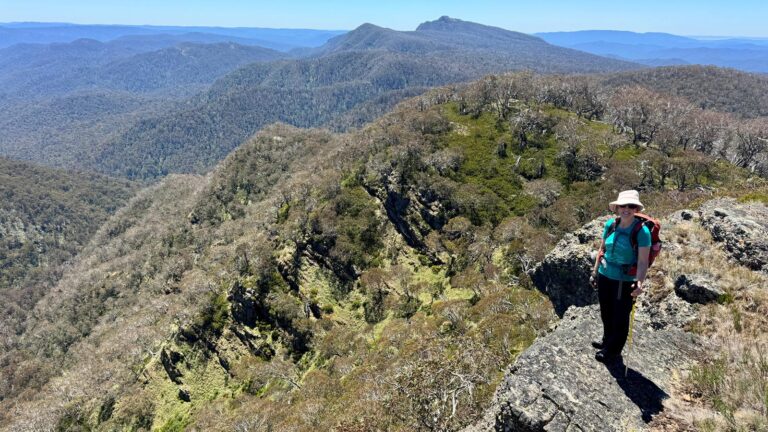
The ascent follows the largely untracked King Spur, which is marked early on in places with pink ribbon. The spur begins broad but gradually narrows as it climbs, becoming more exposed and rugged closer to the summit. Navigation can be difficult, particularly where animal and cattle pads crisscross the spur and can easily draw you off route. Staying close to the high point of the spur wherever possible is the most reliable strategy.
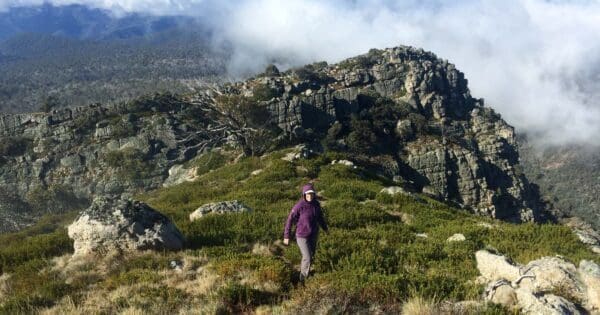
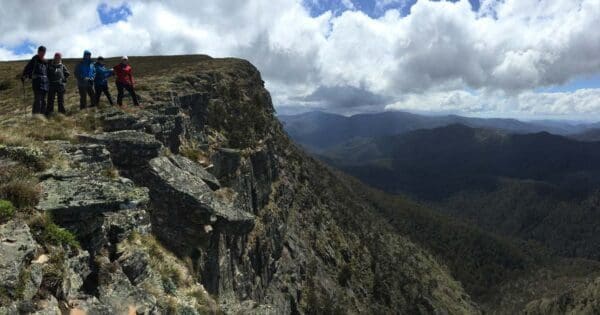
Above roughly 1300 metres, the terrain becomes increasingly rocky, with a series of exposed outcrops requiring careful route finding. At around 1400 metres, a faint track branches left to bypass a prominent rock wall. This bypass allows for a more gradual ascent and avoids a near vertical climb. Reaching the summit is manageable for experienced hikers who are comfortable with short sections of vertical rock scrambling.
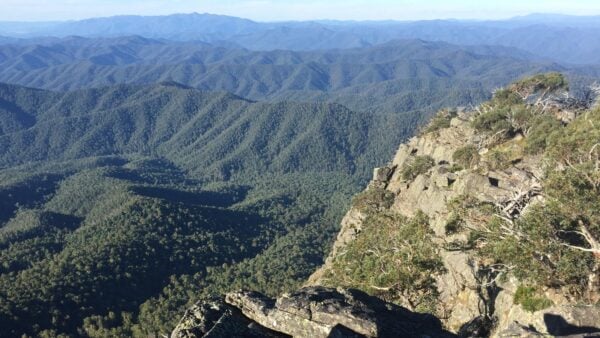
At the summit of Mount Koonika at 1588 metres, expansive views open out across the surrounding alpine ranges. From here you can see Mount Speculation, the Crosscut Saw, Mount Cobbler, and many other peaks across the High Country. An optional sidetrip follows the ridgeline you have just climbed towards Mount Speculation before rejoining the main route via Speculation Road.
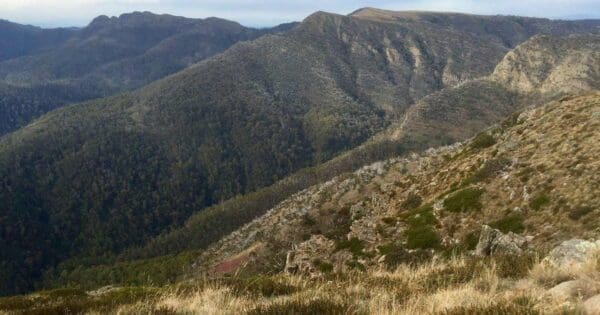
From the summit, descend through open sub alpine shrubland towards Speculation Road. Once on the road, turn north and follow it until you reach the clearly marked trailhead for Muesli Spur.
Muesli Spur provides a steep but well defined descent, dropping close to 600 metres over just 3 kilometres. While the track is clear and maintained, the gradient is relentless and can be tough on tired legs. At the base of the spur, a short road walk returns you to the junction of Speculation Road and King Basin Road, completing the circuit.
Optional extended trips
This hike lends itself well to longer trips and overnight options. From Mount Koonika, the ridgeline to the south east leads towards Mount Speculation, which is an excellent overnight camping destination. Camping here also creates an opportunity to explore further into the Razor Viking Wilderness on a multi day walk.
Another worthwhile variation is a sidetrip to Mount Cobbler. Leave your pack at the Muesli Spur trailhead and follow Speculation Road to the Cobbler Lake Track turnoff. From there, continue to the Mount Cobbler Walking Track and climb to the summit. You can return the same way to your pack and descend Muesli Spur, or camp near the trailhead before continuing.
Water
Water should generally be considered unavailable along this route. When I completed this hike in late December, a few small springs were present, mainly along Speculation Road and near Mustering Flat, where emergency water may sometimes be found. These sources are unreliable and should not be depended on.
The nearest reliable water source is Camp Creek near Mount Speculation. This spring provides a steady year round flow unless affected by drought. Water here is untreated natural spring water and should be treated before drinking.
Trail access during winter
This route is not recommended during winter. Seasonal road closures make access extremely difficult, and snow, ice, and reduced visibility significantly increase the risks associated with navigation and exposure.
King Hut Camping Area
King Hut Camping Area is an excellent place to camp either before or after tackling the Mount Koonika circuit, and it works particularly well if you want an early start the following day. Set on one of the broad flats of the King River, this quiet riverside campground has a relaxed, informal feel and is well suited to both solo hikers and small groups.
The campground is free to use and does not require bookings, unless you are camping with a horse. It sits on Taungurung Country within Alpine National Park and offers a simple bush camping experience with plenty of space to spread out. The King River flows nearby, making it a pleasant spot to unwind after a long day on the track or to prepare gear and packs before heading out.
Access to King Hut Camping Area is by four wheel drive only, and river crossings are required. Conditions can change quickly, especially after heavy rain, and the King River can rise fast and become unsafe to cross. It is important to check weather forecasts and current track conditions before your trip. The Parks Victoria information line on 13 19 63 and the Parks Victoria website are good starting points for up to date advice.
Seasonal road closures apply in this part of the High Country, with vehicle access typically unavailable from June through to November. Closures usually begin around the King’s Birthday long weekend and tracks often reopen just before the Melbourne Cup Day long weekend, though this can vary depending on conditions. For the latest local information, the Mansfield Visitor Information Centre is also a useful resource.
For those planning the Mount Koonika hike, King Hut Camping Area offers a practical and scenic base, allowing you to start fresh and make the most of the day ahead.
King Hut History
King Hut has a long and layered history tied closely to cattle grazing in the Victorian High Country. The original hut was built as a slab hut with associated cattle yards in the early 1900s through to the 1920s by Jim Hearn. This first structure was located around 70 metres north of where the hut stands today and served as a practical shelter for cattlemen working the King River flats.
By the 1940s, the original slab hut had fallen into poor condition and was in need of significant repair. Rather than continue patching it up, a new and larger hut was constructed in the mid 1950s. This replacement was a two room weatherboard hut built in 1957 by George Robinson on behalf of Fred Ross and other local cattlemen. It was erected on a new site and provided a more durable and comfortable shelter for those working in the area.
Tragically, this second King Hut was destroyed by fire in 2008 due to careless use. The loss was deeply felt by the High Country community, given the hut’s historical value and ongoing role as a shelter for visitors. Planning for a rebuild took two years and was led through a cooperative effort between Victorian High Country Huts Association and Parks Victoria.
Over Easter in 2011, around 14 volunteers worked alongside Parks Victoria rangers to largely complete the rebuild. The new hut was constructed on the exact footprint of the previous weatherboard hut and includes full insulation to improve comfort and longevity. The project was a combined effort involving Parks Victoria, Mansfield Shire Council, local four wheel drive clubs, and the broader High Country community. King Hut was officially opened in January 2012.
Special thanks are also due to the CFA 4X4 Club, who looked after the hut and helped organise working bees prior to 2008 to maintain and repair the earlier structure.
High Country huts rely heavily on volunteer support. If you are part of a club or organisation and would like to assist with caretaking a hut, you can contact the Victorian High Country Huts Association to find out how to get involved.
Tips
- Leave a trip plan with a trusted contact before you start. Include your intended route, expected start and finish times, and when to raise the alarm if you do not return. Sharing this trail guide can also help others understand where to look in an emergency.
- Carry a Personal Locator Beacon (PLB) and first aid kit with snake bandages suitable for remote hiking, and make sure you know how to use them.
- Be confident with navigation. Do not rely solely on GPS devices. Carry a map and compass and have the skills to use them if electronic navigation fails.
- Assess your fitness honestly. This is a demanding, off track hike. If you do not have the required strength, endurance, and experience, it is safer not to attempt this route, as fatigue can quickly turn into a serious safety risk.
- Expect navigational challenges from animal tracks. Numerous animal and cattle pads crisscross the spurs and can easily draw you off route if you are not paying close attention.
- Off track navigation skills are essential. The safest approach is to stay on the high point of the spur and follow it upward. While the bush bashing is generally manageable, vegetation varies and progress can be slow in places.
Trail features
- Rough Track
- Undefined Track
- Off Track
- Alpine Region
- Scenic Viewpoints
- Exposed Ledges
- Rock Scrambling
- Steep Terrain
Track grade
Grade 5 (Difficult) - Walks for the Most Experienced: Grade 5 represents the most challenging walking tracks on the AWTGS. These are only recommended for very experienced and fit walkers with specialised skills, including navigation and emergency first aid. Tracks are likely to be very rough, very steep, and unmarked. Walks may be more than 20 kilometers. These challenging walks demand a high level of fitness and experience to navigate difficult terrain, significant elevation changes, and potentially unformed paths.
Walk map and GPX file
Max elevation: 1582 m
Min elevation: 834 m
Total climbing: 1032 m
Total descent: -1031 m
Content use
Please don’t copy GPX files or content from this site to AllTrails or other platforms. Each trail has been personally mapped, documented, and refined to support Australia’s bushwalking and hiking community. While some details come from land managers, every listing reflects significant personal effort. This is a free, community-driven initiative—your respect helps keep it that way.
Getting there
Getting to the trailhead: Alpine National Park.
This hike starts and finishes on Speculation Road near the junction with King Basin Road in the Alpine National Park. The closest major town is Mansfield, Victoria.
Access is via Mirimbah. From Mirimbah, follow Mount Stirling Road to Telephone Box Junction. At Telephone Box Junction, turn left onto Circuit Road and continue in the direction of Craig’s Hut. Watch for the signed turnoff to Speculation Road and follow it until you reach King Basin Road, shortly after the second bridge crossing.
Parking is available near the junction of Speculation Road and King Basin Road. The start of the King Spur is reached by walking back across the second bridge, where a narrow footpad begins through a small patch of blackberries.
Need a rental car to get you to the hike? Find one here.
Find a place to stay
Wondering where to stay near this hike? Find accommodation close to the trailhead — hotels, cabins and campgrounds nearby. Click the button to view the interactive map.
Closest towns to this walk: Mansfield, Merrijig, Mirimbah, Mount Buller, Mount Buller Village
Let someone know
Heading out? Fill in a trip intentions form so someone knows your plans. If things go wrong, they can raise the alarm fast, giving you peace of mind on the trail.
About the region
Alpine National Park is a vast national park in the Central Highlands and Alpine regions of Victoria, Australia. Covering approximately 646,000 hectares, it is the largest national park in the state and is located north-east of Melbourne.
The park protects much of the higher elevations of the Great Dividing Range, including Victoria’s highest peak, Mount Bogong at 1,986 metres, along with the subalpine woodlands and grasslands of the Bogong High Plains. Its north-eastern boundary follows the Victorian border with New South Wales, where it adjoins Kosciuszko National Park, forming one of Australia’s largest continuous alpine conservation areas.
Within this landscape, the Anglers Rest area sits among river valleys and forested slopes shaped by the Cobungra and Mitta Mitta rivers, offering accessible walking opportunities that reflect the broader High Country environment on a smaller, more intimate scale.
Alpine National Park is part of an Aboriginal cultural landscape that includes the traditional Country of the Taungurung and Gunaikurnai Peoples, who maintain enduring connections to this land.
Similar walks nearby
Looking for more walks in or near Alpine National Park? Try these trails with a similar difficulty grade.
Explore safe
Plan ahead and hike safely! Carry enough water, pack layers for changing conditions, and bring safety gear like a torch, PLB, and reliable communication device. Check official sources for trail updates, closures, and access requirements, and review local weather and bushfire advice. Most importantly, share your plans with someone before you go. Being prepared makes for a safer and more enjoyable hike! Stay Safe, Explore More, and Always #ExploreSafe.
Packing checklists
What you carry in your pack depends on factors like weather, terrain, and your adventure type. Not sure what to bring? My free planning, food, and packing checklists are a great starting point, covering day hikes, overnight trips, and multi-day adventures. Use them to customise your kit and always prioritise safety.
Suggest an edit
Notice something different about this trail? Whether it’s a new feature, a route change, or a closure, share your update so we can keep our info accurate and helpful for fellow hikers.
Click to suggest edits >>
Acknowledgement of Country
Trail Hiking Australia acknowledges the Traditional Owners of the lands on which we hike and pay respects to their Elders, past and present, and we acknowledge the First Nations people of other communities who may be here today.

/Mount-Koonika-Summit-Hike%20(16).jpg)
/Mount-Koonika-Summit-Hike%20(6).jpg)
/Mount-Koonika-Summit-Hike%20(22).jpg)
/Mount-Koonika-Summit-Hike%20(5).jpg)
/Mount-Koonika-Summit-Hike%20(21).jpg)
/Mount-Koonika-Summit-Hike%20(3).jpg)
/Mount-Koonika-Summit-Hike%20(19).jpg)
/Mount-Koonika-Summit-Hike%20(24).jpg)
/Mount-Koonika-Summit-Hike%20(15).jpg)
/Mount-Koonika-Summit-Hike%20(14).jpg)
/Mount-Koonika-Summit-Hike%20(12).jpg)
/Mount-Koonika-Summit-Hike%20(26).jpg)
/Mount-Koonika-Summit-Hike%20(4).jpg)
/Mount-Koonika-Summit-Hike%20(17).jpg)
/Mount-Koonika-Summit-Hike%20(10).jpg)


1 Review on “Mount Koonika via King and Muesli Spurs (16km)”
Julie and I hiked this circuit over the Christmas break. What a challenging but rewarding bushwalk. Navigation was challenging in places where we had to choose the most appropriate track to follow and not get led down the wrong path by the many animal trails that crisscrossed the spur. Managed to see a couple of snakes, so keep a keen eye out as you walk. The road walk was the most boring part, but it was also great relief after the long and steady ascent up to Koonika summit. The view were breathtaking, providing 360 degrees of mountains. A great hike.