Hike at a Glance
Max elevation: 42m
Min elevation: 0m
Total Ascent: 235m
Hike overview
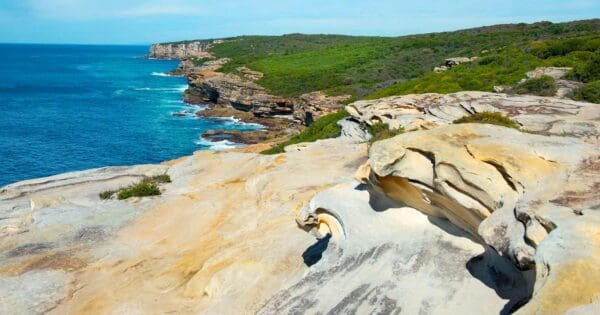
Cronulla to the Botany Bay Discovery Centre is a 14 kilometre, grade 4 coastal walk in Kamay Botany Bay National Park that typically takes around four and a half hours. It links long stretches of beach with rugged headlands, heathland, hanging swamps and historic sites, offering a constantly changing feel as you move from suburbia into a more remote coastal landscape.
The walk begins at Cronulla Station and quickly leaves the streets behind, slipping between shops and parkland before reaching the shoreline. From here, the route follows a series of paved paths and beachfront promenades, keeping the ocean close on your right. You pass ocean pools, rocky platforms and surf clubs before descending onto the sand at Elouera Beach. This long beach walk stretches for several kilometres, with the sound of the waves a constant companion as you head towards the rocky point at the eastern end of Bate Bay.
Beyond the beach, the walk becomes quieter and more natural as it climbs out of the bay and follows the coastal track through heath and open grass. Old infrastructure lines the route in places, but it never dominates the experience. The track weaves around dunes and down to a small shelly beach before reaching the Boat Harbour Aquatic Reserve, a sheltered and scenic corner of the coastline. From here, the path turns inland briefly, skirting Sir Joseph Banks Drive before looping back towards the coast on a sandy management trail.
As you rejoin the coastline, the track crosses rock platforms and skirts low scrub, gradually climbing through taller heath. This section leads towards Cape Baily Lighthouse, an optional side trip well worth considering if you have the time. The sandy bush track to the lighthouse is mostly clear, though the final stretch can be overgrown. While views back inland are more open than those to the east, the lighthouse itself is an interesting reminder of the area’s maritime history, built in 1950 to help ships safely navigate strong coastal currents.
Returning to the main track, the walk continues along the clifftops and then drifts inland through a series of small dunes and depressions. This area is home to several hanging swamps, fragile ecosystems formed where water slowly seeps from surrounding high ground and collects among reeds and dense vegetation. These swamps can be easy to miss at a distance, but close up they add a quiet, almost hidden character to the landscape.
North of the swamps, the track becomes sandier and more overgrown in places, opening occasionally into clearings between dunes. The route winds through scrub and across rock shelves marked by interesting erosion patterns before reaching Tabbigai Gap. From here, a mix of sandy trails and rock platforms leads past bush track junctions and onto wider management trails, with the terrain gradually becoming easier underfoot.
As the walk approaches its northern end, it passes infrastructure such as water tanks and radar installations before dropping gently through bushland towards Polo Street. An alternate exit is available here for those finishing outside the park. Continuing on, the route climbs again through ferny forest and sandy tracks to Kurnell Lookout, where views are mostly filtered through trees, before descending along a wide gravel service trail to Cape Solander Drive.
The final section follows an old road that now serves as a service track, crossing a small bridge before opening out into the Botany Bay Discovery Centre car park. The Discovery Centre sits just to the right and is a fitting end point, offering information about the area’s natural and cultural history, a small shop with basic food and drinks, toilets, and accessible facilities including a Trailrider available for free hire. It is a comfortable place to pause, reflect on the journey, and take in the broader setting of Kamay Botany Bay before heading home.
Track grade
Grade 4 (Hard) - Challenging Walks for Experienced Walkers: Grade 4 on the AWTGS signifies challenging walking tracks. Bushwalking experience is recommended for these tracks, which may be long, rough, and very steep. Directional signage may be limited, requiring a good sense of navigation. These walks are suited for experienced walkers who are comfortable with steeper inclines, rougher terrain, and potentially longer distances.
Walk map and GPX file
Max elevation: 42 m
Min elevation: 0 m
Total climbing: 235 m
Total descent: -232 m
GPX files, maps and content are copyright Trail Hiking Australia. Not to be copied, redistributed or uploaded to other platforms including AllTrails.
Explore safely
Planning this hike? Most incidents develop before you even start. Safe outcomes depend on how navigation, hydration, environment, load and judgement work together. Small oversights can compound quickly in Australian conditions. See how it happens in the Hiking Safety Systems Foundations. Then use the Hiking Safety Systems, planning calculators, and make sure a trusted contact has your trip plan before heading out.
Leave a trip plan
Before you go, complete a trip intentions form and share it with a trusted contact. Agree on a Late-Back Time and ask them to call 000 (Police) if you have not checked in. A clear trip plan is one of the simplest and most effective safety steps you can take.
Planning checklists
Download the hiking preparation and safety checklists before leaving home to help you think through your plans. They help ensure important considerations are not overlooked and support safer decision-making on the trail.
Getting there
Getting to the trailhead: Kamay Botany Bay National Park.
The Cronulla to Botany Bay Discovery Centre walk starts at Cronulla Station at approximately. Cronulla is well connected by public transport, making this an easy starting point for a one way walk. Trains run regularly to Cronulla Station from Sydney, and local bus services also stop nearby. If you choose to drive, free parking is available in surrounding streets and car parks close to the station, though availability can vary, particularly on weekends and during warmer months.
The walk finishes at the Botany Bay Discovery Centre car park. From here, you can return by car, noting that a park entry fee applies for vehicles entering Kamay Botany Bay National Park. Bus services also operate near the Discovery Centre, providing a public transport option for returning to Cronulla or connecting with other parts of Sydney.
Need a rental car to get you to the hike? Find one here.
Accommodation nearby
Find accommodation close to the trailhead including hotels, cabins, and campgrounds. Use the interactive map to explore available options in nearby towns.
Nearby towns: Banksia, Bexley, Brighton-Le-Sands, Caringbah, Carlton, Cronulla, Hurstville, Kogarah, Kurnell, Kyeemagh, La Perouse, Mascot, Miranda, Ramsgate, Rockdale, Sans Souci, Sydney, Sylvania, Woolooware
About the region
Kamay Botany Bay National Park sits on the La Perouse and Kurnell headlands in Sydney’s south, wrapping around the sheltered waters of Botany Bay. It is a place where coastal scenery, Aboriginal culture and layers of early European history come together in a way that feels both accessible and deeply significant. You can wander bush tracks through heath and scrub, pause at historic sites, watch whales pass the headlands, or simply enjoy time by the water.
Separated by the bay itself, the northern and southern sections of the park offer different experiences but share the same sense of connection to land and sea. Both areas are rich in cultural stories and marked by heritage listed sites, making the park an easy but rewarding day out that offers far more than just a walk along the coast.
The southern headland at Kurnell is where local Aboriginal people encountered the crew of the Endeavour in 1770, an event that would shape Australia’s future in profound ways. Today, the area invites quiet exploration through open heathland, along clifftop tracks and past important historic locations. Whale watching from Cape Solander is a highlight during migration season, with the elevated lookout providing one of the best land based viewing spots in Sydney. Longer walks such as the Cape Baily track take you deeper into the landscape, where native birds are common and the sense of space grows with every step.
Several shorter walks around Kurnell are ideal for an easier outing. The Banks Solander track and Burrawang Walk pass striking bronze sculptures and lead by key historic sites, including Captain Cook’s Landing Place. The coastline here also offers sheltered spots for snorkelling and scuba diving, particularly around Inscription Point and the calmer waters off Sutherland Point.
On the northern side of the bay, La Perouse feels closer to the city but no less engaging. Named after the French explorer last seen here in 1788, the area blends rugged coastline with a strong cultural presence. Walking tracks trace the headlands, diving and snorkelling spots surround Bare Island, and historic sites tell stories that stretch back well before European arrival. The La Perouse Museum, open on Sundays, and guided tours of Bare Island Fort provide further insight into the area’s layered past.
As the day winds down, La Perouse Point is a lovely place to sit with a picnic and watch the light change across the bay. From here, you can see across to Kurnell and out to the open ocean, a reminder of the journeys that once arrived and departed from these shores. Whether you are here for a coastal walk, a swim, or a deeper understanding of place, Kamay Botany Bay National Park offers a thoughtful and rewarding way to experience Sydney’s natural and cultural landscape.
Similar walks nearby
Looking for more walks in or near Kamay Botany Bay National Park? Try these trails with a similar difficulty grade.
Gallery
Got any photos from this hike? Your photos can help others plan. Share shots from along the trail so fellow hikers know what to expect.
Click to add your photos >>
Suggest an edit
Notice something different about this trail? Whether it’s a new feature, a route change, or a closure, share your update so we can keep our info accurate and helpful for fellow hikers.
Click to suggest edits >>
Acknowledgement of Country
Trail Hiking Australia acknowledges the Traditional Owners of the lands on which we hike and pay respects to their Elders, past and present, and we acknowledge the First Nations people of other communities who may be here today.