Most alpine hikes start with a forecast. You check the weather app, note the wind speeds, look over the temperature range, and if the conditions look manageable, you build the plan around that window: departure time, route, turnaround point, all lined up with what the forecast says the day should look like. At the trailhead, that feels like solid ground to stand on. The sky’s clear, the air’s calm, everything matches what was predicted. The trouble is that alpine weather rarely behaves like a fixed input for very long.
The shift is usually small at first. Wind arrives earlier than expected. Cloud builds faster than the forecast suggested. Temperature drops a little ahead of schedule. None of that invalidates the plan on its own. Together, though, it starts reshaping the actual conditions the plan was built around.
Forecasts describe expected conditions across a region and a time window, but alpine terrain operates at a much finer scale than that. Elevation, aspect and terrain interact to create localised weather that can shift quickly and unevenly across quite a short distance. A ridgeline can be exposed to wind that’s not being felt in the valley below it. Cloud can form at elevation while the lower terrain stays clear. Temperature can drop fast once wind picks up or moisture moves in. The forecast can still be broadly right, and the conditions on the actual ground can already be something else entirely.
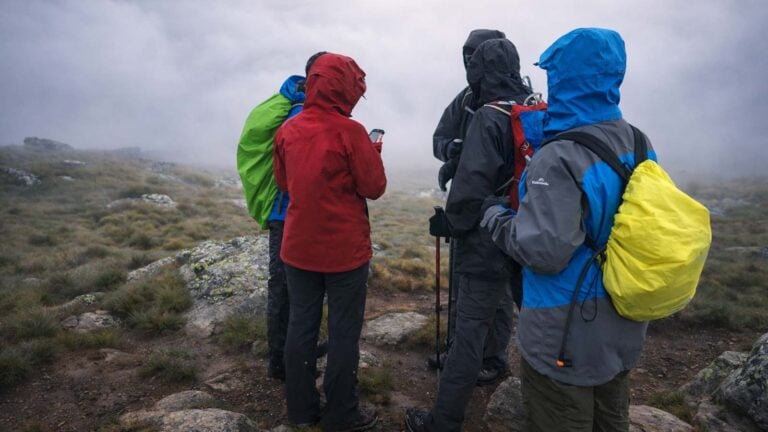
Someone recounted a hike to me once, we met somewhere along the track, possibly toward the end, that shows this clearly. Their group had set out under a forecast calling for light winds and stable conditions until late afternoon, planning to traverse a high ridge before dropping into a sheltered valley to camp. The early stages matched the forecast: a steady climb, good visibility, conditions that felt stable the whole way up. By the time they reached the ridge, though, things had shifted. Wind speed had picked up beyond what was expected, and cloud was building over the higher peaks. Nothing about it felt immediately unsafe, so they kept going, assuming the forecast window still held.
As they continued, the interaction between wind, temperature and exposure became harder to ignore. The wind was cutting the effective temperature, making movement less comfortable and pushing them into extra layers. Gusts were affecting balance on the exposed sections, and visibility kept fluctuating as cloud drifted across the ridge. At that point, the original plan was still technically doable. The real question wasn’t whether the route could still be completed. It was whether they themselves were still in the same condition to complete it that they’d been in that morning.
A plan built around forecast certainty assumes conditions will stay inside a predictable range. Once that variability shows up, the assumptions underneath timing, effort and exposure start shifting too. Wind increases how much energy movement costs. Reduced visibility slows navigation down. Extra layers change how efficiently you can actually move. Each of those alters pace and decision-making a little, and the cost of all of it starts accumulating. As time goes on, it compounds: movement gets slower and more deliberate, breaks get shorter to avoid cooling down in the wind, communication gets harder, and attention narrows onto the immediate task, keeping footing, managing exposure, rather than the bigger picture.
At the same time, the existence of a plan shapes the decision to keep going. Turning back can feel unnecessary if the forecast still promises improving conditions later in the day. Continuing can feel justified because the route’s still technically manageable. Having a plan already in place creates a reference point that’s genuinely hard to walk away from, and that’s not a failure of judgement, it’s a completely normal response to uncertainty. The problem is that the plan was built for conditions that no longer match what’s actually happening.
Environmental variability increases physical strain, physical strain reduces cognitive capacity, reduced cognitive capacity makes reassessment less likely, and delayed reassessment lets the gap between plan and reality keep widening. Each step makes the next one more sensitive to whatever changes next.
This matters in alpine terrain because weather isn’t background noise there, it’s actively shaping what’s possible. Wind, temperature and visibility all influence movement, navigation and safety directly, and when they shift, they rarely shift independently. They interact, and often amplify each other: a moderate wind paired with a temperature drop can feel far colder than either would alone, and reduced visibility over complex terrain can slow progress more than either factor would on its own. Those interactions are genuinely hard to predict precisely, even when the forecast itself is broadly accurate.
The real planning question isn’t whether the forecast is correct. It’s how you’ll actually respond once conditions start diverging from it. Alpine weather doesn’t need to be wrong to disrupt a plan. It just needs to change enough that the assumptions the plan was built on stop holding.
This essay is part of the Hiking Safety Systems in Practice series, exploring how interconnected systems shape safety, decisions and outcomes on the trail. Explore the series →