On a lot of hikes, the route ahead matters more to the planning than the route back. Tracks lead forward, landmarks pull attention onward, and the day gets planned as a sequence of destinations: a lookout, a ridgeline, a campsite. Movement is oriented toward what’s next, not toward what’s still available behind you.
Early on, that usually works fine. The terrain feels open, options feel flexible, and turning around looks straightforward if it ever needs to happen. Nothing about the landscape is putting up an obvious constraint. It’s only as the route progresses that this starts to shift, and the shift is gradual. A ridge narrows. A valley deepens. A spur steepens. What was easy to walk in one direction becomes something genuinely more involved to retrace in the other. None of it feels dramatic while it’s happening. The track’s still visible, progress is still being made, but the number of ways out is quietly shrinking.
Not every landscape behaves the same way here. In open terrain, movement stays flexible. Direction can shift, the route can change, and retreat stays relatively simple the whole way through. More structured terrain channels movement instead. Ridges guide you along a defined line, gullies pull you downward, cliffs and steep slopes cut off lateral options, dense vegetation slows anything off-track, and watercourses can turn genuinely impassable depending on flow. Each of these on its own is manageable. Together, they start to define where movement’s actually possible and where it isn’t.
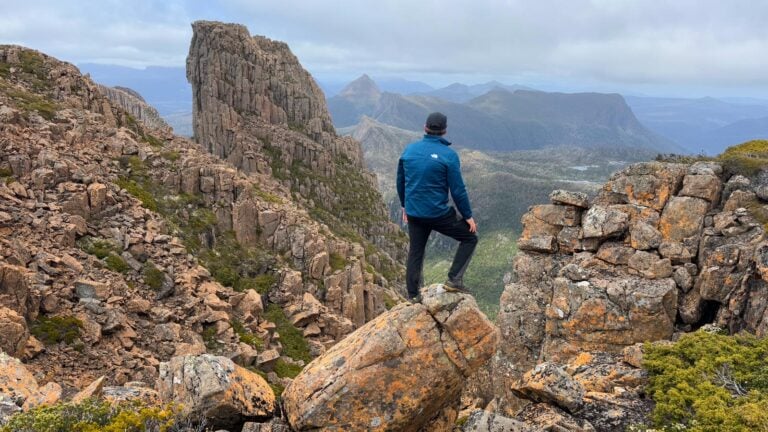
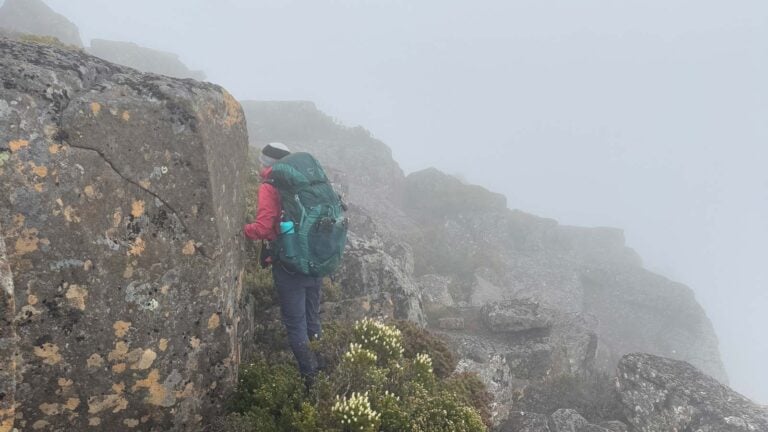
Someone once told me about a day walk through steep escarpment country where a ridgeline they were following gradually narrowed the further it went. The early sections were broad, easy to navigate, with several places to descend if they’d needed to. As they kept going, the ridge grew more defined, the slopes on either side steepened, and off-track movement got slower and more exposed. The plan was to reach a lookout and return the same way. By the final section, the terrain had changed again: the ridge had narrowed further, and parts of it needed careful movement over rock. The return route, which had felt straightforward earlier in the day, now meant retracing steps across ground that felt considerably more consequential going the other way. Turning back was still possible at that point. It just wasn’t simple anymore.
That’s where the interaction between terrain and decision-making becomes real. As exit options shrink, the actual cost of retreating goes up. A decision that would have been easy earlier now involves navigating a steep section, re-crossing exposed ground, or accepting slower movement than expected. Continuing forward can start to feel like the more efficient choice, even while it’s leading deeper into more constrained terrain. That’s not deliberate risk-taking. It’s a natural response to a landscape that’s already shaping which choices are actually available. Movement continues because the line already committed to is getting harder to reverse, not because anyone’s decided to push their luck.
Other factors stack on top of this at the same time. Fatigue builds as effort accumulates, attention narrows as the terrain demands more focus, and daylight keeps running down. Each of these raises the threshold for actually stopping to reassess. Pausing to weigh up options feels like less of an option when the immediate ground already needs your full concentration. Moving forward simply feels simpler than interrupting progress to reconsider.
Terrain limits exit options, and reduced options add real decision pressure, which shapes pace and direction, and fatigue and shrinking daylight both make reassessment less likely on top of that. A route that started out flexible becomes something you’re now committed to, one step at a time, without ever making a single deliberate decision to commit to it.
This matters because terrain tends to get read for difficulty rather than for consequence. A section might not look technically hard, but it can still significantly cut down your ability to retreat, and that distinction matters more than it gets credit for. Some terrain allows gradual adjustment as you go. Other terrain needs the real decisions made earlier, before the options have already narrowed. When the shape of the landscape doesn’t get factored into planning, this transition can happen without ever being noticed, and by the time it’s visible, you’re often already working with fewer options than you’d assumed you still had.
The real question isn’t just whether you can keep going. It’s whether you can still get back out under the same conditions you walked in on. Terrain rarely removes every exit option all at once. It does it gradually, until turning back has quietly become harder than continuing forward.
This essay is part of the Human Factors in Hiking series, exploring behaviour, awareness and decision-making on the trail. Explore the series →




Very interesting. At times, I have pondered how hard it would be to reverse the course, more as an academic thought exercise, but never really consciously thought about what I would do if I HAD to.
Al Morkans I’ve been thinking about it more myself, particularly as some of the hikes we’re planning become more challenging and remote. It’s one of those things that seems obvious once you start thinking about it, but I don’t think I’d consciously framed it that way before either.
Yes. Scrambling up a cliff is much easier than getting back down
I tend to think every steep section both ways at once. While I could easily control slide down a slippery section or “surf” some scree I will not unless I can see an alternative return route. In general, if it isn’t steep, it isn’t a concern.