Hiking poles are most valuable when terrain demands more balance, control, or endurance. On flat ground, they help establish rhythm. On climbs, they support steady effort. On descents, they assist with control and braking. Used with intention, poles can reduce fatigue and joint strain. Used poorly, they disrupt movement and add effort.
This guide explains how I use hiking poles effectively across flat terrain, ascents, and descents, with a focus on rhythm, control, and safety in real Australian hiking conditions.
Why technique matters
Hiking poles do not automatically make walking easier or safer. Their benefit comes from how they are used.
Across all terrain, good pole technique reduces the load carried by the legs, improves balance, and supports more deliberate movement. Poor technique often shows up as rushed placement, overreliance on the arms, or awkward timing that breaks natural walking rhythm. These issues become more obvious on steep ground or late in the day when fatigue sets in.
Understanding what “neutral” pole use feels like on flat ground makes it much easier to adjust technique for climbs and descents.
The baseline: using hiking poles on flat ground
On flat terrain, poles should move naturally with your walking rhythm rather than feeling like tools you have to manage.
A simple starting point is to adjust pole length so your elbow forms roughly a right angle when standing upright. From there, let the poles swing like your arms, with the tip touching the ground level with the opposite heel. The movement should feel relaxed and symmetrical, not forced.
This flat-ground rhythm sets a baseline. If poles feel awkward here, they will feel worse on hills. Once this neutral movement feels natural, shortening or lengthening poles for slopes makes intuitive sense rather than feeling arbitrary.
Using hiking poles on uphill sections
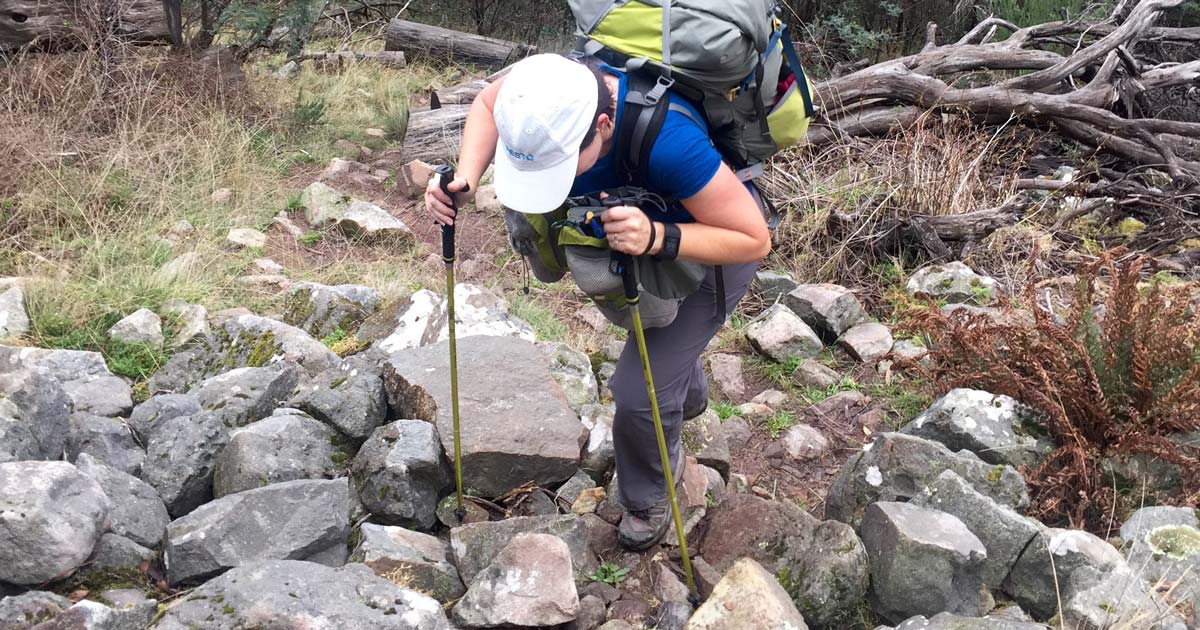
On climbs, poles support rhythm and steady effort rather than power.
Shorten poles slightly from your flat-ground setting so your hands stay below your chest and you are not reaching upward. Poles are usually planted diagonally behind you, opposite the stepping foot, and used to provide gentle assistance rather than to pull yourself uphill.
Good uphill pole use feels repeatable and controlled. If your shoulders tire quickly or your arms are doing most of the work, the poles are likely too long or being overused.
On very steep or rocky ascents, poles may be used more selectively for balance rather than propulsion. In these situations, many hikers switch between one pole, both poles, or stowing them briefly to free their hands.
Using hiking poles on downhill sections
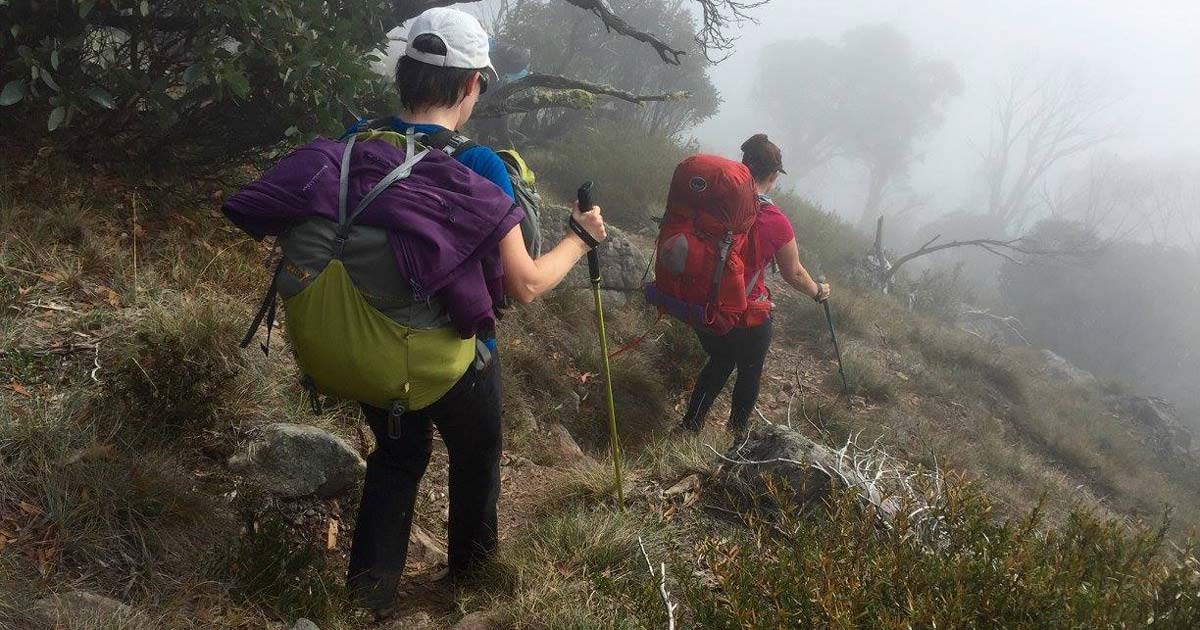
For many hikers, downhill terrain is where poles make the biggest difference.
On descents, lengthen poles slightly so you can stay upright while planting them ahead of you. If you find yourself leaning forward to reach the ground, the poles are too short. The aim is to manage speed and absorb some of the braking force that would otherwise be taken entirely by the knees.
Pole placement should be deliberate and coordinated with foot placement. On steeper descents, planting both poles ahead can provide added stability when stepping down larger drops or negotiating loose rock.
Palm placement on steep descents
On steep, loose, or gravelly descents common in places like the High Country, I find it more effective to place my palms on top of the grips rather than using the wrist straps.
This palm-down method provides a more solid platform to lean on and reduces the risk of the wrist being twisted if a pole catches unexpectedly. It also allows quick release, which is particularly helpful when footing is uncertain or poles are being repositioned frequently.
Adjusting technique for terrain and fatigue
Pole technique should change as conditions change. On very steep climbs, poles are often shortened further and used mainly for balance. On long descents, slightly longer poles improve control and reduce cumulative joint stress. On uneven or rocky ground, placement becomes slower and more deliberate.
As fatigue increases, poles often become more valuable, but only if used thoughtfully. Late in the day is when rushed pole use causes problems. Slowing down, shortening steps, and placing poles deliberately becomes more important than maintaining pace.
Technical focus: river crossings and loose surfaces
In water crossings and on unstable surfaces, poles are tools for stability and assessment rather than propulsion.
When crossing creeks or rivers, plant poles upstream to brace against the current and probe for depth and secure footing. In moving water, it is important to remove your hands from the wrist straps. If you slip or are knocked off balance, you do not want to be tethered to your poles.
On loose gravel, mud, or slippery rock, poles should be placed cautiously and tested before committing weight. They improve feedback and balance, but they do not remove risk. Judgement and conservative decision-making remain essential.
One pole or two?
While a single pole can provide some balance support, two poles generally offer better symmetry, stability, and load sharing across varied terrain.
Two poles are particularly helpful on long climbs, extended descents, and when carrying heavier packs. That said, terrain and comfort should guide your choice. On narrow, scrubby, or technical sections, it is common to use one pole or stow both temporarily.
Practice before you rely on them
Effective pole use develops through practice rather than instruction.
Spend time refining rhythm and placement on moderate terrain before relying on poles in steep, exposed, or high-consequence environments. With familiarity, poles begin to feel like a natural extension of movement rather than something you have to think about.
Hiking poles support movement differently depending on the terrain in front of you: rhythm on flat ground, steady effort on ascents, control on descents. Adjusting pole length, hand placement, and pace to suit slope, surface, and fatigue matters more to me than following rigid rules, because the conditions change through the day even when the destination doesn’t. Used with intention, poles make climbing more efficient and descending more controlled, and that’s really the whole point of carrying them.