Gore-Tex is one of the most recognised names in outdoor gear. For a lot of hikers, it’s become shorthand for “waterproof” and the default choice for jackets, pants, boots, gloves, and gaiters. But I don’t treat it as a magic fabric. It’s a specialised tool designed to solve a specific problem, and like any tool, it works exceptionally well in some conditions and poorly in others.
Here’s what Gore-Tex actually does, where it performs well, where it struggles in Australian hiking conditions, and how I decide whether it earns a place in my own system.
What Gore-Tex is designed to do
At its core, Gore-Tex is a waterproof membrane. Its primary job is to stop external water getting in under pressure, whether that pressure comes from wind-driven rain, melting snow, or water pooling on high-wear areas like shoulders and knees.
The often-quoted “waterproof and breathable” claim is technically true, but it comes with conditions that rarely get explained. Gore-Tex only lets moisture vapour pass through when there’s a temperature and humidity gradient between the inside and outside of the fabric. When that gradient is weak, breathability drops sharply, and that distinction matters far more to me than brand names do.
The DWR factor: why wet jackets stop breathing
A Gore-Tex jacket only “breathes” properly if the outer face fabric isn’t saturated.
The outer fabric is treated with a Durable Water Repellent finish, DWR, that causes rain to bead and roll off. When that finish wears off and the fabric wets out, the surface becomes coated in water. That creates a water mask that blocks the moisture gradient entirely. At that point, the membrane may still be waterproof, but it effectively stops breathing.
This is why two identical Gore-Tex jackets can perform very differently. A clean, well-maintained jacket that still beads water will vent moisture far better than a dirty one with a failed DWR. I treat maintaining the DWR as just as important as the membrane itself, because if the jacket stops beading water, it stops breathing.
Why Gore-Tex sometimes feels like it “leaks”
I’ve heard plenty of hikers say their Gore-Tex jacket or pants “leaked” during a hike. In most cases, the fabric did exactly what it was designed to do. The moisture inside the garment is usually sweat rather than rain that’s found its way in.
In warm, humid conditions, the air outside your jacket is already saturated, so there’s little incentive for sweat vapour to move outward, and it condenses on the inside of the fabric instead. The result feels identical to a leak, even though the membrane is still waterproof. I don’t think of that as user error. It’s a limitation of physics, and no amount of careful use changes it.
Mechanical ventilation matters more than membranes
Because membranes have limits, the real workaround is mechanical ventilation.
In Australian conditions, I consider pit zips close to mandatory on a Gore-Tex jacket. Climbing a spur in the rain, you need to dump heat faster than any membrane can manage, and a fully sealed jacket quickly becomes a portable sauna. Pit zips, two-way front zips, and loose cuffs let excess heat and moisture escape without taking the jacket off entirely. In practice, I find these features matter more than the specific Gore-Tex variant used. A less breathable jacket with good ventilation can outperform a more breathable fabric with none.
Where Gore-Tex genuinely excels
Gore-Tex performs best when keeping external water and wind out matters more than dumping internal moisture.
This typically happens when:
- Rain is cold
- Wind pressure is high
- Exposure is prolonged
- Stopping means rapid heat loss
In Australian terms, this includes:
- Tasmanian alpine plateaus
- Victorian High Country in cold rain
- Wind-exposed ridgelines
- Static or slow-moving conditions in foul weather
In these environments, staying dry from the outside is critical. A soaked insulation layer can become a genuine safety issue, and this is where Gore-Tex earns its keep, giving reliable protection when conditions deteriorate.
Wind protection: the underrated benefit
Sometimes the best reason I wear Gore-Tex isn’t the rain at all.
It’s an excellent wind blocker. On exposed ridgelines, wind can strip heat rapidly, especially when base layers are damp from sweat. In these situations, a shell dramatically reduces windchill and stabilises body temperature, even without rain falling. It’s one reason I tend to use Gore-Tex as a static or transitional layer rather than something worn continuously during hard movement.
Where Gore-Tex often struggles in Australia
Much of Australia’s hiking happens in conditions that are wet but not cold.
Gore-Tex commonly disappoints in:
- Warm rain
- High humidity
- Dense forest
- Long climbs
- Continuous, steady movement
This describes large parts of:
- Coastal NSW
- Queensland rainforests
- The Blue Mountains in summer rain
- Lamington, Border Ranges, and similar environments
In these conditions, sweat accumulation can exceed any membrane’s ability to vent moisture, and I’ve found non-membrane shells, highly breathable wind layers, or simply getting wet and managing heat can be more comfortable and practical.
Footwear: where Gore-Tex is most misunderstood
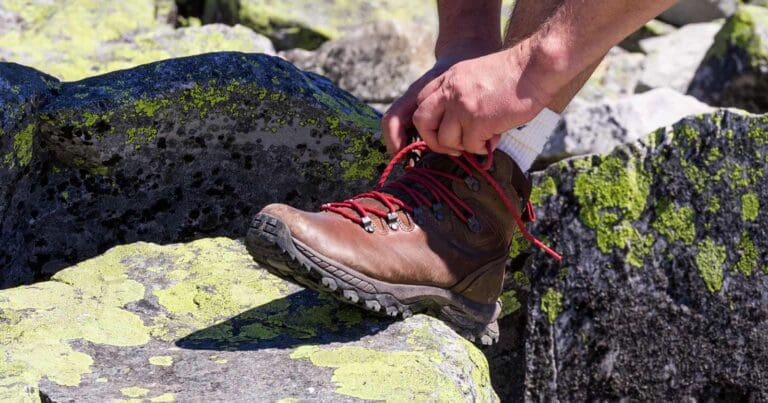
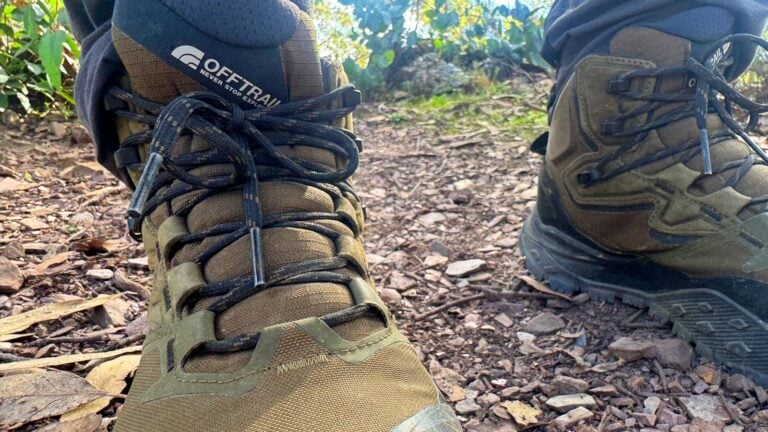
Gore-Tex boots and shoes are popular, but they come with clear trade-offs.
They can be useful when:
- Walking through cold, wet grass
- Crossing shallow streams infrequently
- Hiking in snow or slush
They struggle when:
- Water enters from the top
- Conditions are warm and humid
- Drying speed matters
Once a Gore-Tex shoe wets out internally, it dries very slowly. In a lot of Australian conditions, I’d rather use non-waterproof footwear combined with good drainage and fast-drying socks over multiple days.
Salt, oil, and washing your shell
Skin oils, sunscreen, dirt, and salt from sweat all degrade Gore-Tex over time. They clog the membrane and weaken the adhesive layers, contributing to delamination. Plenty of hikers avoid washing their shells out of fear of damaging them, but not washing them is what actually shortens their lifespan.
Regular washing with an appropriate detergent restores breathability, improves DWR performance, and extends the life of the membrane. A clean jacket works better and lasts longer than a dirty one.
When Gore-Tex works, and when it doesn’t
| Condition | Gore-Tex utility | The trade-off |
| Tassie in July (cold, wet) | Essential | Low breathability is acceptable because warmth retention matters |
| QLD rainforest (warm, wet) | Low | You are likely wetter from sweat inside the jacket |
| Victorian Alps (windy, cool) | High | Excellent wind block even without rain |
| Summer day hike (dry) | Unnecessary | Heavy and bulky compared to a light wind shell |
A balanced way to think about Gore-Tex
I think of Gore-Tex as:
- A weather shield, not a comfort layer
- A defensive tool, not a default state
- Most valuable when things go wrong
In a lot of Australian hiking contexts, getting a little wet is normal and manageable. Staying warm, mobile, and mentally clear matters more to me than being perfectly dry.
Gore-Tex has earned its reputation in the right conditions. It’s reliable, proven, and highly effective when external water and wind pose a real threat, but it isn’t universally comfortable, and it isn’t always the best choice for Australian hiking. Once I understood how DWR and ventilation actually affect performance, and when wind protection matters more than waterproofing, I could use it a lot more intelligently than just trusting the branding. As with most hiking gear, what matters most isn’t the fabric itself, but how and when I choose to use it.




Have you ever found your Gore-Tex trapping sweat during a hike? What’s your go-to for staying comfortable in humid conditions?
I thought Event might be better than Gore-Tex so tried it in Borneo. Nothing will stop you sweating there.