Sorry, no records were found. Please adjust your search criteria and try again.
Sorry, unable to load the Maps API.
Hiking Adventures in New South Wales: World-Class Trails for Every Explorer
New South Wales boasts a hiker’s paradise, with trails spanning dramatic coastlines, snow-capped mountains, and ancient rainforests. Challenge yourself with a climb to the peak of Mount Kosciuszko, Australia’s highest point, or explore the otherworldly sandstone formations of the Blue Mountains World Heritage Area. Breathe in the fresh ocean air on a coastal walk, or delve into the lush Gondwana Rainforests, another UNESCO World Heritage treasure.
Discover hidden waterfalls, encounter unique wildlife, and witness breathtaking sunrises over pristine landscapes. With trails suitable for all experience levels, from short family-friendly walks to multi-day adventures, New South Wales has the perfect hike waiting for you. Browse the interactive map and selection of trails below to plan your unforgettable adventure.
Discover 1617 hiking trails in New South Wales
From alpine high country to red inland plains
Overview
New South Wales covers more than 800,000 square kilometres, and the change in landscape from east to west is striking. The Great Dividing Range forms the broad backbone of eastern New South Wales, separating the short, steep river systems of the coast from the much gentler western slopes and plains. Beyond the ranges, country opens into the riverine plains of the Murray-Darling Basin, low rocky uplands, sand sheets and the arid dunefields of the far west.
That variety is reflected in the state’s protected areas. NSW National Parks and Wildlife Service manages more than 890 parks and reserves covering over 7.6 million hectares, protecting environments that range from rainforest and coastal headlands to sandstone country, alpine landscapes, wetlands and desert.
Highlights
Some of the defining landscapes of New South Wales sit along its eastern ranges. The sandstone plateaux, cliffs, escarpments and deeply incised valleys of the Sydney Basin and Greater Blue Mountains contrast with the higher country farther south, where the Australian Alps contain Mount Kosciuszko and the headwaters of major river systems including the Murray, Murrumbidgee and Snowy.
North of Sydney, subtropical and warm-temperate rainforest survives in the Gondwana Rainforests of Australia, while volcanic landscapes are prominent around places such as the Warrumbungles and Liverpool Range. Farther west, the landscape changes again to broad floodplains, river channels, low ranges, red sand country and extensive semi-arid plains. The state’s major protected landscapes therefore represent very different geological histories rather than variations on a single type of Australian bushland.
Landscape and ecology
Eighteen of Australia’s recognised bioregions occur within New South Wales. These are defined by broad patterns in geology, landform, climate, vegetation and ecological processes, and they help explain why vegetation and wildlife communities change so markedly across the state.
Rainfall and elevation are major influences. Moist coastal and escarpment environments support rainforest and tall forest communities, while the tablelands and western slopes contain extensive woodland and open forest. Across the inland plains, river systems and wetlands create important ecological corridors through otherwise dry country, while the far west supports vegetation adapted to arid and semi-arid conditions. Protected areas also conserve significant cave and karst systems, estuarine and ocean habitats, wetlands and internationally recognised natural landscapes.
Culture and heritage
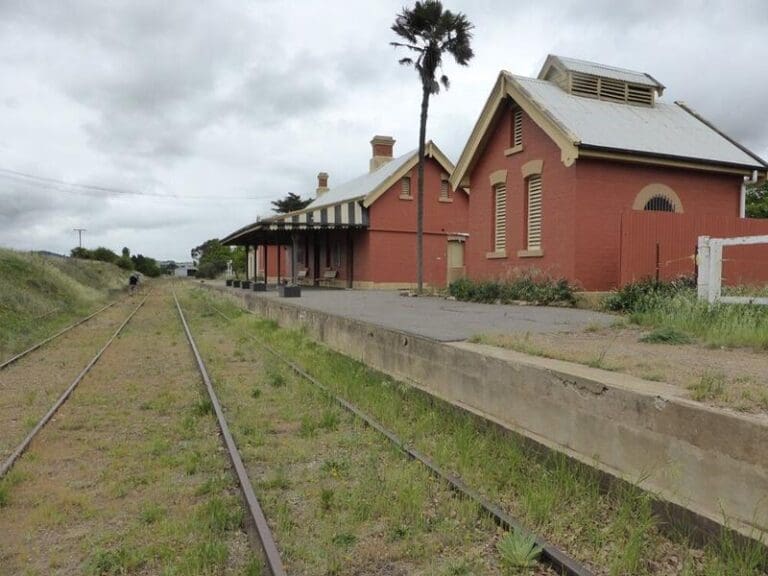
The protected areas of New South Wales preserve a substantial record of the state’s more recent history as well as its natural landscapes. Historic places managed within the park system include former pastoral properties, mining settlements, lighthouses, military structures, roads and early public buildings.
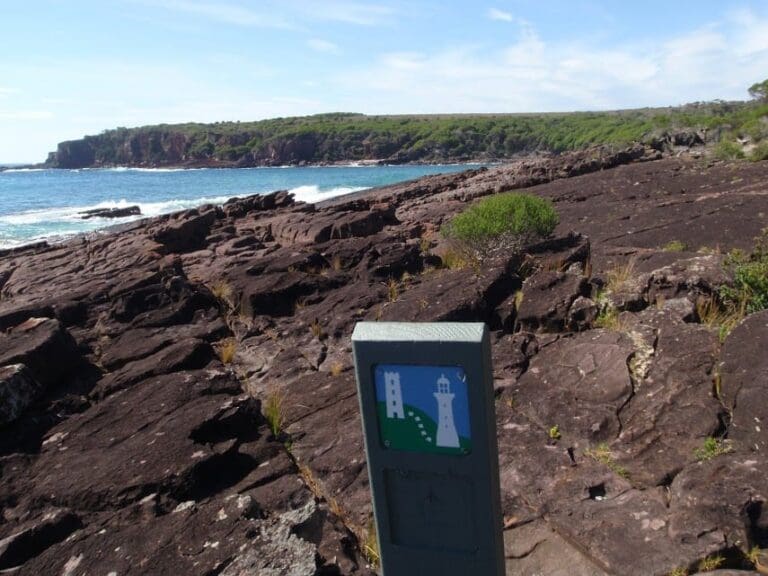
Among the best-known examples are the former gold-mining town at Hill End, the Old Great North Road built using convict labour, historic lighthouse complexes along the coast and pastoral sites such as the Toorale Homestead precinct near Bourke. These places show how mining, transport, agriculture, defence and maritime activity have shaped different parts of New South Wales, often leaving cultural landscapes that are now protected alongside the surrounding natural environment.
Find more places to explore…
Help expand the trail collection!
Know of an official trail not listed on Trail Hiking Australia? I’m focused on showcasing the best tracks managed by land managers, and I’d love your help! Sharing a trail adds to our community and helps others discover safe, new adventures.
Submit your trail here