Hike at a Glance
Max elevation: 660m
Min elevation: 297m
Total Ascent: 843m
Essential information
This circuit has 12 river crossings that involve stepping from rock to rock. This can be hazardous after heavy rain. Do not attempt to cross the river when it is flooding or during heavy rain—you may get caught between crossings. Heavy rains can cause flash flooding, where a huge volume of water can suddenly wash down the gullies, creeks and rivers.
Hike overview
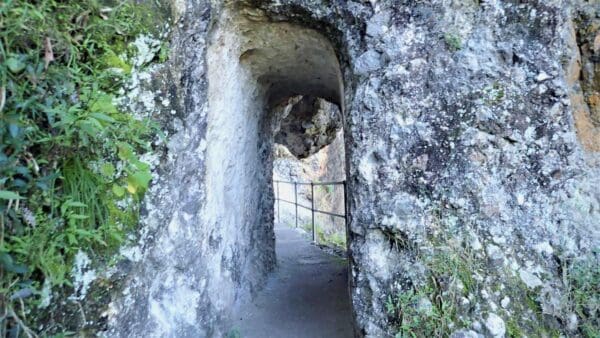
The Illinbah Circuit is a demanding 17km, grade 5 loop trail within Lamington National Park, Queensland. This challenging trek, typically completed in 8 hours, is suited for experienced and fit walkers seeking an adventure along the Coomera River in this World Heritage area.
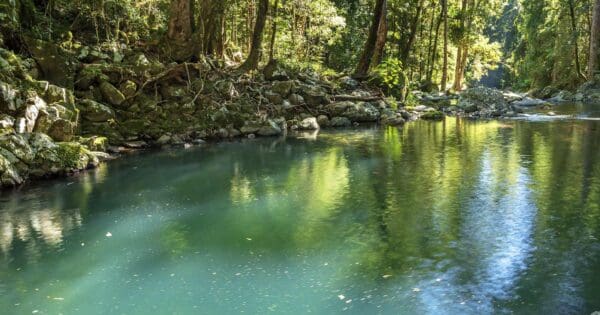
The journey begins at the Binna Burra lower day-use area. Descending steeply along the Gwongoorool Track, you'll pass through a mix of sun-dappled open forest and lush rainforest before reaching the Coomera River. Keep your eyes peeled on the drier western side of the river, where you might spot the elusive black-breasted button-quails, a fascinating remnant of an ancient bird group.
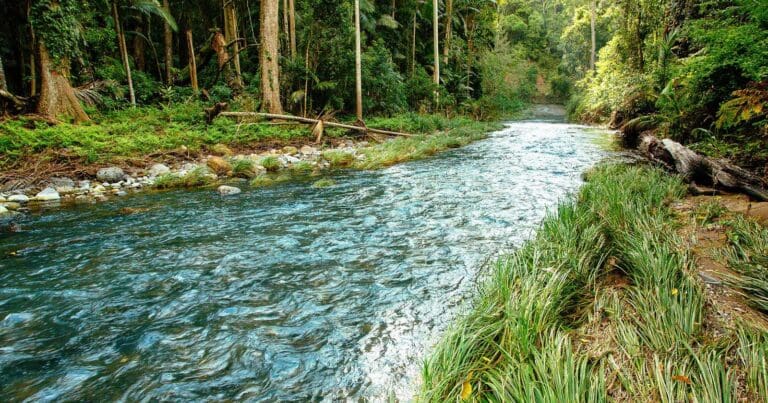
Prepare for an exciting yet demanding section as you navigate 12 river crossings. You'll either need to rock-hop across the swirling waters or wade through them. This section follows the historic "Old Cedar Road," a path once used by timber cutters in the late 1800s. As you make your way along the river, be sure to admire the towering, slender piccabeen palms and the massive, intricate strangler figs that dominate the landscape.
After conquering the river crossings, the circuit departs from the Coomera River and ascends the Beechmont Range. This challenging climb eventually leads you back to Binna Burra, completing the loop.
Track grade
Grade 5 (Difficult) - Walks for the Most Experienced: Grade 5 represents the most challenging walking tracks on the AWTGS. These are only recommended for very experienced and fit walkers with specialised skills, including navigation and emergency first aid. Tracks are likely to be very rough, very steep, and unmarked. Walks may be more than 20 kilometers. These challenging walks demand a high level of fitness and experience to navigate difficult terrain, significant elevation changes, and potentially unformed paths.
Practical information
Important Safety Information for the Illinbah Circuit
The Illinbah Circuit is a challenging hike due to its length, elevation gain, and river crossings. To ensure a safe and enjoyable experience, please carefully consider the following:
- Fitness and Experience: Due to the circuit's difficulty, a high level of fitness and prior experience with hiking are essential.
- Direction: While a clockwise direction is generally recommended, walkers may find the anticlockwise direction less strenuous in hot weather. Choose the direction that best suits your abilities and weather conditions.
- Hydration: Regardless of chosen direction, always carry enough drinking water to stay hydrated throughout the hike.
- River Crossings: The circuit involves 12 river crossings, requiring participants to navigate by stepping from rock to rock. These crossings become especially hazardous after heavy rainfall. To avoid potential danger, never attempt to cross the river during periods of heavy rain or flooding. Flash flooding can occur rapidly in this area, causing a sudden surge of water to overwhelm the Coomera River. Always check the weather forecast before setting out and be prepared to adjust your plans if necessary.
Walk map and GPX file
Max elevation: 660 m
Min elevation: 297 m
Total climbing: 843 m
Total descent: -841 m
GPX files, maps and content are copyright Trail Hiking Australia. Not to be copied, redistributed or uploaded to other platforms including AllTrails.
Explore safely
Planning this hike? Most incidents develop before you even start. Safe outcomes depend on how navigation, hydration, environment, load and judgement work together. Small oversights can compound quickly in Australian conditions. See how it happens in the Hiking Safety Systems Foundations. Then use the Hiking Safety Systems, planning calculators, and make sure a trusted contact has your trip plan before heading out.
Leave a trip plan
Before you go, complete a trip intentions form and share it with a trusted contact. Agree on a Late-Back Time and ask them to call 000 (Police) if you have not checked in. A clear trip plan is one of the simplest and most effective safety steps you can take.
Planning checklists
Download the hiking preparation and safety checklists before leaving home to help you think through your plans. They help ensure important considerations are not overlooked and support safer decision-making on the trail.
Getting there
Getting to the trailhead: Lamington National Park.
To reach the Illinbah Circuit trailhead, travel to Lamington National Park, located approximately 110km south of Brisbane. Once within the park, follow Binna Burra Road for 1.7km from the entrance. You will arrive at the Binna Burra lower day-use area, where you can park your vehicle. The Illinbah Circuit commences here, so you can begin your challenging trek directly from this designated starting point.
Lamington National Park consists of two distinct areas: Green Mountains and Binna Burra. Green Mountains lies on the western side of the Lamington Plateau, while Binna Burra encompasses the eastern section.
Reaching Green Mountains: If travelling from the Gold Coast, drive approximately 40 kilometres to Canungra via Nerang. From the north, take exit 34 on the Pacific Motorway to Beenleigh, followed by route 92 to Tamborine and route 90 to Canungra. The final 36 kilometres from Canungra to Green Mountains is a winding and often narrow bitumen road. Allow at least 50 minutes for this journey and drive with caution. This route is unsuitable for large recreational vehicles (longer than 4 metres) and vehicles towing caravans or camper trailers.
Reaching Binna Burra: Allow approximately 70 minutes for the drive from Broadbeach to Binna Burra. Travel 38 kilometres to Beechmont via Nerang. Coming from the north, take exit 69 on the Pacific Motorway and follow signage westward towards Lamington National Park (Binna Burra section). The last 1.8 kilometres of the drive is particularly narrow and winding.
Public transport: Public transport is not available within the park. Taxis and ride-sharing services may also be difficult to obtain for pick-up from Lamington National Park.
Need a rental car to get you to the hike? Find one here.
Accommodation nearby
Find accommodation close to the trailhead including hotels, cabins, and campgrounds. Use the interactive map to explore available options in nearby towns.
Nearby towns: Beaudesert, Beechmont, Binna Burra, Canungra, Mount Barney, Mount Tamborine, Nerang, North Tamborine, O'Reilly's, Tamborine Mountain, Warwick, Willow Vale, Wongawallan, Wonglepong
About the region
Immerse yourself in the captivating World Heritage rainforests of Lamington National Park, established in 1915 and spanning over 21,176 hectares. Located in south-east Queensland, close to Gold Coast, the park is part of the McPherson Range within the Scenic Rim mountain chain.
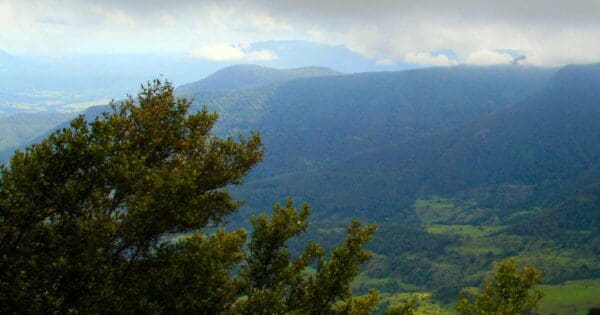
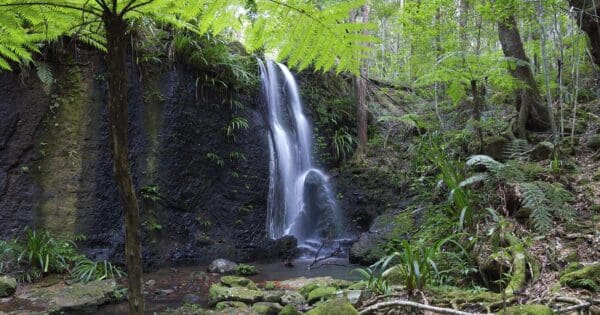
Lamington's extensive network of walking tracks caters to all abilities, from leisurely strolls to challenging hikes that delve deep into the heart of the rainforest. These tracks wind through lush valleys, past ancient trees and cascading waterfalls, leading you to dramatic lookouts offering panoramic views across the Gold Coast, south-east Queensland and even into northern New South Wales.
The park's significance extends beyond its beauty. Lamington is part of the Gondwana Rainforests of Australia World Heritage Area, renowned for its diverse ecosystems. Here you'll find some of the world's most extensive subtropical rainforests, warm temperate rainforests and the most northerly reaches of cool temperate Antarctic beech forests. This unique environment provides a vital habitat for a multitude of plant and animal life, including many threatened and endemic species.
Similar walks nearby
Looking for more walks in or near Lamington National Park? Try these trails with a similar difficulty grade.
Gallery
Got any photos from this hike? Your photos can help others plan. Share shots from along the trail so fellow hikers know what to expect.
Click to add your photos >>
Suggest an edit
Notice something different about this trail? Whether it’s a new feature, a route change, or a closure, share your update so we can keep our info accurate and helpful for fellow hikers.
Click to suggest edits >>
Acknowledgement of Country
Trail Hiking Australia acknowledges the Traditional Owners of the lands on which we hike and pay respects to their Elders, past and present, and we acknowledge the First Nations people of other communities who may be here today.