Hike at a Glance
Max elevation: 169m
Min elevation: 33m
Total Ascent: 302m
Essential information
Walking in hot weather can be dangerous and sometimes even deadly. If you’re planning this hike, make sure you’re prepared. Notify a reliable person of your intended route and expected return time. Carry a satellite phone or PLB (personal locator beacon). You should also have a topographic map and GPS. Swim only in designated areas. Carry and drink plenty of water. Avoid strenuous activity during the heat of the day.
Hike overview
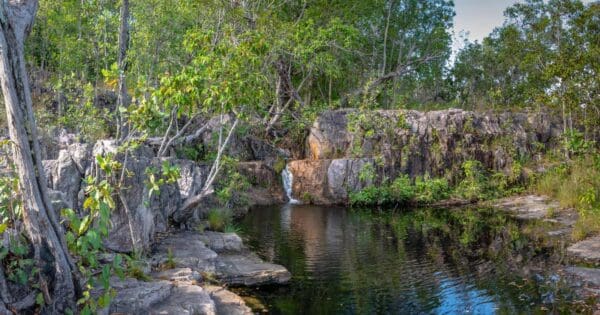
The Greenant Creek to Wangi Falls hike presents a challenging 12.5-kilometre leg of the Litchfield Tabletop Track, graded as Grade 4. Allow one to two days to complete this section. Hikers should be aware of several small creek crossings along the route. The landscape is known for its variety, transitioning from woodland to tall grasses, monsoon pockets, and creeks. You may even encounter an unexpected geological feature: a rocky, shady pine forest. The terrain around Greenant Creek is particularly rocky, which can slow progress. This trail offers a point-to-point journey through diverse landscapes, including woodlands, creek crossings, and waterfalls.
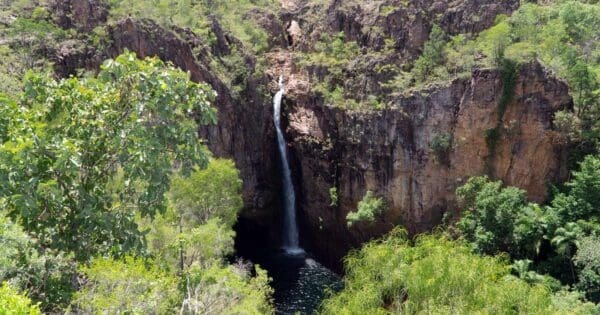
Starting at Greenant Creek, hikers initially traverse through dense monsoon forests. The lush greenery and cool, shaded environment provide a refreshing start to the hike. One of the key attractions near the starting point is Tjaetaba Falls, a serene waterfall that cascades into a clear pool, offering an ideal spot for a swim and rest.
As you progress, the trail opens into expansive savannah woodlands. This section features undulating terrain with rocky outcrops and scattered eucalyptus trees. The open landscape offers broad views of the surrounding area, highlighting the vastness and rugged beauty of Litchfield National Park. Keep an eye out for local wildlife such as wallabies, various bird species, and reptiles that inhabit the area.
Midway through the hike, the track leads through more open woodlands and grassy plains. These areas, characterised by sparse tree cover, provide limited shade but offer an opportunity to appreciate the unique flora of the region. The terrain here includes gentle slopes and occasional creek crossings, adding variety to the hiking experience.
As you approach Wangi Falls, the landscape transitions back into lush monsoon forests. The environment becomes more humid and verdant, a stark contrast to the drier woodlands encountered earlier. The final leg of the hike includes a relatively steep descent, which can be challenging but is manageable with caution.
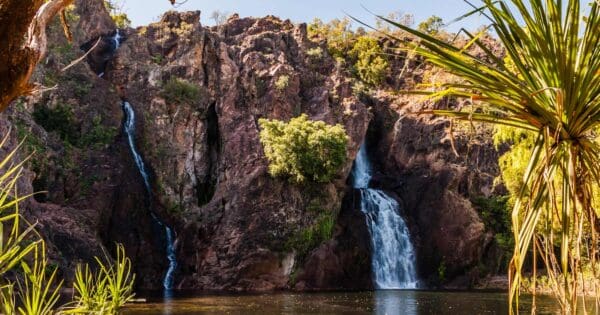
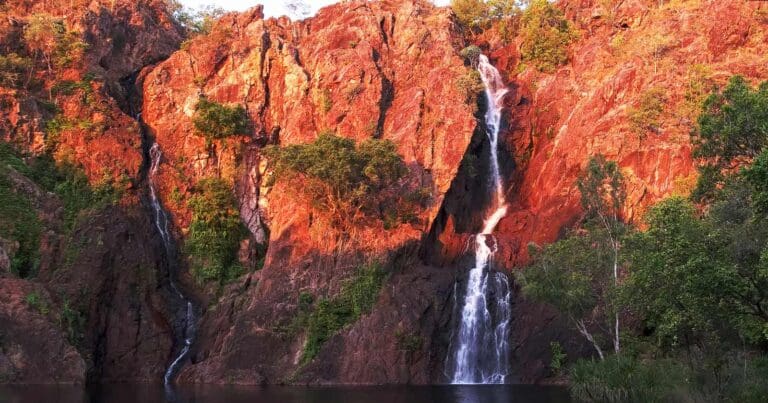
Wangi Falls, the endpoint of this section, is one of Litchfield’s most popular attractions. The twin waterfalls cascade into a large, clear swimming hole surrounded by a lush, shaded picnic area. This spot is perfect for a post-hike swim and relaxation. The facilities at Wangi Falls include picnic tables, barbecues, and restrooms, making it a convenient and comfortable place to end your hike.
Note: The length shown is based on recorded measurements and not the 8.4km length promoted by the Parks & Wildlife Commission of the Northern Territory. There was a notable discrepancy, and it is safer to overstate rather than understate the distance.
Track grade
Grade 4 (Hard) - Challenging Walks for Experienced Walkers: Grade 4 on the AWTGS signifies challenging walking tracks. Bushwalking experience is recommended for these tracks, which may be long, rough, and very steep. Directional signage may be limited, requiring a good sense of navigation. These walks are suited for experienced walkers who are comfortable with steeper inclines, rougher terrain, and potentially longer distances.
Practical information
- The best time to hike is during the dry season (May to October) to avoid extreme heat and heavy rainfall.
- Carry sufficient water as natural water sources may not be potable.
- Sturdy hiking boots are recommended due to the rocky and uneven terrain.
- Inform someone about your hiking plan and expected return time.
- Camping is only permitted in designated areas. If planning to camp, ensure to book designated camping spots ahead of time.
- Swim only in designated areas - heed all signs.
- Parks may close unexpectedly due to bushfires, flooding or park maintenance.
- Before you go, check if the park is open.
- Always check for any park alerts or permits required before starting your hike.
- Flying your drone - get a permit before you arrive.
Walk map and GPX file
Max elevation: 169 m
Min elevation: 33 m
Total climbing: 302 m
Total descent: -317 m
GPX files, maps and content are copyright Trail Hiking Australia. Not to be copied, redistributed or uploaded to other platforms including AllTrails.
Explore safely
Planning this hike? Most incidents develop before you even start. Safe outcomes depend on how navigation, hydration, environment, load and judgement work together. Small oversights can compound quickly in Australian conditions. See how it happens in the Hiking Safety Systems Foundations. Then use the Hiking Safety Systems, planning calculators, and make sure a trusted contact has your trip plan before heading out.
Leave a trip plan
Before you go, complete a trip intentions form and share it with a trusted contact. Agree on a Late-Back Time and ask them to call 000 (Police) if you have not checked in. A clear trip plan is one of the simplest and most effective safety steps you can take.
Planning checklists
Download the hiking preparation and safety checklists before leaving home to help you think through your plans. They help ensure important considerations are not overlooked and support safer decision-making on the trail.
Getting there
Getting to the trailhead: Litchfield National Park.
Reaching Greenant Creek trailhead near Tjaetaba Falls requires a scenic drive from Darwin. Head south on Stuart Highway for roughly an hour and a half until you see the turnoff for Batchelor Road. Follow this well-maintained road through Batchelor and Rum Jungle townships. Signs for Litchfield National Park will be visible along the way. Once you enter the park, continue following the sealed park road. Look out for signs for Greenant Creek and Tjaetaba Falls exit. Take this turnoff and follow the designated road until you reach the carpark and trailhead.
Need a rental car to get you to the hike? Find one here.
Accommodation nearby
Find accommodation close to the trailhead including hotels, cabins, and campgrounds. Use the interactive map to explore available options in nearby towns.
Nearby towns: Adelaide River, Batchelor, Berry Springs, Darwin, Howard Springs, Humpty Doo, Katherine, Pine Creek, Rum Jungle, Wangi Falls
About the region
Litchfield National Park: A Natural Wonder of the Northern Territory. Litchfield National Park, encompassing roughly 1,500 square kilometres, is a jewel of the Northern Territory. This ancient landscape, shaped by water over millennia, boasts a captivating array of natural wonders. Cascading waterfalls tumble from the sandstone plateau of the Tabletop Range, forming crystal-clear pools ideal for swimming.
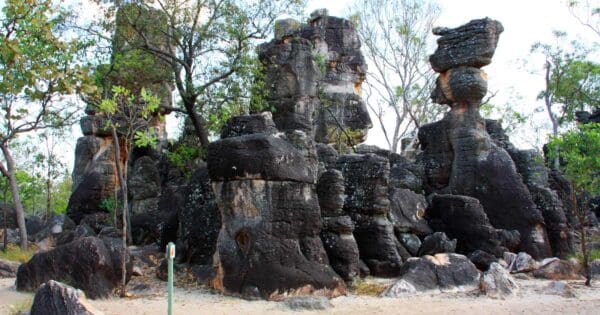
The park is significant to the Koongurrukun, Mak Mak Marranunggu, Werat, and Warray Aboriginal people, with their ancestral stories woven into the very fabric of the landscape. Visitors can explore shady monsoon forest walking trails, marvel at the unique magnetic termite mounds, or be awestruck by the weathered sandstone pillars of the Lost City.
A Haven for Adventure: Litchfield National Park offers endless opportunities for exploration. Whether you seek refreshment beneath cascading waterfalls, marvel at fascinating termite mounds, discover hidden waterholes, or challenge yourself on hiking trails, this park caters to all interests. Camping is the primary accommodation option within the park boundaries, but various lodges and resorts are located nearby for those seeking different comforts. Even a well-planned day trip can allow visitors to experience the park's highlights.
History and Accessibility: The park's name honours Frederick Henry Litchfield, a member of the Finniss Expedition, the first European encounter with this region. Extensive mining for tin and copper dominated the area from the late 1800s until the mid-20th century. Declared a national park in 1986, Litchfield has become a haven for nature lovers.
While a sealed road connects the park's major attractions, a four-wheel drive vehicle is necessary to access The Lost City, Homestead, Central Valley, and the Reynolds River Track. During the dry season, this track allows experienced drivers to reach the Daly River Road. Renting a vehicle? Confirm if it's permitted on unsealed roads.
Accessibility is twofold. The park can be reached via the southern entrance near Batchelor or the northern entrance along Peninsula Way, forming the Litchfield Loop. This loop integrates the park with the Cox Peninsula, creating a more extensive sightseeing experience.
A Local Favourite: Litchfield National Park's pristine swimming holes and scenic walking tracks make it a cherished destination for Darwin residents. Basic amenities like meals and refreshments are available near Wangi Falls, while various accommodation options cater to different budgets and preferences, including campsites, cabins, and caravan parks within or near the park, and lodging options in the nearby township of Batchelor.
Similar walks nearby
Looking for more walks in or near Litchfield National Park? Try these trails with a similar difficulty grade.
Gallery
Got any photos from this hike? Your photos can help others plan. Share shots from along the trail so fellow hikers know what to expect.
Click to add your photos >>
Suggest an edit
Notice something different about this trail? Whether it’s a new feature, a route change, or a closure, share your update so we can keep our info accurate and helpful for fellow hikers.
Click to suggest edits >>
Acknowledgement of Country
Trail Hiking Australia acknowledges the Traditional Owners of the lands on which we hike and pay respects to their Elders, past and present, and we acknowledge the First Nations people of other communities who may be here today.