Waterfalls, Stone Country and Termite Mounds in Litchfield
Overview
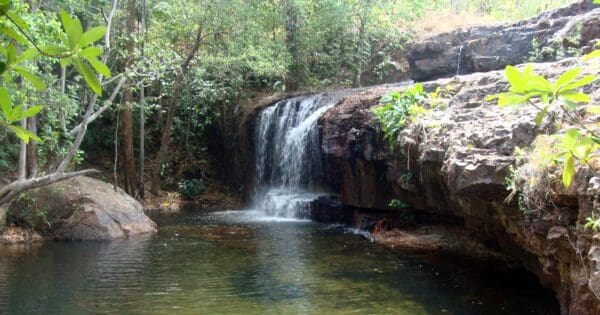
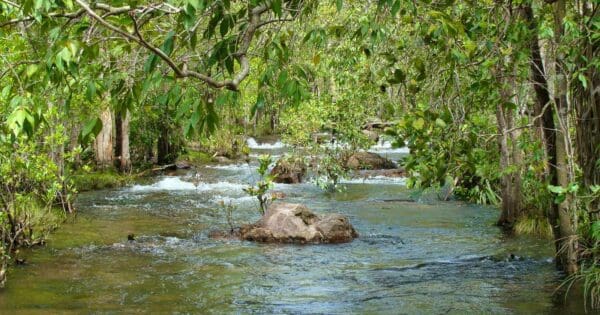
Litchfield National Park sits about 120 km south of Darwin and is one of the Top End’s best-known natural areas. What makes it stand out is the way so many different landscapes are packed into one park, from sandstone plateaus and monsoon rainforest pockets to swamps, Melaleuca woodlands, lowlands and alluvial plains. Water moving through that country shapes much of the place, feeding creeks, plunge pools and floodplain habitats and giving the park its strong sense of contrast between stone, forest and water.
It is also a large park, covering about 145,600 hectares, so even its most familiar scenes are part of a much broader landscape with real ecological depth. The nearest township is Batchelor, which sits at the edge of the park and helps orient the area for visitors coming down from Darwin.
Highlights
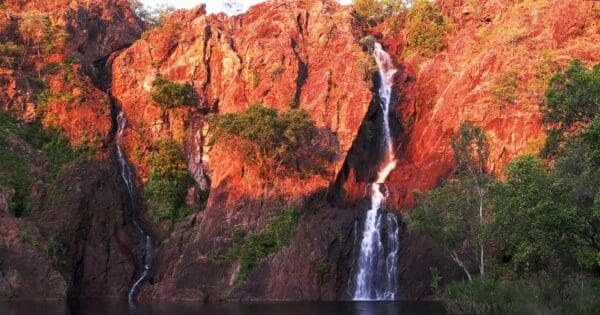
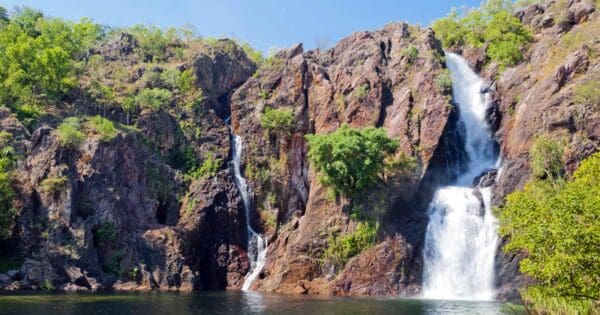
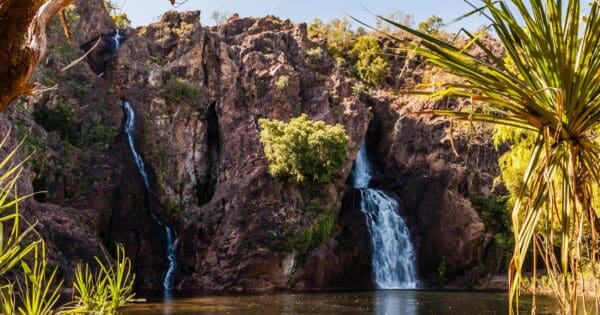
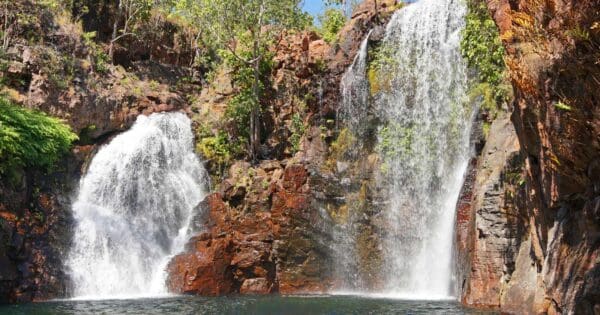
Litchfield is known for its escarpments, waterfalls, rock pools and broad stone country rather than one single landmark. The scenery shifts from spring-fed falls and creek lines to open plains where the magnetic termite mounds rise from the black soil, giving the park a look that is instantly recognisable in the Top End.
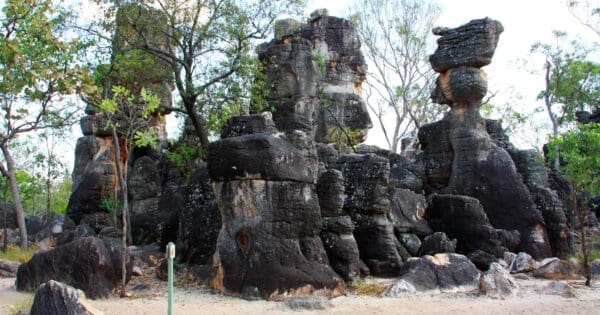
Another distinctive feature is the park’s rugged sandstone country, including weathered formations such as the Lost City and lookout country around the escarpment. Even in the more sheltered parts of the park, the combination of sheer rock, forested gullies and water-cut gorges gives the landscape a strong, sculpted character.
Best Time to Visit
The more comfortable time to spend longer in Litchfield is generally during the dry season, when the weather is milder and the park’s walking country is usually at its easiest to enjoy. That said, the park changes character across the year, and the wet season brings a very different feel, with creeks and falls carrying the force that has shaped the landscape over time.
If you enjoy seeing the park at its greenest, the build-up and wet months can be especially striking for the lushness around the watercourses and rainforest pockets. For longer days outdoors, though, the dry season is usually the better match.
Plants and Animals
Litchfield has high species diversity because its habitats are so varied. Within the one park you get sandstone plateaus, monsoon forests, swamps, riparian corridors, floodplains and lowland woodlands, and each supports a different mix of plant and animal life. Those water-dependent habitats are especially important for wildlife in the wider region.
The plant life includes fire-sensitive communities such as rainforest patches, Callitris pines and cycad stands. Three cycad species occur here, which hints at how botanically rich the park is. Wildlife is just as tied to the landscape’s special features, with birdlife around places such as Tabletop Swamp and species that depend on cliff and gorge habitats, including the orange leaf-nosed bat colony sheltered in the cave at the base of Tolmer Falls.
Culture and Heritage
Litchfield National Park has clear cultural significance for local Aboriginal people, with important connections to country continuing into the present. Traditional hunting still takes place in select parts of the park, and there are many sacred sites, art sites, archaeological sites and other places of significance throughout the park. Some of the best-known visitor areas are sacred sites or lie close to them, which gives the landscape a depth that goes well beyond its scenery.
The park also holds historic places linked to the Top End’s pastoral and mining history, including Blyth Homestead and Bamboo Creek Tin Mine. Those layers of history sit alongside much older Aboriginal cultural connections, making Litchfield a place where natural and cultural stories are closely tied together.