Hike at a Glance
Max elevation: 785m
Min elevation: 624m
Total Ascent: 389m
Essential information
Temperatures across the Northern Territory can be very hot between October and April. It can exceed 40 degrees Celsius in some locations. High humidity in the Top End can also make you tire easily. Check forecast temperatures before you visit.
Hike overview
The Giles Track offers a challenging yet rewarding 22-kilometer journey through the heart of Watarrka National Park, connecting Kathleen Springs and Kings Canyon. This remote adventure is best undertaken as a two-day hike, but day walks starting or finishing at Lilla carpark are also possible.
Before heading out on the Giles Track, thorough preparation is crucial. Download an information sheet and map from the Parks website or Kings Canyon Resort Reception. The track can be tackled in either direction, though Kathleen Springs to Kings Canyon is the recommended route.
The Giles Track is graded 4 (hard), demanding a good level of fitness and experience. Hikers should be self-sufficient, capable of carrying adequate food, water, and sleeping gear for the duration of their trek.
Orange arrows mark the trail at regular intervals, but due to the rugged terrain, it's advisable to locate the next marker before leaving the previous one behind.
While there's limited drinking water available at Kings Canyon and Kathleen Springs trailheads, Lilla offers none. Be sure to carry enough water for the entire journey, as creeks and rockholes are typically dry.
Extreme heat can be a serious threat. Avoid undertaking the Giles Track during peak summer months (typically November-March), as high temperatures pose significant risks. On exceptionally hot days exceeding 36°C, the Kings Canyon track entrance closes by 11am.
Always inform a reliable person about your hiking plans and arrange transportation back upon completion. Fill out the logbooks provided at Kings Canyon, Lilla, and Kathleen Springs. While rangers may not check these logs regularly, accurate information is crucial in case of an emergency.
The Giles Track promises an adventure unlike any other. With meticulous planning, respect for the environment, and a sense of adventure, you'll be well on your way to traversing this remote yet rewarding trek.
Camping
Camping at Watarrka National Park is only permitted for people walking the Giles Track. Walkers can camp anywhere between the 3km and 20km markers, but the best place to camp is Reedy Creek. Camping fees apply and campsites must be booked online before you arrive.
Please Remember
- Stay on the marked tracks and follow the track markers.
- Stay at least 2m from cliff edges.
- All historic, cultural items and wildlife are protected.
- Bins are not provided, please carry your rubbish out with you.
- Pets are permitted on a leash in the Kings Canyon and Kathleen Springs carparks only.
- Throwing rocks into the Canyon is dangerous and illegal. Please report any rock-throwing or graffiti to a Park Ranger.
- A permit is required for Drone use – conditions apply and it must be obtained prior to your arrival in the Park.
Track grade
Grade 4 (Hard) - Challenging Walks for Experienced Walkers: Grade 4 on the AWTGS signifies challenging walking tracks. Bushwalking experience is recommended for these tracks, which may be long, rough, and very steep. Directional signage may be limited, requiring a good sense of navigation. These walks are suited for experienced walkers who are comfortable with steeper inclines, rougher terrain, and potentially longer distances.
Practical information
Essential Tips for a Safe and Enjoyable Watarrka Adventure:
- Observe park safety signs.
- Pack a hat, sunscreen, and sunglasses. Apply sunscreen liberally and reapply often, especially during the harsh midday sun.
- Carry plenty of water and sip regularly throughout your visit.
- Opt for comfortable, lightweight, and breathable clothing that covers your arms and legs. Sturdy walking shoes or hiking boots will provide good traction on uneven terrain.
- Avoid strenuous activity during the hottest part of the day (typically midday). Plan your hikes for the cooler mornings or evenings.
- Be honest about your fitness level when selecting a walking trail. Park maps can help you choose the right path for your abilities.
- Download free interactive park maps onto your phone or tablet before you arrive.
- Walkers planning extended and overnight walks should notify a reliable person of their intended route and walk plans. Carry a satellite phone or personal locator beacon.
Emergencies
If someone is in urgent need of medical attention, you can contact a Park Ranger using the Emergency Radio Call Devices (ECD). There are three call devices located along the Kings Canyon Rim Walk and one near the carpark’s safety information shelter. Basic first aid equipment and emergency water is available from the emergency first aid boxes at the top of the Canyon. Avoid leaving an injured person alone. Stay with them to administer first aid and send another person to get help, with careful note of your location. The Park Ranger Station is situated 2.1km east of the Canyon turn-off, then a further 2 km off the Luritja Road. Please note, this is strictly for emergency situations only.
Heat Management Strategy
When the temperature is forecast to be 36°C or above*, visitors wishing to undertake the Rim Walk need to start their walk before 9.00am. On days when the temperature is forecast to be 36°C or above*, visitors wishing to undertake the South Wall Return Walk need to start their walk before 11.00am. Signs at the safety information shelter and the television with weather forecast will be updated daily to indicate current access conditions. There is no drinking water available once you leave the carparks. *Based on Bureau of Meteorology forecasts for Watarrka.
Walk map and GPX file
Max elevation: 785 m
Min elevation: 624 m
Total climbing: 389 m
Total descent: -421 m
GPX files, maps and content are copyright Trail Hiking Australia. Not to be copied, redistributed or uploaded to other platforms including AllTrails.
Explore safely
Planning this hike? Most incidents develop before you even start. Safe outcomes depend on how navigation, hydration, environment, load and judgement work together. Small oversights can compound quickly in Australian conditions. See how it happens in the Hiking Safety Systems Foundations. Then use the Hiking Safety Systems, planning calculators, and make sure a trusted contact has your trip plan before heading out.
Leave a trip plan
Before you go, complete a trip intentions form and share it with a trusted contact. Agree on a Late-Back Time and ask them to call 000 (Police) if you have not checked in. A clear trip plan is one of the simplest and most effective safety steps you can take.
Planning checklists
Download the hiking preparation and safety checklists before leaving home to help you think through your plans. They help ensure important considerations are not overlooked and support safer decision-making on the trail.
Getting there
Getting to the trailhead: Watarrka National Park.
Vehicle access: Kathleen Springs and Kings Canyon are both well established visitor nodes with carparking, toilets, picnic facilities and water. A small carpark is located along the road to Lilla.
Reaching Watarrka National Park: Your Driving Options
Watarrka National Park lies 450 kilometers southwest of Alice Springs. Three routes offer access, catering to different vehicles and preferences.
- The Easy Route (2WD): Take the sealed Stuart and Lasseter Highways, connecting with Luritja Road. This is the fastest and most straightforward option for standard vehicles, suitable for those coming from Yulara or Alice Springs.
- The Adventurous Route (4WD): Experience the Red Centre Way via Larapinta Drive, traversing the West MacDonnell Ranges. However, a Mereenie Loop Pass permit is required for this route. Permits are available for purchase at various locations, including Kings Canyon Resort, Hermannsburg General Store, and Alice Springs Visitor Information Centre.
- The Alternative Route (4WD): A more challenging option involves following the Stuart Highway south, then turning onto the unsealed Ernest Giles Road before connecting with Luritja Road. This route is recommended only for experienced drivers with four-wheel drive vehicles.
Remember:
- A Parks Pass is mandatory for entry into Watarrka National Park.
- Always check road conditions before heading out on your journey, especially for unsealed roads.
Need a rental car to get you to the hike? Find one here.
Accommodation nearby
Find accommodation close to the trailhead including hotels, cabins, and campgrounds. Use the interactive map to explore available options in nearby towns.
Nearby towns: Alice Springs, Curtin Springs, Kings Canyon, Watarrka, Yulara
About the region
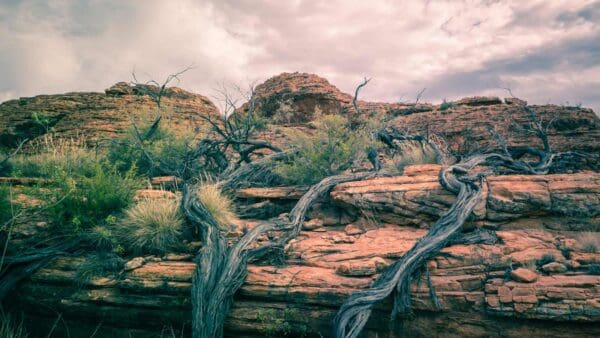
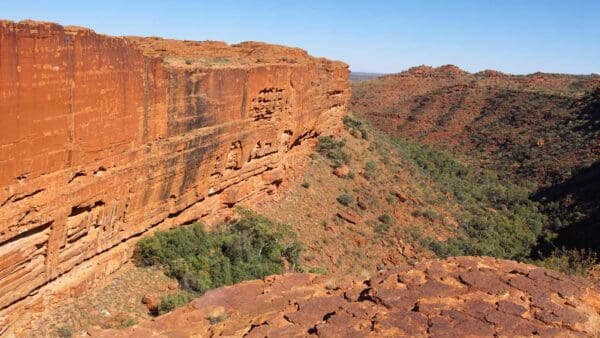
Just a three-hour drive from Uluru lies Watarrka National Park, home to the awe-inspiring Kings Canyon. This majestic landscape boasts 300-meter-high red sandstone walls, palm-filled crevices, and breathtaking desert views. The park encompasses the western end of the George Gill Range, a haven for diverse plant and animal life with rugged ranges, hidden rockholes, and refreshing gorges.
Kings Canyon: A Geological Wonder
Kings Canyon is the crown jewel of Watarrka National Park. Its ancient red walls rise 100 meters above Kings Creek, leading to a plateau dotted with rocky domes. Sheltered by the canyon walls, a unique ecosystem thrives, including the rare MacDonnell Ranges Cycad.
Kathleen Springs: A Place of Cultural Significance
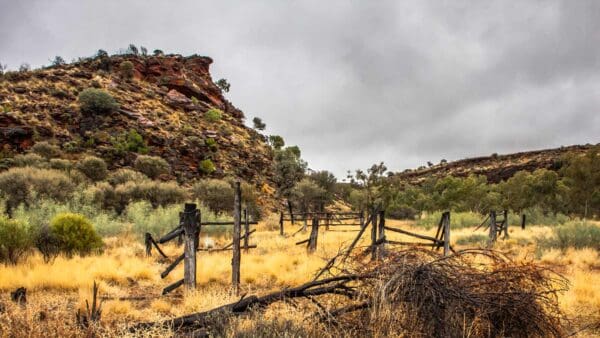
Venture 21 kilometers from Kings Canyon to discover Kathleen Springs. A pleasant, wheelchair-accessible path lined with remnants of old stockyards leads to a permanent waterhole. Deeply significant to the local Aboriginal people and a vital source of life for wildlife, swimming is prohibited here.
Plan Your Visit: A Parks Pass is required for entry into Watarrka National Park. With its diverse landscapes, rich cultural heritage, and stunning natural beauty, Watarrka National Park offers an unforgettable experience for any adventurer.
Similar walks nearby
Looking for more walks in or near Watarrka National Park? Try these trails with a similar difficulty grade.
Gallery
Got any photos from this hike? Your photos can help others plan. Share shots from along the trail so fellow hikers know what to expect.
Click to add your photos >>
Suggest an edit
Notice something different about this trail? Whether it’s a new feature, a route change, or a closure, share your update so we can keep our info accurate and helpful for fellow hikers.
Click to suggest edits >>
Acknowledgement of Country
Trail Hiking Australia acknowledges the Traditional Owners of the lands on which we hike and pay respects to their Elders, past and present, and we acknowledge the First Nations people of other communities who may be here today.